

Getting Your Fly Box Ready for Fall

A fly box full of hoppers, ants and well-loved foam is a pretty good record of the last two months. Those flies earned their place, and a lot of them still have afternoons left in them.
Cooler mornings are a good excuse to make a little room for what comes next. Most of what a fall box needs is already in there — the nymphs, the buggers, the smaller dries. It's really a matter of shifting some things around, adding a few, and giving the summer flies some care before they go on the shelf.
Here's how we'd approach the seasonal swap.

Let the River Set the Timing
Fall shows up on its own schedule, and it varies by a couple of weeks depending on the water and the year. A few things worth watching:
Terrestrial takes tapering off. When a hopper that was getting eaten in August starts drawing looks instead, it's usually a sign that more of the feeding has moved subsurface or onto smaller bugs.
The first Blue-Winged Olives. Small grey-olive mayflies coming off on a grey afternoon. Once they start showing up, it's worth having a few dries and emergers within reach.
Lower, clearer flows. On rivers that drop and clear through fall, a quieter approach and a longer leader start to matter more than they did in July.
Cooling water. A stream thermometer is a useful way to follow the change, though there's no single number that means the summer flies go away. Our complete guide to fall fly fishing walks through what the different temperature ranges tend to change.
These are clues, not rules. If hoppers are still producing where you fish, keep fishing them — that's the best information there is.
Make a Little Room
Start with what filled the box over the summer. The goal isn't to clear it out, just to free up some space.
Keep a few hoppers and foam attractors. There's still good fishing to be had with them on warm afternoons along a grassy bank — our single hopper rig guide covers that water. Three or four within reach usually covers it, and the rest can move to storage.
Set aside the finished hatches. Cicadas and other one-season specialties can go in a separate box until next year.
Look over the well-used ones. Some just need to dry out or have their hackle tidied up. Others have a bent hook or a cracked foam body and have earned retirement.
Sizes more than patterns. It's mostly the 8s and 10s that come out. The size 12s and 14s tend to stay useful right through fall.
📌 Pro Tip: Label the box you're setting aside rather than scattering those flies into a drawer. Next June you'll be pulling out a ready terrestrial box instead of rebuilding one from scratch — which is really the whole point of packing down.
Keep Your Everyday Flies
Most of the box doesn't move at all. The seasonal swap is a smaller job than it sounds like, because so much of what works in July works in October.
Pheasant Tails and Hare's Ears. A good foundation in any season. A range of sizes and weights suited to the water you fish covers a lot of ground.
Parachute Adams. Worth keeping handy, especially in the smaller sizes as fall mayflies get going.
Woolly Buggers. Olive, black and brown, in a few sizes. They were a summer fly, they're a fall fly, and they'll still be there in January.
A beadhead stone. Two sizes is plenty. It doubles as a big meal and as the weight that gets a small dropper down.
While everything's spread out on the table, it's a good moment to look at tippet, floatant, split shot and nippers, and replace whatever's running low.
Add a Few Fall Options
Three groups get a little more space as the season turns.
Small mayflies
Blue-Winged Olives are the anchor on most trout water through fall. A selection in sizes 16 to 20 covers the hatch on a lot of rivers, adjusted for whatever your local bugs are running.
Carrying more than one stage is what makes the difference. During a hatch, trout often take more emergers than duns, so having something that rides in the film alongside the dries gives you an answer when fish are up and refusing. Mahogany Duns overlap the BWO hatch on a lot of western water, and a local hatch report is the fastest way to know whether they're worth carrying where you fish.
Midges
Midges earn their corner of the box as everything else winds down. A few larvae and pupae for nymphing, plus a surface pattern for the quiet afternoons when fish are rising to something almost too small to see.
Sizes 18 to 22 do most of the work. They take up almost no room, so it's easy to carry more than you think you'll need.
The first streamers
Fall is a good time to spend a morning working a streamer through promising water, and it doesn't take many to be ready.
Three different profiles is a comfortable starting point: something olive or brown you can strip at a good clip while the water's still in the 50s, something weighted that gets down, and one larger fly for the morning you feel like looking for a single big fish. The heavier cold-water streamer box can wait until the water actually gets cold.
Eight Patterns to Consider
These are additions rather than a complete fall box, and there's a good chance you already have something similar in a few of these slots. For the twelve patterns that carry the whole season, see our complete guide to fall fly fishing.
Small dries and emergers
 |
 |
 |
 |
|
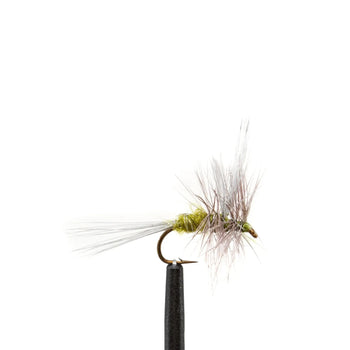
Blue-Winged Olive |
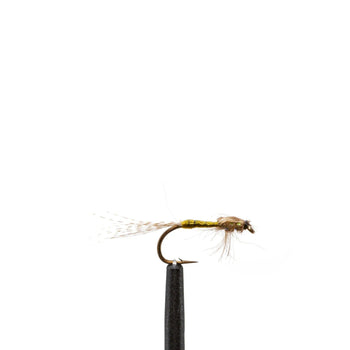
WD-40 – Olive |
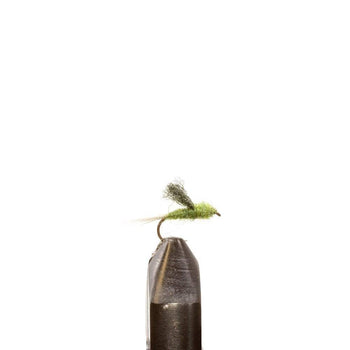
Dk. Olive Emerger |
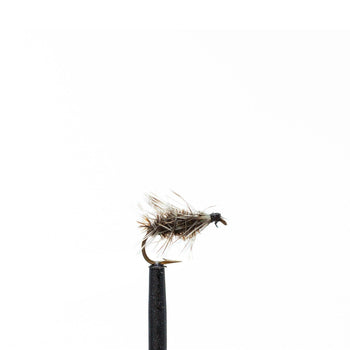
Griffith's Gnat |
Blue-Winged Olive (14–18). The hackled dun, which sits higher and shows up better in broken water than a parachute does. Nice to have alongside a parachute version rather than instead of one — different water tends to call for each.
WD-40 – Olive (16–20). A slim olive emerger that covers the subsurface half of a BWO hatch. A good one to hang below a dry when fish are working steadily but passing it up.
Dk. Olive Emerger (16–20). Rides in the film rather than on it or under it, which is the stage a lot of fall fish are keyed on. Not the easiest fly to track, and often worth it anyway.
Griffith's Gnat (16–18). A longtime answer for adult midges and those gentle rises to something you can barely make out. The Midge Transition has more on this end of the box.
Streamers
 |
 |
 |
 |
|
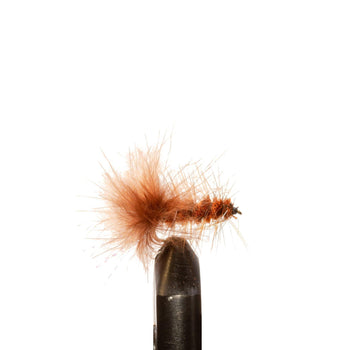
Flash Woolly Bugger – Brown |
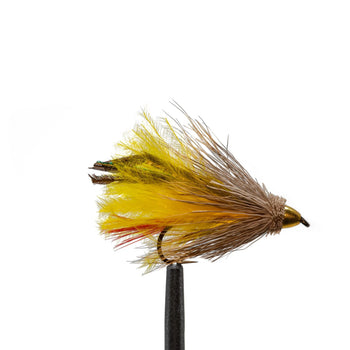
Conehead Muddler – Yellow |
Black Zonker – Flame Egg |
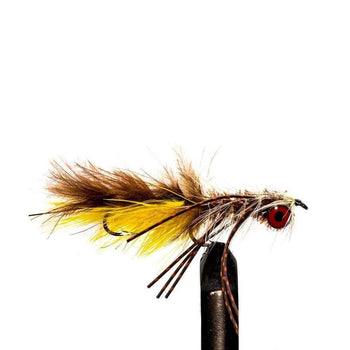
Articulate – Brown/Yellow |
Flash Woolly Bugger – Brown (6–10). A familiar profile with enough flash to get noticed in low light. An easy one to experiment with — a swing, a steady retrieve, or short strips and pauses all work.
Conehead Muddler – Yellow (4–10). The classic sculpin shape with a cone to get it down. Sculpins are on the bottom of most trout rivers year round, and fall is when fish start paying attention to them.
Black Zonker – Flame Egg (4–10). A dark rabbit-strip fly with a bright head, which covers both of fall's big-meal food sources in one pattern. Handy when you're only carrying a few.
Articulate – Brown/Yellow (4/6). The larger profile, for anglers who enjoy fishing articulated streamers. Our fall streamer guide has more on putting one to work.
Give the Summer Flies a Little Care
A few minutes before they go on the shelf makes a real difference to what comes out of that box next June.
Let everything dry first. Flies usually go back in the box damp at the end of a day, and then the box closes for eight months. Leaving it open overnight somewhere dry takes care of most of what follows.
Check the hooks. Corrosion starts at the point. A thumbnail run across a few points tells you quickly which ones are still sharp and which have gone dull or discolored.
Rinse the floatant off the worst offenders. Gel builds up on hackle over a season and eventually mats it flat. Warm water, a blot, and a full dry brings a surprising number of dries back.
Set aside the damaged ones. A scruffy fly still fishes fine — it's cracked foam bodies, missing legs and bent hooks that are worth retiring.
Jot down a restock list. If a pattern is nearly gone from the box, it's much easier to note it now than to remember in March which one kept working.
📌 Pro Tip: A little steam from a kettle brings crushed hackle and matted wings back better than you'd expect. Two minutes over a spout can rescue most of a row of dries.
Organize for Cooler Days
Summer organization assumes warm fingers and long light. A bit of breathing room in the box goes a long way in November.
Keep the small flies easy to reach. Sizes 18 to 22 are the fiddliest to handle and the ones that get changed most, so they're worth putting in the row that opens easiest.
Leave some empty slots. A packed row means picking flies out with a fingernail. A little space makes that much simpler with cold hands.
Carry what's comfortable. Separate dry fly and nymph boxes work well for a full day, and one compact box is plenty for a short afternoon. Our standard dry fly box and hopper dropper box are two ways to set it up.
Build a spare leader or two at home. Having one ready saves rebuilding a rig on a cold bank. If it's been a while, here's how a leader is put together and why.
Leave Room to Adjust
The fall box keeps changing as the season moves. Smaller nymphs and midges tend to come out more often, weight gets added to reach fish holding deeper, and streamer retrieves slow down as the water cools. Each trip is decent information for the next one.
Two things worth planning for. Eggs become one of the most abundant foods in the river once fish are spawning, so a few are worth having by mid-October — fished in the run below spawning gravel, with plenty of room given to the gravel itself and the fish on it. And local regulations vary during the spawn, so they're worth a look before the trip.
Leaving a few slots open is never a bad idea either. There's usually a shop recommendation or a pattern you've been meaning to try.
Ready for the Next Cool Morning
Part of the pleasure of sorting a box is remembering where those flies have been, and thinking about where they're going next.
Keep what's still working, make a little room for the season ahead, and give the summer flies some care before they go up on the shelf. Then pack a layer and go see what the river's doing.


