

Tight to the Bank: How to Fish a Single Hopper Rig

Take the nymph off.
Not forever and not everywhere. But when you're working a grassy bank — overhanging cover, a little depth, current running tight against the dirt — the dropper you've fished all summer is costing you more than it's catching. It changes where the fly lands, it pulls the hopper under on the first seam it crosses, and it slows you down on water where speed is most of the game.
This is the other way to fish a hopper: one fly with nothing hanging under it, close enough to the grass that it makes you pay attention. The hopper gets to be the whole show.
Why Fish a Hopper Without a Dropper?
A hopper-dropper earns its place — we've made that case ourselves in The Magic of the Hopper Dropper. It covers two feeding levels at once, it tells you when something eats down deep, and on unfamiliar water it's usually the right first choice. None of that is in dispute.
But around tight cover, a single fly gives you three specific advantages.
Cleaner placement. A weighted nymph eighteen inches below your hopper turns one object into a system with its own momentum. Aim at an opening under the grass and the hopper goes where you pointed while the nymph keeps traveling — and the rig lands short, long, or in a heap. On open water that's fine. In a small opening, it's the whole target.
More control over the drift. A dropper riding in a different current tugs the hopper off course or pulls it under, and a bank is nothing but current seams. One fly leaves you with only the surface drift to manage.
Quicker pickups. No nymph to lift clear, no second fly to swing into the willows. Pick up, one back cast, deliver to the next opening. That matters when you're working a bank one pocket at a time.
You give up the fish that would have eaten the nymph. In exchange you get to put all your attention on where the hopper lands and how it rides — which, on this kind of water, is the trade that pays.
Find the Feeding Lane Along the Bank
Here's the habit that costs the most fish: the average cast lands about three feet off the bank. A trout tucked under an overhang may never see it.
What you're looking for is the narrow lane where current carries food past cover. Sometimes that's inches from the grass. Sometimes the useful water extends a few feet out. Read it rather than assuming.

Undercuts. Where current has dug in beneath the sod, you get overhead cover, a current tongue, and a feeding lane in the same eighteen inches. Look for enough depth and flow to actually hold a fish — not every grassy edge is occupied.
Overhanging grass and willows. Shade plus a delivery mechanism. Pay particular attention where a breeze is pushing off the bank and toward the water.
Cattle-trampled edges. Unglamorous and genuinely productive. Broken-down banks put terrestrials in the water constantly, and the churned edge gives fish something soft to sit against.
Depth close to shore. A deeper slot tight to the bank beats a long stretch of featureless shallow edge every time. Most bends push deep water to the outside; when you find one where it runs along the inside, you can wade the shallow side and fish a bank almost nobody covers properly.
📌 Pro Tip: Pick the opening before you cast, and aim at the water beneath it rather than at the bank in general. The occasional snag comes with tight-cover fishing, but the goal is a clean presentation into a specific gap — not a fly left in the willows and four minutes lost getting it back.
Accuracy Over Distance
A good bank cast lands where you meant it to, on the first try. Distance has almost nothing to do with it.
Twenty to thirty-five feet is the working window. That's short enough to be genuinely accurate, short enough to pick up and redeliver in one motion, and short enough to set the hook without dragging slack through forty feet of line first. If you can't reach an opening cleanly, move your feet before you add line.
Keep false casts to a minimum — one controlled back cast is usually enough to get from one target to the next. If you need three to load the rod, you're too far out.
Let the situation choose the angle
There's no single correct casting angle for a bank. There's a correct one for how you got there.
Wading upstream — the most common case — approach from behind the fish and cast upstream or up-and-across. Keep as much line as you can out of faster current between you and the fly, and strip slack as the hopper comes back toward you so you stay in contact. The trade-off is drift length — current gets under your line quickly from this angle, so expect a short window before drag pulls the fly off the grass.
From a boat, or anywhere you can come at a target from above without spooking it, a down-and-across presentation shows the fly ahead of the leader and lets the drift run along the bank rather than away from it. Feed slack as needed; once the line comes tight, that same angle starts dragging the hopper off the grass.

A reach cast helps in both cases. As the line unrolls, lay the rod tip toward the side that reduces drag — usually upstream when faster water sits between you and the fly. It buys a few more feet of clean drift and costs nothing but the motion.
Give It a Plop
Everything else in dry fly fishing teaches you to land soft. Ease off that here.
A grasshopper doesn't alight on the water. It falls in — heavily, badly, with a sound. Trout that eat hoppers are keyed to that, and a hopper that touches down like a size 18 Baetis often just gets ignored.
Put the fly down with some authority while keeping the line and leader under control. You want the hopper to announce itself, not the whole rig to slap down on top of the fish.
The exception is flat, clear, low water. If fish scatter when the fly lands, soften the delivery, give them more room, and lengthen the leader. Start loud — it's the higher-percentage mistake — but watch the response and adjust.
Fish the Pocket, Then Move
Most bank takes come shortly after the fly lands. Be ready from the moment it touches down.
In a small pocket that might be three to six feet of drift. Along a continuous feeding lane, let it run as long as it stays drag-free. Don't pull the fly away just because a few seconds have passed — fish follow, and a big one will sometimes rise slowly enough that you'd swear nothing was there.
Once the hopper drifts past useful water or starts to drag, pick up and work the next opening. Move deliberately, stay low, and keep your shadow off the water you're about to fish.
The rhythm is the technique. Pick a target, make a clean cast, watch the drift, move on. More than fly choice or leader formula, what separates anglers who take banks apart from anglers who don't is the number of good presentations they make in an hour — where "good" means the fly actually got a fish a real chance to eat it.
Build the Single Hopper Rig
The single hopper rig is about as simple as fly fishing gets: floating line, a tapered leader, two feet of tippet, one fly. Nothing to tangle, nothing pulling the hopper under, nothing to reset between casts — which is the point when you're working a bank one opening at a time. The only two decisions left are how long the leader runs and how heavy the tippet is, and both come down to the size of the fly and how clear the water is.

Leader: a 7.5-foot tapered leader is the right starting point for short casts with a big fly — shorter than most people fish a dry, deliberately. Add about two feet of tippet to that and you're working with roughly nine and a half feet total. Lengthen it when clear, slow water calls for more separation between fly line and hopper.
Tippet: 2X or 3X for larger wind-resistant patterns near cover — heavier than a lot of anglers fish dries, deliberately. It turns the fly over, it lets you pull a fly out of the grass instead of leaving it, and it gives you something to hold when a good fish eats beside an undercut and immediately tries to get back into it. Smaller hoppers and beetles fish fine on 4X.
Floatant: dress the fly before it goes in the water — floatant applied to a wet fly does very little. After a fish, rinse the slime, blot it dry, and treat it again. A foam body will keep floating regardless, but a waterlogged wing is a fly you can't see, and on this kind of fishing seeing it is half the job.
If you want to go deeper on why a leader is built the way it is, start with choosing the right leader and tippet. Find the basics in our leaders and tippet and tools and accessories collections.
Let the Fish Take the Fly
Some hopper eats throw water. Others barely leave a ring. Either way, the thing to watch for is the fly actually disappearing — not the splash near it.
A big eat will make you strike early, and striking early pulls the fly away from a fish that hadn't closed on it yet. But a fixed several-count pause is its own mistake. Watch the fly, let the fish complete the take, then tighten with a smooth firm sweep. Manage slack through the drift so that movement reaches the hook instead of just straightening line.
Where grass hangs low over the fish, a low side set clears the cover better than lifting straight up, and it drives the hook into the corner of the jaw. You're not trying to snap anything — a big foam fly on 3X wants a deliberate sweep, not a trout set.
Eight Flies for the Bank
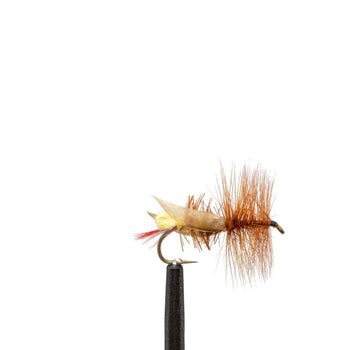
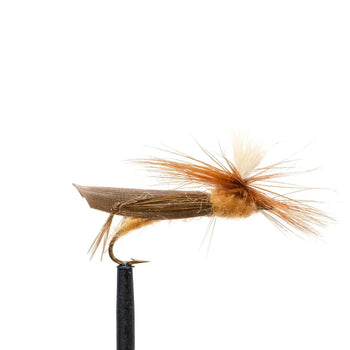
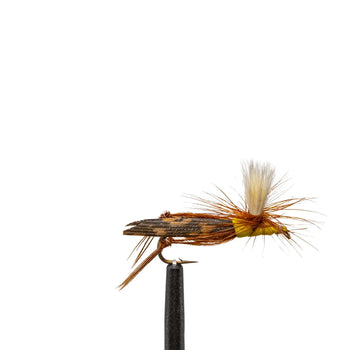
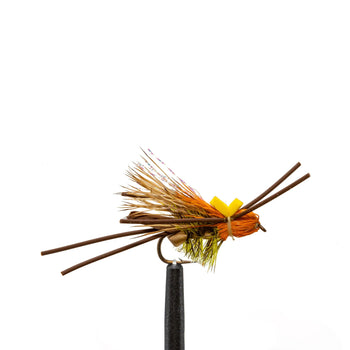
Fishing without a dropper puts every demand on the one fly. It has to float high after a dozen fish and a hundred casts, stay visible against shade and glare, and carry a hook that holds a fish that ate it right beside cover. These eight do that.
The hoppers
 |
 |
 |
 |
| Joe's Hopper | Parachute Hopper | Parachute Hopper – Yellow | Green Envy Hopper |
Joe's Hopper: The traditional option, and the one to fish when you want a realistic silhouette instead of a foam attractor. Hackled body and turkey wing give a different footprint from below — worth having when fish are looking hard at foam and refusing it. We carry it from size 2 down to 16, so it covers a big western bank and a small meadow creek with the same pattern.
Parachute Hopper: The visibility play, and it solves the hardest part of this fishing. Tracking your fly in a narrow strip of shade with glare on the water beside it is genuinely difficult, and a parachute post gives you a reference point to watch. If you've been setting on sounds instead of sights, fish this — and see why parachute patterns work for more on the design.
Parachute Hopper – Yellow: Same parachute advantage with a yellow body. Hopper bodies run everything from pale straw to olive to rust depending on the ground they live in, so it's worth carrying two body colors. If a fish looks and refuses, check your drift and size first — then change color.
Green Envy Hopper: Foam construction, which means it keeps floating after the fish that ate it and the twenty casts after that — the durability case for foam is worth reading on its own in why try the foam fly. Green matches hoppers living in irrigated meadow grass — a lot of what falls into western trout water in late summer. Runs big, size 2 through 12.
Foam and attractors
 |
 |
 |
 |
| Chubby Chernobyl – Tan | Chubby Chernobyl – Tan/Pink | Chubby Chernobyl – Black/Purple | Snake River Beetle |
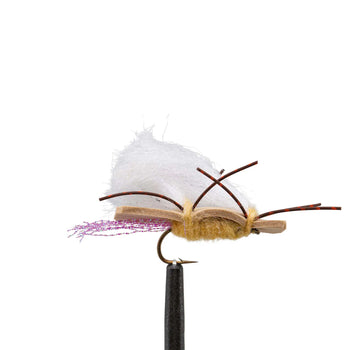
Chubby Chernobyl – Tan: If you fish one foam fly against a bank all season, this is a defensible choice. Tan reads as hopper, stonefly, or generic large edible depending on the water; the white wing is easy to follow; and the foam body floats through abuse that sinks a hair-wing fly by mid-morning. We gave it a full breakdown in the Chubby Chernobyl guide.
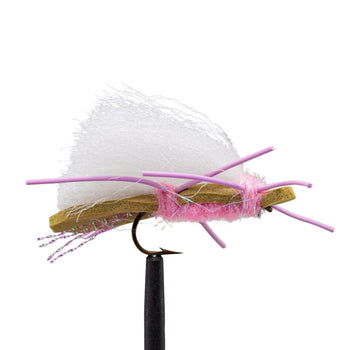
Chubby Chernobyl – Tan/Pink: Same fly, louder wing. On broken water, in low sun, or anywhere you're casting into glare, the pink is the difference between watching your fly and guessing where it is. Worth carrying alongside the tan purely as the visibility version — and worth testing against the actual background you're fishing, because the easiest color to see changes with the light.
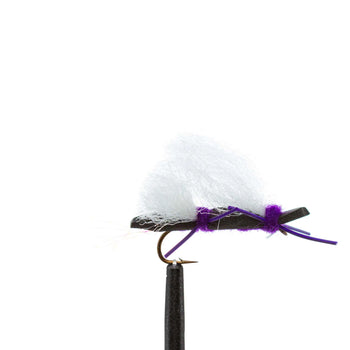
Chubby Chernobyl – Black/Purple: The silhouette option. Against a bright sky a dark fly reads as a hard black shape from below, which is a stronger visual trigger than a pale one for a fish looking up from under a cutbank. First thing to try when they're coming to tan and not committing.
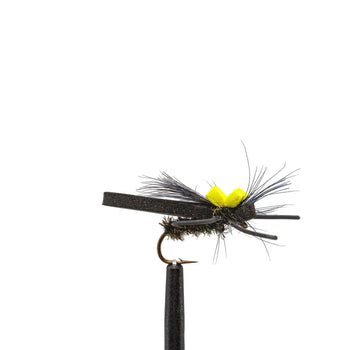
Snake River Beetle: Hoppers get the attention, but beetles are in the water all summer, falling off the same grass. This is the change of pace when fish inspect a hopper and drop off it — same delivery, same feeding lanes, completely different profile and a smaller meal. Available in size 10.
The full range of hoppers, ants, beetles and foam attractors is in our terrestrials collection.
Keep a Hopper Ready in September
One cold night doesn't end hopper fishing, and late-season hoppers are often better than midsummer ones.
Cold mornings leave grasshoppers sluggish. They're slower to move out of the way, worse at holding onto grass, and considerably worse at flying — so more of them end up in the water. They've also had all summer to grow, which means the ones falling in now are the biggest of the year. Fish that are feeding ahead of winter take them with real conviction.
What changes is the clock. Hoppers need warmth to be active, so a cold morning is a slow morning. Wait for the sun to get on the grass, then fish from late morning until the light goes. A warm, windy September afternoon is the best hopper condition there is, and it's also the one most people stay home for.
Let what you actually see decide it. If terrestrial activity has faded and fish have stopped looking up, change tactics — the single hopper is an option worth keeping ready through early fall, not a rule for every September afternoon.
📌 Pro Tip: Walk the bank before you fish it and watch where the hoppers go when you flush them. If they're landing in the water, the fish already know. If they're all making it back into the grass, you may be an hour too cold or a week too early.
Five Mistakes That Cost the Most Fish
Casting three feet off the bank. Find the feeding lane along the cover and put the fly in it, not near it.
Landing it softly. A hopper that touches down like a mayfly doesn't look like a hopper. Make some noise — except on flat, clear, spooky water.
Striking at the splash. Watch for the fly to disappear, then tighten. Pulling on the splash takes it away from a fish that hadn't closed yet.
Fishing tippet that's too light. 4X and 5X don't turn a big foam fly over, don't pull it out of grass, and don't stop a good fish getting back under the bank.
Fishing the cold end of the day in September. Summer's dawn-and-dusk schedule is the wrong one now. Warm afternoons are the window.
Make the Next Cast Count
Find a bank with cover, depth, and current running tight against it. Tie on one hopper you can actually see. Get into position behind the fish, pick an opening, and put the fly in the lane.
Watch it from the moment it lands. Let it fish the pocket, then move to the next one.
One fly, a clean drift, and the narrow strip of shade where the next cast could disappear.
Related Articles
- The Magic of the Hopper Dropper
- Rule the Waters This Summer with Terrestrial Flies
- The Chubby Chernobyl – Foam's Most Versatile Fly
- Why Try the Foam Fly
- Fly of the Month: Parachute Patterns
- Choosing the Right Leader & Tippet
- Reading Water 101


