

Cutthroat Trout: How to Identify, Find and Fish the West's Native Trout

The trout noses up under the dry fly, takes it and slides back into the seam. When it reaches the net, you tilt the mesh toward the light and there it is: a slash of red-orange along the underside of the jaw, bright against the pale throat. Around Jackson Hole, that fish is often a Snake River fine-spotted cutthroat, its sides peppered with small black spots.
Cutthroat are native to much of western North America, from Pacific coastal streams to Rocky Mountain and Great Basin drainages. Rainbows are native to parts of the West too, but across most of the inland range, the original trout was a cutthroat. Stocked rainbows, browns and brook trout have changed a lot of that water since. Cutthroat still hold on in some of the best of it, including the rivers around Jackson Hole.
They also fish a little differently from the trout that share their water. Here's how to identify them, where the main types live, what they eat and how we'd fish for them through the seasons.
How to Identify a Cutthroat
Start with the jaw. The red or orange slash on the underside of the lower jaw is where the name comes from, and it's the first thing to look for. On some fish it's vivid; on others, especially small ones or fish from murky water, it can be faint. Look along the fold of skin under the jaw. A slash is a strong clue, but it doesn't rule out a cutthroat-rainbow hybrid, so read it together with the spots and where you are.
Then the spots. Cutthroat are spotted with black, and the pattern varies a lot from one type to the next. Some carry a handful of large, round spots concentrated toward the tail. Others are peppered with hundreds of tiny ones from head to tail. The spotting pattern, along with where the fish was caught, is often the best clue to which cutthroat you're holding.
Then the color. Body color runs from silvery and brassy to golden, olive and, in spawning fish, deep orange and red on the belly and gill plates. Color changes with the water, the season and the fish's condition, so it's the least reliable of the three. A rosy side on its own doesn't make a fish a rainbow.
The detail biologists use. Cutthroat usually have tiny teeth on the floor of the mouth, behind the tongue, called basibranchial teeth. Rainbows typically lack them, though hybrids muddy even this. It's a real distinction, but it isn't one to check on the water. Keeping a fish's mouth open long enough to look costs it time out of the water, and the jaw slash plus the location is plenty for an angler.
📌 Pro Tip: Look at the slash with the fish still in the net and in the water. Tilt the net, not the fish, and the orange shows up against the mesh without lifting the trout into the air. Wet your hands before you touch it, and if the ID needs more handling than that, skip it.
Cutthroat, Rainbow or Cutbow?
Cutthroat and rainbow trout are close relatives, and where they share water, they can interbreed. The offspring are called cutbows, and they can carry traits of both parents.
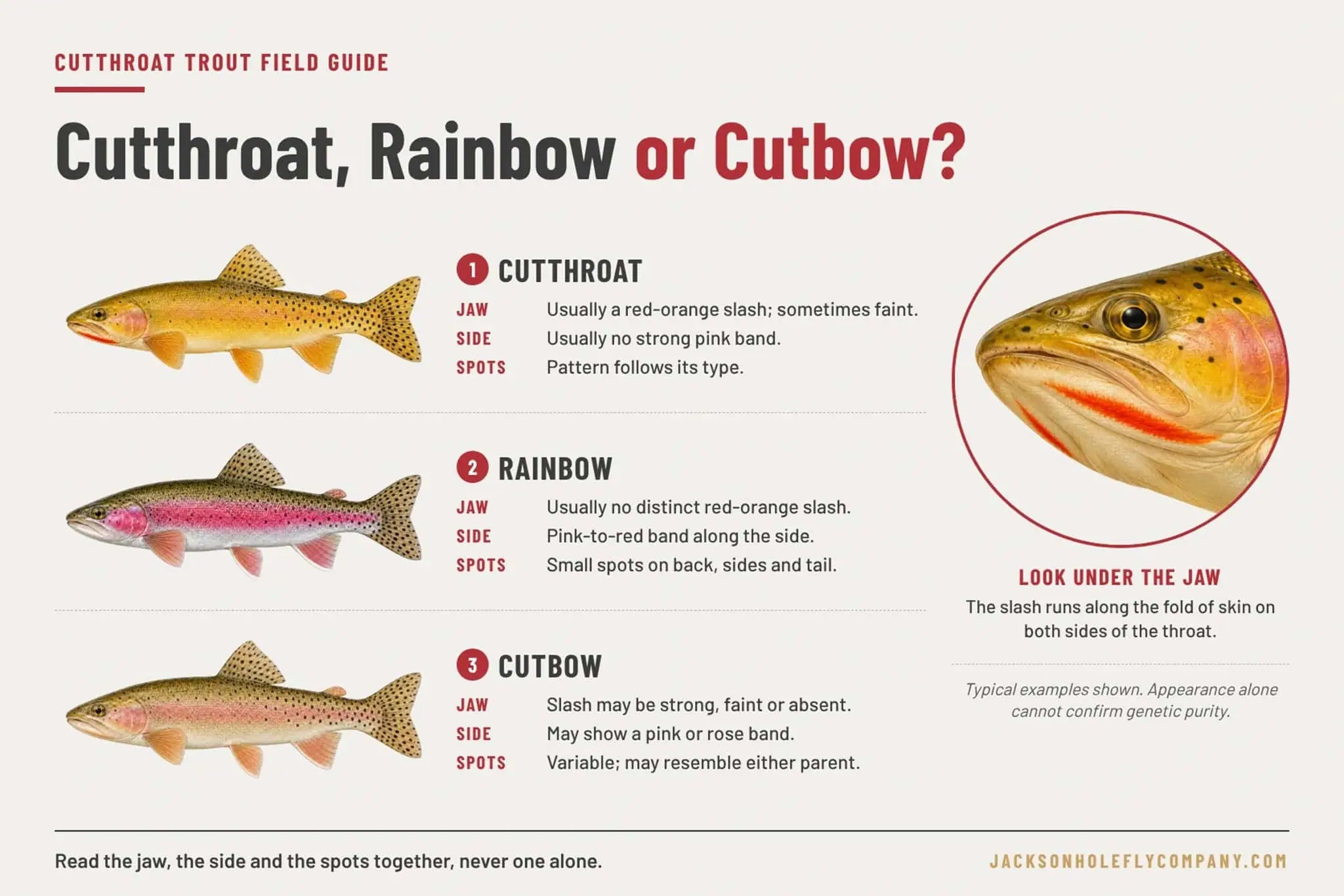
A rainbow typically has a pink to red band along its side, small spots across the body and tail, white leading edges on the lower fins, and no distinct slash under the jaw.
A cutthroat has the jaw slash and spotting that follows the pattern of its type. Some carry a rosy side as well, and on some the slash is faint.
A cutbow can show a slash that's strong, faint or missing, a rosy side band or none, and spotting that looks like either parent. Some are easy to call; plenty aren't. Even fisheries biologists often rely on genetic testing to tell pure fish from hybrids.
That matters beyond the photo. Hybridization with stocked rainbows is one of the main threats to native cutthroat populations, and some waters have special regulations to protect pure fish. If a river has cutthroat-specific rules, follow them carefully, and never make a keep-or-release call on the jaw slash alone.
The Main Types and Where They Live
Cutthroat split into a number of regional types that evolved in separate drainages. Biologists still debate exactly how to group them, so treat these as the broad strokes. Where you caught the fish is usually the best guide to which one it is.
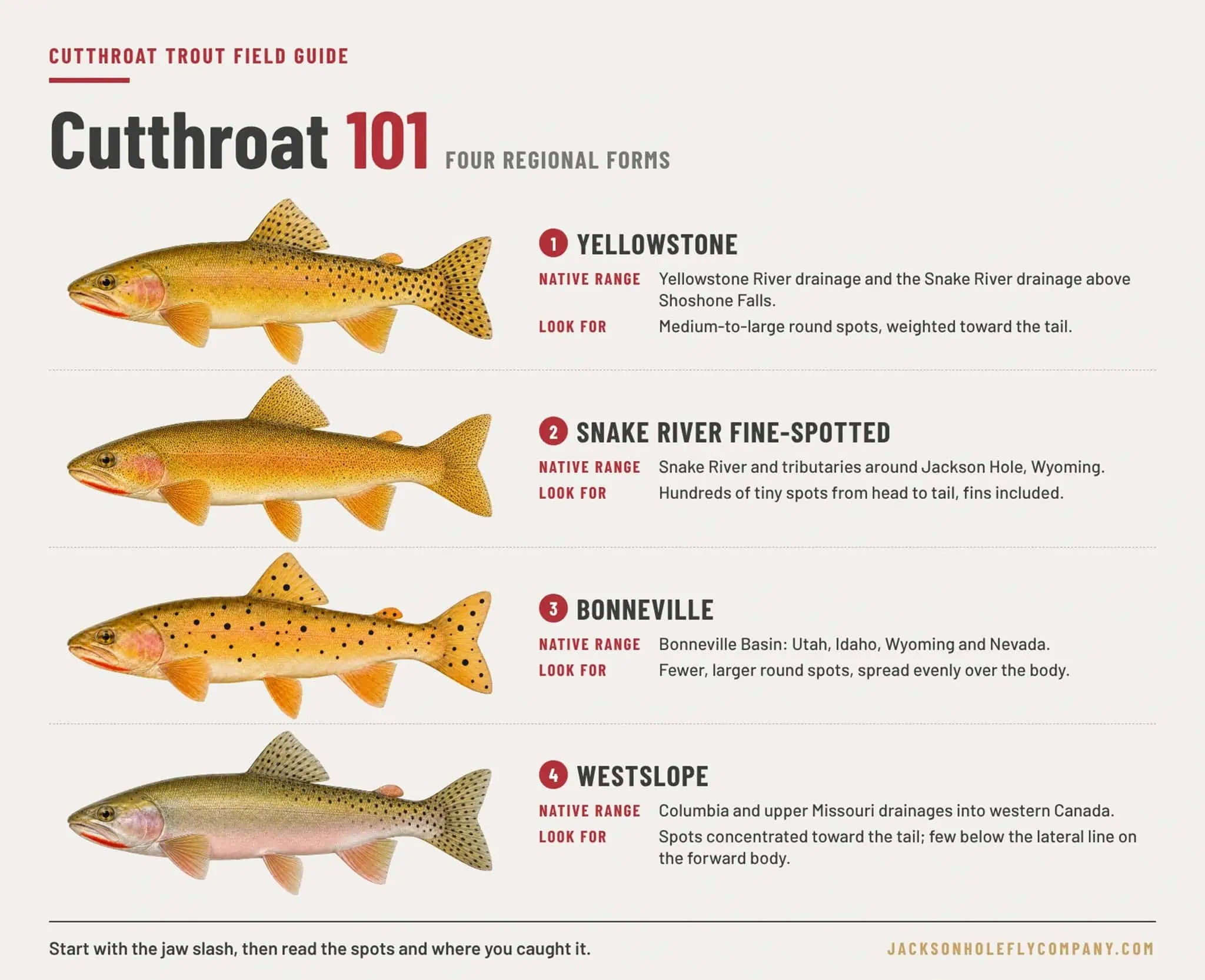
Yellowstone Cutthroat
Native to the Yellowstone River system and the Snake River above Shoshone Falls, with a historical range across parts of Wyoming, Montana, Idaho, Nevada and Utah. They typically carry medium to large round spots concentrated toward the tail, on a brassy, golden or yellowish-brown body.
Snake River Fine-Spotted Cutthroat
The signature cutthroat of the Snake River around Jackson Hole and its nearby tributaries, with a native range in western Wyoming and southern Idaho. As the name says, they're covered in hundreds of small spots rather than a few large ones. Genetically, they're now generally treated as a form of Yellowstone cutthroat, but the look is distinctive and the name has stuck.
Bonneville, Colorado River and Others
Bonneville cutthroat are native to the Great Basin drainage of Utah and surrounding states, often with fewer, larger and more evenly spread spots. Colorado River cutthroat live in the headwaters of the Green and Colorado systems and are often among the most brightly colored. There are other inland types as well, including the greenback and Lahontan cutthroat, both listed as threatened under the Endangered Species Act.
Westslope Cutthroat
Native to parts of the Columbia and upper Missouri river systems, on both sides of the Continental Divide, including much of western Montana, northern Idaho and parts of Washington, Oregon and western Canada. Spotting is concentrated toward the tail, with few or no spots on the front half of the flanks.
Coastal Cutthroat
West of the Cascades, coastal cutthroat live in streams, lakes and estuaries from northern California to Alaska. Some spend their lives in fresh water; others feed in estuaries and nearshore salt water before returning to the rivers. Sea-run fish can be silvery, with jaw markings that are hard to see.
Where to Find Them on the River
Soft water next to fast water. Cutthroat often hold in slower, gentler water than rainbows do: soft seams, the inside edges of riffles, slow runs and eddy lines. They feed in riffles and faster runs too, so let depth, cover and rising fish guide you rather than skipping the fast water entirely.
Structure and cover. Banks with overhanging willows, logjams, boulder pockets and the heads of pools all hold cutthroat. On big rivers, look for the slower water tight to the bank and along gravel bars, and fish the near water before you wade through it. In clear water, pressured cutthroat can be as wary as any trout.
Cold, clean water. Cutthroat need cold, well-oxygenated water. Native populations hang on in small tributaries, big rivers and lakes, and some isolated headwaters serve as refuges from introduced fish. Many high lakes also hold stocked cutthroat outside their original range. Our guide to reading water covers where trout hold in each part of a run.
What Cutthroat Eat
Insects, mostly. Like other stream trout, cutthroat eat a lot of mayflies, caddis, stoneflies and midges, at every stage from nymph to adult. They have a reputation for coming up to dry flies readily, and on many western rivers they're the fish that make summer dry-fly fishing what it is.
Terrestrials in summer. Hoppers, ants and beetles falling off grassy banks are a big part of the late-summer menu. Watch what's actually landing on the water rather than tying on a hopper just because it's August.
Other food, too. Depending on the water, cutthroat also eat crustaceans, sculpins, minnows and other small fish, and larger cutthroat lean on them more. When there's no hatch, a streamer near cover or deeper holding water can be the better bet.
How to Fish for Cutthroat
Give the dry fly time. Cutthroat often rise slowly and deliberately, nosing up under the fly before they take it. Setting the instant you see the head usually pulls the fly away. Wait until the fish has closed its mouth and turned back down, then lift. Takes in broken water come faster, so watch the fish rather than counting a fixed pause. Our guide to why trout get missed covers the timing.

Attractor dries work. On many cutthroat rivers, a buoyant, visible attractor pattern fished through soft water brings fish up even without a hatch. When they're rising steadily to one bug, match its size and profile instead. A dry-dropper with a small nymph underneath covers both levels. Our dry-dropper guide has the pairings.
Go deeper as the water cools. In late fall and winter, cutthroat settle into the slowest, deepest water they can find and feed mostly below the surface. Small nymphs and midges under an indicator take over, with streamers fished slow and low for bigger fish. Adjust weight and depth before you change patterns, and watch for midges on top on the milder afternoons. Our late-season nymphing guide and late-fall midge guide cover that half of the year.
Know the spawning season. Cutthroat spawn in spring and early summer, with the timing set by elevation and water temperature. Many rivers close or restrict fishing during the spawn. Leave spawning fish alone, and don't wade across redds, the patches of cleaned gravel where eggs may still be in the stones after the adults leave. Check the regulations for the water you're fishing.
📌 Pro Tip: When a cutthroat rises and refuses, rest it for a minute and watch the next natural drift past. Change the drift before you change the fly; a cleaner drift with a little more slack often turns the second look into a take. If that still gets refused, go down a size.
Flies for Cutthroat Through the Seasons
Spring and early summer: mayfly and stonefly nymphs on the bottom, then dries as the hatches start. During runoff, fish the softer edges and skip any wading that doesn't feel safe. Through the warm months, attractor dries and caddis.
Late summer: hoppers along grassy banks, ants or beetles when fish ignore the bigger bugs, often with a small nymph dropped below. Check the water temperature before an afternoon session.
Fall and winter: small nymphs, midges and slow streamers, fished deep. Our nymph, midge and streamer collections cover the cold months.
Get to Know the Lineup
Cutthroat don't need a box full of exotic patterns. What matters more is picking the right kind of fly for what the fish are doing. When they're rising steadily to one bug, match its size and shape first and worry about color second. When nothing is hatching, a visible attractor fished through soft water is the quickest way to find out where they're holding.
Most of the time, though, cutthroat are feeding below the surface, so the flies underneath do the bulk of the work. A two-fly rig covers more of the menu at once: a heavier fly on top to get down, and a smaller one trailing behind it. If the fish ignore both, change depth or size before you change patterns.
That's the thinking behind this lineup: four dries for the surface and four flies for underneath. Between them, they cover the main hatches, the attractor water and the cold months on most cutthroat rivers.
On top
Reach for these when cutthroat are rising or the banks are busy with bugs. Two match the hatches you'll see most, and two are attractors for searching water when nothing is coming off.
 |
 |
 |
 |
|
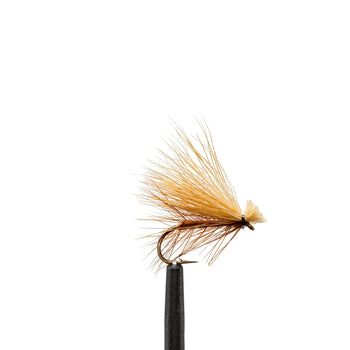
Elk Hair Caddis |
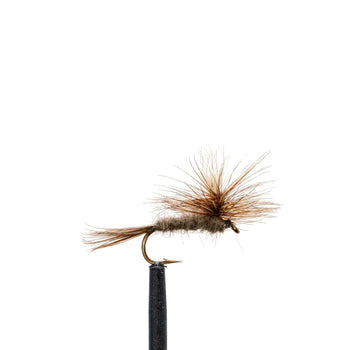
Parachute Adams |
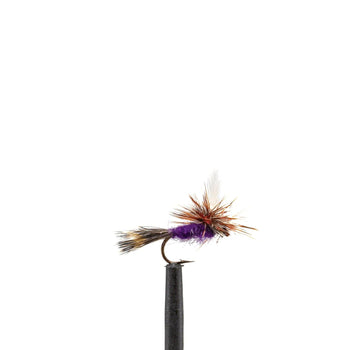
Purple Haze |
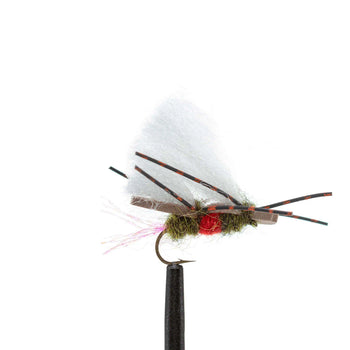
Royal Chubby Chernobyl |
Elk Hair Caddis (8–20). The caddis dry that every western box carries. The elk-hair wing floats through riffles and pocket water, and it's easy to see on broken water. Dead-drift it along soft seams, or give it a small twitch when caddis are skittering on the surface.
Parachute Adams (10–20). A gray, all-purpose mayfly that passes for most of the small dark bugs on the water. The white post makes it easy to follow. Reach for it when cutthroat are rising steadily to mayflies and you're not sure which one.
Purple Haze (10–18). An Adams-style parachute with a purple body. It gives fish a slightly different look from the Adams and stays visible in flat light. A good choice when a fish has refused the first dry.
Royal Chubby Chernobyl (6–10). A big foam attractor that floats all day and holds up a nymph on a dry-dropper. Fish it along grassy banks in summer, or through soft water when nothing is hatching to bring cutthroat up for a look.
Underneath
Most of the year, cutthroat do most of their feeding below the surface. Run the stonefly or the Pheasant Tail as the top fly, with one of the jigs trailing below it, and adjust depth before you change patterns.
 |
 |
 |
 |
|
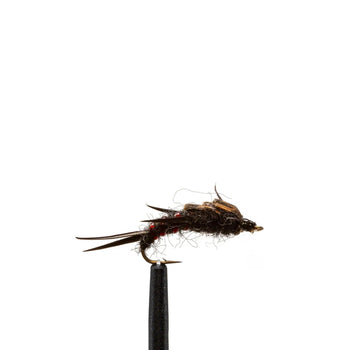
Kaufmann's Stonefly Nymph – Black |
Beadhead Flashback Pheasant Tail |
Tungsten Bead Duracell Jig – Coppertop |
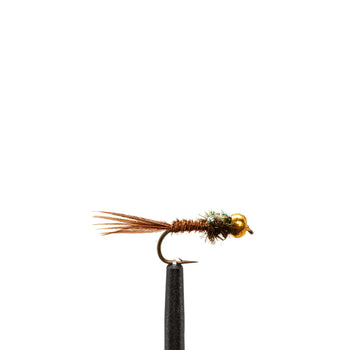
Tungsten Bead Rainbow Warrior Jig |
Kaufmann's Stonefly Nymph – Black (2–16). A big, heavy stonefly that gets down in faster runs and makes a good top fly in a two-nymph rig, with a smaller fly trailing below. Stonefly nymphs live in the river for years, so they're worth drifting in any season.
Beadhead Flashback Pheasant Tail (10–18). The standard mayfly nymph, with a flash of tinsel on the back. Sizes 16 and 18 cover the small mayflies that make up much of the year on cutthroat water.
Tungsten Bead Duracell Jig – Coppertop (10–18). A slim, buggy jig with a tungsten bead, so it sinks fast and rides hook-point-up, which means fewer snags. It's a favorite as the lower fly in a two-fly rig under an indicator or a big dry.
Tungsten Bead Rainbow Warrior Jig (14–18). A small, flashy jig that stands in for a midge or small mayfly nymph and catches the light in clear water. Trail it behind the stonefly or Pheasant Tail, and lean on it more as the water cools.
If you'd rather keep it simple, our Winter Fly Collection pulls together the nymphs, midges and streamers for the cold months.
Handle Them Like the Natives They Are
Some cutthroat populations are small, isolated and protected; others support strong fisheries. Plenty of cutthroat water is catch-and-release only, and even where it isn't, these are fish worth putting back.
- Keep them wet. Use a rubber-mesh net and keep the fish submerged while you unhook it. Take the photo in the water when you can, and keep your fingers away from the gills.
- Use barbless hooks. They come out faster and do less damage. Some waters require them.
- Land them quickly. A long fight in warm water is hard on any trout. Our guide to landing a big trout covers how to shorten it.
- Watch the water temperature. Carry a thermometer. When rivers run warm in late summer, fish early if the water cooled overnight, and quit when it's too warm. Our water temperature guide has the thresholds.
Cutthroat aren't the biggest trout in the West or the hardest to catch. What they are is the original fish of the rivers they live in. Learn to spot the slash, find the soft water they like and give the dry fly a beat before you set.
Then tilt the net toward the light and let it go.


