

Mastering Fall Streamer Fly Fishing: Tactics, Patterns, and Retrieves for Trophy Trout

The first sign is usually a shape. A dark outline slides out from under a cutbank, falls in behind the fly, and follows it halfway across the run. Sometimes it turns away. Sometimes, on the pause, it doesn't.
That moment is why fall is streamer season. Cooling water, shorter days and the approach of winter push trout toward the biggest meals in the river, and the largest fish — the ones that spend summer tucked under structure eating whatever drifts past — start hunting.
This guide covers what makes fall different for streamer fishing, where big trout hold, how to match the retrieve to the water, the lines and leaders that get a fly down, and twelve patterns that cover the season.
Why Fall Is Streamer Season
The menu gets bigger. As summer insects thin out, the calories in a river shift toward baitfish, sculpins, leeches, crayfish and juvenile trout. A fish putting on weight before winter will trade a lot of energy for one substantial meal — which is exactly what a streamer imitates.
Brown trout turn aggressive. Browns spawn in fall, and in the weeks before and around it they get territorial. A streamer moving through their water is as likely to draw a strike out of aggression as out of hunger.
The water is in the right range. Through much of the fall, water sits in the temperatures where trout are willing to move for a fly. That window closes as it gets colder, which changes how streamers should be fished — more on that below.
The light works in the fly's favor. Shorter days, low sun and more overcast mean more hours when big fish feel safe away from cover. For the bigger picture on how the whole season changes, see our fall fly fishing guide.
Where Big Trout Hold in Fall
Streamer fishing is hunting, and it starts with knowing where the fish are. Big trout want two things: cover, and a place to ambush food without fighting the current.
Undercut banks. The single best streamer target on most rivers. Cast tight — inches from the bank, not feet — and bring the fly away from the cover the way a baitfish would flee it.
Logjams and woody debris. Cover overhead, current funneling food past. Swing or strip the fly along the downstream edge.
Boulders and the soft water behind them. A big fish can sit in the eddy behind a rock and dart out for anything that passes. Cast above the rock and let the fly swing past the soft pocket.
Riffle tailouts and the heads of pools. Where fast water slows and deepens, food concentrates. These spots hold more fish as flows drop through the fall.
Deep, slow runs late in the season. As water gets colder, fish slide out of the current and into the deepest, softest water available. This is where the slow, deep approach takes over.
Covering water matters with streamers more than with any other method. A few good casts to each piece of structure, then move on. A fish that wants a streamer usually shows itself in the first handful of casts.
Match the Retrieve to the Water
The retrieve is the most important variable in streamer fishing, and water temperature is the best guide to it.
Above 55°F: fast and erratic. Trout are active and willing to chase. Short, quick strips of a foot or two, with a twitch of the rod tip, make a fly look like something trying to get away.
45–55°F: strip and pause. The classic fall retrieve. A few strips, then a stop. Most eats come on the pause, when the fly sinks and its materials breathe. Vary the length of the pause until the fish show which one they want.
Below 45°F: slow and deep. Cold trout won't chase far. Let the fly sink, then crawl it along the bottom with long pauses — a retrieve so slow it barely counts as one. Streamer Science: How to Fish Slow and Deep covers this end of the season in detail.
Read the follows. A fish that follows without eating is information. It usually means the fly is too fast, too big, or the wrong color for the light. Slow down first, then downsize, then change color.
📌 Pro Tip: When a fish follows to the bank or the boat, don't stop the fly and don't lift it out. Keep it moving, or make a quick figure-eight with the rod tip. A fly that suddenly stops or leaves the water ends the chase; one that keeps swimming often gets eaten at the last second.
Getting the Fly Down: Lines and Leaders
A streamer that swims above the fish rarely gets eaten. In fall, depth control matters as much as the fly.
A floating line and a weighted fly handles shallow runs, riffles and bank water — anywhere a few feet of depth is enough.
A sink-tip line is the most versatile fall setup. The Silvertip 10' Sink Tip Weight Forward Fly Line sinks the front ten feet while the floating body stays easy to cast and mend, so it covers mixed-depth water without constant rigging changes.
A full-sink line is for deep pools and heavy current, where the fly needs to get down fast and stay there. The Silvertip Full Sink Fly Line sinks evenly along its whole length, which keeps the fly at a consistent depth through the retrieve.
Keep the leader short and stout. Four to six feet of fluorocarbon leader in 0X to 2X is plenty. A short leader lets a sinking line pull the fly down instead of letting it ride above; fluorocarbon sinks and stands up to abrasion around rocks and wood. Heavy tippet also means big fish can be landed quickly — and fall streamer fish are often the biggest of the year.
Count it down. After the cast, count while the fly sinks before starting the retrieve. When a fish eats, note the count and repeat it. On unfamiliar water, start short and add a few seconds each cast until the fly ticks bottom, then back off.
For throwing big flies and sinking lines, a 6 or 7 weight rod is the right tool. Our guide to rod and line setups for fall goes deeper on matching the outfit to the water, and our combo kits come ready to fish.

Light, Color and Size
Match color to light and water clarity. Olive, brown and natural tones read as real food in clear water and bright sun. Black holds the strongest silhouette in low light. White, yellow and chartreuse give fish something to track in stained water and heavy overcast.
Start with a mid-size fly. A size 4 or 6 covers most fall water. Go bigger to find the most aggressive fish in the river; go smaller when fish follow but won't commit.
Change one thing at a time. Speed first, then size, then color. Changing everything at once makes it impossible to know what worked.
Twelve Streamers for Fall
Three groups of four: the big articulated flies that move the largest fish, the baitfish and sculpin patterns that imitate the most common fall forage, and the leeches and buggy flies that work when fish are cautious.
Articulated streamers: moving the biggest fish
 |
 |
 |
 |
|
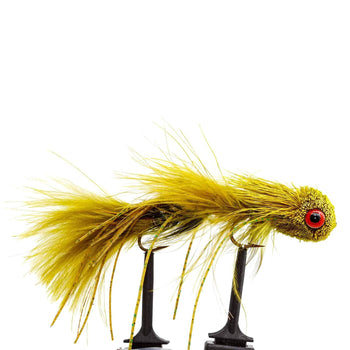
Sex Dungeon |
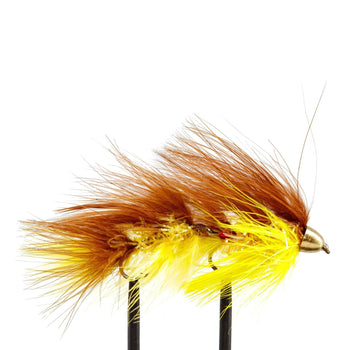
Peanut Envy |
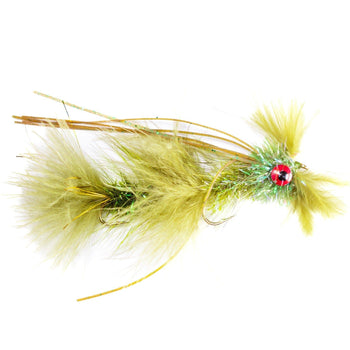
Circus Peanut |
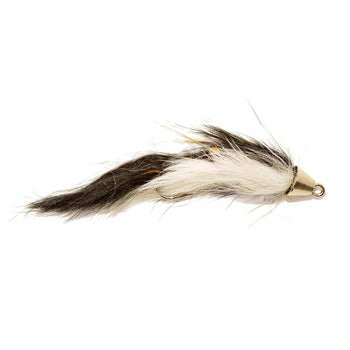
Dolly Llama |
Sex Dungeon (2–4). A Kelly Galloup design built to move big fish: articulated body, deer hair head and rubber legs that push water and wobble on every strip. Fish it on a sink-tip with erratic strips and pauses, tight to logs, cutbanks and boulders. Yellow for stained water, olive/white in clear water, black in low light.
Peanut Envy (2–4). Another Galloup pattern — a big baitfish profile with flash and a swimming action that draws large browns out of deep pools and riffle tails. Strip it aggressively through deep buckets on a sink-tip.
Circus Peanut (2–4). A bulky articulated fly with pulsing materials and two hooks. A strong choice for aggressive fish holding in deeper water, especially when a bigger profile is what gets noticed.
Dolly Llama (2–4). A heavy streamer with flowing rabbit strip. The weight gets it into deep pools quickly without needing a full-sink line, and the rabbit keeps moving even on a slow retrieve — a good fit for colder water late in the season.
Baitfish and sculpins: the everyday fall forage
 |
 |
 |
 |
|
Sparkle Minnow |
Muddler Minnow |
Hardhead Double Bunny |
Zonker |
Sparkle Minnow (4–8). A flashy baitfish imitation that catches light like a shiner or dace. Olive/white for clear water, brown/yellow to suggest juvenile trout. Strip it quickly across riffles and into runs — it's a strong midday fly on bright days.
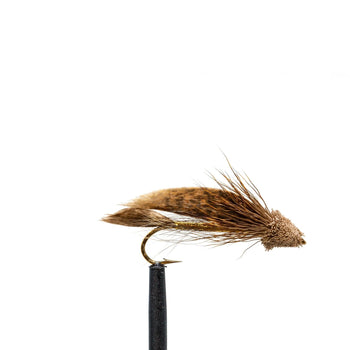
Muddler Minnow (6–10). The classic. A deer hair head that pushes water and a slim body that reads as a sculpin or small baitfish. Swing it through shallow runs, twitch it on the swing, or dead-drift it through seams. A good answer for pressured fish that won't touch a big articulated fly — there's more on it in Mastering the Muddler Minnow.
Hardhead Double Bunny (2–4). Rabbit strips for motion and a hard head that makes the fly dive on each strip, like a sculpin darting along the bottom. Let it sink near undercut banks and boulder fields, then retrieve in short, sharp strips with a pause mid-retrieve. Our sculpin guide covers this style of fly in depth.
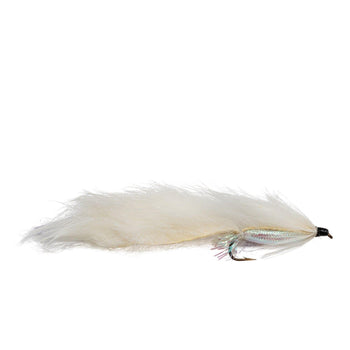
Zonker (4–8). A rabbit strip that breathes on the pause, when most streamer eats happen. White for baitfish and low light, natural in clear water and sun, olive for sculpin water. The Black Zonker – Flame Egg adds an egg hotspot that's especially good around pre-spawn browns.
Leeches and buggy flies: when fish are cautious
 |
 |
 |
 |
|
Woolly Bugger |
Electric Leech |
Mohair Leech |
Zirdle Bug |
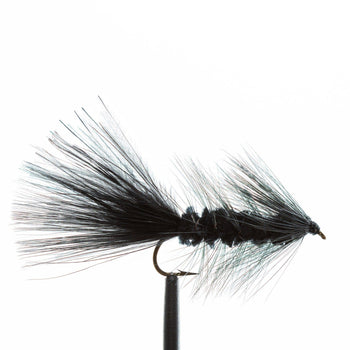
Woolly Bugger (4–8). The most versatile streamer ever tied — leech, baitfish, crayfish or nothing in particular. Black in low light, olive in clear water. Strip it, swing it, or dead-drift it; the same fly covers the whole fall if the speed changes with the water.
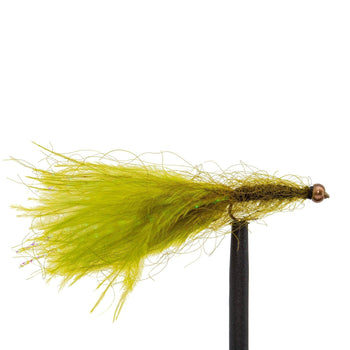
Electric Leech (4–6). Slimmer and subtler than an articulated fly. Dead-drift it through seams like a nymph, then strip it across the current at the end of the drift. The fly to switch to when fish follow bigger streamers without committing.
Mohair Leech (6–10). Mohair pulses in the water with almost no retrieve at all, which makes it one of the best cold-water streamers. Fish it slowly through deep pools and soft water. For more on leech patterns, see our Balanced Leech guide.
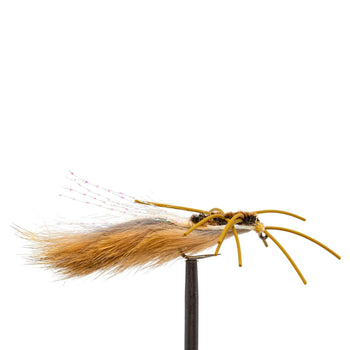
Zirdle Bug (4–8). Part streamer, part nymph — rubber legs and a buggy profile that suggest a crayfish or small baitfish. Fish it low and slow through deep holes and riffles, or dead-drift it under an indicator when fish won't chase.
Two Streamers at Once
Fishing two streamers on one rig — a big fly followed by a smaller one, or a streamer trailed by a nymph — shows fish two sizes and profiles on every cast. It's especially useful early in the day, when the right fly is still a guess. Our double streamer and streamer-nymph rig guide covers how to set it up.
Streamers and Spawning Fish
Fall streamer season overlaps with the brown trout spawn. Fish sitting on redds — the patches of clean, bright gravel where trout lay eggs — are spawning, not feeding, and are best left alone. Wading through a redd destroys the eggs in it.
The fish worth targeting are the ones staging in the deeper water nearby or feeding below spawning gravel. Our fall guide covers how to recognize redds and fish around them.
📌 Pro Tip: Streamer takes are often hard, and the instinct is to lift the rod like a dry fly hookset. Keep the rod tip low and set with a firm strip of the line instead. If the fish misses, the fly stays in the water and in front of it for a second chance.
The Season of the Big Fish
Fall streamer fishing asks for more effort than most fly fishing — heavier flies, more casts, more water covered. It gives back the best shot of the year at the biggest trout in the river.
Fish the structure, let the water temperature set the retrieve, get the fly down to where the fish are, and change one thing at a time when they follow without eating. That's most of it. The rest is being there on the day a big brown decides the fly is worth chasing.
SHOP THE STREAMER COLLECTION
RELATED ARTICLES:
- Fall Fly Fishing: How Tactics Change as the Season Turns
- Streamer Science: How to Fish Slow and Deep for Big Trout
- Maximize Your Catch: Fishing Double Streamer & Streamer Nymph Rigs
- Fly of the Month: Sculpins – Streamers That Hunt Late-Season Trout
- The Art of Fly Fishing with Smaller Articulated Streamers


