

How to Build the Perfect Winter Fly Box

Winter fly fishing rewards preparation, patience, and simplicity. When water temperatures drop and trout become selective, success comes from carrying fewer flies—chosen with purpose—rather than hauling your entire collection to the river.
In this guide, we’ll break down how to build a streamlined winter fly box that covers nearly every cold-water scenario. You’ll learn which patterns matter most, how to stay organized in freezing conditions, and how a single, well-designed fly box can keep you fishing confidently all season long.
Why Winter Fly Boxes Should Be Smaller (and Smarter)
Winter trout rarely move far to eat. They feed selectively, often on small, subtle insects drifting close to the bottom. That reality changes how you should approach your fly selection.
Instead of dozens of patterns in every color and size, a winter fly box should focus on:
- Confidence patterns that imitate midges and small mayflies
- A handful of proven “anchor” nymphs to get flies down efficiently
- Clean organization so you can re-rig quickly with cold hands
The goal isn’t variety—it’s efficiency.
The Core Winter Fly Categories (What You Actually Need)
A successful winter fly box is built around function, not volume. By focusing on a few core fly categories, you can stay organized, fish more efficiently, and make better decisions in cold, technical conditions.

|

|

|
|
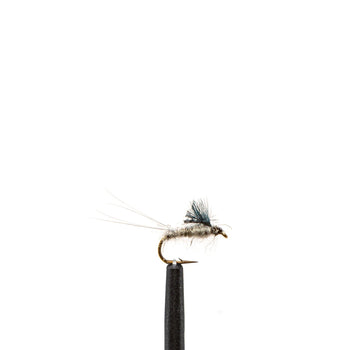
| Zebra Midge | Nickel Bead Zebra Midge | Pheasant Tails | RS2 |

|

|

|

|
| WD-40 | Walt’s Worm | Rainbow Warrior | Tungsten Bead Perdigon |
1. Midges: Your Winter Staples
Midges make up the majority of a trout’s winter diet. They’re present year-round, especially in cold water, and trout often key in on them when little else is active. Because of that, winter midge fishing is all about small sizes, slim profiles, and subtle details.
Effective winter midge patterns share a few common traits:
- Thin, thread-based bodies that match tiny larvae and pupae
- Minimal bulk and flash
- The ability to control depth with weight rather than size
Patterns like Zebra Midges—especially in black, red, and olive—are winter staples because they offer simple, high-contrast profiles trout recognize easily. Thread-bodied midges and their beadhead variations allow you to fine-tune sink rate without changing flies entirely.
Most winter midge fishing happens in the 18–22 size range, where realism matters more than attraction. These flies are typically fished as droppers, but in shallow or highly technical water they can also serve as subtle lead flies.
2. Confidence Nymphs: Small but Reliable
When trout are feeding selectively, confidence nymphs fill the gap between tiny midges and heavier anchor flies. These patterns imitate small mayfly nymphs and emergers that remain active through the winter, particularly during periods of baetis activity.
Strong winter confidence nymphs tend to be:
- Slim and naturally proportioned
- Muted in color with subtle contrast
- Effective across a range of depths
Classic patterns like Pheasant Tails and RS2s excel because they closely match winter mayflies without overpowering the presentation. WD-40s are especially effective when trout are locked in on small insects and refuse bulkier flies, while baetis-style patterns like the Master Baetis shine during cold-water hatches and transitional periods.
These flies work well on their own in shallow runs or as trailing flies behind a heavier anchor in deeper winter water.
3. Anchor Flies: Get Down, Stay Down
Winter trout hold close to the bottom, where current is slower and food drifts within easy reach. Anchor flies are designed to control depth and keep your rig in the strike zone for as much of the drift as possible—where winter trout spend most of their time.
Good winter anchor flies typically:
- Use tungsten weight to sink quickly
- Maintain a slim profile for a clean drift
- Provide enough presence to help trout locate the rig
Patterns like Walt’s Worm are a winter staple because they sink fast and suggest multiple food sources, including worms and caddis larvae. Tungsten-weighted nymphs, including heavier perdigons and attractor-style nymphs, add depth control and subtle visual triggers without excessive bulk.
These flies are usually fished as the lead fly, paired with smaller midges or confidence nymphs to cover multiple feeding levels in one drift.
Why This System Works
A well-built winter fly box isn’t about carrying every pattern—it’s about covering three jobs: realism, confidence, and depth. Midges handle realism, confidence nymphs match active insects, and anchor flies do the work of getting everything down where trout are holding.
With this approach, you spend less time changing flies and more time focused on depth, drift, and presentation—the things that matter most in winter.
Why Your Fly Box Matters More in Winter
Cold hands, frozen guides, and limited daylight leave little room for fumbling. A poorly designed fly box slows you down when efficiency matters most.
A winter fly box should be:
- Slim and packable
- Easy to open with gloves
- Secure enough to prevent spills in snow or wind
- Organized so flies are visible at a glance
Magnetic retention is especially valuable in winter—flies stay put without wrestling foam slots when your fingers are numb.

A Simple One-Box Winter Solution
If you want to take the guesswork out of winter fly selection, we’ve built a loaded winter fly box using the same principles outlined above—fewer flies, proven patterns, and smart organization.
This box combines slim midges, reliable confidence nymphs, and tungsten-weighted anchor flies to cover nearly every cold-water scenario. Inside, you’ll find winter staples like Zebra Midges, Lazer Midges, Pheasant Tails, Frenchie Jigs, Duracell Jigs, Perdigons, Walt’s Worms, and a handful of proven attractors like Ray Charles and Prince Nymphs—all balanced across practical winter sizes.
Everything is housed in the JHFLYCO Magnetic Fly Box, making it easy to access flies with cold hands and keep your setup organized and secure in winter conditions.
The result is straightforward: one fly box you can fish confidently all winter, without overthinking patterns, digging through clutter, or second-guessing your choices.
One Box. One System. All Winter.
Instead of rotating fly boxes or constantly second-guessing your setup, this loaded winter box gives you a complete, confidence-driven system built by anglers who fish through the cold months.
Fish less clutter. Make better decisions. Stay focused on the drift.
Fewer Flies. More Confidence. Better Winter Days.
Winter fly fishing doesn’t require excess—it demands intention. By carrying a streamlined selection of proven patterns in a thoughtfully designed box, you’ll spend less time digging through gear and more time fishing effectively.
Build your winter fly box once, trust it all season, and let confidence replace clutter.
Shop our Winter Fly Collection
RELATED ARTICLES:
- Winter Two-Fly Rig – The Winter Rig That Just Works
- 5 Tips For Winter Fly Fishing
- Fly of the Month: Winter Confidence Flies
-
Winter Trout Tactics: Flies, Rigs, and Strategies for Cold Water
- Fly of the Month: The Marvelous Midge


