

Late-Season Nymphing: Five Rigs, Better Drifts and 20 Flies to Carry

The river looks empty in late October. No rises, no bugs in the air, nothing moving on the surface you'd think twice about. Everything that made August obvious is gone.
Then your indicator hesitates. You lift, expecting another rock, and the rock moves upstream.
The fish never left. They've dropped into water where the current does the work for them, and they've stopped going anywhere to eat. A nymph that drifts six inches over a trout's head in 44-degree water gets ignored. The same fly, at the same speed, drifting past its nose gets eaten.
That's the whole late-season game: find the water they're using, get a fly through it at the level they're feeding, and stay connected enough to notice when one eats. Here's how to build the rigs that do it, how to tell when your drift is actually working, and which twenty flies earn space in a fall nymph box.
Nymphing Terms, Defined
Nymphing has its own vocabulary, and most of it gets used without explanation. If any of these are fuzzy, start here — the rest of the guide leans on them.
- Dead drift – A fly moving at exactly the speed of the current around it, with no pull from the line. This is what you're trying to achieve on nearly every nymph cast.
- Drag – The opposite. Your line catches faster current, pulls the fly, and it swings or speeds up unnaturally. Drag is the single most common reason a good fly gets refused.
- Mend – Flipping a loop of line upstream after the cast so the current can't grab it and pull your flies. A mend buys you drift time.
- Strike zone – The narrow slice of water a cold trout will actually eat in. In fall, it's often the bottom foot or two of the column and only a few inches wide.
- Anchor fly – The heaviest fly in a multi-fly rig, tied at the bottom. Its job is to carry the rest of the rig down and keep it there.
- Tag (or dropper) – A short length of tippet tied off a knot or hook bend to hang a second or third fly at a different depth.
- Sighter – A section of brightly colored mono built into a tight-line leader. It's your strike indicator and your drift-speed gauge in one.
- Tippet ring – A tiny metal ring that lets you change tippet without shortening your leader. Worth the dollar.
- Ticking bottom – Feeling your anchor fly brush the riverbed every few feet. It means you're at depth. Constant dragging means too much weight.
- Seam – The line where two current speeds meet. Food funnels down it and trout sit beside it.
- Tailout – The shallowing, accelerating water at the downstream end of a pool. An underfished spot in fall.
- Emerger – An insect mid-transformation, rising toward the surface. Emerger patterns are fished higher in the column than standard nymphs.
Why Trout Drop Deep When the Water Cools
A trout is as cold as the water it's in, and its metabolism follows. As temperatures fall, it needs less food and has less energy to spend getting it — so it stops making decisions that cost more than they return. It won't cross a fast seam for a size 20 midge. It won't rise three feet. It settles into the slowest water that still delivers food and waits for the conveyor belt.
That belt is the bottom few inches of the column, where friction against the riverbed slows the current and drifting insects collect. Mayfly nymphs, midge larvae, and caddis larvae tumble along it all day, hatch or no hatch. Which is exactly why nymphing stays productive in November long after the dry-fly fishing has gone quiet — you're not waiting on an event, you're fishing a food source that never stops.
Water temperature tells you how tight that window has gotten. These are rough bands, not rules, and your own thermometer beats any chart:
- Above 55°F – Trout still move for food. Riffles, seams, and pocket water all produce, and fish will rise a foot or more to intercept a drift.
- 48–55°F – Prime fall nymphing. Fish hold lower but feed through most of the day. A well-weighted rig in the bottom third of the column is enough.
- 42–48°F – Feeding windows narrow to the warmest hours, usually late morning through mid-afternoon. Depth control becomes the whole job.
- Below 42°F – Slow, deep, soft water only. Trout stack up in a few places and eat in a space you could cover with your hand. Expect to make a dozen drifts through the same lane.
📌 Pro Tip: Carry a stream thermometer and actually use it. A three-degree difference between the shaded run you just fished and the sunlit flat downstream tells you where to spend the next hour — and it's the cheapest piece of gear that will change your fall season.
Find the Holding Water First
Before you pick a rig, pick a piece of water. “Fish deep” is only useful advice when it describes where the fish actually are — a trout feeding a foot up in a seam gets nothing from your determination to scrape gravel. What you're looking for is a place where a fish can hold without working and still have food delivered to it.
- Soft seams beside faster current – the fish sits in the slow side and eats out of the fast side. The most reliable fall water there is.
- Pockets beside and behind boulders – small, constantly walked past, and often the best few square feet in the run.
- Deeper slots along banks – especially where an undercut, a root wad or a log adds overhead cover.
- Pool heads and the slower runs below them – depth plus a steady conveyor of insects coming off the riffle above.
- Tailouts with enough depth or cover to hold a fish – the most underfished water in fall, and the easiest to wade straight through without fishing.
Watch the water as well as the thermometer. A few degrees of warming usually lines up with more activity, and a fish that shows itself higher in the column is telling you to bring the presentation up.
Watch your footing around spawning water. Brown and brook trout spawn in fall. Leave spawning fish alone, and stay off the clean, swept patches of gravel where they've laid eggs — redds are easy to spot once you know to look for them, and easy to destroy if you don't. Fish the feeding water away from them.
Pick Your Rig
Five rigs cover nearly every piece of late-season water you'll stand in. The mistake isn't choosing wrong — it's choosing once and fishing the same setup through water that's changed three times. Start here, then read the detail below.
| Rig | Best Water | Reach This For |
|---|---|---|
| Indicator Nymph | Deep pools, slow runs, tailouts | Long drifts over water you can't reach by hand |
| Split-Shot Dropper | Riffles, seams, mixed depths | Changing depth fast without re-rigging |
| Tandem “Shotgun” | Unfamiliar or variable water | Finding what depth they're eating at |
| Tight-Line | Pocket water, close seams, short runs | Feeling takes you'd never see |
| Suspension (Dry-Dropper) | Shallow riffles, glides, flats | Warm afternoons when a few fish look up |
Five Rigs for Late-Season Nymphing
Every nymph rig is solving the same problem — get two or three small flies to a specific depth and let them travel at the speed of the water. What changes is how you control that depth and how you find out a fish ate. Balance matters more than complexity: weight, leader length, and fly placement have to agree with each other, or you'll spend the day fixing tangles instead of fishing. Three of the five rigs below use two or three flies, so check your state's regulations before you build one — the legal number varies, and a few waters limit you to a single fly.
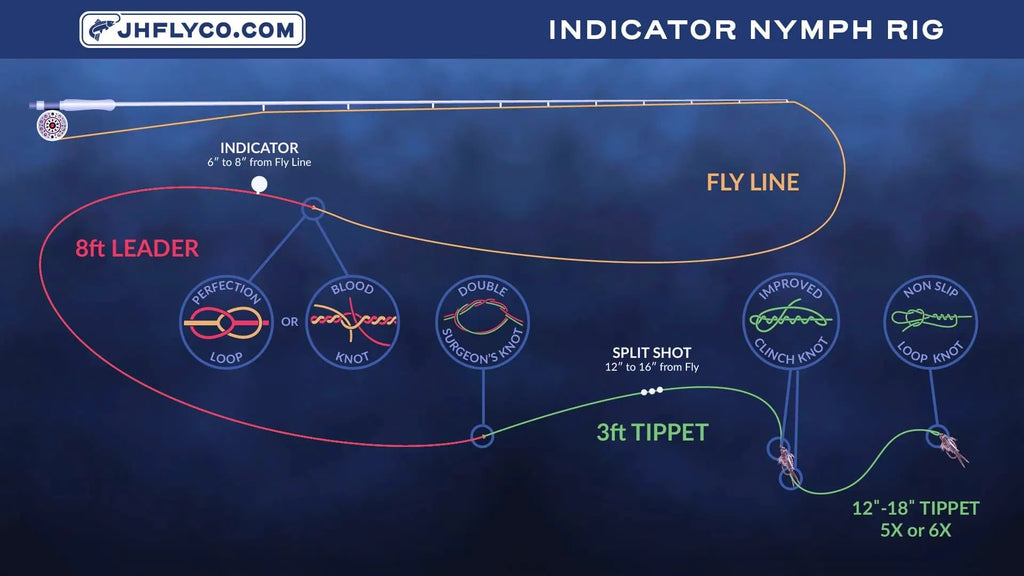
1. Indicator Nymph Rig
The workhorse. A buoyant indicator holds your flies at a set depth and shows you the take, which makes this the right call for deep runs and slow currents where you need a long, undisturbed drift. It's also the most forgiving rig to learn on, because the indicator gives you constant feedback about drift speed — if it's moving faster than the bubbles around it, you have drag.
Components
- Strike Indicator – A Thingamabobber for visibility, durability, and quick depth changes on the water.
- Weighted Nymph(s) – Beadhead Pheasant Tail, Hare's Ear, Prince Nymph, Zebra Midge, or WD-40, covering mayfly, caddis, and midge imitations.
- Split Shot (optional) – Added 6–12" above the fly to fine-tune depth in stronger current or deeper runs.
- Fluorocarbon Tippet (5X–6X) – Stealth, abrasion resistance, and a faster sink rate in cold, clear water.
How to Set It Up
- Attach the indicator 1.5–2× the water depth above your fly. In four feet of water, that's six to eight feet of leader below the indicator — it sounds like too much until you remember the rig drifts at an angle, not straight down.
- Tie your weighted nymph to the end of your fluorocarbon tippet with an improved clinch knot.
- If needed, pinch on split shot 6–12" above the fly to reach bottom.
- Adjust the indicator until the fly drifts just off the substrate — ticking occasionally, not dragging. Sliding it farther from the fly fishes deeper; sliding it closer shortens the rig.
How to Fish It
Drift it through deep pools, slow seams, and tailouts where trout conserve energy. Cast upstream of the target lane, mend immediately, and follow the indicator downstream with your rod tip. Late-season takes are small — a pause, a hesitation, a dip that doesn't look like much. Set on anything that isn't the current. Reset your depth every time you change water type rather than hoping the last setting still applies.
📌 Pro Tip: On sunny fall afternoons, swap your top nymph for a smaller emerger like a WD-40 and raise your indicator a few inches. Trout will lift off the bottom to intercept drifting midges and mayflies as the water warms, and a rig tuned for 10 a.m. is often too deep by two.
2. Split-Shot Dropper Rig
The simplest adaptable system you can fish. One split shot above two flies lets you reach the strike zone quickly and change depth in seconds — pinch on another shot, or slide what's there up or down the leader. It earns its keep when trout are feeding deep but occasionally suspend mid-column, which describes most cold, clear water in late fall.
Components
- Weighted and Unweighted Nymphs – Beadhead Pheasant Tail, Hare's Ear, Prince Nymph, Rainbow Warrior, or Zebra Midge.
- Split Shot – The main weight, placed 6–12" above the upper fly to control sink rate.
- Fluorocarbon Leader & Tippet (4X–6X) – Adds stealth and helps the flies sink faster.
- Thingamabobber Indicator (optional) – High visibility and buoyancy in deeper or mixed currents.
How to Set It Up
- Start with a 9–12 ft fluorocarbon leader, tapered to 4X or 5X.
- Tie your first (heavier) fly to the end of the leader.
- Add a second fly 12–18" below, off the bend of the first hook or on a short tag of lighter 5X–6X tippet.
- Pinch on a split shot 6–12" above the top fly — just enough to tick bottom occasionally without dragging.
- If you want visual strike detection, add an indicator 1.5–2× water depth above the flies.
How to Fish It
Work it through riffles, seams, and transitional runs where trout shift between depths. The shot anchors the rig while the trailing fly rides slightly higher, covering two zones in one pass. Mend early to kill drag, and watch the line or indicator for the smallest hesitation. When you're not sure how much weight to use, start too light — a rig that never touches bottom catches more fish than one that's hung up every third cast.
📌 Pro Tip: Tune weight with smaller shot rather than heavier flies. Changing shot size or sliding it two inches along the leader changes how your flies drift far more than swapping patterns does — and it keeps the fly you already trust in the water.
3. Tandem “Shotgun” Rig
Three flies at staggered depths: an anchor near the bottom, an attractor mid-column, and a light emerger or midge up high. It's a search rig. When you don't know where fish are sitting — new water, variable depth, a day when the temperature is climbing — the shotgun answers the question in one drift instead of five re-rigs.
Components
- Anchor Fly (bottom) – Tungsten Bead Prince Nymph, heavy Perdigon, or Beadhead Hare's Ear.
- Middle Fly (attractor, mid-depth) – Rainbow Warrior, Flashback Pheasant Tail, or Two-Bit Hooker.
- Top Fly (light, emerger) – WD-40, RS2, or Zebra Midge.
- Fluorocarbon Tippet (4X–6X) – Abrasion resistance and a quick sink rate.
- Thingamabobber Indicator (optional) – Useful in deeper or off-color water.
How to Set It Up
- Start with a 10–12 ft fluorocarbon leader, tapered to 4X.
- Tie the anchor fly at the end of the tippet — it controls depth and stability.
- About 12–14" above the anchor, add a 6–8" tag with your middle fly, using a triple surgeon's or blood knot.
- Add the top fly another 10–12" above that, on a slightly longer tag so it rides higher.
- Adjust weight and spacing until the anchor ticks bottom and the upper flies drift freely above it.
How to Fish It
Fish it through riffles, seams, and depth transitions where trout occupy different zones. Start by assuming they're deep. If the anchor isn't producing after a dozen drifts, the fish are suspended, and the mid or top fly will tell you so. Once two fish come on the same fly, simplify — cut back to the depth that's working and fish it with fewer tangles.
📌 Pro Tip: Stagger your tippet strengths — 4X for the anchor section, 5X for the mid fly, 6X for the top. When you hang bottom, you lose the lowest section instead of the whole rig, and you're back fishing in a minute rather than rebuilding from the leader up.
4. Tight-Line Rig
No indicator, no slack. A long, thin leader with a hi-vis sighter keeps you in direct contact with your flies, so you feel the riverbed and every take that comes with it. It's the most precise way to fish pocket water, close seams, and short runs — the catch being that it works at close range, so it rewards wading quietly and covering water methodically rather than casting far.
Components
- Rod – A Yellowstone II 9' 5WT works well; a 10' 3WT gives more reach and sensitivity.
- Leader System – 18–20 ft tapered mono leader with a short hi-vis sighter section in fluorescent orange or chartreuse.
- Anchor Fly (bottom) – Tungsten Bead Perdigon, Prince Nymph, or heavy Hare's Ear for fast sink and contact.
- Tag Fly (upper) – Frenchie, Zebra Midge, or WD-40 on a 6–8" tag, 12–14" above the anchor.
- Fluorocarbon Tippet (5X–6X) – Stealth and sink rate.
How to Set It Up
- Tie a tippet ring to the end of your sighter section to make leader changes quick.
- Add 18–24" of 5X–6X fluorocarbon below the ring.
- Tie the anchor fly to the end of that section.
- About 12–14" above the anchor, tie a tag off a triple surgeon's knot and attach the upper fly on a 6–8" length.
- Adjust fly weight or leader angle until you feel light bottom contact every few drifts.
How to Fish It
Cast slightly upstream, lead the drift with the rod tip high, and keep a tight line between rod and flies — guiding, not pulling. Watch the sighter: it should move at the speed of the surface or just slightly slower. A pause, a twitch, or a sudden straightening is a fish. This rig shines in riffles, pocket water, and seams, especially when trout are pinned to the substrate in cold flows.
📌 Pro Tip: Control depth with tungsten flies rather than adding weight to the leader. Swap the anchor first — one bead size up or down changes contact more cleanly than shot does, and keeps the rig casting the way it was designed to.
5. Suspension Rig (Dry-Dropper)
A buoyant dry fly replaces the plastic indicator and suspends one or two small nymphs below it. It lands softer and spooks fewer fish than an indicator, which matters in shallow, clear fall water — and it gives you a shot at the occasional trout that's actually looking up. Best in shallow riffles, glides, and flats, and on sunny afternoons when a few noses appear.
Components
- Suspender Fly (dry) – Chubby Chernobyl, Amy's Ant, or a hi-vis beetle.
- Dropper Nymph(s) – Beadhead Pheasant Tail, Zebra Midge, or WD-40.
- Fluorocarbon Tippet (5X–6X) – For a natural sink rate and subtle presentation.
How to Set It Up
- Tie your dry fly to the end of the leader.
- Add 12–24" of 5X–6X tippet to the bend of the dry fly's hook.
- Tie on the dropper nymph.
- Add a second dropper 12" below the first if depth allows.
How to Fish It
Target shallow seams, riffles, and the transitions between fast and slow water. Let the dry act as attractor and indicator at once, and watch for hesitations or dips — most of your fish will come on the nymph below. Keep the dropper short enough that the nymph isn't dragging; in two feet of water, 18" of tippet is plenty.
📌 Pro Tip: Go light on floatant. Too much and the dry rides unnaturally high, which both looks wrong and costs you sensitivity on the dropper. Re-grease often instead of heavily, and dry the fly with a few false casts before adding more.
The Drift Is the Whole Game
You can have the right fly at the right depth and still get refused all afternoon, because a nymph that's being pulled by the line doesn't behave like an insect. Real nymphs don't swim upstream, don't accelerate, and don't swing across the current at the end of a drift. They tumble. Everything below is in service of letting your fly tumble.
Read the Bubbles
The fastest way to diagnose drag is to compare your indicator — or sighter, or dry fly — to the foam and bubbles traveling beside it. If your indicator is outrunning them, your line has caught faster current and is towing the flies. That's the first-order check, and it catches most of what goes wrong.
It isn't the whole story. Surface water moves faster than the water down near the riverbed, so an indicator traveling slightly slower than the bubbles is often exactly right — and one that matches them perfectly is no guarantee your fly is drifting honestly four feet below. Read the whole rig: where the line is pulling, how tension changes through the drift, and whether the indicator is tracking down its lane or sliding across it.
Mend Early, Not Often
One good mend the instant the line lands is worth four frantic ones mid-drift. Each later mend moves your flies, and at late-season depths that means they lift out of the strike zone and have to sink all over again — which can eat the entire productive length of the run. Cast slightly farther upstream than feels necessary so the rig has time to sink before it reaches the fish, mend once, and leave it alone.
And sometimes the fix isn't a mend at all. Move your feet, shorten the cast, or fish a closer lane instead. Repairing the same awkward cast twenty times is how a good run gets fished badly.
Lead the Drift
Follow the flies downstream with your rod tip, keeping the line off the water where you can. On an indicator rig you're managing slack. On a tight-line rig you're maintaining contact without pulling. Both come down to the same motion: the rod travels at the speed of the water, and your hand does the work your line otherwise would.
Guess the Depth, Then Prove It
Most anglers fish too shallow in fall, and most of them don't know it. Set your indicator at roughly twice the water depth, make five drifts, and pay attention to whether your anchor fly ever touches bottom. If it doesn't, you were never in the strike zone — add weight or drop the indicator six inches and try again. If you're hanging up every cast, come back the other way. The goal is intermittent contact, a tick every few feet, which tells you you're at the bottom without being stuck in it.
One caveat, because this cuts both ways: a rig that never touches bottom can still be fishing perfectly well. If fish are working higher in the column, follow that evidence rather than piling on weight just to feel a rock.
📌 Pro Tip: Fish one lane at a time. Make six to eight drifts down the same line before moving your cast a foot sideways. Cold trout won't move to your fly, so covering water means covering it in narrow strips — the angler who grids out a run beats the one who sprays casts across all of it.

What a Late-Season Take Looks Like
Every rig section above says to watch for a subtle hesitation, which is accurate and completely unhelpful the first few times. Here's what you're actually looking for.
In warm water, a trout takes a nymph and moves — the indicator goes down, the line jumps, there's no ambiguity. In 44-degree water, the same fish opens its mouth, the fly goes in, and it does nothing else. Your only signal is that the fly stopped drifting at the speed of the current for a fraction of a second. That's it. That's the whole take.
- Indicator rig: the indicator pauses, tips on its side, or slows while the bubbles around it keep going. It often doesn't go under at all.
- Split-shot and tandem rigs: watch where the line enters the water. A small twitch or a sideways drift that doesn't match the current is a fish.
- Tight-line rig: the sighter straightens, stalls, or ticks differently than it has been. You'll often feel it before you see it — a weight that arrives a half-beat early.
- Dry-dropper: the dry dips, shudders, or gets pulled slightly under. A dry fly that suddenly sits lower has a fish on the nymph.
Set on all of it. Nearly every one of those signals is also something a rock does, and you will set the hook on a lot of rocks — but a hook set costs you one drift, and a missed fish in cold water rarely gives you a second look. Keep the set short and low: a quick lift downstream of the fly, not a hard sweep that breaks 6X tippet.
One tell worth learning: if the same signal arrives at the same spot on every single drift, that's a rock or a sunken branch, not an unusually cooperative trout. Mark where it is, then either change your depth or move your entry point a foot and keep fishing.
📌 Pro Tip: If you think you felt something, you did. The habit worth building is setting on the ambiguous ones — most anglers lose their best fall fish in the half-second they spend deciding whether that was a bite.
Tuning Your Setup
Even the best rig only performs as well as it's tuned. Late-season nymphing is a series of small adjustments — weight, leader length, drift speed — that add up to a fly behaving like the real thing. Work through these before you start changing patterns.
Weight & Depth
In cold water, trout feed close to the bottom where temperature and current stay consistent. Getting your flies there naturally is everything. Start light and add weight gradually until you feel an occasional tick — too much and the drift looks forced, with the rig plowing along instead of tumbling. Use tungsten beadheads or a single split shot to fine-tune depth instead of overhauling the whole rig.
Leader & Tippet
Fluorocarbon is your friend in fall — it sinks faster than mono and all but disappears in clear water. A longer leader of 10–12 ft paired with supple 5X–6X tippet improves drift and reduces drag, because less of your thick butt section sits in conflicting currents. On technical tailwaters, consider dropping to 6.5X or using a two-diameter leader for better turnover and stealth.
Rod & Reel Balance
A sensitive rod amplifies every subtle take, which is the difference between feeling a fall fish and never knowing it was there. The 9' 5WT Yellowstone II is a strong all-around nymphing rod, while a 10' 3WT offers extra reach and precision for tight-line work. Match it with a smooth-drag reel like the Yellowstone Grizzly to protect fine tippet and hold consistent tension through long drifts.
📌 Pro Tip: Adjust depth before changing flies. Most missed fish in fall come from being six inches too high — and six inches is a half-turn of the indicator, not a new pattern and ten minutes of re-rigging.
Choosing the Right Fly Patterns
Late-season insect life is smaller, darker, and more subdued than in summer. The bugs that mattered in July are gone; what's left is small mayflies, midges, caddis larvae living in the gravel, and the occasional stonefly. Match that with imitations in natural tones and smaller sizes, with just enough flash to get noticed in low light.
These twenty patterns cover every category of fall nymphing, sorted by what they imitate. You don't need all of them on any given day — but a box built from this list will have an answer for whatever the river is doing in November.
Twenty at a Glance
- Mayflies (#14–22): Pheasant Tail Nymph · Copper John · Tungsten Bead Perdigon Jig · Beadhead BWO Emerger
- Midges (#18–24): Zebra Midge · RS2 · WD-40 · Disco Midge
- Caddis (#14–18): Hare's Ear Nymph · Caddis Pupa · Tungsten Bead Walt's Worm Jig · Sparkle Rock Roller
- Stoneflies & Attractors (#6–16): Rootbeer Rubber Legs · Zirdle Bug · Kaufmann's Stonefly Nymph · Beadhead Prince Nymph
- Terrestrial Holdovers (#10–14): Chubby Chernobyl · Chernobyl Ant · Parachute Hopper · Madam X
Mayflies
From Blue-Winged Olives to the smaller Baetis species, mayflies dominate fall hatches across much of the West. Cloudy days and steady flows bring reliable mid-afternoon activity, and even when nothing is hatching, trout feed heavily on mayfly nymphs tumbling near the bottom — which is why these patterns work on blank-looking water. Stick with natural olive, brown, and gray tones in #16–22 to match fall generations, which run noticeably smaller than their spring counterparts.
When to Expect: September through November, strongest on overcast afternoons and mild days.
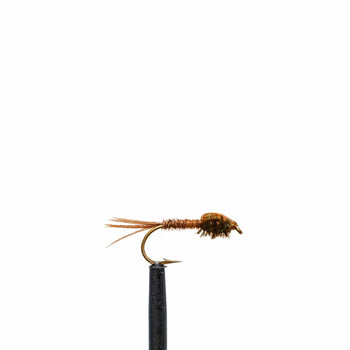 |
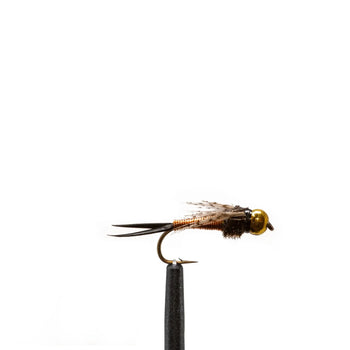 |
 |
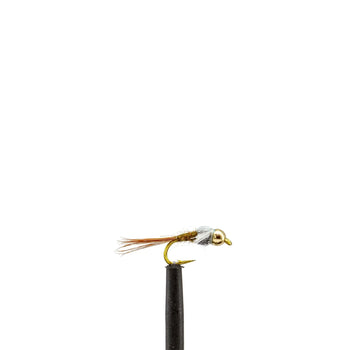 |
| Pheasant Tail Nymph | Copper John | Tungsten Bead Perdigon Jig | Beadhead BWO Emerger |
- Pheasant Tail Nymph (sizes 16–20): A timeless imitation of Baetis and other small mayflies, and the first fly to tie on when you don't know what's happening. Fish it under an indicator or as the upper fly in a tandem rig to imitate nymphs drifting between hatches.
- Copper John (sizes 14–18): A heavy, fast-sinking attractor that gets down quickly in deep or pushy water. The wire body adds flash and makes it nearly indestructible, so it's the fly to use as an anchor when you're fishing rocky bottom and expecting to lose some.
- Tungsten Bead Perdigon Jig (olive, black, or purple, sizes 16–20): A slim, fast-sinking mayfly imitation on a jig hook that rides point-up to reduce snags. The tungsten bead drives it into the feeding zone faster than any similarly sized fly, which makes it the natural anchor for tight-line work. Carry two bead sizes so you can change sink rate without changing fly size.
- Beadhead BWO Emerger (sizes 18–22): Built to ride just under the surface film when trout switch from nymphs to emergers. When fish are working but refusing your dry, this is usually the fly they actually want — try it as a dropper below a small dry.
📌 Pro Tip: Trout feed deeper than you'd expect during a mayfly hatch. Start with a heavier nymph on the bottom, and only lighten the rig once you've confirmed fish are moving up in the column — the visible activity is usually a fraction of what's happening below it.
Midges
When temperatures fall and the other hatches fade, midges become the main course. They're active year-round, they thrive in cold clear water, and on a December tailwater they may be the only thing on the menu. Focus on smaller sizes in #18–24 and subdued colors — black, red, gray. For a deeper look at fishing them through the coldest part of the season, see our guide to late-fall midge fishing.
When to Expect: Consistently active all season, strongest on calm mornings and afternoons.
 |
 |
 |
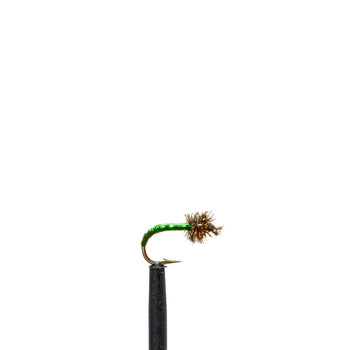 |
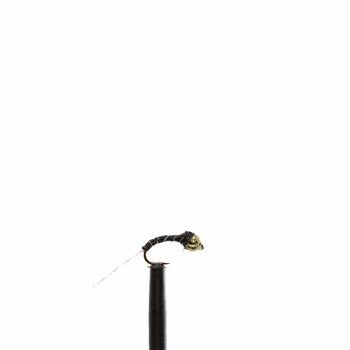
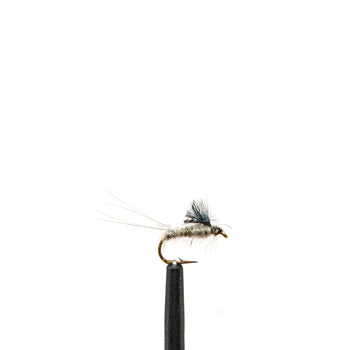
| Zebra Midge | RS2 | WD-40 | Disco Midge |
- Zebra Midge (black, red, or olive, sizes 18–24): The standard for subsurface midge fishing — a bead, a body, a rib, nothing wasted. Fish it solo on light tippet or in tandem below a heavier fly, and carry it in at least two colors, because fish on heavily fished water do show preferences.
- RS2 (sizes 20–24): An emerger that shines during active midge or BWO hatches, when trout are taking insects in the act of transformation. Fish it unweighted behind a small split shot for the most delicate presentation in your box.
- WD-40 (black or olive, sizes 20–24): Doubles as a midge and a mayfly emerger, which makes it the most useful single small fly for fall. Its sparse profile gives you less bulk than a beadhead when fish are being difficult. Pair it with a heavier anchor to target trout suspended mid-column.
- Disco Midge (red or chartreuse, sizes 18–22): A flashy attractor midge for overcast days and slightly off-color water. When natural patterns aren't getting noticed in low light, the sparkle is what brings fish the last few inches.
📌 Pro Tip: Midges are about drift, not pattern. Light tippet in 6X–7X and a genuinely drag-free presentation will out-fish the perfect color on a stiff drift every time — so if you're getting refused, fix the drift before you open the box.
Caddis Larvae & Pupae
The adult caddis hatches taper off in late fall, but the larvae never leave. They live in the gravel year-round, and every time current shifts a rock or a wading boot kicks one loose, one tumbles downstream — which is why a caddis larva is one of the most consistently eaten insects in cold water even when you haven't seen an adult in weeks. Focus on green, tan, and olive in #14–18.
When to Expect: September through early November, strongest in mid-afternoon as the water warms.
 |
 |
 |
 |
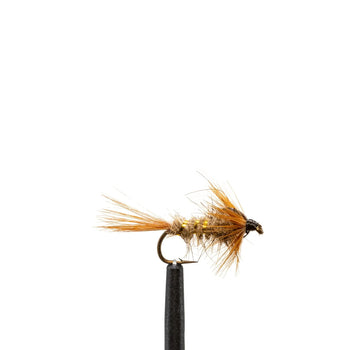
| Hare's Ear Nymph | Caddis Pupa | Tungsten Bead Walt's Worm Jig | Sparkle Rock Roller |
- Hare's Ear Nymph (sizes 14–18): A classic caddis imitation that passes just as well for a mayfly nymph or a generic something-buggy. Its scruffy texture is the opposite of a slim Pheasant Tail, which makes the two a useful pair when you haven't identified a food source. A must in every fall box.
- Caddis Pupa (green or brown, sizes 16–18): Represents a caddis ascending through the column toward emergence. Fish it on a dropper, and let it swing a few feet at the end of your drift — that rising motion is exactly what the real insect does, and it draws takes a dead drift won't.
- Tungsten Bead Walt's Worm Jig (sizes 14–16): A clean, heavy caddis-larva imitation that sinks fast in cold, pushy water. The jig hook rides point-up to cut down on snags, which makes it a practical anchor on rocky bottom where you'd otherwise lose flies steadily.
- Sparkle Rock Roller (sizes 14–16): A caddis pupa with subtle shimmer that reads as an insect caught mid-emergence. Good in mid-column currents and on the slightly colored water you get after a fall rain.
📌 Pro Tip: As water cools, work the slower seams and pocket water tight to structure. A trout holding beside a rock won't chase, but it will eat a drifting larva that passes within a few inches of its nose — so the cast that lands two feet off is a wasted cast, not a near miss.
Stoneflies & Attractors
Small bugs dominate late fall, but larger stoneflies and attractors still earn their place — especially on freestone rivers with rocky bottoms, where stonefly nymphs live in the substrate all year. They do double duty: they draw fish on their own, and their weight carries the small stuff down. On unfamiliar water, a big dark nymph is a legitimate search tool.
When to Expect: Sporadically year-round, most effective in riffles and fast runs.
 |
 |
 |
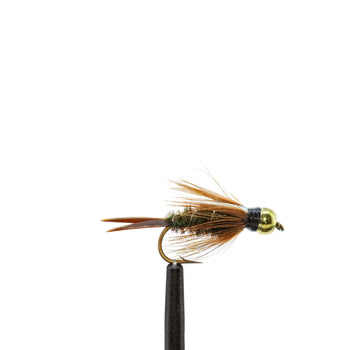 |
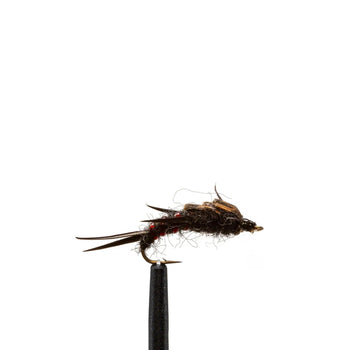
| Rootbeer Rubber Legs | Zirdle Bug | Kaufmann's Stonefly Nymph | Beadhead Prince Nymph |
- Rootbeer Rubber Legs (sizes 8–10): A stonefly with rubber legs that move at the slightest change in current, giving fish something to react to. Hard to beat in stained or turbulent water where a subtle pattern simply won't get seen.
- Zirdle Bug (natural or olive, sizes 8–10): A hybrid between a zonker and a stonefly. The slim profile sinks well and the rabbit tail breathes on the drift, which makes it read as alive in deep runs and pocket water where a stiff fly looks like what it is. Worth trying on a slow retrieve as well as a dead drift.
- Kaufmann's Stonefly Nymph (brown or black, sizes 6–10): A heavy, realistic imitation that gets down fast in cold, rocky water. This is the anchor fly for a two- or three-fly rig when the run is deeper than your indicator setting wants to admit.
- Beadhead Prince Nymph (sizes 12–16): The classic attractor — peacock herl and white biot wings that catch whatever light makes it down there — with enough weight to hold depth. Ideal for deeper seams or as the middle fly in a tandem rig.
📌 Pro Tip: Use the big patterns as your point or anchor fly so the smaller midges and mayflies above them reach depth faster and stay there. You're buying depth with the big fly — and often catching fish on it as a bonus.
Terrestrial Holdovers
By late October most hoppers and ants are gone, but a warm afternoon still puts a few on the water, and trout that spent three months watching for them keep watching. Meadow sections and grassy banks are where it happens. A handful of foam terrestrials in the box can turn a mild fall day into an unexpected dry-fly session — and even when nothing eats off the top, a big foam fly makes a superb suspender for a nymph.
When to Expect: Warm, sunny afternoons through the end of October, especially on lower-elevation and meadow streams.
 |
 |
 |
 |
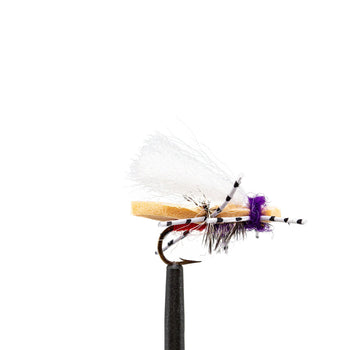
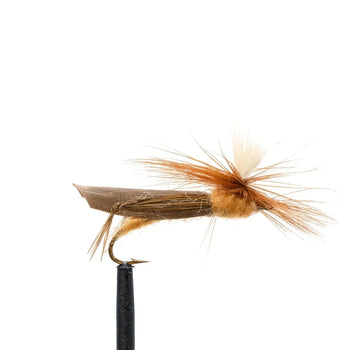
| Chubby Chernobyl | Chernobyl Ant | Parachute Hopper | Madam X |
- Chubby Chernobyl (tan, olive, or royal, sizes 10–14): High-floating, nearly unsinkable, and the best suspender fly in a fall box — it will hold a weighted nymph without disappearing. Fish it along grassy banks and edge seams, with or without a dropper.
- Chernobyl Ant (black or tan, sizes 12–14): Simple and deadly on clear, calm afternoons when trout rise opportunistically rather than to a hatch. The flat foam body lands softly, which matters in low water, and it carries a light dropper well.
- Parachute Hopper (sizes 10–14): A realistic, low-riding pattern for late hoppers and crickets. It sits in the film rather than on top of it, which is what a drowning terrestrial actually does — fish it in slow pools and along foam lines.
- Madam X (yellow or orange, sizes 10–14): A versatile attractor that passes for a hopper, a stonefly, or a beetle depending on what the fish is expecting. The rubber legs and visible wing make it easy to track at distance — fish it alone or as the top half of a hopper-dropper.
📌 Pro Tip: On unseasonably warm fall days, hang a small WD-40 or Zebra Midge off the back of one of these. Even with the hatch long over, trout rarely ignore an easy surface meal — and if they do, the midge below is already in the water doing its job.
Reading the Water Through the Day
Fall fishing moves. The run that produced at nine in the morning can be dead by one, not because the fish left but because they slid thirty feet to where the water is a degree warmer. The water types above don't change through the day — which of them is worth your time does.
- Before the sun is on the water – Fish the deepest, slowest water you can reach. Trout are holding low and eating little. This is anchor-fly time, and it rewards patience over coverage.
- As the water warms – Insects start moving and so do fish. Shift to riffles, seams, and the heads of runs, and raise your rig a few inches as trout lift off the bottom. The best hours of a late-fall day usually land somewhere between late morning and mid-afternoon.
- As the light leaves – Work tailouts and transition zones where fish move up to feed before dark. Shallower than you'd think, and worth a dozen drifts before you call it.
Within any of those, repeat your drifts from several angles and vary where the cast enters the water. Cold trout won't chase — but they will eat something that passes right by their nose, and the fourth drift down a lane often gets eaten when the first three didn't.
When It's Not Working: Five Checks, In Order
A blank hour in fall almost always comes down to one of five things, and they're worth working through in this order — because the first four are free and the last one is the one everybody reaches for first.
- Are you fishing water that actually holds fish? Current beside depth or cover, per the list up top. If a run looks right and gives you nothing after a deliberate twenty minutes, it may simply be empty. Move to the next piece rather than fishing hope.
- Is the fly reaching the level they're feeding at? If your anchor hasn't touched bottom in ten drifts and you believe they're on the deck, add weight or lengthen the rig. If fish are showing higher, come up instead. Depth is the adjustment — deeper isn't automatically the answer.
- Is the line pulling the drift? Watch where tension builds and whether the indicator is sliding across its lane. Reposition your feet or shorten the cast before attempting another series of difficult mends.
- Could you see a take if you got one? Too much slack, a dry riding half-sunk under too heavy a dropper, a sighter lost in the glare — any of those hides the one signal you came to read. Make the rig easier to read before you make it more complicated.
- Now change the fly. Size or weight first, then color, and consider dropping a tippet size while you're in there. Going two sizes smaller solves more fall problems than switching patterns does.
📌 Pro Tip: Give any change five clean drifts before you judge it. Most anglers cycle through six flies in twenty minutes and never fish any of them properly — which means they end the day without knowing what actually would have worked.
Taking It to the Water
Late-season nymphing rewards precision over speed. Slow down, watch the drift, and fix depth before you fix anything else. The takes are small and the windows are short, but the fish are there, eating steadily in water that looks empty from the bank.
That's most of the appeal. The crowds are gone, the parking lots are empty, and every fish you bring in feels earned in a way an August trout never quite does.
If you're building a box from scratch, start small. A Pheasant Tail, a Zebra Midge, a Hare's Ear and one weighted attractor will cover most late-fall water, and adding a buoyant foam dry turns those same four flies into a dry-dropper.
After that it's a short list of corrections. If the rig pulls across the current, fix the angle. If it hangs up every cast, take weight off. If a fish starts feeding higher, follow it up. Build a smart rig, pick one lane, and trust the drift — the best fall fishing is happening a foot off the bottom.
SHOP OUR NYMPH COLLECTION
GEAR UP:
- Nymphs & Wet Flies
- 9ft Fluoroflex Fluorocarbon Tapered Leader
- Fluoroflex Fluorocarbon Tippet
- Yellowstone II Fly Rod
- Yellowstone Grizzly Fly Reel
RELATED ARTICLES:
- Late-Fall Midge Fishing: Small Flies, Better Drifts and 12 Patterns to Carry
- Master Fall Streamer Fishing: Top Flies, Gear & Pro Tips
- Fall Fly Fishing Guide: Key Hatches & Essential Flies
- Fall Fly Fishing for Brook Trout: Essential Tips & Techniques
- The March Melt & Nymphing Secrets for More Hookups
- Nymphing Your Way Through the Dog Days: Mastering Late July Trout Fishing


