

When the River Fills With Leaves: How to Keep Fishing Through Fall Leaf Drop

It happens fast. One week the river is low and clear, and the next there's a gold leaf in every seam, a raft of them spinning in the back eddy you came to fish, and something hanging off the hook after every other drift.
It's tempting to call it a lost day. It isn't. Leaves on the water don't mean the trout have stopped eating. The job is just getting a clean fly through water where a fish can take it.
Some days that means waiting for a gap. Other days it's a simpler rig or a different stretch of river. Either way, it starts with watching what the leaves are doing. Here's how we'd fish through it.
Read the Leaves
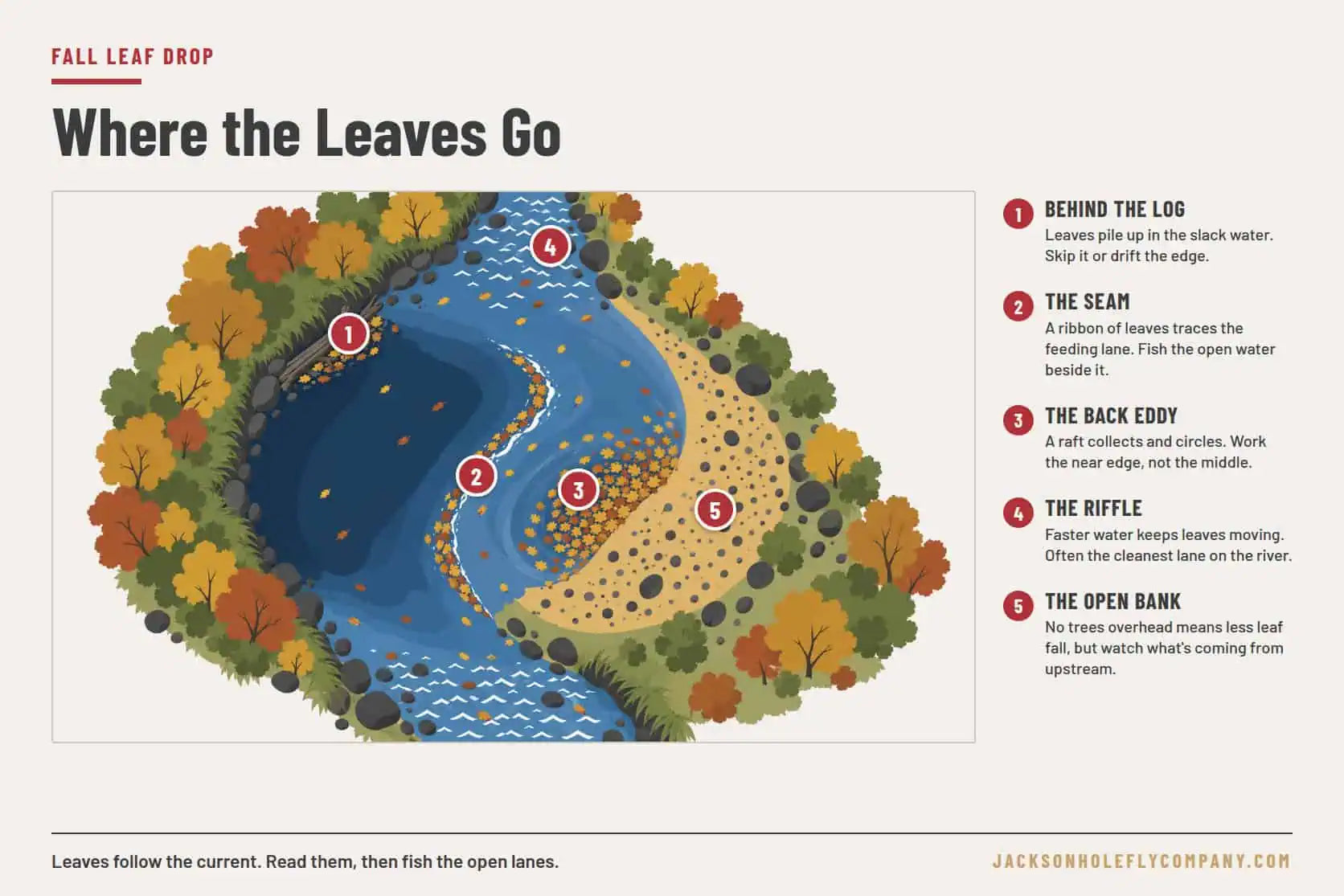
Here's the upside of a river full of leaves: they show you the currents. A line of them traces a seam. A raft turning in an eddy shows you exactly where a long drift is going to end up.
Watch the lanes, not just the piles. Back eddies and slack pockets collect leaves into mats. Current seams carry steady ribbons of them, and faster water moves them through without letting them settle, although it can still be full of drifting debris. What you're looking for is a gap you can actually fish. Our foam line guide explains why those same seams gather floating food.
Check underneath, too. Waterlogged leaves sink and tumble through the same water your nymph is drifting in. A clean-looking surface doesn't mean a clean drift down below. What comes back on the hook will tell you more than the view from the bank.
Expect it to change. A gust of wind can drop a fresh load, and a change in flow can lift leaves that had settled. Two runs a hundred yards apart can look completely different, and the same run can change by the hour.
Find a Lane You Can Fish
Before you change flies, give the water a minute. Look upstream and watch whether the leaves come through in pulses or fill the lane nonstop. Sometimes a well-timed cast between clusters is the only adjustment you need.
Fish the edge of the leaf line. A narrow open seam right beside a line of debris can give you a clean drift close to where the food is moving. Work the near edge of an eddy or a mat before you cast into the middle of it.
Try the next piece of water. The edge of a riffle or the head of a run often has more room than a clogged back eddy. Just make sure it still has depth, cover and current a trout would hold in. Clean water doesn't help if there's no reason for a fish to be there.
Look past the trees. A meadow stretch or an open gravel bank gets less leaf fall than a run under a canopy of maples or cottonwoods. It still carries everything coming from upstream, though, so watch it for a minute before you make the walk.
Check a tailwater if you have one close. A reservoir holds back a lot of what floats down from above, so the water below a dam is worth a look. Local trees and side creeks still add their share, and releases change the fishing too. Our tailwater guide covers the rest.
📌 Pro Tip: If leaves are coming through your lane faster than you can fish a clean drift, don't fight it. Walk up to the next riffle and take a look. Ten minutes of walking will usually beat an hour of picking leaves off a hook.
Simplify the Rig
Every extra fly, knot and split shot on the leader is one more thing for a leaf to grab. Take off what you can, but keep what the presentation needs. A rig that stays clean but never gets to the fish hasn't fixed anything.
Start with one fly. Dropping the second fly takes away a hook and a length of tippet. Go with a single dry for rising fish, a weighted nymph for a subsurface drift, or a small streamer through an open lane.
Let the fly carry the weight. A beadhead or a heavy stonefly nymph can often reach the right depth without split shot. If it can't, change the fly, the casting angle or the rig. Keep the weight it takes to fish the water.
Keep the indicator if it helps you see takes. Swapping it for a dry adds another hook, so a dry-dropper isn't automatically a cleaner setup. Save it for lighter leaf days and water where both flies can fish well, and set the dropper for the depth the fish are feeding at. Our dry-dropper guide covers that setup.
Shorten up. At closer range, a raised rod tip keeps more line and leader off the surface, and away from whatever is floating on it. Follow the drift with the tip, without lifting the nymph out of its lane or dragging the dry.
Tidy the connections. Trim long tag ends, but leave enough for the knot to hold. After you pull a leaf off, give the knots a quick look, especially if you had to tug hard on the leader.
A Leaf or a Take?
You won't always know, and that's fine. A leaf can stop an indicator cold, and a trout can eat a streamer without a sharp thump.
Set on anything that looks wrong. If the indicator pauses, dips or moves differently from the current around it, make a short, quick hookset. You'll pull up plenty of leaves. You'll also hook the fish you'd have missed by waiting to be sure. On a streamer, keep in contact and give a firm strip-set when you feel unexpected weight. A big overhead yank just sends the rig flying back at you.
Don't trust the feel completely. Soft, steady weight is often a leaf, but not always. Treat the first contact as a fish. If nothing comes alive, bring it in and look.
Check the fly more than usual. After a drift through debris, a bump, or any change in how the fly is moving, bring it in close enough to see the hook and leader. Even a small piece of leaf can cover the hook point or spoil the drift. Our fall fly fishing guide makes the same point in its section on casting through wind and debris.
📌 Pro Tip: Clear a fouled fly by hand. Snapping it off with false casts rarely gets it all, and it's hard on the tippet. Pull the leaf, run a finger past the hook point to make sure it's clean, and then make the next cast.
Know When to Move
If three or four drifts in a row come back fouled, change something. Try another lane or another depth, simplify the rig, or move to a different run. Making the same cast through the same leaves rarely makes the next drift any better.
Keep an eye on the wind and on how much is coming downstream. A calmer spell can help, but it doesn't promise cleaner water or feeding fish, so let what you see set the timing. Our post on fishing the weather covers how wind changes a fall day.
A run that's full now can clear later in the afternoon or by your next trip. Give it another look when things change.
Watch Your Step
Wet leaves make streamside rocks slick and can hide uneven footing underwater. Test each step, use a wading staff if you carry one, and stay out of water where you can't read the bottom.
Fall is also spawning season, so give spawning fish and redds plenty of room. When leaves are covering the bottom, pick a route that steers clear of the gravel where fish might be spawning.
Four Flies to Keep It Simple
No fly is leaf-proof. These four give you a dry, two weighted nymphs and a streamer, so you can change the presentation without building a complicated rig.
 |
 |
 |
 |
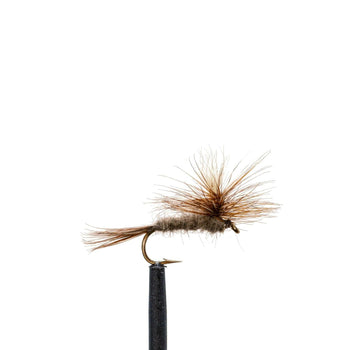
Parachute Adams |
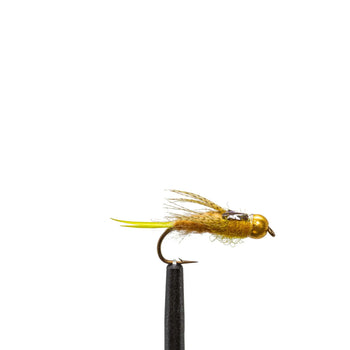
Beadhead Golden Stone |
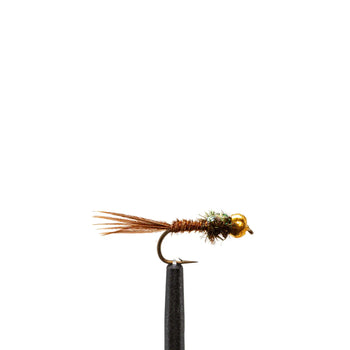
Beadhead Flashback Pheasant Tail |
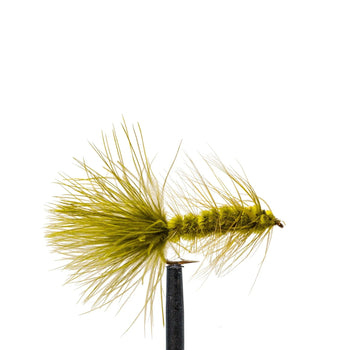
Woolly Bugger – Olive |
Parachute Adams (14–20). The single dry for rising fish. The white post is easy to pick out on a surface full of brown and gold, which matters when you're tracking it through a narrow lane. Match the size to what's on the water, and keep the drift short enough to follow.
Beadhead Golden Stone (6–12). The heavy nymph. It's a big meal and it gets down on its own, so you can fish it alone without adding shot. If it rides high or keeps finding the bottom, adjust the rig rather than piling on weight.
Beadhead Flashback Pheasant Tail (14–18). The smaller option for shallower seams where a stonefly is too much. Fish it as a single nymph, with an indicator if that helps you see the drift stall.
Woolly Bugger – Olive (4–10). One fly and a short retrieve or a controlled swing through an open lane. It'll still pick up leaves, but it takes a different path through the water than a dead drift does, and sometimes that's all it takes to get more clean fishing time.
Make the Clean Drifts Count
A few open feet beside a leaf line can be plenty. Watch the lane, put a clean fly through it, and check the hook before you go again. When the leaves close it off, go look at the next seam.
On a day like this, the measure isn't how many casts you make. It's how much time your fly spends actually fishing. Do a little less casting and a little more watching, and the leaves won't cost you nearly as much as you'd think.


