

Fly of the Month: Mastering Tiny Mayflies for Fall Trout

October transforms U.S. trout rivers into a stage for precision and patience. Low flows expose every pebble and seam, crystal-clear water demands flawless presentations, and the shift from crisp mornings to misty, golden evenings sets a contemplative mood. While hoppers and beetles still tempt bold trout, and streamers coax aggressive pre-spawn browns, the true stars of fall are tiny mayflies. Blue-Winged Olives (BWOs), Mahogany Duns, and their delicate cousins—baetis and pseudocloeon—emerge in sizes 16–22, drawing pods of selective trout to the surface in a subtle, technical game.
These hatches reward anglers who hone their observation and refine their approach. In slow slicks and glassy tailouts, trout have ample time to inspect every drift, often fixating on a specific life stage—dun, spinner, or emerger. The Adams family of flies, along with modern variants like the Purple Haze, offers unmatched versatility, bridging precise imitation and subtle attraction. These patterns are your key to unlocking October’s dry-fly magic, fooling even the wariest trout across multiple hatch scenarios.
Why Tiny Mayflies Dominate Fall
Autumn reshapes trout feeding behavior across the U.S., from the Rockies to the Northeast. Summer’s chaotic buffet of grasshoppers, ants, and caddis fades, giving way to smaller, more consistent mayfly hatches that define fall fishing. Here’s why tiny mayflies are the cornerstone of October success:
- Reliable Hatches: BWOs thrive in cool, overcast conditions, often blanketing the water in waves during cloudy afternoons. This predictability creates prime dry-fly windows.
- Heightened Selectivity: In low, clear flows, trout scrutinize every detail. Small, realistic profiles and drag-free drifts are essential to avoid refusal.
- Life Stage Precision: Trout may target emergers in the morning, duns at midday, or spinners by dusk. A versatile fly box lets you adapt to their shifting preferences.
- Universal Appeal: Patterns like the Adams don’t mimic one species perfectly but suggest enough mayflies to succeed when exact matches fall short.
📌 Pro Tip: Before casting, pause to study the water. Watch for rise forms and scoop a few naturals with a small net or your hand to confirm size, color, and life stage. If trout ignore your dun, switch to an emerger or spinner to match their focus.
The Adams Family: Timeless and Versatile
The Adams is a fly-fishing icon, celebrated for imitating a range of mayflies while forgiving minor imperfections. In October, when hatches overlap and trout turn finicky, the Adams and its cousins shine as confidence patterns.
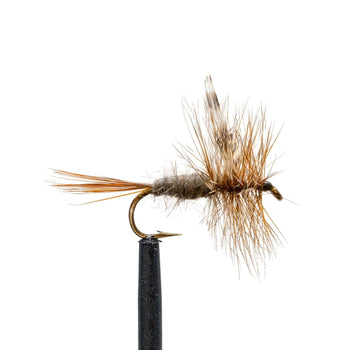
- Adams (Sizes 16–22): With its gray body and mixed hackle, the Adams is a “universal mayfly.” It’s not an exact imitation of anything, yet close enough to many species that it fools trout across seasons. In fall, a size 18–20 is hard to beat when BWOs are hatching.
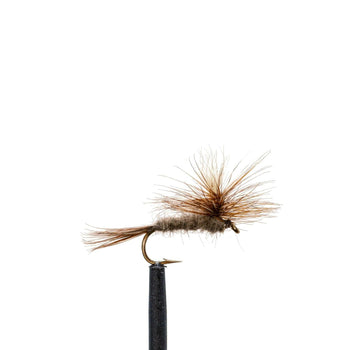
- Parachute Adams (Sizes 16–22): The parachute style improves visibility and floats flush in the surface film. It’s especially useful in slicks, back eddies, and glassy pools where trout have time to inspect your fly.
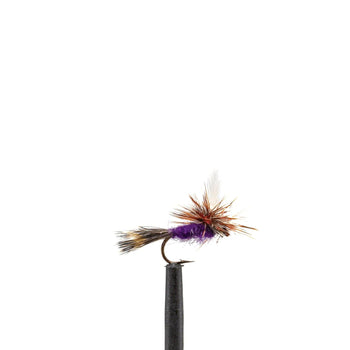
- Purple Haze (Sizes 16–20): This modern cousin swaps the gray body for purple, which seems to trigger extra takes from pressured trout. It works as both a mayfly imitation and a subtle attractor — a great confidence fly when other patterns fail.
📌 Pro Tip: Carry both traditional and parachute Adams. On the same day, one pod of fish may prefer a higher-floating fly, while another pod sips only flush-riding versions.
Blue-Winged Olives: The Stars of October
Blue-Winged Olives are the undisputed stars of October. On cloudy, cool afternoons, they can cover the water in waves. To fool trout during a BWO hatch, you need a mix of dries and emergers.
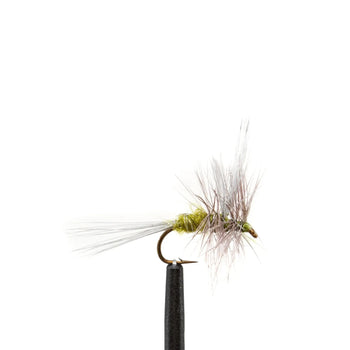
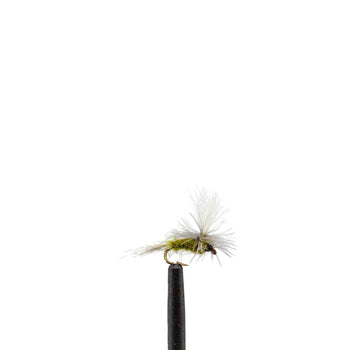
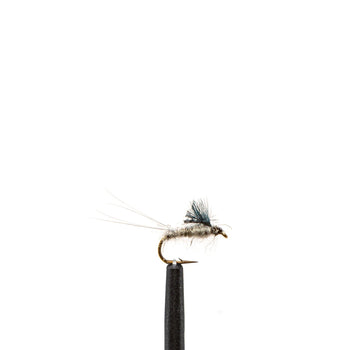
- Blue-Winged Olive (Sizes 18–22): The straightforward match-the-hatch pattern, with olive body and slate wings. Best fished on overcast afternoons when the hatch is strongest.
- Parachute BWO (Sizes 18–22): A parachute version that rides lower in the film, offering a more natural silhouette on calm water. The white post makes it easier to see, especially when fishing tiny sizes.
- RS2 (Sizes 18–22): A classic emerger pattern that imitates a mayfly transitioning from nymph to dun. Sparse and subtle, it’s most effective when trout feed just below the surface film during or immediately after a hatch.
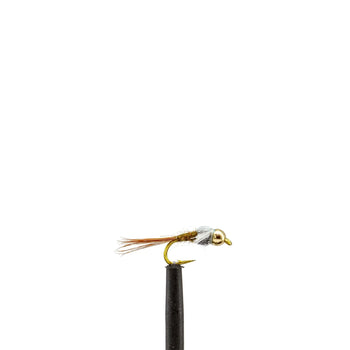
- Beadhead BWO Emerger (Sizes 18–22): A slightly heavier emerger that sinks into the upper water column. Perfect for covering trout that are keyed on ascending nymphs rather than surface adults, especially in riffles or faster seams.
📌 Pro Tip: Fish a double rig — a Parachute BWO on top with an RS2 or BWO emerger dropped 12–18 inches below. This covers both surface feeders and trout keying just under the film.
Tricos, Mahoganies & Rusty Spinners: Fall’s Overlooked Hatches
While BWOs dominate October, other late-season mayflies quietly deliver some of the season’s best dry-fly fishing. Tricos, Mahoganies, and Rusty Spinners often overlap with olive hatches, and trout will switch focus in an instant. These patterns represent subtle meals, but when trout key on them, nothing else will do.
-
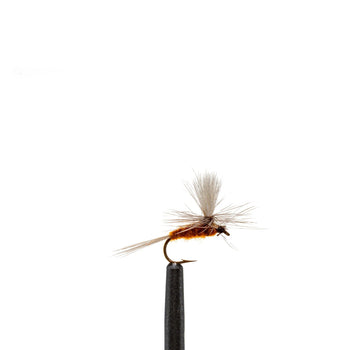
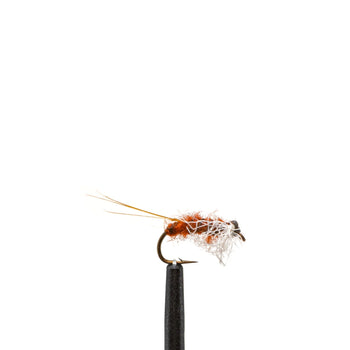
Parachute Mahogany Dun (Sizes 16–18): With its reddish-brown body and flush-floating profile, this parachute is easier to track than traditional ties and imitates one of fall’s most underappreciated hatches. Best in afternoons when Mahoganies trickle off in smaller numbers but trout respond eagerly.
-
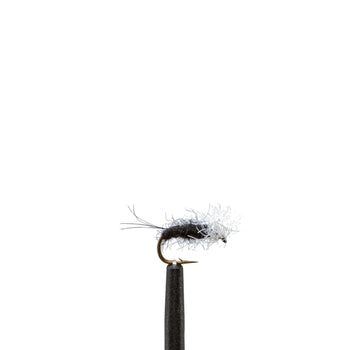
Trico Spinner (Sizes 20–24): Famous for their dense morning hatches, Tricos blanket the water in clouds of tiny black-and-white mayflies. Trout often feed on the spent spinners, sipping them gently from the surface. A technical but rewarding pattern for flat water and picky fish.
-
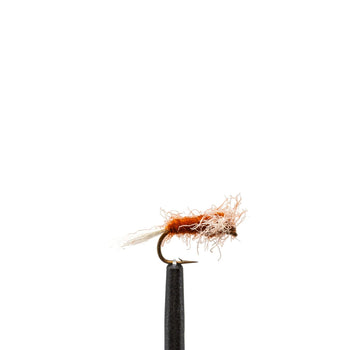
Rusty Spinner or Mahogany Spinner (Sizes 16–20): Representing the spent adults of various mayflies, these flies become critical in the evenings. Look for soft sipping rises — subtle rings rather than splashy takes — as trout feed heavily on spinners that gather in back eddies and tailouts.
📌 Pro Tip: If trout ignore your BWOs but rise steadily, they may be focused on Trico or Rusty Spinners. Switch to a smaller profile and present it delicately — the reward is often the biggest fish of the day.

Mastering Tiny Mayfly Tactics
Fishing tiny mayflies is a game of precision, not power. Success depends on reading the water, refining your presentation, and adapting to trout behavior. Here are the keys:
-
Leaders & Tippets: Use 9 foot, 5X or 6X tapered leaders for delicate, drag-free drifts.
-
Decode Rise Forms: Splashy rises signal duns; gentle sips indicate spinners; subsurface bulges or dimples suggest emergers. Match your fly to the trout’s behavior.
-
Positioning: Approach from downstream to stay hidden. Cast at a 45-degree angle to achieve natural drifts in slow water.
-
Weather Advantage: BWOs and Mahoganies thrive in cool, overcast conditions. Cloudy days deliver some of the best dry-fly fishing of the year.
-
Dead-Drift Perfection: Micro-drag ruins presentations. Use reach casts, slack-line casts, or upstream mends to ensure a natural drift.
-
Observe First: Spend a few minutes watching the water before casting. Scoop naturals with a fine-mesh net or your hand to confirm size and color, saving time on trial and error.
📌 Pro Tip: Downsize everything — flies, tippets, and expectations. Tiny mayfly fishing rewards accuracy and finesse more than brute force or endless fly changes.
Troubleshooting Common Challenges
Even seasoned anglers face hurdles when fishing tiny mayflies. Here’s how to overcome common issues:
-
Refusals: If trout refuse your fly, check for micro-drag. Adjust your position or use a longer leader to improve your drift. Alternatively, downsize your fly or switch to a different life stage (e.g., emerger instead of dun).
-
Poor Visibility: Tiny flies are hard to track in low light. Use a Parachute Adams or BWO with a white post, or add a larger, visible dry (like a size 14 Elk Hair Caddis) as an indicator fly above your tiny mayfly.
-
Tangled Leaders: Long, light leaders can tangle in wind. Use a stiffer leader material (e.g., fluorocarbon for the butt section) and practice smooth, controlled casts to minimize knots.
-
Missed Strikes: If trout hit but don’t hook, your tippet may be too stiff, causing the fly to drag subtly. Switch to a softer tippet (e.g., nylon) or delay your hook set by a half-second to let the fish fully take the fly.
📌 Pro Tip: Keep a small notebook or use your phone to jot down hatch details—time, weather, and successful patterns. Over time, this log will help you anticipate and adapt to October conditions.
Gear Recommendations for Fall Mayfly Fishing
To tackle October’s technical hatches, your gear must match the challenge. Here’s an expanded selection from the JHFLYCO collection, tailored for tiny mayfly fishing:
Rod & Reel Combos
-
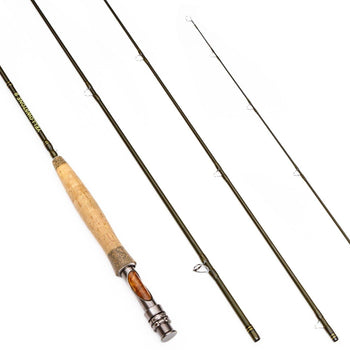
Fall Creek Combo Kit: Built for small water and technical dry-fly work, this 7' 4WT setup shines when you’re casting tiny mayflies in tight quarters. Its shorter length delivers accuracy under overhanging banks or in brushy streams, while the forgiving action helps protect light 6X–7X tippets. Compact, durable, and perfectly balanced, it’s a go-to for anglers chasing October hatches on creeks and high-country streams.
-
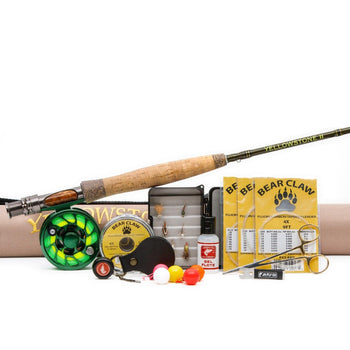
Yellowstone Signature Combo Kit: Designed with precision dry-fly fishing in mind, this premium 9' 5WT setup is all about delicate presentations and smooth control. Built on our fast-action Yellowstone Signature Series rod, it delivers crisp loops for accurate casts while still protecting fine tippets when fishing size 18–22 mayflies. Paired with the Yellowstone Signature Reel and balanced line, this kit is a top choice for anglers who want a refined tool for October’s technical hatches.
-
Backpacker Combo Kit: Built for anglers who chase hatches beyond the beaten path, this lightweight 7'6" 4WT setup is perfect for high-country streams, alpine lakes, and tight backcountry creeks. Its compact 4-piece design packs easily into a backpack, while the responsive action handles small dry flies and emergers with finesse. When October mayflies blanket remote waters, the Backpacker Combo Kit gives you the reach, control, and portability you need to fish them effectively.
Rods
-
Yellowstone II Fly Rod: Crafted from premium IM8 graphite, the Yellowstone II delivers fast-action performance in a refined package. Available in 3- and 4-weight models from 7' to 9', it’s built for long, accurate casts with tiny mayflies yet sensitive enough to protect delicate 6X tippets. Lightweight, responsive, and versatile, this rod excels when October hatches demand both reach and finesse.
Reels
-
Yellowstone Grizzly Reel: Dependable, lightweight, and built to balance perfectly with our Yellowstone II rods, the Grizzly is a workhorse reel for trout anglers. Its smooth drag system handles everything from small-stream fish to hefty fall browns, while the durable large-arbor design makes line management easy when fishing tiny dries and emergers. A reliable choice for anglers who want performance without the premium price tag.
-
Yellowstone Signature Reel: Engineered for anglers who want the best in performance and refinement, the Signature Reel features a fully sealed drag system, large-arbor design, and lightweight construction. Perfectly paired with our Yellowstone Signature Rod, it offers buttery-smooth startup inertia for protecting fine tippets while still delivering stopping power when a big fall brown takes off downstream. Built to handle technical mayfly hatches with precision, this reel is the premium choice for serious trout anglers.
Fly Boxes, Leader & Tippet
-
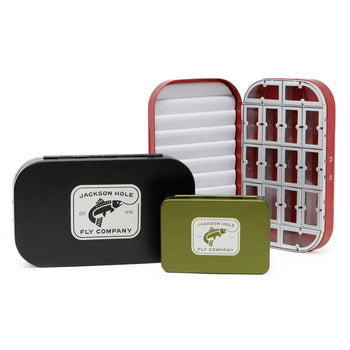
JHFLYCO Aluminum Fly Box: Stay organized and ready for technical fall hatches with this premium aluminum fly box. One side features spring-loaded compartments with clear snap-shut windows, perfect for storing smaller patterns like BWOs, Tricos, and midges securely. The other side holds high-density EVA ripple foam, giving you flexible storage for parachutes, emergers, or even a few small streamers. Slim, durable, and laser-engraved with the JHFLYCO logo, this box slips easily into a vest or pack and keeps your October mayfly arsenal dialed in.
- Leader & Tippet (5X–7X): Success with tiny mayflies often comes down to your leader choice. Monofilament offers better floatation, making it ideal for dry flies and spinners, while fluorocarbon sinks more readily and is nearly invisible underwater — perfect for emergers and subsurface presentations. Carry both in 5X–7X so you can adapt to changing conditions and match the hatch more effectively.
Accessories
-
Big Loop Gold Forceps: A must-have for fishing tiny flies, these forceps feature oversized loops for easy grip and control, even with cold or wet hands. Perfect for safely removing size 18–22 hooks and protecting light 6X–7X tippet, the Big Loop design gives anglers the precision needed during technical fall hatches. Durable, reliable, and streamside ready.
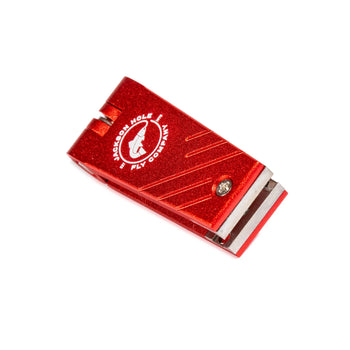
- JHFLYCO Pro Nippers: When trout are selective and fly changes are constant, reliable nippers are essential. Built with a rugged aluminum body and razor-sharp stainless steel cutting edges, the JHFLYCO Pro Nippers slice cleanly through mono, fluoro, and even braid. Replaceable blades extend their life, while the built-in eye cleaner makes prepping tiny size 18–22 hooks quick and frustration-free. Lightweight, durable, and designed to clip easily to a zinger or lanyard, these nippers are streamside essentials for technical fall fishing.
-
JHFLYCO Carbon Fiber Landing Net: Lightweight, durable, and perfectly sized for trout fishing, this net is built from carbon fiber for strength without bulk. The rubberized, fish-friendly basket protects trout during catch-and-release and won’t tangle with small flies or fine tippet. Ideal for technical mayfly fishing where you’re using 6X–7X leaders, the Carbon Fiber Net gives you the confidence to land fish quickly and safely.
📌 Pro Tip: When fishing tiny mayflies, a balanced setup matters more than brute strength. Pair a lightweight rod and reel with the right leader and you’ll notice your drifts improve immediately.
Taking It to the Water
October is a gift to anglers who embrace the art of technical dry-fly fishing. The Adams family—classic, parachute, and modern variants like the Purple Haze—forms the backbone of your fly box, offering unmatched versatility. Complemented by specialized BWO, Mahogany Dun, and Rusty Spinner patterns, these flies prepare you for every hatch scenario. By lengthening your leader, perfecting your drift, and stocking up with JHFLYCO’s curated gear and patterns, you’ll be ready to meet the challenge of fall’s selective trout.
Tiny mayflies may seem unassuming, but in the quiet slicks and seams of October, they unlock some of the most memorable moments on the water. So tie on a size 18 Parachute Adams, watch for those subtle sips, and let the river’s autumn magic unfold.
Shop our Fall Fly Collection
RELATED ARTICLES:
-
Mastering Fall Streamer Fly Fishing: Tactics, Patterns, and Strategies for Trophy Trout
-
How to Fish Low Water in Early Fall – Best Rod & Line Setups
- Fly of the Month: Targeting Fish with Egg Patterns During the Fall Spawning Season
- Fall Fly Fishing Guide: Key Hatches & Essential Flies
- Fall Fly Fishing for Brook Trout: Essential Tips & Techniques


