

Late Spring to Early Summer Fly Fishing: A Regional Hatch Guide for Every Major Watershed

Every June, the same thing happens across the country. A famous hatch shows up — the Green Drake on Penns Creek, the Salmonfly on the Big Hole, the Hex on the Au Sable — and anglers from three states away drive in to fish it. Magazines write about it. Instagram fills with grip-and-grins under cottonwood shade. Guides book solid for the window.
And on every one of those rivers, a second hatch is happening at the same time. Quieter. Less photogenic. Usually smaller. Often producing more fish per hour than the famous one.
The anglers who fish the famous hatch get the story. The anglers who fish the producing hatch get the day.
This is a coast-to-coast look at what's happening on the water right now in June — region by region, with the famous hatch you've been reading about and the producing hatch you should probably be fishing instead. Six regions, twenty-four patterns, one editorial argument: the famous hatch sells the trip; the producing hatch catches the fish.
How to Use This Report
Find your region. Read both hatches — the famous one and the producing one. If the famous hatch is happening in your home water this week, fish it; it's famous for a reason. But carry the producing-hatch patterns on the same rig. When the famous hatch goes quiet for thirty minutes — and it always does — switch over. That's when the fish that didn't get caught during the rush get caught.
1. Northeast & New England
Famous Hatch: Eastern Green Drake (Ephemera guttulata) | Producing Hatch: Sulphurs (Ephemerella invaria/dorothea)
The Eastern Green Drake gets the press, and rightly so — it's a size 8–10 cream-bodied mayfly that hatches in fishable numbers for roughly four to seven days a year on Penns Creek, Slate Run, the upper Delaware system, and the better Catskill freestones. When it pops, trout that have ignored every fly in your box come unglued. The problem is the window: four to seven days. Most anglers traveling to fish the Green Drake hit it for two days too early or two days too late and end up watching empty water through binoculars.
The Sulphur — Ephemerella invaria in late May and June, then Ephemerella dorothea taking over into July — runs for six to eight weeks. It hatches in the late afternoon and into the evening, almost every day, on every wild trout river east of the Mississippi. Trout key on it harder than they key on almost anything else, because the hatch is sustained long enough for them to develop a real selectivity rhythm. A size 14–16 Sulphur dun fished during the evening rise on the West Branch of the Delaware or the upper Beaverkill catches fish that the Green Drake circus never bothers.
The strategic move in June if you live anywhere from Maine to Pennsylvania: fish the Sulphur every evening you can, and keep one or two Green Drake patterns in the box for the four-day window when it lines up. Don't plan your month around the Drake. Plan it around the Sulphur and let the Drake be the bonus.
📌 Pro Tip: Sulphur duns get refused by pressured fish more often than anglers admit. When a confirmed riser refuses the Para Dun twice, drop down to the Sulphur Dun on 6X tippet and present it on the slowest, longest drift you can manage. The traditional dun pattern sits lower in the film and reads more naturally to fish that have already seen a parachute that day.
 |
 |
 |
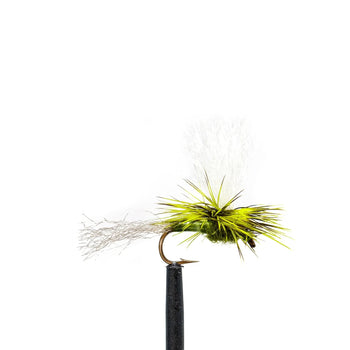 |
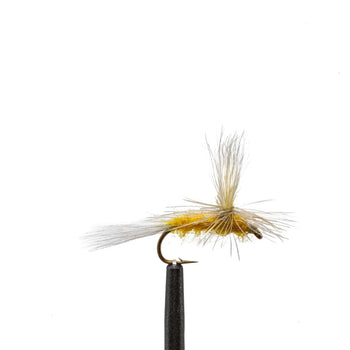
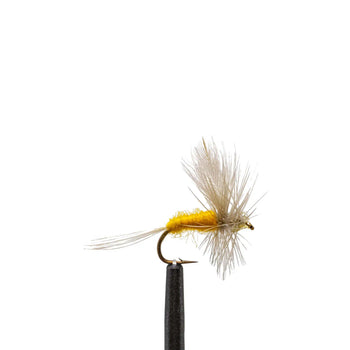
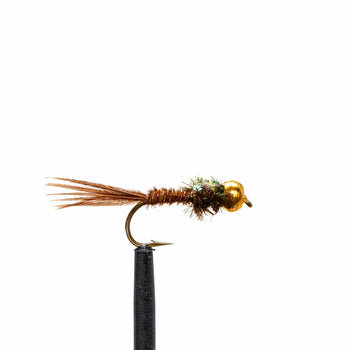
| Sulphur Para Dun | Sulphur Dun | Beadhead Flashback Pheasant Tail | Green Para Drake |
Sulphur Para Dun (#14–#18): The high-visibility evening dun for the daily Sulphur emergence. The pale yellow body matches Ephemerella invaria and dorothea precisely, and the parachute hackle with bright post keeps the fly visible in fading light when fish are most active. Fish it dead-drift on 5X or 6X fluorocarbon through the riffle-pool transitions where Sulphurs emerge. This is the fly that catches the most fish during the rise; carry several in each size.
Sulphur Dun (#14–#18): The traditional Catskill-style dun for selective risers. The hackled body sits lower in the surface film than a parachute pattern, giving you a different silhouette to show fish that have refused the Para Dun. Essential when fish are confidently feeding but ignoring the obvious presentation. Fish it on the longest fine-tippet drift you can manage, mending aggressively to eliminate any drag.
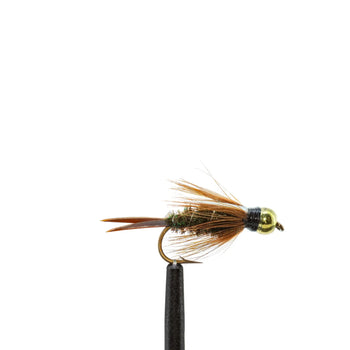
Beadhead Flashback Pheasant Tail (#14–#18): The most versatile mayfly nymph in the box — works as a Sulphur nymph in summer, a March Brown nymph earlier in the season, and a general searching pattern any time you can't see fish working. The flashback wing case adds subtle attraction without overpowering the silhouette. Fish it under a dry as a dropper, or on a tandem nymph rig with a heavier point fly. The fish that won't come up to the dun will often eat this twelve inches below.
Green Para Drake (#10–#12): The famous-hatch hedge. Keep one or two in the box for the narrow Eastern Green Drake window in late May and early June. When you find yourself standing in fishable Drake activity, this is the fly that turns a difficult, technical hatch into the kind of fishing that anglers remember for years. The parachute construction makes it visible against the cream-colored naturals, and the size and silhouette match a freshly emerged adult.

2. Mid-Atlantic & Appalachian Tailwaters
Famous Hatch: Sulphurs (South Holston, Watauga, Caney Fork) | Producing Hatch: Slate Drake / Isonychia
The Tennessee and North Carolina tailwaters are so Sulphur-famous that most anglers fishing them in June never fish anything else. The South Holston in particular has built an entire angling identity around its Sulphur hatch, and the Sulphur is a legitimately spectacular event — daily afternoon emergences, technical risers, picture-perfect tailwater conditions. It deserves the reputation.
But it's not the most productive hatch on those rivers in late June.
That distinction belongs to the Slate Drake — Isonychia bicolor, a swimmer mayfly that emerges from late June through July on most Appalachian tailwaters and major freestones like the South Branch of the Potomac, the upper Greenbrier, and the Smokies tailwaters. Isonychia is a unique hatch because the nymph is a strong swimmer that migrates to rocks and exposed structure to emerge, rather than drifting helplessly to the surface like most mayflies. That means the productive Isonychia game is mostly subsurface — large pheasant tail nymphs, prince nymphs, and beadhead patterns swung wet through riffles and tailouts in the late afternoon. Adults are sparser on the water than the nymph activity would suggest, which is exactly why most anglers miss it. They're looking for surface bugs and seeing a few stragglers, while the trout are eating migrating nymphs eighteen inches below.
The play on Mid-Atlantic and Appalachian tailwaters in late June: nymph the Isonychia migration window (typically 3 PM to dark) with size 10–12 Pheasant Tails and Prince Nymphs. When you see actual Slate Drake duns on the water in any number, switch to a March Brown East dry — close enough to a Slate Drake silhouette to fool most fish. Keep the Sulphur Para Dun ready for the evening transition; it's still essential for the last hour of light.
📌 Pro Tip: Isonychia nymphs swim — they don't drift passively. Dead-drift presentations work, but a slight upstream mend followed by a controlled swing through the back end of the run is the most productive presentation. Strip-set on any tightening of the line. Fish often hook themselves on the swing.
|
 |
|
 |
| Beadhead Flashback Pheasant Tail | Beadhead Prince Nymph | Sulphur Para Dun | March Brown East |
Beadhead Flashback Pheasant Tail (#10–#12): The Isonychia nymph play. Larger sizes than you'd normally fish — #10 and #12 — to match the actual size of mature Slate Drake nymphs migrating to structure in late June. The flashback wing case mimics the gas bubble that forms as the nymph prepares to emerge. Fish it dead-drift through the slower water just inside the main current seam, then allow it to swing across the tail of the run on a tight line.
Beadhead Prince Nymph (#10–#14): The Isonychia attractor. The peacock body and white biot wings create exactly the kind of buggy, slightly flashy profile that triggers reaction strikes from fish keyed on migrating nymphs. Particularly effective in slightly off-color tailwater conditions where natural patterns get lost. Fish it as the lead fly on a two-nymph rig with the Pheasant Tail trailing eighteen inches behind.
Sulphur Para Dun (#14–#16): Still essential on Mid-Atlantic tailwaters even when Isonychia is the headline. The Sulphur evening rise on the South Holston, the Watauga, and the Caney Fork is too consistent to ignore — you'll fish nymphs through the afternoon and shift to the Para Dun for the last ninety minutes of light. The pale yellow body matches Southern tailwater Sulphurs precisely.
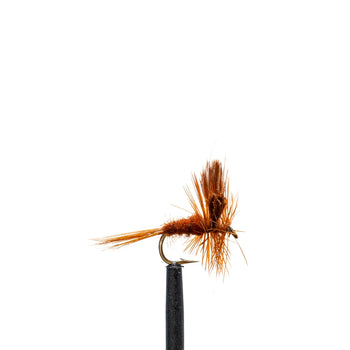
March Brown East (#10–#12): The Slate Drake dry fly substitute. When Isonychia adults are actually on the water in numbers, the March Brown East profile is close enough to a Slate Drake silhouette to fool selective fish — both insects share the dark mottled wing and rusty-brown body. Sized larger than a typical Mid-Atlantic mayfly imitation, this fly tells trout you're showing them something big and worth eating.
3. Southeast & Southern Tailwaters
Famous Hatch: Sulphurs (Hiwassee, lower White, Norfork) | Producing Hatch: Emergers and Cripples
Southern tailwater fish are the most pressured trout in America. The Hiwassee, the lower White River, the Norfork — these fisheries see boat traffic that Northeastern rivers can't imagine. By the time the calendar flips to June, the trout in them have seen ten thousand Sulphur Para Duns drift by in perfect water. They know what a fly looks like. They know what a leader looks like. They eat with a precision that frustrates anglers who learned to fish in less pressured water.
The honest read on these rivers in June isn't that the Sulphur isn't the right bug. It is. The honest read is that the dun isn't the right stage anymore. Pressured fish on Southern tailwaters routinely refuse the most beautifully tied Sulphur dun in favor of a cripple, a stuck dun, or an emerger riding in the surface film. The cripple — a Sulphur or Pale Morning Dun pattern designed to imitate a fly that didn't make it cleanly out of the nymphal shuck — is the most under-fished pattern type on Southern tailwaters by a wide margin.
The play in the Southeast in June: when the Sulphur dun isn't working on a fish you can see eating, switch to a cripple or emerger before you switch flies again. Drop the cripple two feet behind the dun on the same rig as your indicator. Or fish the cripple alone, treated with floatant only on the wing post, so it rides flush with the film like a struggling natural. Caddis are also peak in early June across the South, and an Elk Hair Caddis or Deer Hair Sparkle Caddis swung wet in the last hour of light produces evening fish that won't come up for any mayfly.
📌 Pro Tip: Fish eating cripples and emergers leave a quieter rise form than fish eating duns. Watch for a slow head-and-tail roll, a small bulge, or a confident sip with very little splash. If you see splashy aggressive rises, the dun is fine. If you see slow confident sips, you're seeing emerger feeders. Switch flies, not tippet size. For a deeper read on diagnosing rise forms in real time, see our Read the Rise framework.
 |
 |
 |
|
| Green Cripple Drake | Beadhead PMD Emerger | Deer Hair Sparkle Caddis | Sulphur Dun |
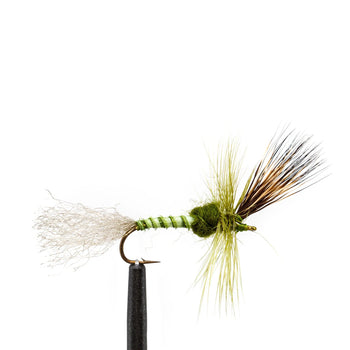
Green Cripple Drake (#12–#16): The producing-hatch lead. This pattern imitates a Sulphur or Drake mayfly that failed to fully emerge from its nymphal shuck — the most vulnerable stage of a mayfly's life and the one pressured tailwater trout key on hardest. The splayed wing profile sits flush in the surface film, exactly where stuck duns ride in real life. Treat only the wing post with floatant; let the body hang in the film. Fish it on the slowest dead-drift you can manage through confirmed risers refusing standard duns.
Beadhead PMD Emerger (#16–#18): The subsurface emerger play. Despite the Western name, this pattern works as a Sulphur emerger when sized down to #16 or #18 — the pale yellow body and emerger silhouette translate perfectly to Eastern Sulphur water. The beadhead gets the fly into the strike zone just below the surface where pre-emergent insects are most vulnerable. Trail it twelve to eighteen inches behind a visible dry as a dropper, or fish it solo on a long fluorocarbon leader through risers refusing surface patterns.
Deer Hair Sparkle Caddis (#14–#16): The evening caddis play. Caddis are peak across Southern tailwaters in early June, and the last hour of light belongs to caddis-feeding trout — but most anglers are already off the water. The deer hair wing and sparkle dubbing create a buoyant, visible silhouette that imitates both newly-emerged adults and egg-laying females. Fish it dead-drift through the riffles, then let it swing into a soft hackle presentation on the back end of the drift. Strikes on the swing are common.
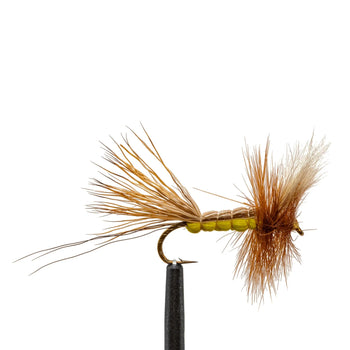
Sulphur Dun (#14–#16): Still the daytime essential. The traditional hackled dun is the pattern Southern tailwater fish have seen ten thousand times, but it's still the right answer when the dun is what's actually on the water. The low-riding silhouette catches the fish that won't take a parachute. Pair it with the Cripple as a trailer dropper to give selective fish two options on the same drift.

4. Midwest & Great Lakes
Famous Hatch: Hexagenia | Producing Hatch: Smallmouth on Topwater
The Hex hatch on the Au Sable, the Pere Marquette, the Manistee, the Wolf — this is the most romanticized event in Midwestern fly fishing. Size 4 mayflies emerging at full dark on warm summer nights. Drift boats with red lights. Brown trout that act like they've never seen a fly. Anglers who plan their entire June around it.
The Hex is real, and when it lines up, it's the experience that's worth the year of waiting. But it has the same problem as every famous hatch — the window is narrow, the timing is brutal, and the rivers that host it are crowded with anglers all waiting for the same thirty minutes of darkness. If you live within driving distance of the Hex water, you should absolutely fish it. But if you're a Midwestern angler who isn't camped on the Au Sable on the right night, June offers something even more productive that almost nobody talks about as a fly-rod target: smallmouth bass on topwater.
From the upper Mississippi to the New River, the Susquehanna to the Ohio, late June is peak smallmouth season across the entire warmwater fishery of the Midwest, Mid-Atlantic, and Great Lakes watershed. Smallmouth in the post-spawn period are aggressive, surface-oriented, and they crush poppers in shallow water from late afternoon into dark. A 7 or 8 weight rod, a floating line, a 0X bass leader, and a chartreuse or olive popper produces twenty fish on a good evening. Bigger fish — three to five pound smallmouth — are entirely realistic targets on the fly in June.
The play in the Midwest in June: keep one eye on the Hex calendar and one rod set up for smallmouth. The Hex is the headline event. Smallmouth is the everyday productive game from now until October. And when the Hex doesn't line up — which is most nights — the angler with the popper rig in the back of the truck still goes fishing.
📌 Pro Tip: The most common smallmouth popper mistake is stripping too fast. Let the popper sit motionless for five to ten seconds after the cast, then give it a single hard pop and let it rest again. Most smallmouth strikes come during the pause, not the pop. Anglers conditioned to trout movement under-fish the pause.
 |
 |
 |
 |
| Hexagenia | Hex Nymph | Poppers & Bass Bugs Collection | Loaded Medium Streamer Box |
Hexagenia (#6–#8): The famous-hatch headliner. When the Hex pops on the Au Sable, the Pere Marquette, or the Manistee at full dark, this is the fly you tie on and don't change. The bushy silhouette, extended body, and high-floating wings match the size and profile of a freshly emerged Hex dun precisely. Fish it on heavy tippet — 3X or even 2X — because the trout eating Hex are the biggest fish in the river and they don't act delicate. Cast across and slightly downstream, let it drag-free, and listen for the slurp.
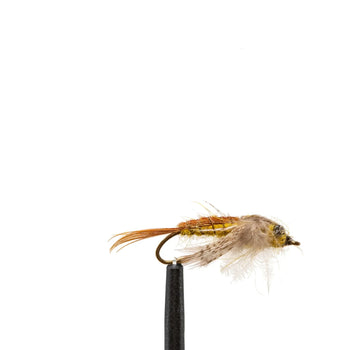
Hex Nymph (#6–#10): The actually-productive pre-hatch play. Trout key on migrating Hex nymphs in the hours before the adult hatch — typically late afternoon through dusk — and most anglers don't fish them. Dead-drift the nymph along silty or muddy bottoms where Hex burrows exist, or fish it on a slow strip retrieve in the upper water column as nymphs ascend. A two-fly rig with the Hex Nymph as your point fly and a smaller attractor above it covers both depths.
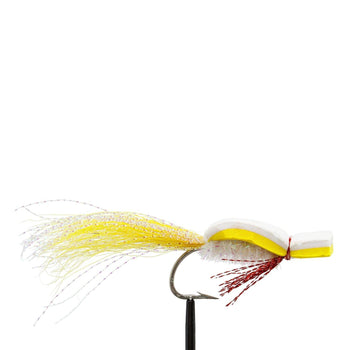
Poppers & Bass Bugs Collection: The producing-hatch reality. Smallmouth on topwater is the most under-appreciated fly fishing opportunity in the Midwest from June through September. Pick poppers in chartreuse, olive, and natural deer hair for clear water; brighter colors for stained water. Fish them on a floating line with a short, heavy leader — 7.5 feet of 0X or 1X — and a 7 or 8 weight rod. Cast tight to structure, let them rest, and strip with the long pauses described above. This is the most exciting topwater fly fishing most Midwestern anglers will ever do.
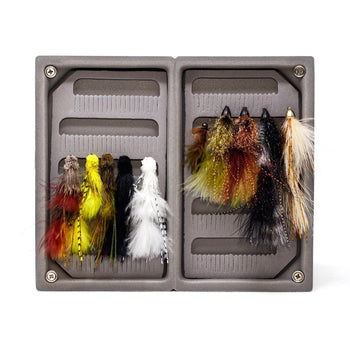
Loaded Medium Streamer Box: The subsurface smallmouth play. When topwater goes cold — bright sun, post-cold-front, mid-day heat — switch to streamers. The Medium Streamer Box contains ten proven patterns covering everything from jig-style sculpin imitations to articulated bait patterns. Fish them on an intermediate or sink-tip line with a strip-strip-pause retrieve along weed edges, current seams, and rocky banks. Smallmouth that won't commit to a popper will inhale a properly-presented streamer.
5. Mountain West & Rockies
Famous Hatch: Salmonflies & Henry's Fork Green Drakes | Producing Hatch: Yellow Sallies + PMDs Together
The Salmonfly hatch — the giant black-orange stonefly that emerges in waves up the Madison, the Big Hole, the Yellowstone, the Henry's Fork — is the headline event of late May and June across the Mountain West. So is the Henry's Fork Green Drake. Both deserve every word that's been written about them. Both also have the famous-hatch problem: short window, heavy pressure, and a tendency to disappoint anglers who travel for them and miss by a week.
The producing hatch through June across the entire Rocky Mountain West is the daily Yellow Sally + PMD double feature. Yellow Sallies — small yellow stoneflies, the same family we covered in our May Stoneflies Fly of the Month — start in mid-June and run hard through July. PMDs — Pale Morning Duns, the Western Sulphur — overlap completely and produce afternoon and evening rises on every wild trout river from Montana to Colorado. Most anglers fish one and ignore the other, but the most productive June rig in the Rockies is a Yellow Sally dry with a PMD emerger trailed eighteen inches behind it. The fish that won't eat the stonefly imitation will eat the mayfly emerger. The fish that won't eat the emerger will sometimes inhale the Sally on a confident drift. Two stages, two species, one rig.
This is also the through-line into our June Fly of the Month — the Yellow Sally, dropping Thursday. The hatch you've been ignoring while you watched the Salmonflies is about to get its own deep-dive post.
📌 Pro Tip: Yellow Sallies are most active in the warmest hours of the day — the opposite of most mayfly hatches. Fish the Sally hard from 11 AM to 3 PM, then transition to the PMD emerger and dun as afternoon shadows lengthen and water cools. The Sally bite often dies right as the PMD bite turns on. Don't switch flies mid-rise — switch flies between rises, on the next blank window.
 |
 |
|
|
| Yellow Sally | Yellow Foam Stimulator | Beadhead PMD Emerger | Green Para Drake |
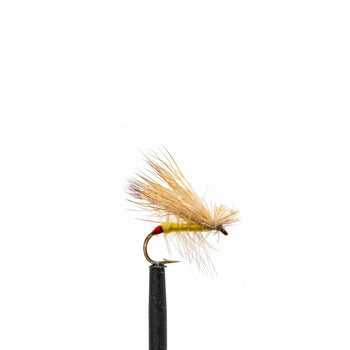
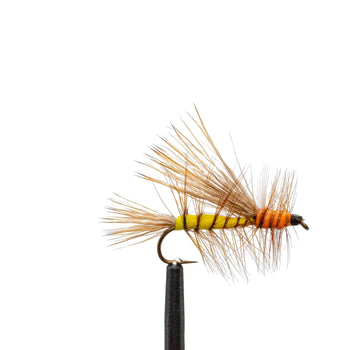
Yellow Sally (#14–#16): The producing-hatch headliner. This is the dry fly for the small yellow stonefly that hatches across the entire Rocky Mountain West from mid-June through July. The yellow body and natural hackle match the size and profile of a freshly emerged Sally adult precisely. Fish it on a 5X tippet through the warm, sunny hours of the day, casting tight to bank seams and current breaks where Sallies congregate. This pattern leads directly into our June Fly of the Month — keep watching.
Yellow Foam Stimulator (#12–#14): The high-visibility version. When you can't see the standard Yellow Sally pattern in choppy water or fading light, the foam body of the Stimulator keeps the fly floating and visible through long drifts. It also works as an indicator dry in a dry-dropper rig with a PMD emerger or small nymph trailing eighteen inches below. Particularly effective on the broken pocket water and faster runs where Sallies hatch in numbers.
Beadhead PMD Emerger (#14–#18): The other producing hatch. Pale Morning Duns overlap the Yellow Sally hatch completely across the West, and most days the most productive rig is the Sally up top with this emerger trailed behind. The beadhead sinks the fly to the meniscus where pre-emergent PMDs are most vulnerable. Fish that won't eat the surface Sally will inhale this on the dropper, and vice-versa. Two species, two stages, one rig.
Green Para Drake (#10–#12): The Henry's Fork hedge. When you find yourself standing in fishable Green Drake activity on the Henry's Fork, Silver Creek, or any of the spring creek fisheries where the Western Green Drake makes its short, electric appearance, this is the fly that converts. The parachute construction provides visibility against the cream-colored naturals, and the size and silhouette match the freshly emerged adult.

6. Pacific Northwest & California
Famous Hatch: Lower Deschutes Salmonflies | Producing Hatch: PMDs, Spinner Falls, and Evening Caddis
The Lower Deschutes Salmonfly hatch is one of the most-photographed events in Western fly fishing. So is the Yakima Salmonfly run a few weeks later. Anglers from the entire Pacific Northwest plan their year around them. Like every other famous hatch, they're real, they're worth fishing, and they last about a week per river.
What's actually fishing well for six straight weeks on every Pacific Northwest river — the Lower Deschutes, Upper Yakima, McKenzie, Owyhee, the Klamath drainages, the wild trout streams of the Sierra Nevada — is the late-June complex of PMDs, March Brown spinner falls, and evening caddis. The PMD hatch on the Yakima in particular is one of the most productive June mayfly events on the continent and gets almost no national press because the Salmonfly story overshadows it. The March Brown spinner fall — the egg-laying flight of females from the May hatch returning to deposit and die — happens between roughly 6 PM and 8 PM on most Western rivers through mid-June, and it's the most under-fished event of the season. Most anglers are off the water before it starts. The ones who stay catch their best fish of the trip.
Evening caddis tops it off. Every Pacific Northwest river hosts a daily caddis emergence and egg-laying flight in the last hour of light, and an Elk Hair Caddis swung wet through soft water at dusk catches fish that ignored everything during the day. The rig: PMD nymph or emerger as the deep play, Rusty Spinner for the 6-to-8 window, March Brown for the residual spinner activity, Elk Hair Caddis for the final hour. Four bugs cover the entire productive day on a Pacific Northwest river in June.
📌 Pro Tip: Spinner falls happen on calm water in fading light, which is hard to see. Use a Rusty Spinner with a tiny strip of orange or pink yarn glued to the top of the wing post for visibility. You'll trade some realism for a fly you can actually track, and the fish don't care. The post is above the surface; the silhouette they see from below is unchanged.
|
 |
 |
 |
| Beadhead PMD Emerger | Rusty Spinner | March Brown | Elk Hair Caddis |
Beadhead PMD Emerger (#14–#18): The deep play during the PMD hatch. Pacific Northwest PMDs on the Yakima, the Lower Deschutes, and the smaller wild trout streams hatch in the heat of the afternoon — typically between noon and 4 PM — and the most productive presentation is subsurface, not on the dun. The beadhead positions the emerger just below the surface film where pre-emergent PMDs are most vulnerable. Fish it as a dropper behind a visible dry or solo on a long fluorocarbon leader.
Rusty Spinner (#14–#18): The most under-fished pattern in Western fly fishing. Mayfly spinner falls — the egg-laying flight of females returning to deposit and die on the water — happen between roughly 6 PM and 8 PM on most Western rivers through June. The flush-floating, splayed-wing silhouette matches a spent spinner exactly. Most anglers are off the water before the spinner fall starts. The ones who stay catch the best fish of the trip on this fly.
March Brown (#12–#14): The Western March Brown imitation for the residual hatch and the related spinner activity. The Lower Deschutes and Yakima both host strong Western March Brown hatches that tail off into June, and the spinner fall of the Western March Brown overlaps the early-evening Rusty Spinner window. Same drift, same tippet, different silhouette. Carry both.
Elk Hair Caddis (#14–#16): The last-hour producer. Every Pacific Northwest river hosts a daily caddis emergence and egg-laying flight in the last hour of light, and this is the pattern. The elk hair wing keeps the fly visible and buoyant even in low-light, broken water. Fish it dead-drift through the riffles, then let it swing across the back end of the run on a tight line — caddis egg-layers actively skitter on the surface, and a swung Elk Hair Caddis imitates exactly that motion. Strikes on the swing are common and often violent.
The Saltwater Read — Briefly
For anglers who fish saltwater alongside the trout, June is its own kind of peak month. Striper migration is firing across the entire Northeast — Cape Cod, Long Island, the Jersey Shore, and the Maine coast all see strong June fishing on the fly with topwater poppers, deceivers, and clousers. Florida tarpon is on the tail end of prime time in the Keys and around Boca Grande; the fish that didn't get caught in May are still there, and they get less pressure. Bonefish are year-round but produce best in early morning before the heat shuts them down. Permit windows in the Lower Keys and Bahamas are open. And along the Pacific coast, sea-run cutthroat and the first early salmon runs are starting to show in the Puget Sound tributaries and Oregon coastal rivers.
Taking It to the Water
The pattern in every region is the same. There's a famous hatch — the one that sells trips, fills magazines, and gets every angler within driving distance excited about a narrow window. And there's a producing hatch — the one happening at the same time, quieter, less photogenic, and almost always more reliable. The famous hatch is worth fishing when it lines up. The producing hatch is worth fishing every day.
The strategic move in June isn't to abandon the famous hatch. It's to recognize that every river has both, and to plan your fishing around the producing one while staying ready for the famous one. Carry the patterns for both. Fish the rhythm of the day — nymphs in the morning, the producing-hatch dries through the heat, the emergers and spinners in the last two hours, the caddis swing into dark. June rewards anglers who fish the whole day, not just the headline hour.
The rivers are open. The hatches are happening. Pick your region, pick your producing hatch, and go fishing.


