

Fly of the Month: Read the Rise — How to Decode a Caddis Hatch in Real Time

April doesn't announce itself with a single obvious event. The water is still cold some mornings, hatches are unpredictable, and the angler who arrives at the river expecting a textbook emergence is often the one who drives home frustrated. But there's a hatch happening right now on rivers across the country that rewards preparation, patience, and one specific skill most anglers never develop: the ability to read a rise form and know exactly what the fish are eating.
That's this month's Fly of the Month — not a single pattern, but a system built around the caddis hatch and the discipline of reading what's actually happening on the water before you tie anything on.
Caddis are unlike any other insect in fly fishing. A mayfly hatch is largely sequential — nymph, emerger, dun, spinner, done. A caddis hatch is chaotic. On a single April evening, you may have larvae dislodging from the bottom, pupae swimming hard toward the surface, adults skating across the film, and spent females crashing back down to deposit eggs — all within the same two-hour window. Trout will lock onto one of those stages and ignore everything else. The angler who figures out which stage is happening first will out-fish everyone else on the water, every time.
The tool for doing that is your eyes, not your fly box. This post teaches you how to use them.
Why Caddis Are Different From Every Other Hatch
Most anglers understand the concept of matching the hatch. What they miss with caddis is that the hatch isn't one thing — it's four things happening simultaneously, and trout can shift between stages multiple times in a single afternoon without warning.
The caddis lifecycle moves from larva to pupa to adult to spent adult, but unlike mayflies, caddis pupae are active swimmers. They don't drift passively toward the surface — they swim, dart, and struggle, and that movement triggers aggressive predatory responses from trout. This is why a dead-drifted dry fly fails during a caddis hatch when all the fish are visibly rising: the rise forms look like surface feeding, but the trout are actually eating pupae just beneath the film and barely breaking the surface doing it.
Understanding the four signals below changes everything. Each one tells you a specific stage, a specific fly, and a specific presentation. Work through them in order, commit to what the fish are showing you, and adjust when they stop responding.
📌 Pro Tip: Water temperature is your single best predictor of where in the lifecycle the hatch is. Caddis activity builds meaningfully as temps push past 48°F and peaks in the 52–58°F range. Carry a thermometer and check it when you arrive. If you're below 48°F, start deep with pupae and larvae. Above 55°F and you may already be in the adult window.
Signal #1 — The Bulge Rise
What it looks like: A subtle subsurface boil. The surface pushes up and rolls without ever truly breaking. No visible mouth, no splash, often no sound. Easy to miss entirely if you're not watching for it. From a distance it can look like nothing — just a slight disturbance, a shadow, a wrinkle that disappears before you're sure you saw it.
What it means: Pupae rising through the water column, not yet at the surface. This is the most important and most missed stage of the entire caddis hatch. Trout are intercepting cased or free-swimming pupae as they make their ascent from the bottom, often in the top 12–18 inches of the water column. The fish isn't breaking the surface because it doesn't have to — the food is still below.
What to Tie On
 |
 |
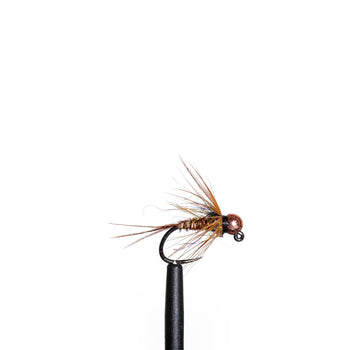 |
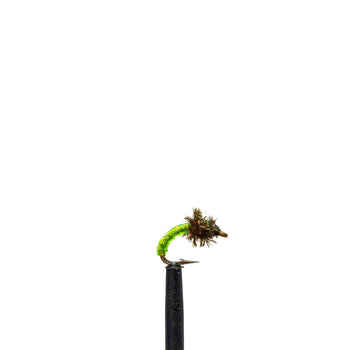
| Caddis Pupa – Brown | Caddis Pupa – Green | Beadhead Soft Hackle Pheasant Tail |
Caddis Pupa – Brown (#14–#16): The most direct imitation of a caddis pupa mid-ascent. Its soft body profile and subtle movement in the current give it the slightly compressed, emerging look of a pupa that hasn't fully unfurled yet. Fish it dead drift just below the surface film, or — better — with a small split shot 10 inches above it to keep it at the depth where the bulge rises are happening. Match color to what's hatching: brown for most April freestone rivers, green for spring creeks and tailwaters with heavier Rhyacophila caddis populations.
Caddis Pupa – Green (#14–#16): Same profile as the brown in a color that covers the bright chartreuse-bodied free-living caddis larvae common in many Western tailwaters. When you're seeing bright green naturals on the rocks or in your net, this is your pupa match. Particularly effective on spring creeks and tailwaters where Rhyacophila species are dominant.
Beadhead Soft Hackle Pheasant Tail (#14–#16): A versatile pupa imitation that works double duty. The bead gets it down fast, the soft hackle collar pulses naturally with every micro-current change, and the pheasant tail body suggests the segmented, compact profile of a pupa mid-emergence. Fish it on a dead drift first, then let it swing and lift at the end of the drift — that rising motion perfectly imitates a pupa accelerating toward the surface and is often when the eat happens.
How to Fish It
Dead drift a pupa or soft hackle through the zones where you're seeing bulge rises — typically the upper third of the water column over moderate-depth runs and riffles. A short indicator set high (18–24 inches above the fly) gives you the best strike detection without pulling the fly out of the feeding zone. When fish stop responding to the dead drift, switch to a swing: cast across and slightly downstream, let the fly sweep through the seam, and hold it at the end of the drift as it rises toward the surface. That pause and lift — the Leisenring lift — is one of the most productive moments in caddis fishing.
Signal #2 — The Splash Rise
What it looks like: Aggressive, committed, often audible. The fish fully breaks the surface, sometimes launching through it. Head and tail, or full body roll. Water sprays. You can't miss it.
What it means: Adults on the surface. The hatch is in full swing and trout have positioned into surface feeding lanes. This is the moment most anglers have been waiting for — and the easiest stage to fish, with one important caveat: adult caddis don't always drift quietly like a mayfly dun. They flutter, skitter, and struggle to take flight. Your presentation has to account for that behavior.
What to Tie On
 |
 |
 |
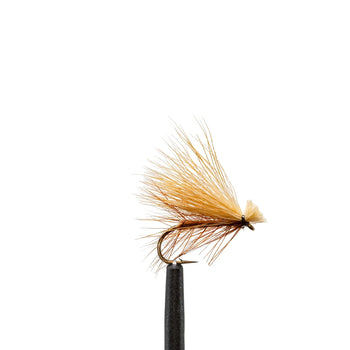
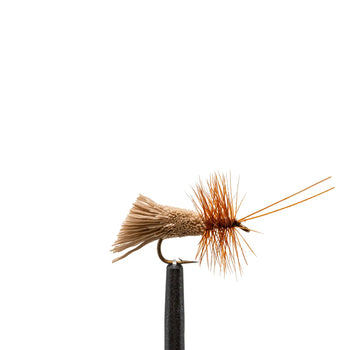
| Elk Hair Caddis | Goddard Caddis | Deer Hair Sparkle Caddis |
Elk Hair Caddis (#14–#16, natural, black, or olive): The most versatile adult caddis imitation in existence, and for good reason. The elk hair wing creates a high-riding silhouette that's visible in broken water, resistant to sinking, and naturally buoyant even after multiple casts. Fish it dead drift first — many anglers skip straight to skating and miss the easy eats from fish that are happy to take a stationary adult. If dead drifting isn't producing, add a subtle twitch or skate to trigger the reflex eat. Carry natural tan for most conditions, olive for spring creeks and greener water, black for low-light and evening fishing.
Goddard Caddis (#12–#14): The rough-water specialist. When flows are up and the surface is broken, the Goddard's deer hair body and generous profile create a pattern that stays afloat through riffles and pocket water where lighter dries would drown. Its larger silhouette also makes it easier to track in fast current — critical when you're watching for subtle takes in heavy water. Fish it the same way as the Elk Hair, starting with a dead drift before adding movement.
Deer Hair Sparkle Caddis (#14–#16): The Sparkle Caddis adds a shuck of trailing sparkle material behind the deer hair wing, imitating a caddis adult that hasn't fully separated from its pupal shuck. This is a deadly pattern during the transition from Signal #1 to Signal #2 — when trout are starting to eat adults but the pupa/adult window is overlapping. If fish are rising to adults but refusing your Elk Hair, the trailing sparkle on this pattern is often what closes the deal.
How to Fish It
Start with a dead drift upstream through rising fish. Present the fly 2–3 feet above the last rise you saw and let it come to them naturally. If you're getting refusals or fish are flashing at the fly without eating, try a single subtle skate — lift your rod tip slightly and draw the fly a few inches across the surface to imitate a struggling adult trying to take flight. Don't overdo it. One twitch, then let it drift again. That single movement often triggers the eat that a static presentation couldn't.
📌 Pro Tip: If fish are splashing aggressively at your dry fly but not hooking up, drop one hook size. April trout keying on caddis are often more size-selective than you'd expect, and going from a #14 to a #16 can be the difference between a miss and a solid eat.
Signal #3 — The Head-and-Tail Roll
What it looks like: Slow, deliberate, almost lazy. The fish's head appears first, then the dorsal fin, then the tail — all in a fluid sequence, like a porpoise rolling through the surface. No splash, no urgency. These are the quietest rises on the river and the ones most anglers walk right past.
What it means: Spent female caddis lying flush in the surface film after returning to deposit eggs. The fish are sipping them with almost no effort — these insects are dead or dying, completely stationary, going nowhere. Trout don't need to rush. They simply rise, open their mouth, and the food is there. These fish are often the largest, most selective trout on the water, feeding in the slowest, flattest water near the bank or in tailouts.
What to Tie On
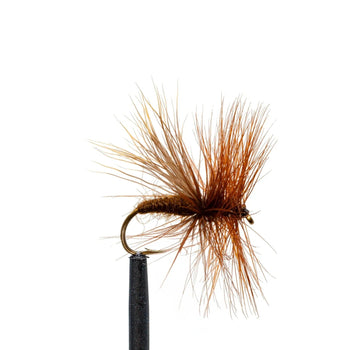 |
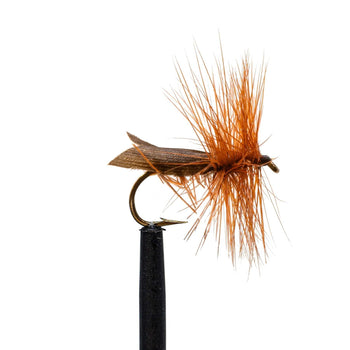 |
| Brown Caddis | Tentwing Caddis |
Brown Caddis (#14–#16): A low-riding adult pattern with a natural brown body that sits flush in or just below the surface film rather than riding high on its hackle. This is exactly the profile of a spent or exhausted adult caddis, and it's what trout producing head-and-tail rises are keying on. Fish it without floatant — let it ride low and flush, which is counter-intuitive but correct for this specific rise form.
Tentwing Caddis (#14–#16): The tent-shaped wing of this pattern creates a perfectly realistic profile of an adult caddis at rest on the water — wings folded in their characteristic tent shape, body resting in the film. This is the most imitative spent caddis pattern in the box and the one to reach for when trout are being particularly selective in slow, flat water. The realistic profile gives selective fish exactly what they're looking at.
How to Fish It
Approach from downstream and below the rising fish. Keep as much line off the water as possible — drag is your enemy here, and in slow flat water even the slightest drag will spook every fish in the pool. Present the fly 3–4 feet above the last rise ring with a reach cast or pile cast to buy yourself extra drag-free drift. Then wait. Don't twitch, don't skate, don't move it at all. These fish are eating stationary food. The best thing you can do after the cast is nothing.
📌 Pro Tip: Spent caddis fishing demands lighter tippet than you think you need. In slow, flat tailouts where these fish are feeding, drop to 5X or 6X fluorocarbon. The thinner diameter reduces drag and makes the fly behave more naturally. You'll lose the occasional fish — but you'll get far more eats.
Signal #4 — No Visible Rises, Caddis in the Air
What it looks like: Caddis adults flying everywhere — sometimes in dense clouds near the bank, sometimes just a few scattered in the air. But the surface looks quiet. You're scanning for rises and not finding them. The river looks fishless.
What it means: This is actually one of the best signs on the water, and most anglers pack up and leave when they see it. Trout are eating caddis pupae subsurface before they ever reach the surface film. The hatch is happening — it's just happening two feet below where you're looking. Fish are stacked and feeding aggressively; they're just not giving themselves away at the surface.
What to Tie On
 |
 |
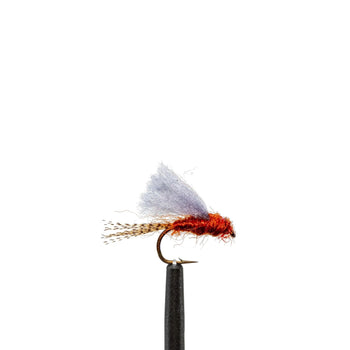 |
| Sparkle Rock Roller | Beadhead Soft Hackle Flash Pheasant Tail | Brown Emerger |
Sparkle Rock Roller (#14–#16): One of the most underused patterns in the caddis arsenal. The Sparkle Rock Roller imitates a cased caddis larva that's been dislodged from its rock and is tumbling through the current — exactly the kind of easy, helpless food that trout pick off without effort. When caddis are in the air but the surface is quiet, fish are often eating dislodged larvae and ascending pupae simultaneously. Run this as your anchor fly in a two-nymph rig with a pupa pattern trailing behind.
Beadhead Soft Hackle Flash Pheasant Tail (#14–#16): The flash version of the soft hackle pheasant tail adds a subtle glint that mimics the gas bubble trapped inside a caddis pupa as it rises toward the surface — a detail that trout in clear water respond to strongly. Fish this as your trailing fly in a two-nymph rig, or swing it solo through likely seams when you want to cover more water. The combination of bead weight and soft hackle movement makes it effective on both the dead drift and the swing.
Brown Emerger (#14–#16): When fish are feeding subsurface but high in the water column — just below the film — the Brown Emerger bridges the gap between a pupa and an adult. Its unweighted construction lets it ride naturally just below the surface, imitating a caddis caught in the transition between underwater and airborne. Fish it unweighted under a small indicator or as a dropper trailing 12–16 inches behind a visible dry fly. This is the pattern to use when trout are refusing your dry but clearly feeding nearby.
How to Fish It
Run a two-nymph rig with the Sparkle Rock Roller as your anchor and the Beadhead Soft Hackle Flash Pheasant Tail trailing 12–16 inches behind. Set your indicator at 1.5 times the depth and work through the riffles and moderate runs where caddis pupae are ascending. When you've covered the likely dead-drift water, switch to a soft hackle swing: cast across and slightly downstream, mend once to control speed, and let the fly sweep through the seam. Hold it at the end of the swing and wait for the grab before lifting for the next cast. That pause — the fly hanging in the current as it rises toward the surface — is where most takes happen and where most anglers miss them by lifting too early.
📌 Pro Tip: When you see heavy caddis flight but no surface rises, don't leave. Set up in a run with good depth and moderate current and work the water methodically. This signal often precedes a full surface hatch by 20–30 minutes. Fish the subsurface while you wait, and be ready to switch to dries when the first rise rings appear.
Build Your April Caddis Box
You don't need every pattern in the collection to fish caddis effectively. A focused selection that covers all four signals gives you the versatility to adapt as conditions change throughout the evening.
| |
|
|
|
| Caddis Pupa – Brown | Beadhead Soft Hackle Pheasant Tail | Sparkle Rock Roller | Elk Hair Caddis |
| |
|
|
|
| Deer Hair Sparkle Caddis | Brown Caddis | Tentwing Caddis | Brown Emerger |
Subsurface (Signals #1 and #4): Caddis Pupa Brown and Green (#14–#16), Sparkle Rock Roller (#14–#16), Beadhead Soft Hackle Pheasant Tail (#14–#16), Beadhead Soft Hackle Flash Pheasant Tail (#14–#16)
Surface (Signal #2): Elk Hair Caddis in natural, black, and olive (#14–#16), Goddard Caddis (#12–#14), Deer Hair Sparkle Caddis (#14–#16)
Spent/Film (Signals #3 and transition): Brown Caddis (#14–#16), Tentwing Caddis (#14–#16), Brown Emerger (#14–#16)
Carry 2–3 of each in your primary sizes and you're covered for every signal the river will throw at you. The full JHFLYCO Caddis Collection has everything you need in one place.
Taking It to the Water
The caddis hatch rewards the angler who watches before casting. Spend the first ten minutes at the water's edge doing nothing but reading rises. Find a fish, watch it feed three or four times, identify the rise form, and match it to one of the four signals above. Then tie on the right fly and make your presentation.
If you're not getting eats after fifteen minutes, move to the next signal down the list — not to a different fly within the same signal. The most common mistake during a caddis hatch isn't the wrong pattern, it's the wrong stage. A beautiful presentation of the perfect adult dry fly to a fish eating pupae two feet below the surface will fail every cast. Read the rise first. The fly selection follows.
April caddis fishing is some of the most dynamic and technically satisfying angling of the entire season. The insects are unpredictable, the trout are engaged, and the angler who can read what's happening in real time has a genuine edge over everyone else on the water. That's the skill this month's FOTM is built around. Learn to read the rise and the right fly becomes obvious.
SHOP OUR CADDIS COLLECTION
RELATED ARTICLES:
- Caddis Chronicles: A Guide to the Mother's Day Hatch
- Fly of the Month: How to Fish the March Brown System
- Early Spring Fly Box Essentials: What to Carry, What to Cut, and How to Organize It
- Indicator Fishing Gets Easier in March
- Chasing Season Starts Now: When to Throw Micro Streamers — and When to Go Full Meat


