

25 Essential Flies: A Beginner’s Guide to Building the Perfect Fly Box

Summer is the best time to learn fly fishing — the water is warm, the fish are active and looking up, and insects are everywhere both on the water and along the banks. If you're just starting out, the sport can feel like learning a whole new language: leaders, tippets, hatches, and dozens of fly patterns staring back at you from the fly shop wall. It's exciting, but a little overwhelming.
One of the most common questions beginners ask is: "Which flies should I start with?" The truth is, no fly will catch fish everywhere, every time. But there are proven patterns that have stood the test of time — flies that consistently produce across different waters, seasons, and conditions.
Think of these patterns as your foundational fly box — a toolkit of versatile, reliable flies you can reach for with confidence. The goal of this guide is to explain what each fly is, what it imitates, and how and when to fish it, so you'll know exactly why it works.
Whether you're chasing trout on a mountain stream, exploring a warmwater pond, or planning your first big fishing trip, stocking these 25 must-have flies will give you the confidence to step to the water ready to succeed.
Dry Flies & Terrestrials
Dry flies are designed to imitate adult aquatic insects — like mayflies, caddisflies, and stoneflies — that float on the surface of the water. Terrestrials, on the other hand, imitate land-based insects such as ants, beetles, and grasshoppers that accidentally end up in the stream. Both types are fished on top, making them some of the most exciting patterns to use because you actually see the fish rise and take your fly.
For beginners, dry flies and terrestrials are a great place to start because they're easy to track on the water, provide clear visual feedback, and often draw aggressive strikes in warmer months. During summer, when insect activity is high both in the air and on land, having a mix of these patterns in your box is essential. Whether you're matching a hatch with a dry pattern or simply tempting a hungry trout with a juicy terrestrial, these flies can produce fast-paced, unforgettable fishing days.
 |
 |
 |
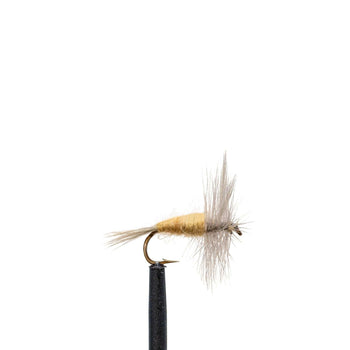 |
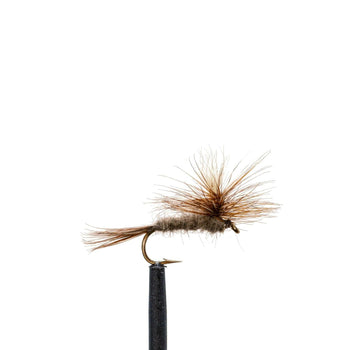
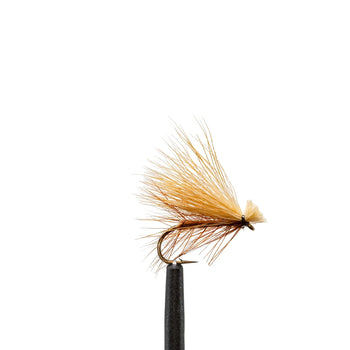
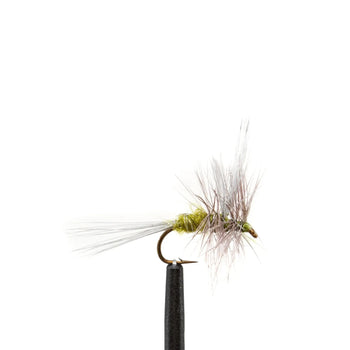
| 1. Parachute Adams | 2. Elk Hair Caddis | 3. Blue-Winged Olive | 4. Pale Morning Dun |
1. Parachute Adams
What It Is: The Parachute Adams is arguably the most versatile dry fly ever tied — a variation of the classic Adams with a parachute hackle wound horizontally around a white post of calf tail or poly yarn. This design lets the fly sit flush in the surface film, showing a realistic profile to fish while the bright post keeps it easy for you to track. The gray body and mixed grizzly-and-brown hackle give it a buggy silhouette that isn't locked to one insect, making it an outstanding search pattern. Typically tied in sizes 12–20, it matches small to medium mayflies found in nearly every trout stream.
What It Mimics: Mayfly duns and spinners, small caddisflies, and general mayfly-type insects. Because of its coloration, it can also pass for midge clusters in a pinch.
When to Use: Effective from spring through late fall, especially during selective feeding in calm, clear water when trout have time to inspect food. Works on freestone rivers, spring creeks, and stillwater alike.
How to Fish It: Present with a drag-free drift to rising fish. The low-riding profile is especially effective on smooth water. Use a floating line with a 9–12 ft leader tapered to 5X or 6X, and mend line as needed to prevent unnatural movement.
Why It Works: The parachute hackle slows the drift for a natural presentation, while the post gives you high visibility without spooking fish. It rides high enough to see, yet low enough to look vulnerable.
📌 Pro Tip: When matching a hatch, focus on size before color. If the naturals are size 18, fish the Parachute Adams in that size — the right profile matters more than the exact shade.
2. Elk Hair Caddis
What It Is: Designed by Al Troth in the 1950s, the Elk Hair Caddis remains one of the most buoyant and durable dry flies in existence. Its body is made from fine dubbing, ribbed with wire for durability, palmer-hackled for added floatation, and topped with a distinctive wing of light elk hair. The wing flares backward, giving it a realistic tent-shaped profile. Common colors include tan, olive, and black, tied in sizes 12–18.
What It Mimics: Adult caddisflies — active insects that skate, hop, and drift on the surface, often laying eggs in riffles and along banks.
When to Use: Late spring through early fall, particularly in the evenings or on warm, overcast days. Also excellent as an attractor dry when no obvious hatch is occurring.
How to Fish It: Pair with a 7.5–9 ft leader tapered to 4X–5X tippet. Drift it naturally through riffles and pocket water, or add short twitches to imitate a caddis trying to take off. In slower water, present it softly with minimal disturbance.
Why It Works: The elk hair wing and hackle keep it riding high and visible even in fast water. The wire ribbing makes it last through dozens of fish — a plus for beginners still learning careful casting.
📌 Pro Tip: In slow pools, trim the hackle flush on the underside — this lets the fly sit lower in the film and look more realistic to selective trout.
3. Blue-Winged Olive (BWO)
What It Is: The Blue-Winged Olive imitates one of the most common mayfly species in North American waters. It features an olive to olive-brown slender body, gray or dun hackle, and upright wings of light gray material. Tied in sizes 16–22 to match the naturally small size of BWOs. This is one of the most important mayfly patterns to carry, and it pairs perfectly with the subsurface stages in our Mayfly Life Stages Box.
What It Mimics: Adult Blue-Winged Olive mayflies in their dun stage, which emerge in cooler, often overcast weather and are a staple food source for trout.
When to Use: Best in late winter, early spring, and fall when BWOs are most active. Prime fishing often occurs on cloudy days with light drizzle, when hatches can last for hours.
How to Fish It: Fish on a floating line with a long, fine leader (12 ft, 6X–7X) to avoid spooking selective trout. Present with a dead drift over rising fish. If trout are picky, try an emerger version or fish a BWO dry with a trailing unweighted nymph.
Why It Works: BWOs are among the most reliable cold-weather hatches, and trout often feed on them exclusively when present. The slim profile and muted colors perfectly match the natural insect.
📌 Pro Tip: During heavy BWO hatches, position yourself downstream and make reach casts to keep drag off your fly — BWOs drift slowly, and trout will refuse anything that doesn't match their pace.
4. Pale Morning Dun (PMD)
What It Is: The Pale Morning Dun imitates one of the most important and widespread mayfly hatches in North America. It features a slender, pale yellow to light olive body, fine tails, upright dun-colored wings, and light hackle. Tied in sizes 14–18, it closely matches the delicate profile of the natural insect.
What It Mimics: Adult Pale Morning Dun mayflies in their dun stage. PMDs are a staple hatch on many trout streams from late spring through early fall, often producing steady surface activity for hours at a time.
When to Use: From late May through September, depending on region. Most hatches occur mid-morning to early afternoon, but in hot weather they may start earlier or later in the day.
How to Fish It: Fish on a floating line with a 12–14 ft leader tapered to 6X for delicate presentation. Cast to rising fish with a drag-free drift, or target likely feeding lanes during an active hatch. If fish are picky, switch to a parachute or CDC emerger version.
Why It Works: The PMD is a frequent, predictable hatch trout recognize instantly. Its slim, pale body and upright wings provide a perfect silhouette, and trout often feed on PMDs selectively when they're abundant.
📌 Pro Tip: During heavy PMD hatches, watch for trout feeding just beneath the surface — they may be taking emergers. Pair your PMD dry with an RS2 dropper to cover both life stages.
 |
 |
 |
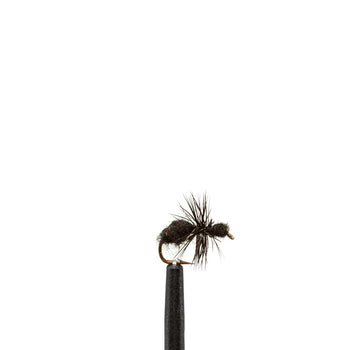 |
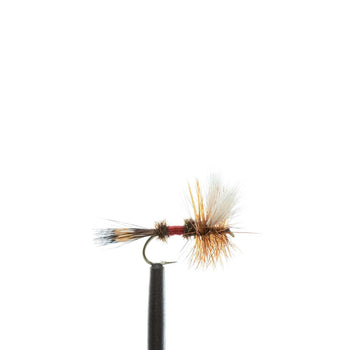
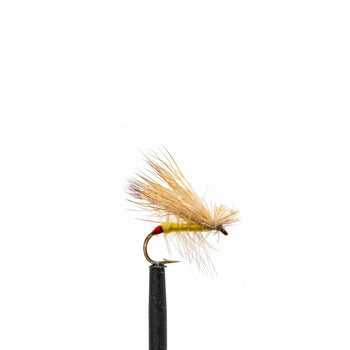
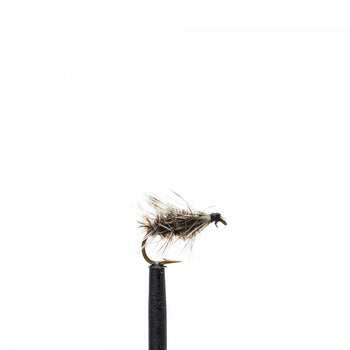
| 5. Royal Wulff | 6. Yellow Sally | 7. Griffith's Gnat | 8. Black Ant |
5. Royal Wulff
What It Is: A high-floating attractor dry fly designed by Lee Wulff, featuring a body of iridescent peacock herl separated by a bright red floss band, upright white calf tail wings, and brown hackle. The calf tail wings stand tall and bright, making the fly easy to spot even in choppy currents. Commonly tied in sizes 10–16.
What It Mimics: Not tied to one insect — it's an attractor that suggests a variety of big, tasty bugs, from large mayflies to terrestrials. Its bright colors make it as much about visibility as imitation.
When to Use: Ideal in summer when trout are opportunistic feeders. Especially effective in fast, broken water where visibility is key.
How to Fish It: Cast into riffles, pocket water, or turbulent runs and let it drift naturally. Because it floats so well, it's perfect as the "dry" in a dry-dropper rig to suspend a nymph.
Why It Works: The bright red band and peacock herl catch the eye, while the high-floating calf tail wings keep it visible to you. The combination triggers reaction strikes from opportunistic trout.
📌 Pro Tip: When fishing new water with no obvious hatch, start with a Royal Wulff. It often draws aggressive strikes simply because it looks big and edible.
6. Yellow Sally
What It Is: The Yellow Sally is a small stonefly imitation tied to match the slender, bright yellow adults that appear on many trout streams in late spring and summer. It typically features a yellow thread or dubbed body, fine ribbing, sparse hackle, and light-colored elk or deer hair wings for buoyancy. Commonly tied in sizes 14–18.
What It Mimics: Adult Yellow Sally stoneflies — active, delicate stoneflies that skitter across the surface to lay eggs, making them vulnerable to rising trout.
When to Use: Best from late spring through mid-summer when Yellow Sally hatches occur, particularly in the afternoon and evening. Productive in clear freestone streams and tailwaters with strong stonefly populations.
How to Fish It: Fish on a floating line with a 9–12 ft leader tapered to 4X–5X. Cast tight to the bank or into riffles, then drift naturally. Occasional short twitches can imitate the erratic movements of a live Sally.
Why It Works: The bright yellow coloration is highly visible in natural light, while the slender profile matches the real insect perfectly. Trout often take it confidently because it looks like a familiar, calorie-rich meal.
📌 Pro Tip: During a heavy hatch, use a Yellow Sally as the dry in a dry-dropper rig with a small beadhead nymph below — you'll imitate both adults and emerging nymphs at the same time.
7. Griffith's Gnat
What It Is: A small, delicate dry fly made from peacock herl wrapped to form the body, with fine grizzly hackle palmered throughout. The hackle fibers trap air and help the fly sit high in the film while imitating clusters of tiny insects. Commonly tied in sizes 18–24 to match midge clusters or small mayflies.
What It Mimics: Clusters of midges (mating adults) or very small aquatic insects trapped in the surface film. These occur year-round but are especially important in winter and early spring.
When to Use: Most effective during calm conditions when trout are sipping gently at the surface, often in slow pools or tailouts. Winter and early spring are prime, but it can also work during summer midge activity.
How to Fish It: Present with a delicate, drag-free drift using a long leader and light tippet (6X–7X). Cast upstream of rising fish and let it float naturally into the feeding lane. In stillwater, drop it gently to avoid spooking fish.
Why It Works: The peacock herl body adds subtle iridescence, while the hackle creates the impression of multiple tiny wings or legs. This makes it highly convincing to trout feeding on clusters of small insects.
📌 Pro Tip: When trout refuse larger dries during a hatch, switch to a size 20–22 Griffith's Gnat. Downsizing often turns refusals into confident takes.
8. Black Ant
What It Is: A simple but deadly terrestrial pattern, the Black Ant is usually tied with two distinct body segments of peacock herl, foam, or black dubbing, separated by thread wraps to create the classic "wasp waist" shape. Some versions include a sparse hackle collar for flotation, while others add small wings. Sizes range from tiny (#20) for small ants to larger (#12–14) for winged varieties.
What It Mimics: Ants — one of the most common and abundant terrestrial insects to end up in streams and rivers. Winged ants are especially important during mating flights, when thousands can be blown onto the water at once.
When to Use: Summer through early fall, especially on warm, windy afternoons or after rainfall when ants are knocked from bankside vegetation. Winged ant falls can be some of the most exciting dry fly fishing of the season.
How to Fish It: Use a floating line with a 9–12 ft leader tapered to 5X or 6X. Cast tight to grassy banks, under overhanging branches, or along foam lines and let the fly drift naturally. Avoid excessive false casting, as ants are best presented with minimal disturbance.
Why It Works: Ants are high-protein, easy meals that trout readily recognize. The segmented silhouette is distinctive, and fish often commit aggressively once they spot one.
📌 Pro Tip: After summer thunderstorms, keep an eye out for large winged ants on the water. Switch to a larger (#14–16) winged ant pattern to capitalize on the feeding frenzy.
 |
 |
 |
|
| 9. Black Beetle | 10. Dave's Hopper | 11. Chubby Chernobyl |
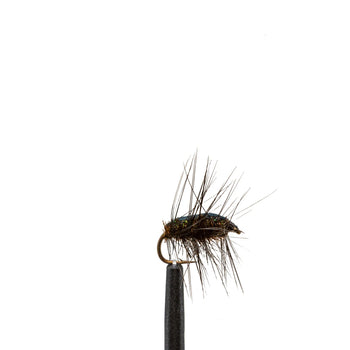
9. Black Beetle
What It Is: The Black Beetle is a natural-material terrestrial that imitates the beetles trout feed on all summer long. Unlike big foam attractors, it's a subtle, realistic pattern with a dark peacock-herl or dubbed body and a low-riding profile that sits flush in the film. Tied in sizes 10–16, it's built for the moments when fish are inspecting their food rather than crashing it.
What It Mimics: Terrestrial beetles that tumble off bankside vegetation into the water — a constant, high-protein summer food source that trout key on more than most anglers realize.
When to Use: Summer through early fall, especially on spring creeks, small streams, tailwaters, and any flat, clear water where a foam attractor is too much fly. Warm, breezy afternoons knock the most beetles onto the water.
How to Fish It: Fish on a floating line with a 9–12 ft leader tapered to 5X. Cast tight to grassy banks, undercut edges, and overhanging brush, and let it drift drag-free. The dark silhouette can be hard to see, so track it by the ring of the rise or add a tiny indicator post.
Why It Works: Its realistic, low-riding profile fools selective fish that refuse showier flies. Trout see the dark underside against the sky exactly the way they see the naturals, and they eat it with confidence.
📌 Pro Tip: On hard-fished water where trout ignore hoppers and foam, a small black beetle drifted tight to the bank is often the fly that finally gets eaten. When in doubt in summer, go subtle.
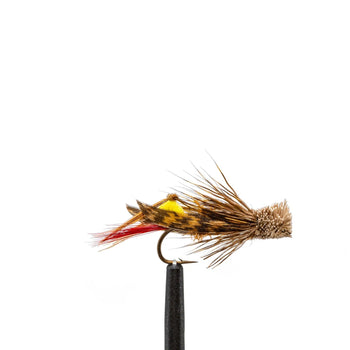
10. Dave's Hopper
What It Is: Dave's Hopper is a time-tested grasshopper imitation created by Dave Whitlock, known for its realistic profile and excellent buoyancy. The body is built with spun and clipped deer hair, giving it a segmented, tapered shape that floats high while maintaining durability. Yellow or tan body tones are most common, paired with brown hackle, a deer hair wing, and rubber legs for lifelike movement. Tied in sizes 8–12.
What It Mimics: Adult grasshoppers that accidentally end up in the water. These meaty terrestrials are a significant summertime food source for trout, bass, and panfish.
When to Use: Mid to late summer through early fall, especially on warm, breezy days when hoppers are active in meadows and along grassy banks. Afternoons are often prime, as hoppers are more likely to be knocked into the water during the heat of the day.
How to Fish It: Use a floating line with a short, stout leader (7.5–9 ft, 3X–4X) for accurate turnover of the large fly. Cast close to grassy banks, undercut edges, and along seams, letting it drift naturally with occasional short twitches to mimic a struggling hopper.
Why It Works: The spun deer hair body keeps the fly riding high, the rubber legs create constant motion, and the realistic shape matches a familiar, protein-rich meal. The buoyancy also makes it an excellent choice for suspending a dropper fly.
📌 Pro Tip: On slower meadow streams, try casting upstream at a 45° angle and giving one or two subtle twitches as the fly drifts past cover — it often triggers explosive strikes from hidden fish.
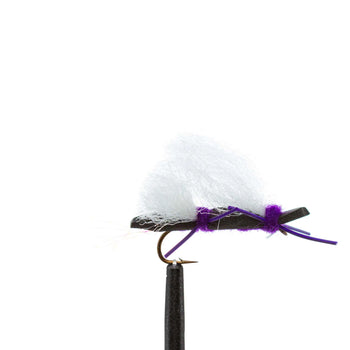
11. Chubby Chernobyl – Black/Purple (Knockout)
What It Is: The Chubby Chernobyl is a high-floating foam terrestrial/attractor built to handle big water and heavy dropper rigs. The Black/Purple "Knockout" variation features a segmented foam body in alternating black and purple for bold contrast, rubber legs for lifelike movement, and a flashy synthetic wing for visibility. The wing also helps support heavy nymphs when fished as a hopper-dropper rig. Want to go deeper on foam attractors? Read our guide to fishing big foam for summer trout.
What It Mimics: A versatile attractor that can suggest large stoneflies, grasshoppers, crickets, beetles, or even big caddis. The flashy black and purple combination draws attention in all water types.
When to Use: From late spring through early fall during stonefly and terrestrial seasons. Works particularly well in midsummer when hoppers and large insects are abundant.
How to Fish It: Fish on a floating line with a short, stout leader (7.5–9 ft, 3X–4X) for turnover power. Cast along grassy banks, into riffles, or over seams, letting it drift naturally. It's ideal as the top fly in a hopper-dropper rig with a weighted nymph underneath.
Why It Works: The foam construction makes it nearly unsinkable, the rubber legs provide constant motion, and the bright wing ensures visibility even in rough water. The black and purple coloration is a proven combination for aggressive summer strikes.
📌 Pro Tip: In faster water, give the fly slight twitches to mimic a struggling insect — this can trigger savage takes from opportunistic trout.
Nymphs & Emergers
While surface takes are thrilling, the truth is that most trout feed below the surface for the majority of their diet. Aquatic insects spend most of their lives in immature stages, drifting or crawling along the riverbed before they ever hatch into flying adults. Nymphs imitate these underwater stages — mayfly, caddis, stonefly, and midge larvae — making them some of the most consistently productive patterns you can fish.
Emergers represent the in-between stage, when an insect is rising toward the surface to hatch. At this moment, the bug is highly vulnerable, trapped in the surface film, and trout know it. Fishing emergers can be deadly during a hatch, especially when you see fish feeding just below the surface but ignoring dries.
For beginners, learning to fish nymphs and emergers is one of the fastest ways to start catching more fish. They work year-round, in nearly any water type, and can be fished in many ways — from a simple indicator setup to the increasingly popular euro-nymphing style. If nothing is happening on top, switching to these subsurface flies is often the key to unlocking steady action.
 |
 |
 |
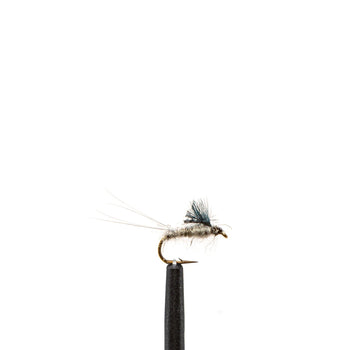 |
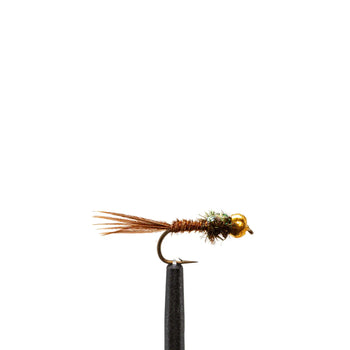
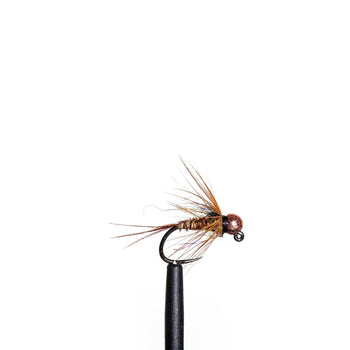
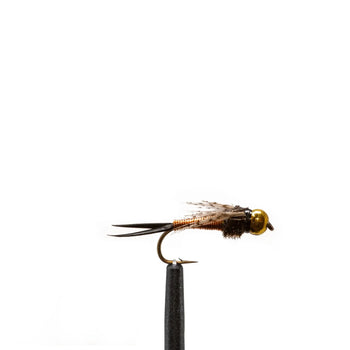
| 12. Pheasant Tail Nymph | 13. BH Flashback Pheasant Tail | 14. BH Soft Hackle Pheasant Tail | 15. RS2 |
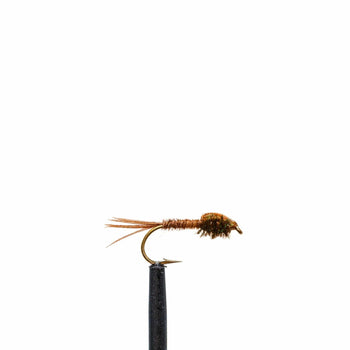
12. Pheasant Tail Nymph
What It Is: One of the most natural-looking and effective nymph patterns ever tied, the Pheasant Tail is constructed from mottled brown pheasant tail fibers wrapped to form a slim, tapered abdomen. Fine copper wire ribbing adds segmentation and durability, while a thorax of peacock herl gives a subtle flash. Tied in sizes 14–20, it's an understated but deadly match for natural mayfly nymphs.
What It Mimics: Mayfly nymphs in their aquatic stage before emergence. These are one of the most important and abundant food sources for trout in rivers and streams.
When to Use: Year-round, but especially productive before and during a mayfly hatch when trout are feeding subsurface. Works in freestone rivers, spring creeks, and stillwater.
How to Fish It: Use a floating line with a 9–12 ft leader tapered to 5X or 6X. Fish it dead drift under an indicator or tight-line Euro-style in riffles and runs. Add split shot if necessary to get down quickly in deeper water.
Why It Works: The natural mottling of pheasant tail fibers and the slim profile perfectly match a broad range of mayfly nymphs. It's subtle enough to fool selective trout while still visible enough in varied water.
📌 Pro Tip: Carry both weighted (beadhead) and unweighted versions. Use the beadhead to reach deep runs and the unweighted pattern in shallow, slow-moving flats.
13. Beadhead Flashback Pheasant Tail
What It Is: A modern, attention-grabbing twist on the classic Pheasant Tail. It retains the natural pheasant tail fiber body and fine copper wire ribbing, but adds two upgrades: a gold beadhead for weight and an iridescent mylar "flashback" wing case that reflects light. The bead helps the fly sink quickly without extra split shot, while the flashback mimics the shimmer of an emerging insect. Tied in sizes 14–18.
What It Mimics: Emerging mayfly nymphs rising through the water column. The reflective wing case resembles the gas bubble or sheen that developing nymphs produce as they ascend toward the surface to hatch.
When to Use: Year-round, but especially during mayfly hatches when fish are feeding subsurface. Particularly effective on overcast days or in lightly stained water, when a touch of flash helps fish spot the fly.
How to Fish It: Fish it under an indicator in a dead drift, or as part of a Euro-nymphing rig for better depth control. In hatch conditions, position it mid-column rather than bouncing right along the bottom, since many strikes happen as the nymph rises.
Why It Works: It blends the subtle, natural profile of the Pheasant Tail with just enough flash to get noticed without spooking fish. The bead and slim body drop it quickly into the strike zone.
📌 Pro Tip: Use this as the dropper in a hopper-dropper rig during summer mayfly hatches. You'll cover both aggressive surface feeders and subsurface fish in one setup.
14. Beadhead Soft Hackle Pheasant Tail
What It Is: A variation of the classic Pheasant Tail featuring a beadhead for weight and a soft hackle collar for added movement. The body is tied from natural pheasant tail fibers ribbed with fine wire, with a thorax of peacock herl and a soft hackle (often partridge) swept back over the body. The beadhead gets the fly into the strike zone quickly, while the hackle pulses with lifelike action.
What It Mimics: Primarily emerging mayfly nymphs, but the soft hackle action also lets it suggest caddis pupae and other swimming insects.
When to Use: Year-round, especially during mayfly or caddis hatches when trout are feeding on emergers just below the surface. Particularly effective in spring and early summer hatches.
How to Fish It: Dead drift it like a traditional nymph, or swing it through runs and tailouts to imitate an emerging insect rising toward the surface. The soft hackle makes it effective in both presentations.
Why It Works: It combines the natural, imitative look of the Pheasant Tail with the extra motion of a soft hackle — an irresistible combination for trout targeting emergers.
📌 Pro Tip: Try lifting the rod tip slightly at the end of your drift to make the fly rise toward the surface — this "Leisenring Lift" often triggers strikes from fish keying on emergers.
15. RS2
What It Is: The RS2 (Rim's Semblance 2) is a slim, sparse emerger pattern created by Rim Chung. It features a slender body of fine dubbing or thread, a short tail of microfibers, and a small, understated wing of CDC or synthetic fibers. Designed to ride just below or in the surface film, the RS2 excels at fooling selective trout during hatches.
What It Mimics: Mayfly emergers in the final stage of transitioning from nymph to dun. It can also imitate small midges depending on size and color.
When to Use: Year-round, but especially during Blue-Winged Olive and Pale Morning Dun hatches when trout are focused on emergers. Prime in slow, clear water where fish have time to inspect their food.
How to Fish It: Present on a floating line with a long, fine leader (12–14 ft, 6X–7X). Fish in the surface film on a dead drift, or as a trailing fly behind a dry to target fish feeding just below the surface. In stillwater, a slow hand-twist retrieve imitates a struggling emerger.
Why It Works: The RS2's subtlety is its strength — no flash, no bulk, just a perfect match for vulnerable emergers that trout are conditioned to eat. The CDC wing traps air bubbles, adding realism.
📌 Pro Tip: Grease only the leader up to a few inches from the fly to keep the RS2 riding low — this mimics the natural position of an emerger trapped in the surface film.
 |
 |
 |
 |
| 16. Copper John | 17. Gold Ribbed Hare's Ear | 18. Prince Nymph | 19. Kaufmann's Stonefly |
16. Copper John
What It Is: A heavily weighted nymph featuring a slim, tightly wrapped copper wire abdomen, biot tails, a peacock herl thorax, and a flashback wing case covered with epoxy for durability. A gold beadhead provides additional weight and a bit of flash. Available in copper, red, green, chartreuse, and more. Sizes 12–18 are most common.
What It Mimics: Primarily mayfly or stonefly nymphs, but with enough flash to also act as an attractor for opportunistic trout.
When to Use: Year-round, but especially in fast, deep water where you need to get the fly down quickly. Excellent in pocket water and plunge pools.
How to Fish It: Use it as your point fly in a two-fly rig to carry smaller nymphs down. Dead drift under an indicator or Euro-nymph for precise depth control. The weight often eliminates the need for extra split shot.
Why It Works: The slim wire body sinks rapidly, while the flash and contrasting colors draw attention in deeper water. It's both a match-the-hatch nymph and a strike-triggering attractor.
📌 Pro Tip: In stained water, try the chartreuse or red version — these brighter colors often outfish natural copper in low visibility.
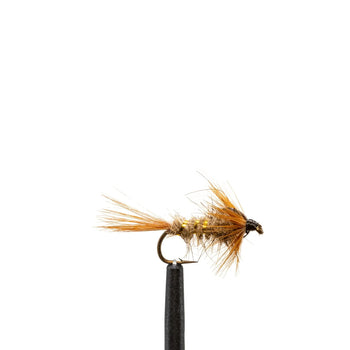
17. Gold Ribbed Hare's Ear
What It Is: The Gold Ribbed Hare's Ear (GRHE) is one of the most versatile nymphs ever created. It's tied with a natural hare's mask or blended dubbing for the body, giving it a spiky, buggy texture. The gold wire ribbing adds durability and subtle flash, while the thorax is often reinforced with peacock herl. Some versions include a beadhead for added weight. Tied in sizes 12–18, it's a true all-purpose nymph.
What It Mimics: A generalist imitation that can represent mayfly nymphs, caddis pupae, or even small stonefly nymphs. Its buggy appearance is convincing in many hatch situations.
When to Use: Year-round, in both rivers and stillwater. Particularly effective during mayfly or caddis hatches when fish are feeding subsurface.
How to Fish It: Fish dead drift under an indicator or tight-line through riffles and runs. In lakes, retrieve slowly on an intermediate line to imitate emerging insects. Use beadhead versions for faster or deeper water.
Why It Works: The spiky dubbing creates lifelike movement, and the gold rib mimics the subtle segmentation of natural insects. It's a proven pattern for fooling trout in both clear and slightly off-color water.
📌 Pro Tip: Rough up the dubbing with a piece of Velcro or a dubbing brush after a few fish — a scruffier Hare's Ear often looks even more convincing.
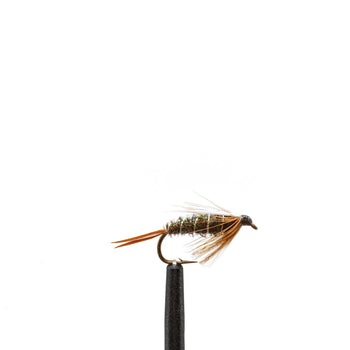
18. Prince Nymph
What It Is: The Prince Nymph is a classic attractor nymph with a peacock herl body, gold beadhead, white goose biot wings, and brown hackle legs. The bead adds weight and a touch of flash, while the white wings create contrast against the dark body. Typically tied in sizes 12–18, it's durable and highly visible in a variety of water types.
What It Mimics: A general attractor that can pass for many insects — most often stonefly nymphs, caddis pupae, or mayfly nymphs. The white wings may also resemble the gills of an aquatic insect.
When to Use: Year-round, especially in pocket water, riffles, and deeper runs where fish have less time to inspect flies. Particularly good during caddis or stonefly activity.
How to Fish It: Dead drift under an indicator with enough weight to keep it close to the bottom, or tight-line in faster water. It also works well as the anchor fly in a multi-nymph rig to help smaller flies get down.
Why It Works: The combination of iridescent peacock herl, white wing contrast, and beadhead flash triggers reaction strikes, even when fish aren't actively feeding on a specific hatch.
📌 Pro Tip: In fast water, use a larger (#12) Prince Nymph as your lead fly — its weight and visibility help pull smaller, more imitative flies into the strike zone.
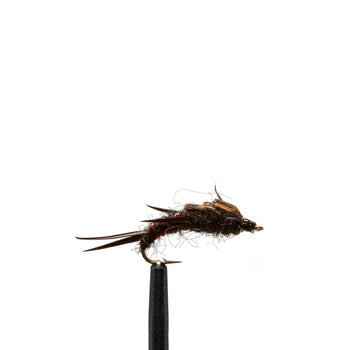
19. Kaufmann's Stonefly Nymph – Black
What It Is: Kaufmann's Stonefly Nymph is a classic, realistic imitation of large stonefly nymphs. The pattern features a durable, tapered body of dubbed fur ribbed with fine wire, a dark wing case, prominent tails, and rubber legs for lifelike movement. Weighted to get down quickly in fast water, the black version is especially effective in early-season high water and for darker stonefly species.
What It Mimics: Large stonefly nymphs — a major food source for trout in many freestone rivers. These insects live on the river bottom for up to three years, making them available to trout year-round, especially when dislodged by currents.
When to Use: Year-round in rivers with strong stonefly populations, but especially late winter through early summer when nymphs are most active. Prime before and during Salmonfly and Skwala hatches.
How to Fish It: Dead drift near the bottom with a floating line and weight (either from the fly itself or split shot). Use under an indicator or in a Euro-nymphing setup. Focus on riffles, pocket water, and seams where stoneflies live among rocks.
Why It Works: Its realistic silhouette, natural materials, and rubber-leg movement match the real insect closely. The black coloration stands out in off-color water while still looking natural to trout.
📌 Pro Tip: Use Kaufmann's Stonefly as your anchor fly in a two-fly rig with a smaller mayfly or midge pattern above to cover multiple food sources.
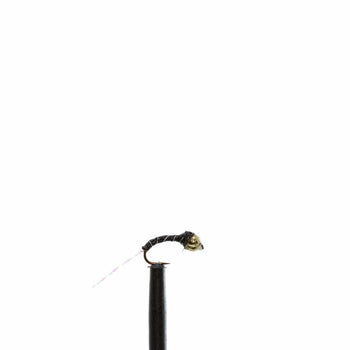
20. Zebra Midge
What It Is: The Zebra Midge is a slender, minimalist subsurface pattern designed to imitate midge pupae. It's typically tied on small curved hooks in sizes 18–24, featuring a thread-wrapped body (commonly black, red, or olive), fine silver wire ribbing for segmentation, and a small beadhead for weight. Its simple design is incredibly effective in cold water.
What It Mimics: Midge pupae — tiny aquatic insects that hatch year-round, but are especially important in winter and early spring when other insect activity is minimal. In many tailwaters, midges make up a large percentage of a trout's diet.
When to Use: Most effective from late fall through early spring, particularly in tailwaters and spring creeks where midges are a constant food source. Can also produce in lakes and ponds when trout are sipping just under the surface.
How to Fish It: Use as part of a tandem nymph rig, either as the point fly or dropper. Dead drift near the bottom under an indicator, or present mid-column when fish are suspended. In stillwater, slow hand-twist retrieves imitate a midge slowly ascending to hatch.
Why It Works: The slim, understated profile closely matches natural midges, and the beadhead adds just enough flash and sink rate to draw strikes. It's a confidence fly for winter and tough conditions.
📌 Pro Tip: Fish two different colors or sizes at the same time to figure out exactly what the trout are keyed on — a black size 20 paired with a red size 18 is a deadly winter combo.
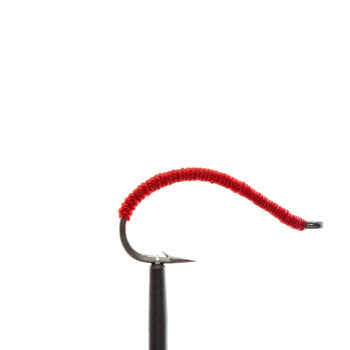
21. San Juan Worm
What It Is: The San Juan Worm is one of the simplest and most effective patterns ever tied, originating from the San Juan River in New Mexico. It's typically constructed from a short length of ultra chenille secured to a curved or scud-style hook. The body can be tied in a range of colors — red, pink, brown, tan, and wine — to imitate different natural worm species. Easy to tie and highly durable, it's a staple worldwide.
What It Mimics: Aquatic worms and annelids that live in the sediment and vegetation of rivers and lakes. High water, heavy rain, or disturbance to the riverbed dislodges these worms, sending them drifting downstream where trout eagerly feed on them. In tailwaters, worms can be a year-round food source.
When to Use: Particularly deadly after rainfall, during spring runoff, or in any high or off-color water. Also effective in winter tailwaters where trout feed on worms throughout the year. Works in both freestone and spring-fed rivers.
How to Fish It: Rig under an indicator as part of a nymph setup, with enough weight to keep it near the bottom where worms drift naturally. In slower pools or spring creeks, a lighter unweighted version can be dead drifted without an indicator. In high water, pair it with a heavier beadhead nymph to help it sink faster.
Why It Works: The San Juan Worm offers a big calorie payoff for minimal effort — protein-rich, easy to catch, and highly visible in murky water. Its simple shape and soft texture closely match the real thing, so fish hold on longer after the take.
📌 Pro Tip: Keep a few in bright pink or fluorescent red for dirty water — the extra visibility triggers strikes when natural colors go unnoticed. In clear, pressured water, switch to subtle earth tones like brown or wine.
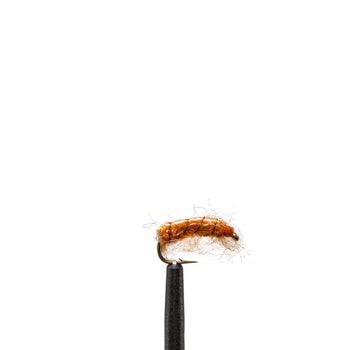
22. Scud (Sulphur Orange)
What It Is: The Scud imitates the small freshwater crustaceans — sometimes called freshwater shrimp — that are a primary food source in tailwaters, spring creeks, and stillwaters. Tied with a curved profile, a dubbed and picked-out body, and often a shellback over the top, it perfectly matches the humpbacked shape of the natural. The Sulphur Orange color is one of the most productive because scuds turn orange when molting or dead — the exact moment trout key on them. Tied in sizes 10–18.
What It Mimics: Freshwater scuds — abundant, protein-rich crustaceans that trout in rich tailwaters and spring creeks eat constantly, and one of the most overlooked patterns in a beginner's box.
When to Use: Year-round, and especially valuable in tailwaters and spring creeks where scuds thrive. Deadly in winter when other food is scarce, and any time flows bump and dislodge scuds from the weeds.
How to Fish It: Fish dead drift under an indicator near the bottom, or tight-line through weedy runs and drop-offs. A slow lift at the end of the drift imitates a scud swimming for cover. In stillwater, a slow hand-twist retrieve along weed beds is deadly.
Why It Works: Scuds are available to trout every day of the year, so fish eat them with total confidence. The curved profile and orange molting color match a familiar, easy meal that most anglers never think to tie on.
📌 Pro Tip: Carry both a natural gray/olive scud and this orange version. When the natural color goes untouched, the orange "molting" scud often triggers an immediate eat.
Streamers & Baitfish
Streamers imitate larger prey such as minnows, leeches, sculpins, and crayfish, making them the "big meal" option in your fly box. Because they represent a substantial food source, they often trigger aggressive strikes from larger fish that ignore smaller flies. Streamer fishing is more active than dry-fly or nymph fishing — instead of a delicate drift, you'll cast and retrieve to make the fly look alive, using varied speeds and twitches to entice a take.
For beginners, streamers are an excellent way to cover water quickly and locate where big fish hold — undercut banks, deep pools, submerged logs, and current seams. They work for trout, bass, and other predators, and the strikes can be sudden and explosive. Having a few versatile streamer patterns on hand ensures you're ready when that trophy fish shows up.
 |
 |
 |
|
| 23. Woolly Bugger | 24. Muddler Minnow | 25. Crayfish |
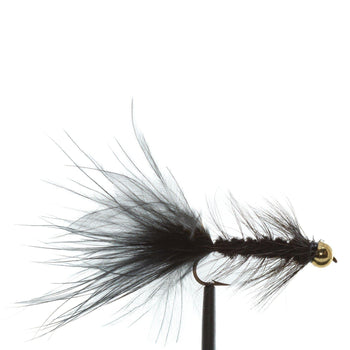
23. Woolly Bugger
What It Is: Perhaps the most versatile streamer ever created, the Woolly Bugger consists of a flowing marabou tail, a chenille-wrapped body ribbed with wire, and palmered hackle. Colors vary widely — black, olive, brown, and white are staples — and beadhead or conehead versions add extra weight for faster sink. Sizes range from #4 for big bass to #12 for smaller trout.
What It Mimics: Almost everything a trout might want to chase: leeches, baitfish, damselfly nymphs, crayfish, and even drowned terrestrial insects.
When to Use: Year-round, but especially productive in spring and fall when fish are aggressively feeding. Equally effective in lakes, ponds, rivers, and streams.
How to Fish It: Use a floating or sink-tip line depending on depth. Strip with varied speeds (slow crawl for leeches, quick bursts for baitfish) or swing it across the current. Fish near structure, drop-offs, and seams.
Why It Works: The marabou tail undulates with every movement of the water, even when the fly is paused, creating irresistible lifelike motion. Its silhouette is large enough to get noticed in murky or deep water.
📌 Pro Tip: Use a non-slip loop knot to attach your Woolly Bugger — it gives the fly more freedom of movement and often triggers more strikes.
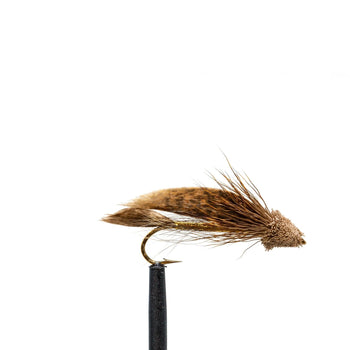
24. Muddler Minnow
What It Is: The Muddler Minnow is one of the most iconic streamer patterns in fly fishing, created by Don Gapen in 1936 to imitate the sculpin — a small, bottom-dwelling fish found in many trout and bass waters. Its distinctive deer hair head, gold tinsel body, mottled turkey wing, and sparse tail create a bulky, lifelike profile. The deer hair adds buoyancy, letting the fly ride high or dive deeper with strips or added weight. Tied in sizes 4–12, it's a versatile "big meal" fly for trout, bass, and even salmon.
What It Mimics: Primarily sculpins and other small baitfish, but it can also pass for crayfish, leeches, or even large terrestrials like grasshoppers when fished near the surface.
When to Use: Effective year-round, but especially deadly in spring and fall when fish feed aggressively before or after spawning. In summer, it's a great searching pattern in deep pools or along undercut banks.
How to Fish It: Use a weight-forward floating or sink-tip line with a 0X–3X leader, depending on fly size. Cast across and slightly downstream, let it sink, then strip back with short, sharp pulls to imitate a darting baitfish. Near the surface, try a dead drift with occasional twitches to mimic a struggling terrestrial.
Why It Works: The bulky, buoyant head pushes water and creates vibration, making it highly visible and "audible" to predatory fish. Its versatility means you can adjust retrieve speed and depth to match multiple prey items.
📌 Pro Tip: Trim the deer hair head to a slimmer profile for clear, slow water, and leave it full and bushy for faster, off-color water where you need more movement and presence.
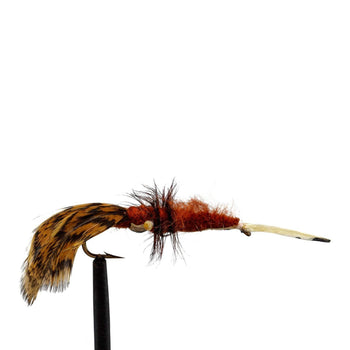
25. Crayfish
What It Is: A bottom-crawling streamer designed to imitate a real crayfish. Most patterns use a weighted head, a stout tapered body of dubbed fur or chenille, rubber legs for kick, and split claws. Popular ties ride hook-point up so you can crawl the fly through rocks without snagging. Productive colors include rusty brown, olive, tan, and black, in sizes #4–10 for trout and smallmouth.
What It Mimics: Live crayfish — prime, protein-rich forage that scuttles along the bottom, kicks backward in short bursts when spooked, and pauses in a defensive "claws up" posture. Molting crayfish turn paler, making them especially vulnerable.
When to Use: Late spring through early fall when crayfish are most active, especially warm afternoons and low light. Deadly after flow bumps that dislodge crayfish, and anytime you're fishing rocky structure. Especially productive for summer smallmouth bass, which key on crayfish more than any other food.
How to Fish It: Use a floating line with split shot or a sink-tip to keep the fly near bottom. For trout, 3X–4X tippet; for bass, 0X–2X. Cast quartering upstream, let it sink until you tick bottom, then retrieve with short 2–6" strips and frequent pauses so the fly scoots, puffs silt, then settles. Around boulders, add the occasional sharp hop to mimic a startled tail-flick.
Why It Works: Crayfish are a high-calorie meal and easy to ambush. A weighted, head-down posture and bottom contact create silt puffs and vibrations that predators key on. Rubber legs and soft materials keep moving even during pauses — often when strikes happen.
📌 Pro Tip: Match local molt cycles — go lighter (tan/cream) midsummer and darker (rust/olive) in spring and fall. A non-slip loop knot lets the fly kick more naturally on short, panic bursts.
Taking It to the Water
You don't need a thousand flies to start catching fish — just a well-thought-out selection that covers the most common food sources where you fish. This list of 25 gives you a foundation for success in almost any scenario.
From the high-floating visibility of a Chubby Chernobyl to the subtle underwater drift of an RS2, each pattern here has earned its place by consistently fooling fish. Start with these, learn to fish them well, and you'll have the confidence to walk into any fly shop or step into any stream knowing you're ready for whatever the day brings.
SHOP OUR ESSENTIAL FLY COLLECTION >>
SHOP OUR LOADED FLY BOXES:
- Standard Dry Fly Assortment
- Standard Nymph Assortment
- Hopper Dropper Assortment
- Extra Small Fly Box w/ 6 Flies


