

10 Must-Have Flies for October: Eggs, Streamers and Nymphs

You've worked a streamer down a good bank, changed the retrieve and tried the deeper edge. Nothing. Then a small nymph goes through the same run and the indicator stops.
October can do that. Some days trout will chase. Other days you need to put something small right in their path.
This box gives you options for both: egg patterns where loose eggs are part of the food supply, streamers for searching banks and cover, and nymphs for working feeding lanes more slowly. For the surface side of fall, our 12 best October fly patterns covers the dries.
You don't need all ten patterns in every size. Start with a few that fit your water, and know what you want each one to do.
A Few Terms, Up Front
These come up throughout, so here they are in one place.
- Dead drift: letting the fly travel at exactly the speed of the current, with no pull from your line. Most nymph and egg fishing is dead drifting.
- Indicator: a small floating marker on your leader that works like a bobber. It suspends your flies at a set depth and shows you the take.
- Strip: pulling line in by hand to make a streamer swim. Short strips, long strips and the pauses between them are how you control the action.
- Swing: letting the current carry the fly across the river at the end of a drift, so it rises and sweeps instead of sinking.
- Attractor: a fly that doesn't copy any one insect but still reads as food.
- Emerger: an insect caught partway between nymph and adult, hanging just under the surface.
- Redd: a spawning bed. A patch of gravel a fish has cleaned by fanning silt away, so it looks noticeably paler than the streambed around it.
- Split shot: small removable weights you pinch onto the leader to get flies down.
- Articulated: a fly tied on two hooks joined by a flexible link, so it keeps swimming even when you pause.
- Tungsten bead: a denser bead than brass, so a small fly can still sink fast. Depth without bulk.
How to Build the Box
As a rule, we start with a streamer when the water is stained or the light is low, and with eggs and nymphs when the water is clear and the fish aren't chasing.
If you want the short version, four flies cover most October days: an egg pattern for water where loose eggs are available, a Woolly Bugger for searching with movement, a Beadhead Prince Nymph for a bolder subsurface option, and a BWO nymph or midge for something small. Everything else here gives you one thing that set is missing — more flash, a larger profile, a different movement, or another way to reach the fish.
Eggs and Leeches: Work the Drift, Then Try Some Movement
Fall spawning puts real eggs in the current, and trout have figured out that eggs are an easy meal. They drift helplessly, they're full of calories, and a fish doesn't have to chase one. That combination makes an egg pattern one of the highest-percentage flies of the season.
Egg patterns and leeches give you very different profiles, but both can be fished slowly through a run. Carry a straightforward egg imitation, a leech with a bright head, and a Bugger you can fish several ways.
📌 Pro Tip — before fishing near spawning water: Brown and brook trout spawn in fall. Leave spawning fish alone and go well around redds, the cleaned patches of pale gravel where they lay their eggs — a boot through one destroys the next generation of fish in that river, and a trout parked on a redd is spawning, not feeding. Fish the established run twenty feet downstream instead. That's where the eggs end up and where the feeding fish are.
 |
 |
 |
|
| 1. Egg Patterns | 2. Egg-Sucking Leech | 3. Woolly Bugger |
1. Egg Patterns (Glo Bug, Spawn Sac, Dead Egg) (Sizes 10–16)
An egg pattern has one specific job: imitate a single loose egg drifting with the current. A Glo Bug is a small clump of egg yarn, a spawn sac wraps a few eggs in a bit of mesh, and a dead egg is the pale, washed-out version of an egg that's been in the water a while. Carry a few shades of orange, peach and cream.
- What It Mimics: Real eggs drifting down from spawning fish.
- When to Reach for It: When eggs are in the drift and fish are feeding in water away from the spawning beds.
- How to Fish It: Dead-drift it through the feeding run, usually under an indicator, with enough split shot to reach the fish. Watch for small hesitations or a change in the indicator rather than an obvious stop.
- Why It Works: Eggs drift with the current and can't dodge anything, which makes them easy, high-calorie prey.
- 📌 Pro Tip: Match your egg color to the water. Bright orange shows up in stained flows and low light; pale cream or peach is the better call in gin-clear water, where a loud fly gets refused. And if the fly keeps hanging up, adjust the weight or depth — you want it drifting through the lane, not dragging along the riverbed.
2. Egg-Sucking Leech (Sizes 6–8)
The name does most of the explaining: a dark leech-style body with a bright, egg-colored head, so it's an egg and a leech in one fly. The moving tail and the contrasting head give fish something different to look at when a small egg or a plain nymph hasn't drawn a response.
- What It Mimics: A leech chasing down a drifting egg, or either one on its own.
- When to Reach for It: When you want a more visible profile, especially in stained water or deeper holding areas.
- How to Fish It: Try short strips and pauses through a deeper pool, or a controlled dead drift through a run. Let the tail move in the current instead of keeping the fly in constant motion.
- Why It Works: It gives a fish two reasons to eat, and it fishes as either a streamer or a nymph, so one fly covers a lot of water.
- 📌 Pro Tip: This is a good fly for experimenting with presentation. Drift it through a seam, then make another pass with movement. The one that gets a response tells you what mood the fish are in, which is worth more than the fly itself.
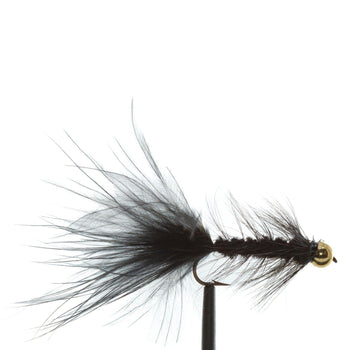
3. Woolly Bugger (Olive or Black, Sizes 6–10)
The Woolly Bugger earns its space by giving you several ways to fish one fly. Strip it along a bank, swing it through a run or drift it into a pocket. The marabou tail keeps moving with very little encouragement. If you're unsure where to begin with streamers, begin here.
- What It Mimics: Baitfish, leeches, crayfish, and even larger aquatic insects, depending on how you fish it.
- When to Reach for It: When you're searching unfamiliar water, or want a compact streamer that's easy to vary.
- How to Fish It: Work a likely stretch with short strips and pauses, then try a slower swing. Let the water temperature set your speed: strip with some pace above the mid-50s and crawl it in the 40s. The same fly covers the whole season if you change the retrieve.
- Why It Works: It reads as several different foods at once, which is why it works in so many situations.
- 📌 Pro Tip: Carry different weights as well as different colors, and pick the one that reaches your depth without constantly catching bottom. Olive holds its silhouette in clear water; black does better in low light and stained flows.
Streamers: Cover the Places a Bigger Fish Could Be
A bank-side slot, the edge of a logjam, a dark pocket behind a boulder. Streamers let you work those places with a substantial fly, and in October two things make that worth doing: big fish are putting on weight before winter and will trade a lot of energy for one solid meal, and spawning browns and brookies get territorial enough to hit a fly out of pure aggression.
Bring a few contrasting profiles. A slim rabbit-strip fly, a bulky articulated pattern and a flashy minnow give you meaningful changes to make when fish follow without committing.
 |
 |
 |
 |
| 4. Zonker | 5. Sex Dungeon | 6. Sculpin | 7. Sparkle Minnow |
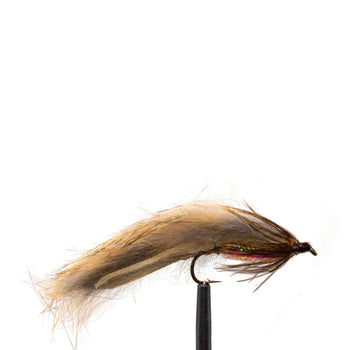
4. Zonker (Sizes 4–6)
The rabbit strip is the reason to carry a Zonker. It ripples during the retrieve and keeps moving in the current when you pause, so the fly looks alive without much work from your line hand. It's the one to pick when you want a baitfish profile you can fish slowly around cover.
- What It Mimics: A small baitfish.
- When to Reach for It: Along undercut banks, through deeper seams and around cover with room for a retrieve.
- How to Fish It: Cast along a bank or past a likely holding spot, then retrieve with strips and pauses. Give the fly time to move between pulls, because the pause is often when the fish eats — a fly that stops looks like an ambush chance.
- Why It Works: Rabbit fur breathes and pulses on its own, which is hard to fake with stiffer materials.
- 📌 Pro Tip: Watch the fly as it comes into view near the end of the cast, and keep stripping all the way to your feet. A following fish will show you where it was holding even if it never eats, and the last few feet are where a lot of them make up their minds.
5. Sex Dungeon (Sizes 4–8)
The Sex Dungeon brings bulk and an articulated body to the box, meaning it's tied on two hooks joined by a flexible link. That gives you a much larger profile than the Bugger or Zonker, with movement that changes as you strip, pause and change direction. It's a fly to choose deliberately, so make sure your rod, leader and casting space suit it.
- What It Mimics: A big baitfish, the kind of meal a large trout will commit to.
- When to Reach for It: When you want to test a larger meal in water with enough depth and room to fish it properly.
- How to Fish It: Work banks, deeper pools and substantial cover. Try a short sequence of strips followed by a pause, then vary the cadence on the next cast. A sink-tip line helps when you need to keep it at depth.
- Why It Works: The bulk pushes water, so a fish feels it before it sees it, and the jointed body keeps swimming on the pause.
- 📌 Pro Tip: Start with a size 6 in early October and move up to a 4 as the water cools and browns get bolder. Olive and black are the two colors to carry. Pick the size for the conditions in front of you, though — the calendar alone doesn't tell you how big a fly to throw.
6. Sculpin (Sizes 2–6)
A sculpin pattern gives you a broad head and a compact, bottom-hugging baitfish profile. It belongs in the box for rocky water, deeper pockets and runs where you can work it close to the bottom. The useful question is whether your setup gets it down there while still letting you control the fly.
- What It Mimics: Sculpins, bottom-dwelling fish that trout eat all year.
- When to Reach for It: Around boulders, rocky banks and deeper slots, and when bigger fish are willing to chase bigger prey.
- How to Fish It: Short strips and pauses near the bottom, or a controlled swing through a deeper channel. Adjust the fly weight, the line or the added weight to suit the current.
- Why It Works: It looks like a food fish already know, and in fall they're more willing to chase a larger one.
- 📌 Pro Tip: Depth is the whole game with this one, because a real sculpin never leaves the bottom. Add a split shot six to eight inches above the fly. Occasional bottom contact tells you you're at the right depth; constant snagging means something needs to change.
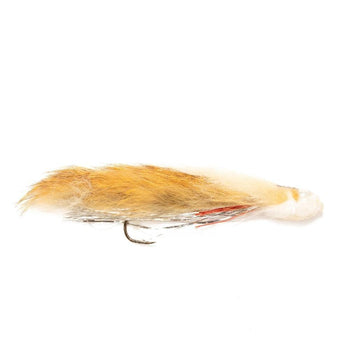
7. Sparkle Minnow (Sizes 4–8)
The Sparkle Minnow gives you a clear change from the muted streamers in the box. Its reflective body offers a flashier baitfish profile, which is useful when you want to test visibility or simply show a following fish something different.
- What It Mimics: A small baitfish catching the light.
- When to Reach for It: Low light, overcast days and stained water, or when a natural-colored streamer draws interest without a take.
- How to Fish It: Strip it along seams and banks, or swing it through a run. Start with a retrieve you can repeat, then change the speed or the length of the pause.
- Why It Works: The flash stands out when light is low, so fish can find it in water where a natural pattern disappears.
- 📌 Pro Tip: This is the fly to try when a fish follows a natural pattern without eating. Changing the color or the amount of flash often solves a refusal faster than changing size or retrieve.
📌 Pro Tip: Change one thing at a time. If you switch the fly, the depth and the retrieve together, you won't know which adjustment mattered. Work through it in order: depth first, then speed, then size, then pattern.
Nymphs: Slow Down and Work the Feeding Lane
When fish aren't chasing, nymphs let you spend more time in a smaller piece of water. These three cover a bolder attractor, a slim mayfly imitation and a tiny midge.
Fish them under an indicator or on a tight line, and pay attention to depth before deciding the pattern is wrong. In cold water a trout won't move far for a fly, so getting the depth right matters more than the pattern does.
 |
 |
 |
|
| 8. Beadhead Prince Nymph | 9. Blue Wing Olive Nymph | 10. Midge Patterns |
8. Beadhead Prince Nymph (Sizes 12–16)
The Prince is easy to recognize: a peacock-herl body, white biot wings and a profile that stands out from a slim mayfly nymph. It's an attractor, and a well-weighted version does a second job by carrying a smaller trailing fly down into the feeding zone.
- What It Mimics: No single insect. It suggests food without copying one.
- When to Reach for It: When you're searching subsurface water, or want a more prominent fly in the rig. Faster runs and deeper pools especially.
- How to Fish It: Dead-drift it through runs, riffles and deeper seams. Pair it with a small mayfly or midge pattern eighteen inches behind when you want to offer two different profiles.
- Why It Works: It's a genuinely large subsurface meal that also anchors a two-fly rig, so one fly solves two problems.
- 📌 Pro Tip: Check its actual weight before you count on it as an anchor — a beadhead Prince isn't automatically heavy enough to get two flies down in a fast run. Use a size 12 in high or stained water and drop to a 16 when it's low and clear.
9. Blue Wing Olive Nymph (Sizes 18–22)
When small olives are part of the river's insect activity, a slim BWO nymph is a close match below the surface. Keep a few ready for the period before a hatch and for fish feeding under visible surface activity. Blue-winged olives keep hatching well into fall, and they come off best on the gray, drizzly afternoons most people skip.
- What It Mimics: The nymph stage of the blue-winged olive mayfly.
- When to Reach for It: When olives are active, or you want to try a small, slender mayfly profile.
- How to Fish It: Drift it through seams and softer riffle edges, adjusting weight and depth to where fish are feeding. A heavier companion fly helps a pattern this small reach deeper water. Watch the indicator closely, because these takes can be very subtle.
- Why It Works: It matches food that's really there, in a size trout see all the time.
- 📌 Pro Tip: If trout are rising but refusing a dry, watch the rise forms before you add weight. They may be taking emergers just under the surface, and a lightly weighted nymph hung eighteen inches below the dry often fits better than a fly ticking bottom.
10. Midge Patterns (Sizes 16–20)
A slim midge gives you a small option when the larger flies aren't earning attention. Simple thread-bodied patterns with a wire rib and a small bead are what you want, with red and black as the two starting colors. Carry a few sizes and bead weights rather than a dozen nearly identical versions.
- What It Mimics: Midge larvae and pupae.
- When to Reach for It: As the weather cools and other insect activity slows down. This is also the fly that keeps working once the water drops below 45°F and almost everything else stops.
- How to Fish It: Trail one behind a heavier nymph, or suspend it under a suitably small indicator. Work slower seams and pools, adjusting depth until you find the feeding level.
- Why It Works: Midges are tiny, but they're steady food, and fish that have stopped looking for bigger bugs still take them.
- 📌 Pro Tip: A tungsten bead helps a small fly sink, but use only as much weight as the presentation needs — a shallow seam and a deep pool call for different setups. Red often does better in silty rivers, black in clear water.
📌 Pro Tip: If you're missing takes, adjust your indicator depth before you change flies. A good starting point is about one and a half times the depth of the water, then move it up or down until your flies are ticking the bottom. Most "they aren't eating" days are really "the flies are a foot too high" days.
Build a Smaller Box First
Fall rewards flexibility. If streamers aren't getting looks, slow down and go to eggs and nymphs. If the nymphs aren't working, try something bigger and louder.
On the water, give each change a purpose. If the fly isn't getting down, adjust depth or weight. If a fish follows your streamer, try a different retrieve. If a good drift gets ignored, test another size or profile.
You don't have to guess right on the first cast. You do have to notice what happened before making the next one.
SHOP THE FALL FLY COLLECTION >>
Related Articles
- October's Best Trout Flies: 12 Patterns for Fall Success
- Fall Fly Fishing: How Tactics Change as the Season Turns
- 10 Fall Fly Fishing Tips for Trout That Have Seen It All
- Fly of the Month: Targeting Fish with Egg Patterns During the Fall Spawning Season
- Master Fall Streamer Fishing
- Maximize Your Catch: Fishing Double Streamer & Streamer Nymph Rigs
- Fall Fly Rod Combos: Pick the Right Kit for the Water You Fish
- Fall Fly Fishing for Brook Trout


