

Streamer Setups: Choosing the Right Line, Leader and Rod

Most streamer fishing starts on whatever rod is already in the truck — the 5 weight with a floating line and a nine-foot leader that's been fishing dries and nymphs all summer. For a small Woolly Bugger in a shallow run, that outfit works just fine.
It's when the flies get bigger and the water gets deeper that the setup starts to matter. A bulky articulated streamer is a lot to throw on a light rod, and a floating line will only take a fly so far down in a deep run before the current lifts it back up.
Most of that doesn't take a whole new outfit to fix. The line gets the fly down, the leader connects it, and the rod has to handle the whole package. Here's how we'd put each piece together.
Start with the Fly Line
Depth comes from a few things working together — the line, the weight of the fly, the current, and how long the fly gets to sink. The line is the piece that's easiest to change.
Floating line: shallow water and smaller flies
A floating line and a weighted fly is the simplest streamer setup there is, and it covers a lot of water. Shallow runs, bank edges, small streams — anywhere a few feet of depth is enough. The line stays on top where it can be mended, and a longer leader gives the fly room to sink.
It's also the setup that lets one rod do everything. If you're switching between dries, nymphs and a small Bugger over the course of a day, a floating line means the only thing changing is the leader.
Where it runs out is deeper, faster water. The fly needs more weight and more time to get down, and once the line comes tight on the retrieve, the current starts pulling it back toward the surface. That's where a sink-tip comes in.

Sink-tip line: depth with surface control
A sink-tip puts the front section of the line underwater and leaves the rest floating. That means depth where the fly is and control everywhere else, which is why it's the line we'd reach for first for streamer fishing in rivers. Bank structure, drop-offs, runs that change depth from top to bottom — it handles all of it without re-rigging.
The Silvertip 10′ Sink Tip Weight Forward Fly Line has a ten-foot tip that sinks at three inches per second, with a floating running line behind it for mending and pickup.
Worth knowing: that number is how fast the line sinks, not how deep the fly ends up. Current, casting angle, fly weight and retrieve speed all change where the fly actually travels.
A sink-tip also opens up something a floating line doesn't do well — fishing an unweighted or buoyant streamer below the surface. The line takes it down, and the fly's materials are free to swim and breathe instead of hanging off a heavy head. A heavy fly is one way to get deep. It isn't the only one.
Full-sink line: staying down through the whole retrieve
A full-sink line keeps the whole line underwater, which is what you want in lakes and in deep, fairly even water where the fly needs to stay down through a long retrieve.
The Silvertip Full Sink Fly Line sinks at five inches per second along its entire length — a good bit faster than the sink-tip.
The trade-off is handling. Once it's down, it can't be mended, and it needs to be stripped in close and lifted toward the surface before the next cast. Even a full-sink line doesn't hold the fly at one level, either. It still rises and falls with the retrieve and the current.
📌 Pro Tip: A spare spool with a sink-tip on it turns the rod you already own into a streamer rod in a couple of minutes. Just match the line weight to the rod, and keep the flies to a size the outfit casts comfortably.
Match the Leader to the Line
Streamer leaders are simpler than dry fly leaders. They need to be strong enough for the fly, the cast and whatever wood and rock you're fishing around — and then the length sets how the fly rides compared to the line.
With a sinking line, start shorter
Four to six feet is a good place to start. A shorter leader keeps the fly close to the line's path, and it's a lot easier to handle with a heavy fly on the end.
The fly still has a say. A buoyant pattern will ride up off the line, and a heavily weighted one will sink below it — more leader gives either one more room to do its own thing.
No taper needed here. A straight piece of tippet in the right size is all most sinking-line streamer rigs need, and it's how our White River combo ships.
With a floating line, go a little longer
Seven to nine feet gives a weighted fly time to get down before the floating line starts lifting it. A tapered leader turns the fly over more smoothly, especially if the same rod is fishing dries later in the day.
Longer helps a fly get deeper, up to a point. Past that, a long leader and a heavy fly start fighting each other on the cast.
Pick the diameter for the fly and the cover
For most trout streamers, 0X to 2X is the range. Go heavier for bigger flies and for fishing tight to wood and rock; a small Bugger in open water can get by with something finer.
Fluorocarbon sinks more readily than nylon, which helps with anything fished below the surface. Nylon works too — it mostly comes down to how much help the fly needs getting down.
For a sinking-line rig, a spool of Fluoroflex fluorocarbon tippet in the right size covers it. For a floating line, a nine-foot Fluoroflex tapered leader is a ready-made place to start. And for the longer version of how leaders are built, our guide to choosing leaders and tippet walks through it.
Choose the Rod for the Whole Rig
The rod isn't just casting the fly. It's casting the line, the weight of a wet, bulky streamer, and usually some wind. That's what decides how much rod the job takes.
A 5-weight handles smaller streamers. Compact Buggers, leeches and slim baitfish patterns fish fine on an everyday trout rod. Sinking lines come in lighter weights too, so a 5-weight can go deeper as well.
A 6-weight gives you more room. It's a good middle ground for anyone fishing a mix of small patterns and mid-size streamers who wants one rod that does both.
A 7-weight is the dedicated streamer rod. More capacity for bulky flies and heavier lines, and more backbone for steering a good fish away from cover. The biggest articulated patterns can call for more rod still.
Fast-action rods are a popular choice for streamer work, and for good reason, but action isn't the whole story. What matters is that the rod and line load well together and the outfit feels under control at the distances you're actually fishing. Our fly rod guide goes deeper on that.
A Complete Streamer Outfit
 |
The White River Rod Combo Kit is our streamer outfit, built around a fast-action 9'0" 7-weight Yellowstone II rod with a fighting butt. |
It's paired with a 7/8-weight Yellowstone Flow reel, spooled with backing and Silvertip 7-weight 10′ Sink Tip line, and it ships with 1X fluorocarbon tippet tied straight to the line — the same short, stout connection described above. String it up, tie on a streamer, and it's ready to fish.
Three Setups to Start With
| Water and presentation | Fly line | Leader starting point | Rod starting point |
|---|---|---|---|
| Shallow runs and bank edges with smaller weighted flies | Floating | 7–9 feet, tapered | 5- or 6-weight |
| Mixed-depth river water with moderate to larger streamers | Sink-tip | 4–6 feet, stout material | 6- or 7-weight |
| Deeper pools and lakes with sustained subsurface retrieves | Full-sink | 4–6 feet, adjusted for fly behavior | 6- or 7-weight, matched to the line and fly |
Think of these as starting points rather than rules. A heavier fly might push you up a rod weight, and faster current might call for a shorter leader or more sink time.
Once the outfit's matched, the rest is small adjustments on the water — a few more seconds of sink, a different casting angle, a fly with a little more or a little less weight. That's the fun part.
Flies for Each Setup
The outfit and the fly go together. Here's roughly how the three main kinds of streamer line up with the setups above.
 |
 |
 |
 |
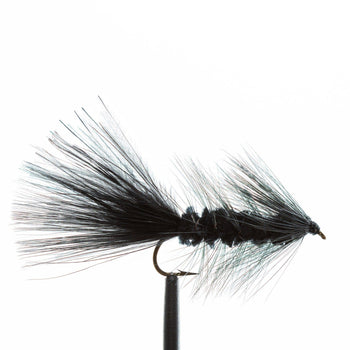
Woolly Bugger |
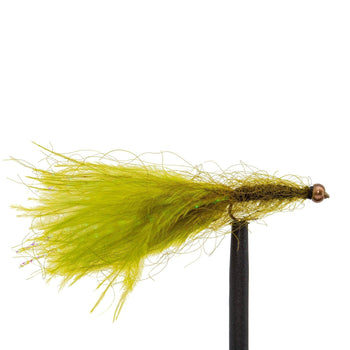
Mohair Leech |
Sparkle Minnow |
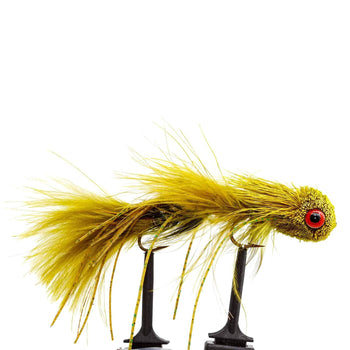
Sex Dungeon |
Buggers and leeches. The Woolly Bugger, Mohair Leech and Electric Leech are the easiest streamers to cast, and they fish well on all three setups. On a 5-weight with a floating line, this is the place to start.
Baitfish and sculpin patterns. The Sparkle Minnow, Muddler Minnow and Zonker are mid-size flies that sit comfortably on a 6-weight. A sink-tip gets them down along banks and through runs — and a buoyant deer-hair fly like the Muddler is a good one for letting the line do the sinking.
Big articulated streamers. The Sex Dungeon, Peanut Envy and Circus Peanut are the bulkiest flies in the box, and they're what a 7-weight, a sink-tip and a short, stout leader are for.
Our fall streamer guide covers twelve patterns across these three groups, along with where to fish them and how to work the fly once it's down there. Then go find a deep cutbank and see who's home.
SHOP FLY LINE
RELATED ARTICLES:
- Fall Streamer Fishing: Patterns, Retrieves and Setups for Trout
- Streamer Science: How to Fish Slow and Deep for Big Trout
- Maximize Your Catch: Fishing Double Streamer & Streamer Nymph Rigs
- Fly Line 101: Types, Tapers & When It's Time for a Replacement
- Choosing the Right Leader & Tippet for Fly Fishing Success


