

10 Fall Fly Fishing Tips for Trout That Have Seen It All

That trout under the bank spent all summer watching indicators float overhead. Now the river is lower, the water is clearer, and your first cast just landed across its back.
Fall fishing can be excellent. It can also make your usual approach look pretty clumsy.
You don’t need to rebuild your fly box or reinvent your cast. You do need to notice what’s changed—and make a few adjustments before you step into the water.
Think of this as the field version of our fall tactics guide: ten adjustments you can make before the first cast, each with the reason behind it.
The Ten at a Glance
- Flies: go muted and natural, keep one more hopper handy, carry olives and midges, and fish eggs below the spawning gravel.
- Presentation: lengthen the leader, fish the near water before you wade, and work the shaded edges.
- Conditions: follow the fish to slower water as it cools, bring a streamer, and let the thermometer set your start time.
Pick Your Flies With a Purpose
1. Give Olive, Brown and Black Some Box Space
Before you reach for the loudest streamer in the box, take a look at the river. Low, clear water is where muted colors earn their keep: olive, brown, black and tan.
Here’s why. A trout in clear water gets a long, honest look at whatever swims or drifts past, and natural tones read as the food it actually eats this time of year: sculpins, leeches, crayfish and stoneflies. A bright pattern can still draw a strike, but in skinny, clear water it’s also easier for a fish to inspect and refuse.
A simple fall box covers it. Carry a few natural-looking streamers in olive and black, something sculpin-colored, and nymphs in natural browns and tans. Then match color to the water, not the calendar. When fall rain stains the river, the bigger, flashier patterns get another turn, because white, yellow and chartreuse give fish something to find when visibility drops.
2. There’s Still Time for One More Hopper Eat
Don’t retire your terrestrial box at the first yellow leaf.
Warm early-fall afternoons can still put hoppers and beetles on the water, especially when wind works over a grassy bank. Trout hold near those banks because the wind keeps delivering food, and a big, buggy fly is an easy meal that fish haven’t forgotten about since August.
Cast tight to the edge and dead-drift it, which means letting the fly float at the same speed as the current. Then try a small twitch. You want just enough movement to look alive among the leaves, not enough to look like something trying to escape. We’d keep a terrestrial tied on while the water is still above about 60°F. Once hard frosts arrive, the bite fades, so treat this as a bonus window and not a plan.
Get the setup: Single Hopper Rig Guide
3. Watch the Water When the Weather Turns Ugly
A gray, drizzly afternoon deserves a closer look before you call it a wash.
Blue-winged olives, the small mayflies that define fall hatches, come off best on cool, overcast days, and midges never really stop. Keep both handy, with patterns in sizes 18–24. Small flies and subtle rises are easy to miss when you’re busy wishing the sun would come out, so slow down and look.
Start with the seams and bubble lines. A seam is the line where fast and slow water meet, and a bubble line is the foam that collects where currents converge. Both concentrate food, so feeding fish line up along them. A rise can be as quiet as a small ring, a bubble or the tip of a nose slipping through the surface film.
Before you cast, pick out one fish and watch it rise a few times. Give yourself a target and a rhythm. If it keeps ignoring your dry, try a small emerger on a short dropper about eighteen inches below it. Fish that are working steadily will often eat the emerger and refuse the dry.
Match the hatch: Fall Fly Fishing Guide: Key Hatches & Essential Flies
4. Fish Eggs With Some Restraint
Fall spawning puts eggs on the menu in many trout rivers. Loose eggs drift downstream, and the fish below the spawning activity eat them readily. An egg pattern in orange, peach or cream, sizes 10–16, drifted near the bottom is one of the most dependable flies of the season—but where you fish it matters.
Leave spawning fish alone. Avoid redds, the patches of clean, pale gravel where trout lay their eggs, and don’t wade across them. A redd holds next year’s fish, and a boot through it can destroy them. A trout parked on a redd is spawning, not feeding.
Instead, fish the run downstream of the gravel. The trout stacked there are eating drifting eggs, and they’re often the biggest fish in the neighborhood. Add enough split shot to get the egg down to their level, and check local regulations, since some rivers close or restrict fishing during the spawn.
Read more: Fly of the Month: Targeting Fish with Egg Patterns During the Fall Spawning Season
Make the First Cast Count
5. Give Your Fly a Little More Room
In clear water, a sloppy presentation is hard to hide.
Start with the leader. The “X” number on a spool of tippet tells you how thin it is: the higher the number, the finer the line. For small dries, a nine- to twelve-foot leader with 5X or 6X tippet is the setup we’d reach for first. For nymphs, 4X or 5X does the job. The longer, finer leader lands the fly more softly, keeps the thick fly line farther from the fish and lets the fly drift without looking tethered. Go as light as you can while still landing your fish.
If a trout looks and refuses, pause before changing flies. Check for drag, which is the current pulling your line and making the fly move faster or slower than the water around it. Check your approach. A cleaner drift may do more than another trip through the fly box.
📌 Pro Tip: Watch a leaf or a foam bubble floating alongside your fly. If your fly is skating past it, or lagging behind it, you have drag. Mend your line or reposition so the fly moves at the same speed as the debris around it.
Dial it in: Choosing the Right Leader and Tippet
6. Fish the Water You’re About to Stand In
The far bank always looks promising. So does the near bank—until you walk through it.
Start from shore. Fish the close seams and bank edges before wading out. Every step in the river pushes a small pressure wave ahead of you, and in low, clear water that is enough to send fish out of a run before you’ve made a cast. Move slowly, keep your shadow off the lie (the spot where a trout holds), and approach from downstream when you can. Trout face into the current, so coming from below puts you behind them.
In skinny water, getting into position is part of the presentation. Take a couple of minutes to watch a run from the bank before you wade into it. You’ll often see fish, or the wakes of the ones you just pushed out, and both tell you more than a blind first cast.
7. Work the Dark Edges
On a bright day, look for places where a trout can feed without feeling exposed: an undercut bank, the shadow behind a boulder, the edge of a logjam. With less water overhead in fall, cover matters more, and fish that would have sat in open riffles two months ago tuck into these spots.
Fish those edges carefully. Stay low, watch where your line lands and resist the urge to wade closer just because you can’t see what’s under there. Polarized sunglasses help a lot here, since cutting the glare lets you see into the shade lines and spot fish holding on the gravel.
That’s part of the appeal—for the trout.
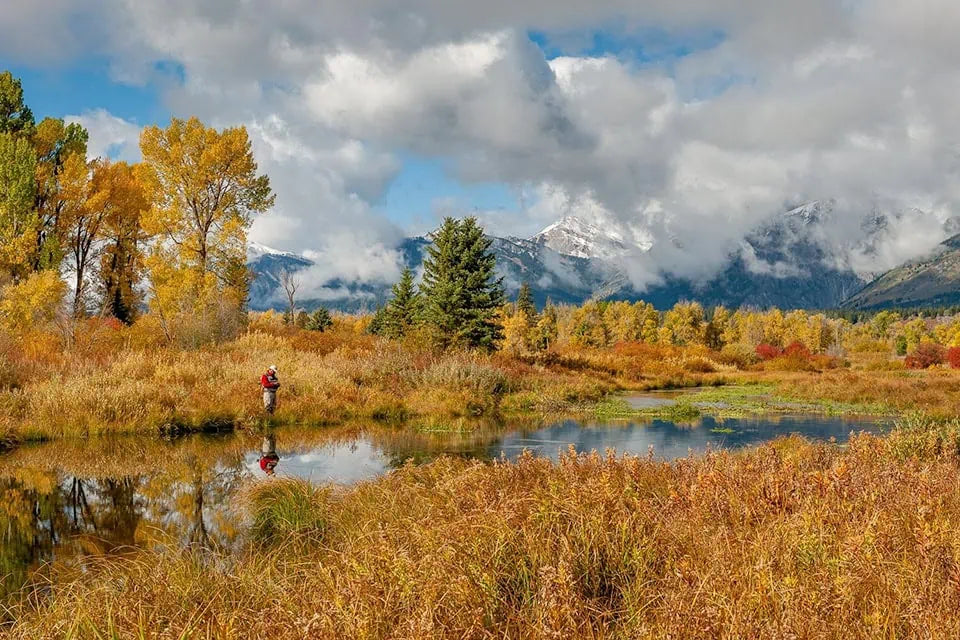
Let Conditions Set the Schedule
8. Don’t Keep Fishing Last Month’s Water
A riffle that produced in September may be quiet by late October.
Warm water holds less oxygen, so early in fall, fish still favor riffles and the heads of runs, where current and turbulence keep oxygen up. As the water cools, oxygen stops being the limit and trout start choosing lies by food and effort. They slide into slower seams, pool heads (where a run dumps into a pool), undercut banks and deeper holding water where the current delivers a steady meal without much work to hold in.
Those slower seams and pockets were often choked with weeds in summer. In fall they open up and become prime nymphing water. If your favorite stretch goes quiet, try a different kind of water before deciding the fish aren’t eating.
Work the slower water: Late-Season Nymphing Guide
9. Bring a Streamer—and Pick Your Water Carefully
Fall is streamer season. Brown and brook trout get territorial as they spawn, and big fish will hit a streamer out of instinct to defend their space. Work undercut banks, deeper runs and cover where a larger trout might be holding.
Experiment with the retrieve instead of stripping every cast at the same speed. Strip and pause, since the pause is often when the fish eats, and keep stripping all the way to your feet because fish sometimes follow a long way before committing. Let the water temperature guide your speed. Strip with some pace when it’s above the mid-50s and slow to a crawl when it’s in the 40s. If fish follow but won’t eat, change the color or size before you change the retrieve.
Keep that fishing away from spawning beds. A visible brown or brook trout sitting on clean gravel is one to leave alone.
Go deeper: Master Fall Streamer Fishing: Top Flies, Gear & Pro Tips
10. Let the Thermometer Pick Your Start Time
You got up early. The trout didn’t agree to.
Cold fall mornings can be slow, because the water is at its daily low and the fish are at their least interested. A few degrees of afternoon warmth can change the whole day. Carry a stream thermometer—it’s cheap, small and answers more questions than anything else in your vest—and let it guide where, when and how you fish.
Above 60°F. Late-summer conditions holding on. Fish early and late, keep terrestrials in play and handle fish quickly.
50–60°F. The sweet spot. Trout feed through much of the day and will move for a fly, so a streamer stripped with some pace or a dry on an overcast afternoon both work.
45–50°F. Slow down. Get the drift closer and more precise, add weight and cut your retrieve speed roughly in half.
Below 45°F. The deep, slow game. Small nymphs and midges dead-drifted right on the bottom, or a streamer fished so slowly it barely qualifies as a retrieve.
October doesn’t automatically demand a dawn start. Sometimes the smartest move is another cup of coffee.
📌 Pro Tip: Check the temperature twice, once in the morning and again at lunch. A morning that starts at 42°F can be 49°F by two o’clock, and that difference is often a slow morning versus a very good afternoon.
Check the ranges: Trout Water Temperature Guide
Before You Step In
Take a minute at the bank and run through it:
- What’s the water temperature, and what does that say about where fish will be?
- Are there any rises, and what are they eating?
- Have you fished the near edge before wading?
- Is your leader long and fine enough for how clear the water is?
- Is there pale, clean gravel nearby that you should walk around?
Then make your first adjustment: a longer leader, a smaller fly, a slower drift—or a cast to the water you nearly walked through.
You’ve got ten things to try. The river will help you choose the first one.
Related Articles
- Fall Fly Fishing: How Tactics Change as the Season Turns
- 10 Must-Have Flies for October: Eggs, Streamers and Nymphs
- Fall Fly Fishing for Brook Trout: Essential Tips & Techniques
- Fall Fly Rod Combos: Pick the Right Kit for the Water You Fish


