

Panfish & the Family Trip: Fly Fishing's Best On-Ramp

Camp's set up, the kids are antsy, and it's finally time to get a line in the water. Here's the good news: nobody needs a perfect cast for this to go well.
The first fly cast a kid ever makes is never pretty. A little sideways, a little short, maybe straight into the weeds instead of past them. And then — almost every time — something eats it anyway. The rod bends, somebody yells, and just like that, you've got a new angler in the family.
That's the whole case for panfish. They're not a smaller, easier version of trout fishing you settle for on a family trip — they're their own kind of fun, built for exactly this: fast, forgiving, and hard to mess up badly enough to ruin the afternoon.
Why Panfish Are Fly Fishing's Best On-Ramp
"Panfish" isn't one specific fish — it's the friendly nickname for a whole group of small, easy-to-catch freshwater fish that all hang out in the same ponds and lakes: bluegill, crappie, sunfish, and a few others. They're called panfish because they're just the right size for a frying pan, and for a fly rod, they're just the right size to forgive almost everything a first-timer does wrong.
A cast that lands with a splash instead of a soft landing, a fly retrieved a little clumsily, a cast that's not quite where you meant it to go — they eat anyway. They're not shy, and they're not picky. If a fish is nearby and hungry, it usually just eats.
They also travel in groups, so once you find them, they don't run out. A good spot doesn't give you one bite an hour — it gives you one every few casts. That's a fun afternoon for you. For a kid, it's the whole difference between "this is boring" and "can we come back tomorrow."

Where to Find Them
You don't need to know how to read a river for this, which is genuinely good news. Panfish gather around anything that gives them a place to hide or hunt from — a dock, a fallen tree in the water, a patch of reeds or lily pads along the bank. Cast anywhere near that kind of cover and there's a good chance fish are close by.
Depth isn't something to worry about either. Most good panfish water is only a few feet deep, so a fly that floats on top stays right where the fish can see it the whole time — no guessing how deep to fish.
How to Fish It
The fly you'll use for this is called a popper — a small floating fly with a flat or cupped face that makes a little "plop" on the water and a soft popping sound when you give the line a short tug. That sound and splash is what gets a panfish's attention in the first place.
Cast it close to whatever cover you found — right next to the dock post, right along the edge of the reeds — and then don't move it right away. Let it sit still for a few seconds first. Panfish often look before they eat, and a fly that starts moving immediately gets passed over more than one that gives them a moment to notice it.
After that pause, one short tug is usually all it takes. If nothing happens after a few tugs, reel in and try the next spot — with panfish, moving to a new piece of cover works better than staying put and waiting.
📌 Pro Tip: If you're bringing a first-timer, fish the spot yourself for a minute or two before handing over the rod. Confirming fish are actually there and willing turns their first cast into a near-guaranteed catch instead of a gamble — and that first fish is what decides whether they want to go again.
The Flies
Panfish aren't picky about exact color or pattern the way some fish are — bright and easy to see matters more than looking like a perfect imitation of a real bug. Small, buoyant, and simple is a combination they rarely refuse.
 |
 |
 |
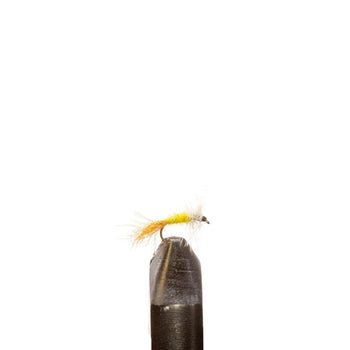 |
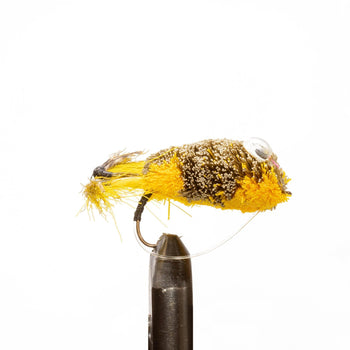
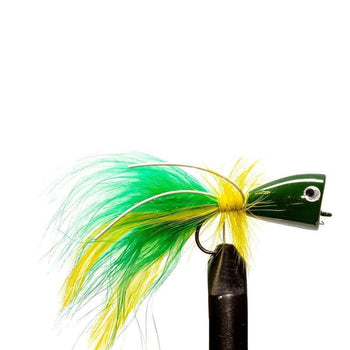
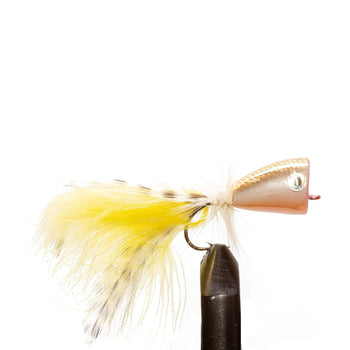
| Frog | Popper Legs – Green/Yellow | Popper – Gold/White | South Carolina Dry – Chartreuse |
Frog (#6): A little frog-shaped popper built to sit and plop right at the edge of weeds or lily pads — exactly the cover panfish hide around. A dependable first choice.
Popper Legs – Green/Yellow (#6): The rubber legs keep wiggling even after the fly stops moving, which is often what gets a fish to finally commit during that pause.
Popper – Gold/White (#6): A bright, flashy face that's easy for a kid to track on the water and easy for a fish to find, even in slightly murky water.
South Carolina Dry – Chartreuse (#12–16): A smaller, simpler fly built specifically for panfish water — bright yellow-green body, a little white wing on top. One twitch and wait is usually all it needs.
 |
 |
 |
 |
| Bass Bug – Red/White | Bass Bug – Black/White | Chubby Jackson – Green | Chernobyl Ant – Orange |
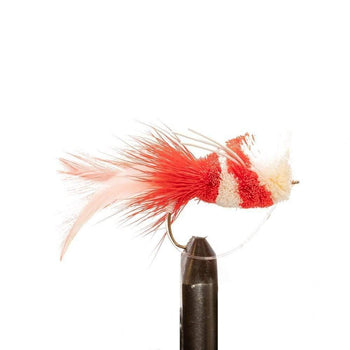
Bass Bug – Red/White (#6): High-contrast and loud in the water — the kind of fly a fish doesn't have to think twice about. A great one to start the day with.
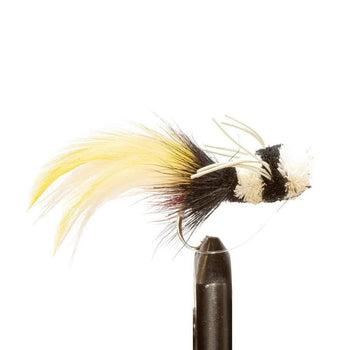
Bass Bug – Black/White (#6): A darker option for bright, sunny days, when a dark shape shows up better against the glare than a light-colored fly does.
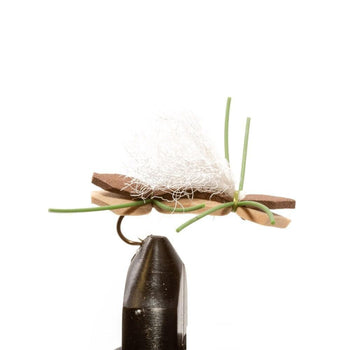
Chubby Jackson – Green (#8): A slimmer, quieter foam bug for water that's already seen a few of the louder poppers today. Lands soft, drifts natural.
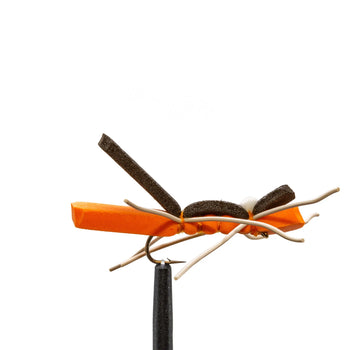
Chernobyl Ant – Orange: Simple, buggy, and about as easy to tie on and forget about as a fly gets — a genuine confidence pick for a first-timer's rod.
For anyone who'd rather not pick colors, the Panfish Popper Assortment and Crappie Popper Assortment are an easy shortcut — six proven colors, pre-tied to the right size, ready to fish straight out of the box.
Beyond Poppers
Poppers are the best place to start because the take is impossible to miss — no subtle bite to feel for, no guessing whether that was a fish or just the current. But panfish genuinely aren't picky eaters, and they'll take all kinds of flies, not just things that float and pop.
 |
 |
 |
 |
| Beadhead Hare's Ear Flashback | San Juan Worm – Red | Snake River Beetle | Woolly Bugger – Olive |
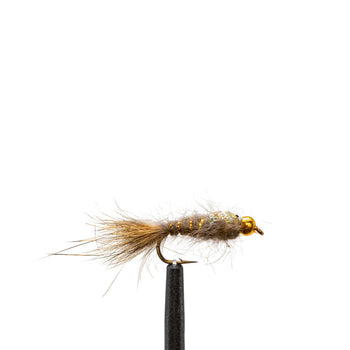
Beadhead Hare's Ear Flashback: A small, sinking fly that works when panfish are feeding below the surface instead of on top. Cast it out, let it sink a little, and reel in slow — a good change of pace if the popper bite slows down.
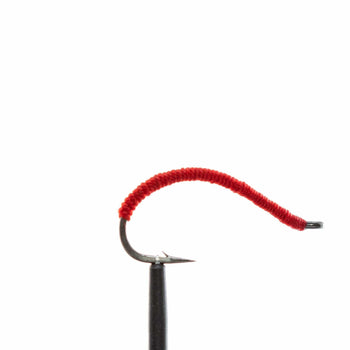
San Juan Worm – Red: About as simple as a fly gets — bright red, no moving parts — and panfish eat it readily. A good backup that needs no explanation for a first-timer to fish.
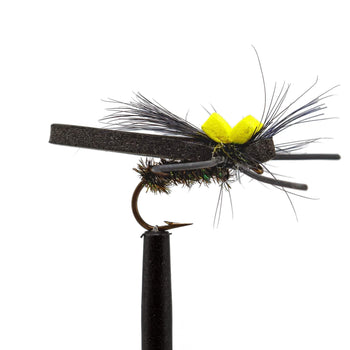
Snake River Beetle: A small foam beetle that sits low and quiet on the water — the opposite of a loud popper. Worth trying on water that's already seen some action, or just for the fun of switching things up.
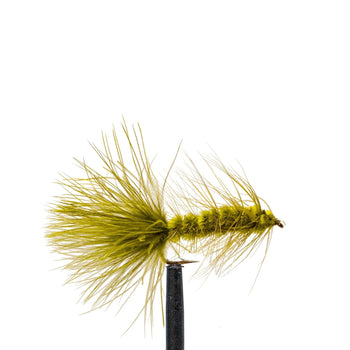
Woolly Bugger – Olive: A classic streamer with a soft, pulsing tail — cast it out and strip it back in short pulls. Different from everything else here: instead of waiting for a fish to find a still fly, this one goes looking for them.
Handling Your Catch
One thing worth knowing before that first fish comes to hand: bluegill and sunfish have a spiny dorsal fin along their back that can genuinely poke and pinch if you grab one the wrong way. It's not dangerous, but it does surprise people — and a surprised kid holding a fish for the first time is exactly the moment to avoid. Show them to hold the fish gently from underneath, or run a hand from head to tail so the spines lay flat, rather than grabbing across the top.

A landing net makes this whole moment easier — it controls a wriggling fish without anyone needing to grab it out of the water, which is especially helpful with a first-timer still getting comfortable. And a pair of forceps gets the hook out quickly and safely, away from fingers and fins alike — worth having clipped on before the first fish is even in the net.
There's a second, bigger reason to keep those forceps handy: pinch the barb down on every fly before the first cast of the day. A barbless hook still catches fish just fine, but with a beginner casting — and a few errant casts are guaranteed with a first-timer — a barbless hook coming out of skin instead of a fish takes seconds instead of a trip to urgent care. It's the single easiest safety habit to build into a family trip, and it costs nothing but thirty seconds before you start.
Gear for a Family Trip
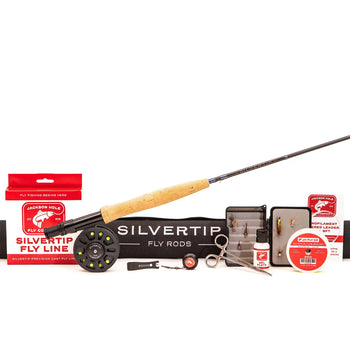
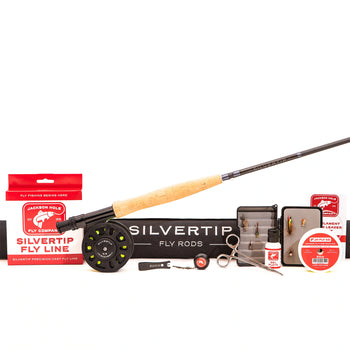
Panfishing doesn't demand specialized gear, which is part of the appeal — the same light setup that works for panfish also happens to be the easiest rod for a new or young angler to learn on. The Granite Creek Combo Kit, a short 7'0" 4WT, is built for exactly this: small water, light flies, and a rod that's easy to control for anyone still learning the cast — the right pick for a younger or smaller angler. For an older kid or an adult who wants something a little more standard, the Crystal Creek Combo Kit, a 9'0" 5WT, is the classic do-everything first outfit — still an easy rod to learn on, just built for a wider range of water down the road.
 |
 |
 |
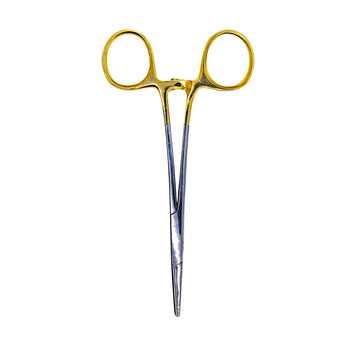 |
| Granite Creek – 7'0" 4WT | Crystal Creek – 9'0" 5WT | Carbon Fiber Landing Net | Gold Loop Forceps |
For the complete rundown on rod weight, reel balance, line, and everything else that goes into a first setup, we covered it all in Fly Fishing for Beginners: The Complete Starter Guide.
Taking It to the Water
Panfish won't test your casting or your patience the way technical trout water does, and that's exactly the point on a family trip. Pick a dock or a weed edge, tie on something bright, and let the fish do the rest. The skills carry forward to everything else in fly fishing — the confidence they build carries even further.
Related Articles
- Fly Fishing for Beginners: The Complete Starter Guide
- Kids & Fly Fishing: How to Get Young Anglers Hooked
- Fly of the Month: Topwater for Warmwater


