

Fly of the Month: Topwater for Warmwater – Surface Patterns for Bass & Panfish

There's a sound every warmwater angler knows — the smack of a bass popper getting inhaled, or the quiet slurp of a bluegill sipping a foam beetle off the surface. It's the whole reason topwater exists: you see the take. No indicator, no guessing at a subtle take deep in a run — just a fish deciding to come up and eat, right in front of you.
That takeover isn't limited to one species, either. The same handful of pattern families that fool a smallmouth off a rocky point will pull a bluegill off a dock edge, and at the right time of day, the same mouse pattern that works on a bass will get eaten by something with a lot more teeth.
This is the surface box — the pattern families worth carrying once the water's warm enough that everything under it is looking up.
The Warmwater Surface Box
Warmwater topwater breaks down into a handful of families, and each one is built to do something different on the surface: poppers and divers chug, spit, or dive to imitate a wounded or fleeing baitfish. Frogs and pollywogs work through cover other flies can't touch. Mice trigger some of the most violent strikes in freshwater fly fishing. And foam and terrestrials cash in on the bugs that fall out of streamside brush all season long. Carry a handful from each family and there's very little warmwater you can't fish.
Why Topwater Works Across Species
Topwater isn't just a preference — three things happen on a warm-water take that don't happen underwater, and they explain why the same handful of pattern families works whether you're fishing for bass, panfish, pike, or musky.
You see the take, every time. There's no indicator to watch and no subtle pause in a nymph rig to interpret — a fish either commits to what's sitting on the surface or it doesn't, and you watch it happen in real time. That visibility does more than make topwater exciting: it means you set the hook when the fish actually eats instead of a half-second late, which is the difference between a solid hookup and a fly that gets spit before you react.
Warm water makes these fish more aggressive, not less. Trout are cold-water animals — push them into warm water and they get stressed, sluggish, and reluctant to chase. Bass, panfish, pike, and musky are built the opposite way. As the water warms into their comfort range, their metabolism climbs, and so does their willingness to move fast and commit hard to a meal. The exact conditions that shut down trout fishing are the conditions that turn these species on.
One system scales instead of multiplying. You don't need a different fly box for every species in warm water — you need the same handful of proven silhouettes, sized to the mouth in front of you. A popper that works on a bass works on a bluegill in a smaller size. A mouse that works on a bass works on a pike or musky in the right water. Learn the families once and the sizing takes care of the rest.
Poppers & Divers: The Workhorses
This is the family that does the loud, obvious work. Poppers chug and spit on a straight retrieve, imitating a wounded baitfish or a bug that fell in and can't get out. Divers do the opposite motion — a slanted foam head sends them a few inches under on the strip, then they float back up trailing bubbles, a completely different signal than a popper's surface commotion. Between the two, plus a rubber-leg option that keeps moving through the pause, this section covers most of what a fish sees on the loud end of the surface box.
Color isn't decoration here — it's how visible and how believable the fly reads, and that shifts with water clarity and light as much as it does with species. Bright, flashy colors like gold/white or chartreuse throw the most contrast in stained water, low light, or against a bright sky, which makes them the right first choice on new water when the goal is pulling fish from a distance. Natural, subdued tones like green/brown or black read as more believable in clear water and to fish that have already seen plenty of loud flies go by — the second option once the bright color stops working. Species matters too: panfish tend to respond to bright, high-contrast colors even in gin-clear water since they're far less leader- and fly-shy than bass, while bigger bass, pike, and musky get pickier about color the more pressure they've seen.
For anyone who'd rather skip picking colors, the Bass Popper Assortment carries six proven patterns pre-loaded and ready to fish — Black Fin Diver, Purple Flash Popper, Pink Diver Legs, Silver/Chartreuse Diver, Pearl/Blue Diver, and Orange Popper, each doing a different job depending on light and water clarity. The same six-fly system comes packaged for panfish and crappie too, just retied to size 6 and size 4 to match smaller mouths — one lineup, three sizes.
Frogs & Pollywogs: Working the Slop
Frogs and pollywogs earn their keep in water the poppers can't reach — lily pads, matted vegetation, the slop bass and bigger panfish use as a roof over their heads. The retrieve is less about commotion and more about patience: skate it through the open pockets, then let it sit dead still.
Mice: Same Fly, Different Predator
Mice aren't a novelty — they're some of the most consistent big-fish flies in freshwater, fished on the swing or dead-drifted along a bank at last light. And the same fly that pulls a bass off a bank at dusk is exactly what gets thrown at pike and musky in the right water — bigger leader, wire or heavy bite tippet, and the figure-eight at the rod tip on every retrieve. We'll walk through that full setup — rod, leader, and the figure-eight — in an upcoming guide; for now, the pattern itself is the same one already in your box.
📌 Pro Tip: If there's any chance pike or musky share the water, rig a short section of wire or heavy bite tippet even on days you're technically bass fishing. Losing a mouse pattern to a fish you weren't ready for costs a lot more than the six inches of wire would have.
Foam & Terrestrials: When Naturals Are on the Menu
Beetles, ants, and other terrestrials fall out of streamside brush all season long, and warmwater species eat them just as readily as trout do. This is the subtle end of the surface box — a slower, quieter presentation for water that's already seen too many poppers.

Where to Fish It
Match the fly family to the structure in front of you more than the species. Bass and big panfish key on the same lily pads, timber, and rocky points, and the frog and popper families both work there interchangeably. Panfish and smaller bass work the same shallow, weedy slack water — a lighter rod and the smaller-sized assortment box cover it. Pike and musky tend to hold adjacent to that structure in the deeper or slightly cooler water nearby, which is exactly where the mouse patterns come into play.
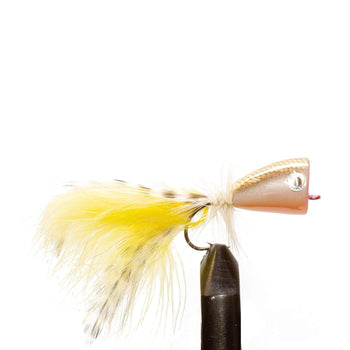
Popper – Gold/White (#2–#6): About as close to a confidence fly as topwater gets — the gold/white combo throws a bright, flashy profile that reads as a fleeing baitfish and doesn't ask a fish to think twice. Fish it on a 6–9 ft leader tapered to 0X or 1X so it turns over on the cast without collapsing the pop. Pop it hard, let the rings die out completely, then pop again — the fish that eat it usually do so on the pause, not mid-retrieve. Tie on the #2 for bass, the #6 for bigger panfish that can handle the bulk.
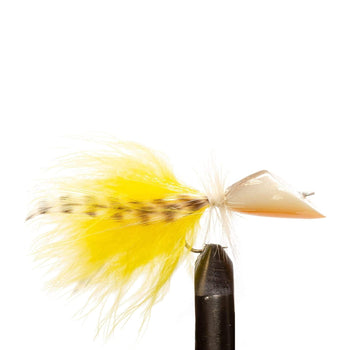
Diver – Silver/White (#2–#6): A slanted foam head sends this one a few inches under on a sharp strip, then it floats back up trailing a stream of bubbles — a completely different motion than a popper's straight chug, and often the fly that draws a strike after the popping has gone quiet. Use a firm, short strip to send it under, then let it rest and rise on its own before the next pull. The silver/white flash reads as a fleeing baitfish diving for cover, which is exactly the right signal in clear water.
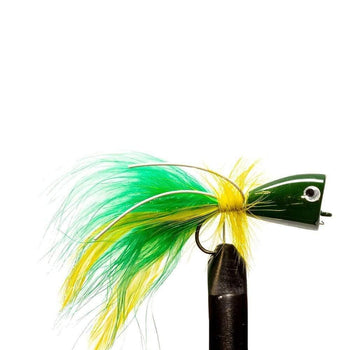
Popper Legs – Green/Yellow (#2–#6): The rubber legs are the whole point — they keep kicking through the pause long after the popper body has gone still, which is exactly when most strikes happen. It's also the best-selling color in the lineup for a reason: green/yellow reads natural enough for clear water while still throwing enough contrast to get noticed. Cast it tight to cover, let it sit until the rings disappear, then twitch just enough to make the legs shiver without moving the bug itself very far.
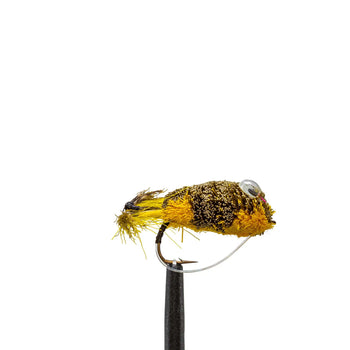
Frog (#2–#6): Built for water most other flies can't touch — lily pads, matted vegetation, the slop bass and bigger panfish use as a roof. Skate it across open pockets and let it sit dead still in every opening; the take almost always comes on the pause, not the retrieve. A heavier leader (0X–2X) is worth the trade-off for pulling fish out of cover before they wrap you around a stem.
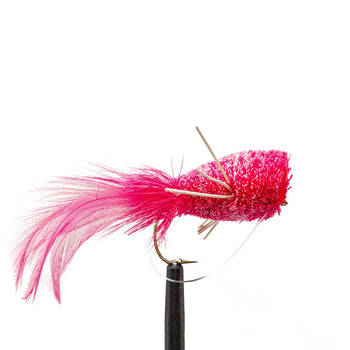
Pink Pollywog (#2–#6): Covers the same slop water as the Frog with a different profile and a color that holds up in stained water and low light — a natural frog color can disappear against dark vegetation exactly when you need it to stand out. Fish it the same way: skate, pause, sit. On overcast days or in tannic water, this is the one to tie on first.
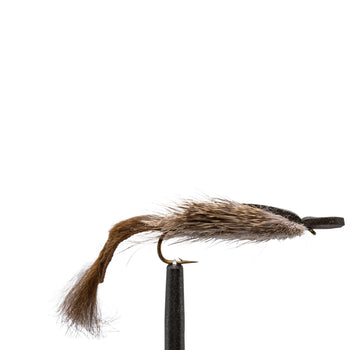
Moorish Mouse (#2–#6): One of the most consistent big-fish flies in freshwater — swing it across current or dead-drift it tight to a bank at last light and hang on. The deer-hair body pushes a wake fish feel before they see, which is most of what makes a mouse pattern work in low light. Same fly, same presentation, whether what's chasing it has fins or teeth.
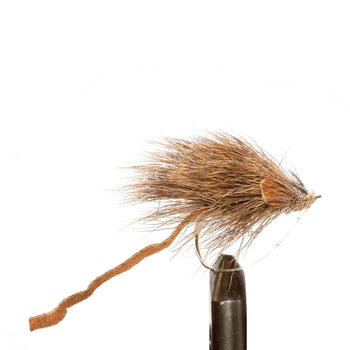
Rat-Mouse (#2–#6): Does the same job as the Moorish Mouse with a leaner, ratlike silhouette — worth carrying both, since picky fish that refuse one profile will sometimes eat the other without hesitation. Fish it on a short, stout leader; a mouse eat is rarely delicate, and a light tippet is the last thing you want between you and the best fish of the evening.
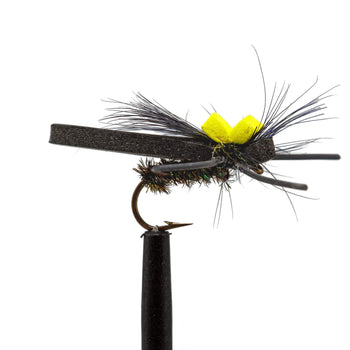
Snake River Beetle (#10): Earns its spot any time there's brush or overhanging grass near the water — beetles fall in all season, and warmwater species eat them just as readily as trout do. Fish it tight to the bank on a long, light leader and give it time to sit; the take is often a slow sip rather than an explosion, so resist the urge to set the hook on anything less than a firm pull.
📌 Pro Tip: Fish topwater slower than feels right. The single biggest mistake across every one of these patterns is moving them too soon — let the rings from the last twitch fully die out before the next one. That pause is doing more work than the retrieve.
Build Your Surface Box
You don't need every pattern in this post to fish topwater well — you need coverage across the jobs each family does. Here's the minimum box that covers a warmwater day from the first loud cast to last light.
The workhorses (3): Popper – Gold/White (the bright, flashy chug), Diver – Silver/White (the dive-and-rise change of pace when the popping goes quiet), Popper Legs – Green/Yellow (the best-selling rubber-leg option, movement through the pause).
The cover flies (2): Frog and Pink Pollywog — for lily pads and matted vegetation the poppers can't reach, one profile for clear water and one for stained.
The predator bridge (2): Moorish Mouse and Rat-Mouse — the same fly, two silhouettes, for bass at dusk and pike or musky in the right water.
The subtle option (1): Snake River Beetle — for pressured water that's already seen too many poppers.
Carry two or three of each and you're covered for whatever's in front of you — loud water and quiet, open water and cover, and the predator that might be waiting behind either one.
Related Articles
- Summer Smallmouth on the Fly
- Watch the Thermometer: Water Temps & When to Quit
- Fly of the Month Archive


