

October's Best Trout Flies: 12 Patterns for Fall Success

October can have you tying on a size 22 dry fly one afternoon and throwing a four-inch streamer the next. A few trout barely wrinkle the surface as they sip midges. Another follows your streamer all the way to the bank and leaves you standing there with your mouth open.
Your fly box needs room for both.
These twelve patterns cover three useful jobs: matching surface activity, getting down to fish feeding below it, and covering water with a larger meal. You won't need every one on every trip. But knowing when to reach for each is more useful than carrying another dozen flies you never fish.
A Few Terms, Up Front
These come up throughout, so here they are in one place.
- Freestone river: a river fed by rain and snowmelt. Flows and temperatures swing with the weather.
- Tailwater: the river below a dam. Water comes out at a steady temperature, so hatches are more predictable and flies run smaller.
- Spring creek: a stream fed by groundwater. Slow, clear, cold and technical.
- Dead drift: letting the fly travel at exactly the speed of the current, with no pull from your line.
- Drag: the current pulling your line and dragging the fly faster or slower than the water around it. The most common reason a trout refuses.
- Film: the surface itself. A fly riding in the film sits half-sunk rather than up on top of it.
- Emerger: an insect caught partway between nymph and adult, hanging just under the surface. Easy prey, and trout eat more of them during a hatch than they do duns.
- Dry-dropper: a buoyant dry fly on top with a nymph hung beneath it. The dry doubles as your strike indicator.
- Euro-nymphing: a tight-line method with a long leader and no indicator. You feel and see takes through a direct connection to the flies.
- Swing: letting the current carry the fly across the river at the end of a drift, so it rises and sweeps instead of sinking.
- Sink-tip line: a fly line with a weighted front section that pulls a streamer down fast.
- Tippet "X" size: the diameter of the fine end of your leader. Higher number, thinner line. 7X is finer than 5X.
Dry Flies: When Trout Look Up
Keep an eye on the surface even when you're catching fish underneath. A few quiet rises can be your cue to put down the nymph rig. Blue-winged olives and midges deserve the most attention in October, and they come off best on the days you'd rather stay home: gray, drizzly and raw, usually around midday. Caddis and spinners round out the box where those insects are still active.
 |
 |
 |
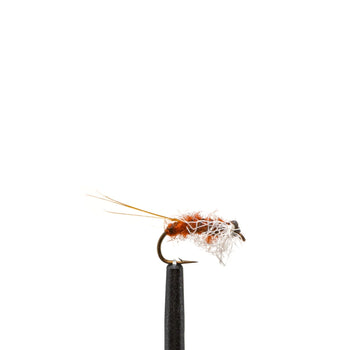 |
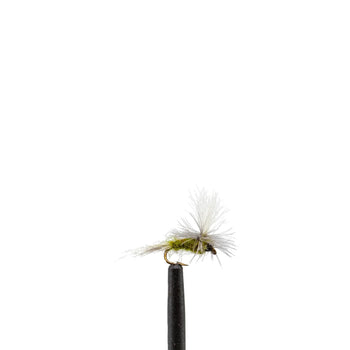
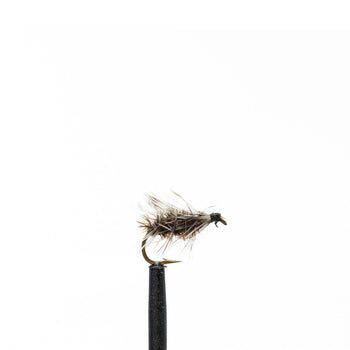
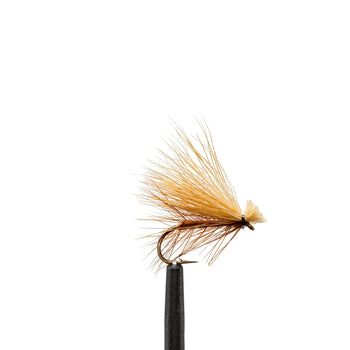
| BWO Parachute | Griffith's Gnat | Elk Hair Caddis | Rusty Spinner |
1. BWO Parachute (Sizes 18–22)
A gray afternoon, a soft seam and a trout rising in the same spot: this is where the BWO Parachute earns its place. Its slim body suggests a small olive mayfly, while the upright post gives you something to follow in flat light. That visibility is the whole point, because the best blue-winged olive days are the dreariest ones.
- How to Fish It: Pick a rising fish and watch its rhythm before you cast. Position upstream, give the fly room to settle into a natural drift, and keep unnecessary line off the water. Use 6X or 7X tippet on spring creeks and slower water, 5X on faster freestone rivers. Drag is what kills this fly.
- Where It Shines: Tailwaters, spring creeks, slow pools and softer riffle edges.
- 📌 Pro Tip: If fish keep rising but ignore the parachute, they're probably taking emergers rather than duns. Hang a Beadhead BWO Emerger about eighteen inches under the dry and the refusals usually turn into takes. On tailwaters, drop to a 20 or 22 to match smaller naturals.
2. Griffith's Gnat (Sizes 18–22)
Small, scruffy and easy to underestimate, the Griffith's Gnat is a useful answer to trout feeding on midges, which hatch all season and take over as everything else winds down. It's also easy to lose sight of, which makes watching the water around your fly part of fishing it well.
- How to Fish It: Dead-drift it through slicks, soft seams and quiet pockets where fish are rising. Keep your casts short enough to track the drift and spot a take. A slight twitch can suggest a struggling insect and tip a selective fish over.
- Where It Shines: Tailwaters, slow river sections and calm lake margins.
- 📌 Pro Tip: Pair it with a larger, more visible dry if you need a reference point, then watch the water just behind that fly rather than trying to pick out the Gnat itself. On windy days, fish it alone to keep from spooking fish in clear water.
3. Elk Hair Caddis (Tan or Olive, Sizes 14–18)
The Elk Hair Caddis is the dry to reach for when the water gets broken and a tiny parachute becomes impossible to follow. Its buoyant wing holds up through riffles and pocket water, and it works as an attractor, meaning a fly that doesn't copy any one insect but still reads as food. That makes it the pattern to prospect with when you haven't found a steady riser.
- How to Fish It: Start with a dead drift along bank edges and through pockets. When caddis are active, try a small twitch or a controlled skate at the end of the drift. On small streams, a downstream presentation shows the fish the fly before the leader.
- Where It Shines: Freestone rivers, small streams and choppy runs.
- 📌 Pro Tip: Apply floatant to the wing only, so the body rides lower and looks more natural. Carry tan and olive and let the insects you see decide: olive does better in shaded or forested streams, tan in open water.
4. Rusty Spinner (Sizes 16–20)
Some rises barely leave a mark. A nose appears, the surface dimples, and you're left wondering what the fish found.
Spent mayflies are often the answer. After mayflies mate, the spent adults fall to the water and lie flat in the film with their wings splayed, unable to go anywhere, so trout sip them with complete confidence. The Rusty Spinner gives you that sparse, flat profile, and it explains a lot of evening rises that nothing else will match.
- How to Fish It: Look for sipping fish in tailouts and quieter water when spinners are present. Cast to a specific fish and follow the lane your fly is traveling through. A rise in that lane may be all you ever see of the take, so set gently rather than hard.
- Where It Shines: Flat water, gentle seams and pool tailouts.
- 📌 Pro Tip: A spinner lying flat in the film is nearly invisible to you, too. Line your drift up with a reflection or a foam line so you know where the fly is. On very clear rivers, drop to a 20 to avoid refusals.
📌 Pro Tip: Whichever dry you're fishing, watch a foam bubble or a leaf traveling beside it. If your fly pulls ahead or falls behind, you have drag — check that before you change patterns. Repositioning or a better mend solves more refusals than another trip through the fly box.
Nymphs: Make the Depth Count
When nothing is rising, these four give you a useful starting lineup. Fish them under an indicator or on a tight line, and adjust weight and depth to the current. In cold water a trout won't move far for a fly, so getting the depth right matters more than the pattern does.
Before you decide a fly isn't working, make sure it's reaching the water where fish are holding.
 |
 |
 |
 |
| Beadhead Pheasant Tail | Zebra Midge | Beadhead Hare's Ear Flashback | Beadhead Prince Nymph |
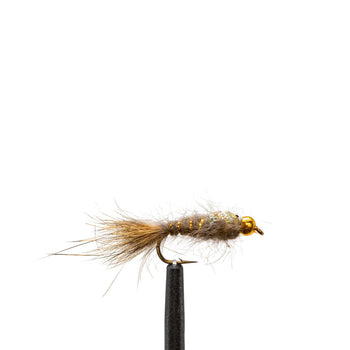
5. Beadhead Pheasant Tail (Sizes 14–20)
The Pheasant Tail earns its space by being useful in a lot of situations. Its slim, segmented profile suggests a range of mayfly nymphs, and in October it does one job especially well: to a trout keyed on blue-winged olives, a size 18 Pheasant Tail reads as the nymph those olives hatch from.
If you're standing beside unfamiliar water wondering what to tie on first, this is the answer.
- How to Fish It: Dead-drift it through feeding lanes, riffle edges and runs, or Euro-nymph it through pocket water. Fish it alone where its own weight is enough, or pair it with a heavier fly to reach deeper water. Keep the drift tight so you can detect subtle takes.
- Where It Shines: Freestone rivers, tailwaters and seams below riffles.
- 📌 Pro Tip: Keep a few smaller sizes handy. Going from a 14 to an 18 gives you a different profile without abandoning a dependable pattern, and in clear, low water the smaller natural-fiber versions are the ones that get eaten.
6. Zebra Midge (Red or Black, Sizes 18–22)
There isn't much to a Zebra Midge: a slim thread body, a wire rib and a bead. That spare profile is exactly the appeal when trout are eating small subsurface food, and it takes up almost no room in the box.
It also earns its keep at the cold end of the season. Once the water drops below about 45°F and most everything else stops producing, this is the fly that keeps catching.
- How to Fish It: Trail it behind a heavier nymph, suspend it under an indicator, or hang it below a buoyant dry in suitable water. Adjust the depth rather than assuming the first setup had it right — fish are usually holding near the bottom.
- Where It Shines: Tailwaters, spring creeks and slower pools.
- 📌 Pro Tip: Carry different bead weights as well as both colors. A tiny fly that reaches the feeding lane is more useful than the perfect-looking one drifting above it. Red tends to do better in silty rivers, black in clear water, and a tungsten bead sinks faster without adding bulk.
7. Beadhead Hare's Ear Flashback (Sizes 14–18)
The Hare's Ear gives you a shaggy, buggy alternative to the Pheasant Tail's slimmer outline. It suggests food without requiring you to identify every insect beneath the rocks, which is exactly why it works when you don't know what they're eating. The flashback adds a little visibility, making it a good pattern to rotate in when you're searching for a response.
- How to Fish It: Drift it through riffles, rocky runs and seams. At the end of the drift, let it lift and swing before you pick up for the next cast — that rise imitates an insect swimming toward the surface and draws aggressive takes.
- Where It Shines: Broken water, rocky freestone rivers and runs with mixed currents.
- 📌 Pro Tip: Between a Pheasant Tail and a Hare's Ear you have two distinct profiles to try before reaching deeper into the box. If a new fly looks too bright, rub it with a little river mud to dull it down. Gold beads do better in murky water, silver in clear.
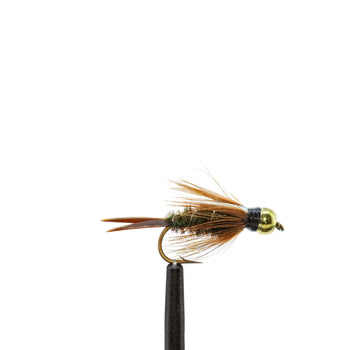
8. Beadhead Prince Nymph (Sizes 12–16)
With its peacock body and white biot wings, the Prince offers a bolder profile than the smaller nymphs in this lineup. It's a genuinely large subsurface meal, and a well-weighted version does a second job: it carries a smaller trailing fly down through the current to where trout are hugging the gravel.
Check the fly's actual weight, though. A beadhead alone doesn't guarantee it will anchor your rig.
- How to Fish It: Pair it with a smaller Pheasant Tail or Zebra Midge and work deeper runs and riffles so it ticks the bottom. Adjust the rig until it reaches the feeding zone without constantly hanging up.
- Where It Shines: Deep pools, fast riffles and cold mornings.
- 📌 Pro Tip: Use a 12 in high or stained water and drop to a 16 when it's low and clear. The white biot wings give fish something to key on when visibility is poor.
📌 Pro Tip: If you aren't getting takes, test a depth or weight adjustment before you change flies. Set your indicator at about one and a half times the water depth, then move it up or down until your flies are just ticking the bottom. Change one thing at a time so you can tell what helped.
Streamers: Show Them Something Bigger
Streamers give you a different way to fish October. You can search banks and cover, work a deep run slowly, or show a larger profile to fish that haven't responded to smaller flies. Big trout putting on weight before winter will trade a lot of energy for one substantial meal, which is why most anglers' largest fish of the year comes in the fall.
They also make the retrieve part of the experiment. Try a few deliberate changes in speed and movement rather than stripping every cast the same way.
Fall is spawning season for brown and brook trout. Leave fish on spawning beds alone, avoid casting over redds, and watch for clean patches of pale gravel before you wade.
 |
 |
 |
 |
| Woolly Bugger | Tungsten Thin Mint Jig | Sex Dungeon | Olive Sculpin |
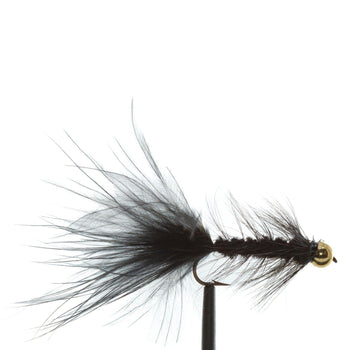
9. Woolly Bugger (Olive or Black, Sizes 6–10)
If you only carry one streamer, the Woolly Bugger makes a strong case. It can suggest a leech, a sculpin or a small baitfish, and it works with enough different presentations to stay useful as conditions change.
It's also a good fly for learning what a retrieve does. Strip it with some pace when the water is above the mid-50s and crawl it when it's in the 40s — the same fly covers most of the season if you change the speed.
- How to Fish It: Work bank edges, deeper seams, logjams and deep runs. Strip it, swing it or dead-drift it, and pay attention to which approach draws a response.
- Where It Shines: Rivers, lakes and anywhere big trout lurk.
- 📌 Pro Tip: Olive holds its silhouette in clear water; black does better in low light and stained flows. A conehead gets it deeper, a beadhead keeps it in the middle of the column.
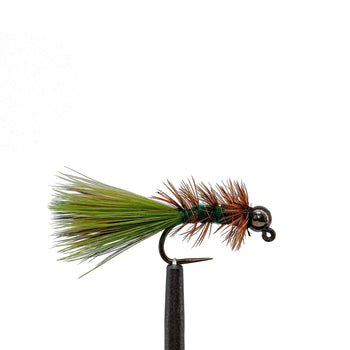
10. Tungsten Thin Mint Jig (Sizes 8–12)
This one blends olive, brown and peacock to suggest a leech or a small sculpin, and it's the fly to reach for when a full-size streamer feels like too much. The jig hook rides point-up, so it snags less on the bottom, and the tungsten bead makes it dive and dart between strips. That up-and-down action is what trout react to.
- How to Fish It: Bounce it along the bottom on a Euro rig or swing it through structure. Short, sharp strips suggest a fleeing baitfish.
- Where It Shines: Deep runs, undercut banks and silty rivers.
- 📌 Pro Tip: Trail a smaller leech or Bugger twelve to eighteen inches behind it for a two-fly rig that covers both sizes at once. It's especially good in stained water.
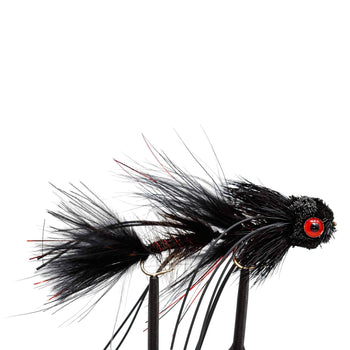
11. Sex Dungeon (Sizes 4–8)
This is an articulated fly, meaning it's tied on two hooks joined by a flexible link. It pushes water and keeps pulsing even when you pause it, and that's the point: a big trout feels the disturbance before it sees the fly, and the jointed body keeps swimming on the pause, which is when most streamer eats actually happen.
- How to Fish It: Fish it on a sink-tip line and target deep structure like logjams and undercut banks. Long, slow strips keep it moving without ripping it out of the zone.
- Where It Shines: Big rivers, deep pools and trophy trout water.
- 📌 Pro Tip: Start with a size 6 in early October and move up to a 4 as the days get colder and browns get bolder. Olive and black are the two to carry.
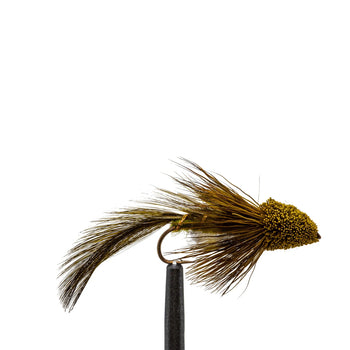
12. Olive Sculpin (Sizes 6–10)
Sculpins are bottom-dwelling fish that trout eat all year, and in fall they'll chase a bigger one. This compact streamer imitates them with a broad head and lively movement. The detail that matters is depth: a real sculpin never leaves the bottom, so a sculpin fly swimming through the middle of the water column doesn't look like anything a trout knows.
- How to Fish It: Crawl it along the bottom with slow strips, or swing it through seams. You want to feel it ticking rocks.
- Where It Shines: Rocky rivers, deep pools and boulder-strewn runs.
- 📌 Pro Tip: Add a small split shot six to eight inches above the fly to keep it down. If you aren't occasionally hanging up, you aren't deep enough.
📌 Pro Tip: Keep stripping all the way to your feet. Fish will follow a streamer a long way before they commit, and the last few feet are where a lot of them make up their minds. If one follows without eating, change the color or the size before you change the fly.
Build Your October Fly Box
Stocking up? Start with these twelve patterns in a range of sizes and keep a few extras of each for the inevitable tree snags. Organize by type, dries in one row, nymphs in another, streamers in a third, so you can find what you need with cold hands.
If you're packing light, this is a solid day's worth: a BWO Parachute and an Elk Hair Caddis for the surface, a Pheasant Tail and a Zebra Midge for the dropper, a Prince Nymph to anchor the rig, and a Woolly Bugger for when you want to cover water. Everything else is a refinement on those six.
And if you're new to tying, start with the Zebra Midge or the Pheasant Tail. Both use a handful of materials and no hackle, and they catch as many fish as anything in the box.
Not sure where to start? Our Loaded Fly Box Assortments are packed with many of these same patterns, hand-picked, neatly organized and ready for the water. It's the easiest way to stay dialed when the weather and the fish change hour by hour.
Shop Loaded Fly Box Assortments >>
Taking It to the Water
October is prime time, a balance of solitude, beauty and hungry trout. Whether you're chasing risers on a spring creek or swinging streamers for big browns, these flies will keep you in the game.
One last thing worth remembering: fall rewards the angler who changes something. If nothing is happening, try a different depth, a different speed, a different size, or a different kind of water. The fly box is only one of those levers. Tie on, step into the current, and make this fall one to remember.
SHOP OUR FALL FLY COLLECTION
Related Articles
- Fall Fly Fishing: How Tactics Change as the Season Turns
- Fall Fly Fishing Guide: Key Hatches & Essential Flies
- 10 Must-Have Flies for October: Eggs, Streamers and Nymphs
- 10 Fall Fly Fishing Tips for Trout That Have Seen It All
- Fly of the Month: Mastering Tiny Mayflies for Fall Trout
- Mastering Fall Streamer Fly Fishing: Tactics, Patterns and Strategies for Trophy Trout


