

Fly of the Month: Scuds & Sowbugs

The tailwater looks quiet in November. No rises, no bugs coming off, nothing in the air. But stand on the bank a minute and you'll see trout holding beside the weed beds, sliding a foot left, a foot right, and settling back in. They're eating, and whatever they're eating never shows up on the surface.
Most of the time, it's a crustacean. Scuds and sowbugs live their whole lives underwater, in the weeds and on the bottom, and on rich tailwaters and spring creeks they're on the menu every single day of the year. When the hatches thin out, they become a bigger share of what trout see drifting by.
They don't put on a show the way a hatch does. What they give you is a reason to fish when nothing is rising, and they're simple to fish once you know where they live and how they drift. Here's how we'd approach them.
A Few Terms, Up Front
- Scud: a small freshwater crustacean (an amphipod), often called a freshwater shrimp. Curved, segmented and a good swimmer.
- Sowbug: a flat, broad aquatic crustacean (an isopod), the water-dwelling cousin of the pill bugs in your garden. It crawls rather than swims.
- Tailwater: a river below a dam. Water released from deep in the reservoir runs cool in summer and mild in winter.
- Spring creek: a stream fed mostly by groundwater, with steady temperatures and clear, mineral-rich water.
- Dead drift: letting the fly move at exactly the speed of the current, with no drag from the line.
- Flow bump: a rise in water level below a dam when releases increase.
- Point fly: the last fly on a two-fly rig. The dropper is the one tied in above it.
Why Trout Eat Them Every Month of the Year
Most of the bugs we imitate have a season. Mayflies, caddis and stoneflies spend months as nymphs, then hatch, mate and die. Crustaceans don't hatch. A scud or sowbug lives its entire life in the water, breeds several times a year, and is there in January just as it is in July.
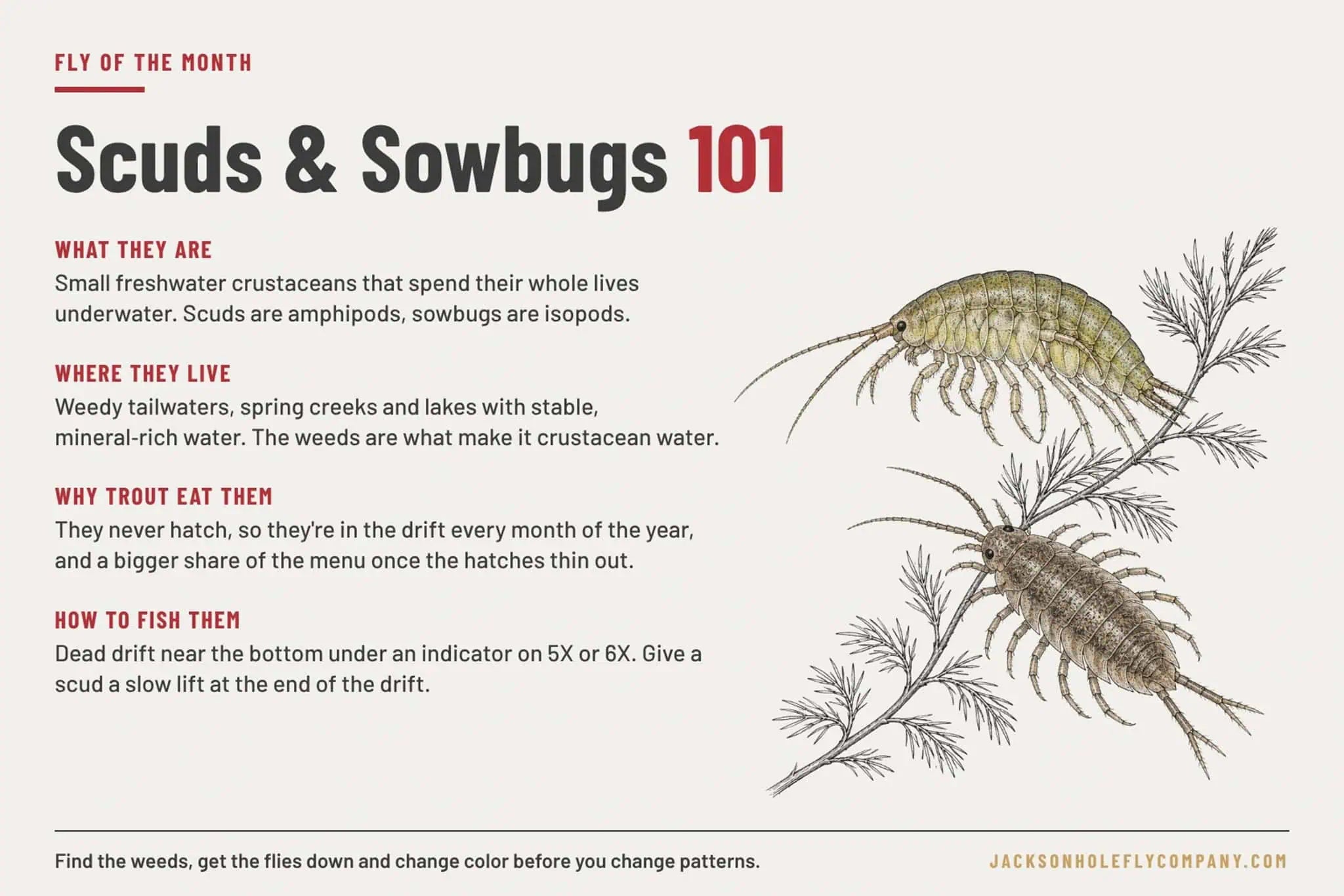
They thrive where the water is stable. Tailwaters and spring creeks hold steady temperatures through the year, and that keeps weed beds growing and crustaceans breeding when freestone rivers go dormant. Scuds in particular need calcium for their shells, which is why the richest crustacean water tends to be hard, alkaline and weedy. In the right river, a single clump of weed can hold dozens of them.
Habitat is the qualifier. A river below a dam isn't automatically scud water. What makes it crustacean water is submerged vegetation, a protected bottom with debris and cover, and the naturals themselves. If a tailwater runs over bare cobble with no weed, scuds and sowbugs may be a small part of the menu there.
They're an easy meal. A scud doesn't flutter off the surface or dart away fast. Once it's in the drift, it tumbles along near the bottom, right where a trout is already holding. For a fish trying to save energy in cold water, that's about as good as food gets.
They matter most when everything else slows down. On a summer evening, a crustacean is one option among many. In late fall and winter, with the hatches down to midges and the odd BWO, it's a big part of what's left.
Scud or Sowbug? How to Tell Them Apart
Both are small, both are crustaceans, and both live in the weeds. They behave differently, though, and that changes how you fish them.
Scuds
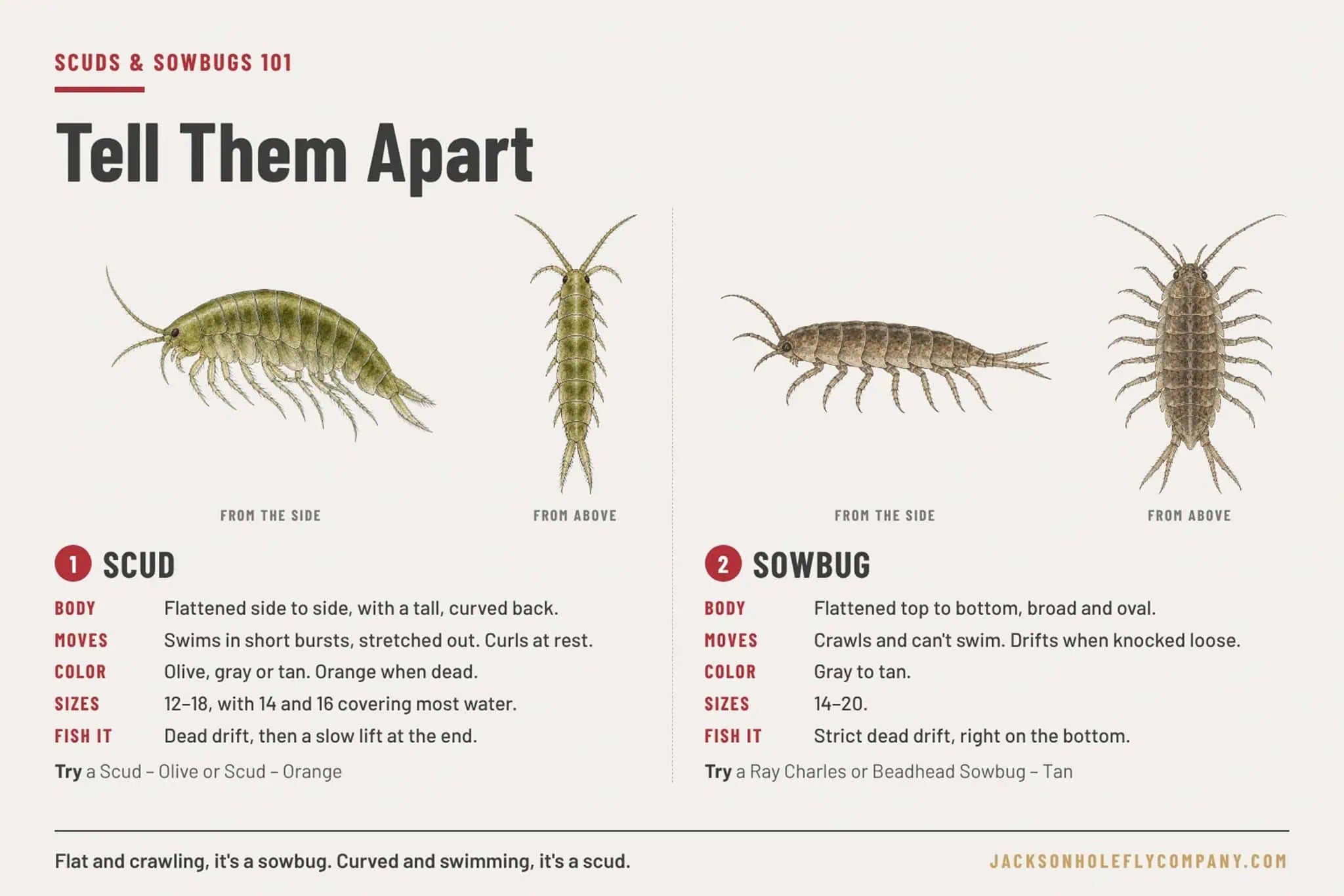
Shape: narrow from side to side, with a curved, segmented back and lots of legs. Swimming, they stretch out. At rest, they curl.
Color: living scuds are usually olive, gray or tan, often matching the weeds they live in. Dead scuds can take on an orange or pinkish color, and bright patterns also work as attractors, which is why an orange scud earns a spot even on water where the naturals are olive.
Size: most naturals fall between sizes 12 and 18, with 14 and 16 covering a lot of water.
Behavior: they swim in short bursts through the weeds and along the bottom, so a scud pattern can take a little movement.
Sowbugs
Shape: flat from top to bottom and wide, like a tiny gray shield with legs out the sides.
Color: gray to tan, sometimes with a light underside.
Size: mostly 14 to 20.
Behavior: they crawl on the bottom through silt, weed and leaf litter, and they can't really swim. When a sowbug comes loose, it drifts helplessly with the current. That makes a dead drift right along the bottom the only presentation that matters.
Where to Find Them
Weed beds first. Look for beds of submerged vegetation and fish the slots, edges and tailouts just downstream of them. Anything knocked loose from the weeds drifts straight into those lanes.
Slow edges and soft bottoms for sowbugs. Sowbugs favor slower water with silt, fine gravel and decaying leaves. Below a dam, the slower runs and back edges are classic sowbug water.
Riffles below the weeds. Trout stack up at the head of a run where weedy flats spill into faster water, eating whatever the current pulls off the bottom.
Watch the flows. When a dam increases its release, the rising water often scours weed beds and puts a pulse of crustaceans into the drift. The first hour or two of a flow bump can be the best fishing of the day. Most tailwaters publish their release schedules online, and it's worth checking before you go. Keep an eye on the water level while you fish, too. A crossing that was easy in the morning can be deeper and faster after a release.
Lakes, too. Scuds are just as important in stillwater, especially weedy lakes with hard water. Our fall stillwater guide covers fishing them on lakes.
📌 Pro Tip: Where access and local rules allow, lift a small clump of weed, shake it gently into a white cup of water, then put the weed back. In a minute you'll know whether the river holds scuds, sowbugs or both, and what size and color they are. That tells you more than another fly change.
How to Rig Them
Both flies belong near the bottom, so the rig's whole job is getting them there and keeping them in a clean drift.
Indicator nymph rig. This is the workhorse. Run a 9-foot leader to 5X fluorocarbon tippet, pinch a split shot about 10 to 12 inches above the fly, and set the indicator at roughly one and a half times the water depth to start. Adjust from there, one thing at a time: if the flies never reach the zone, add depth or weight; if they hang up on every drift, shorten the distance or lighten the rig. Ticking bottom every few drifts means you're close. Snagging on every drift means something needs to change. Our indicator fishing guide covers depth, weight and strike detection in detail.
Two flies, two jobs. A common tailwater setup runs a heavier fly, like a beadhead sowbug or a worm, with a scud or sowbug trailing 14 to 18 inches behind it on 5X or 6X. The heavier fly gets the rig down, and the lighter fly drifts more naturally behind it. Watch which fly gets eaten; if one clearly outfishes the other, simplify or swap the slow one for another color. Check your local regulations first, since some waters limit you to one fly.
Dry-dropper over shallow weed flats. Where the water is under three feet and the weeds come close to the surface, a buoyant dry with a scud dropped 18 to 24 inches below it covers the slots between the beds without snagging every cast. If the scud keeps coming back with weed on it, shorten the dropper; if it's riding above the fish, lengthen it or add a little weight. Our dry-dropper guide has the pairings.
Tippet size follows the fly. 5X suits sizes 12 to 16. Go to 6X for 18s and 20s, and on clear, heavily fished water where trout get a long look.

How to Fish Them
Depth comes first. Before changing flies, make sure the pattern is getting down to the trout. A perfect imitation drifting a foot above feeding fish rarely gets eaten.
Dead drift, low and slow. This is the core of it for both flies. Cast upstream, mend to keep the line from pulling the indicator, and let the flies roll along the bottom at current speed. Our late-season nymphing guide covers the drift in depth.
Give a scud a little life at the end. Since scuds swim, the moment at the end of a drift when the line comes tight and the fly lifts toward the surface often draws a take. Let it swing up, then add a couple of slow, short strips before recasting. If the dead drift is already producing, keep doing what's working. Sowbugs don't swim, so keep them strictly on the dead drift.
Set on anything. A trout eating a crustacean near the bottom barely moves to take it. The indicator might just pause, tip or slide a little sideways. If it does anything other than float along with the bubbles, set. Our guide to why trout get missed covers the timing.
Rotate colors before you rotate patterns. If an olive scud isn't working in a run where you can see fish, try tan, then orange or pink, before changing to something else entirely. Keep the depth and weight the same while you compare colors, so you know which change made the difference. Color is often the difference on crustacean water.
📌 Pro Tip: Check the flies for weed every few casts. On crustacean water, a single strand of moss on the hook is enough to ruin the drift, and a fouled fly rarely gets eaten.
Get to Know the Lineup
Four scuds and four sowbugs. Together they cover the living colors, the bright dead-scud colors, and the weights you need to get down in slow water and fast.
Scuds
 |
 |
 |
 |
|
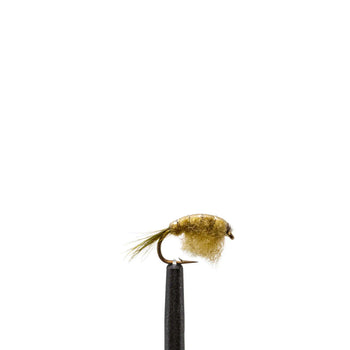
Scud – Olive |
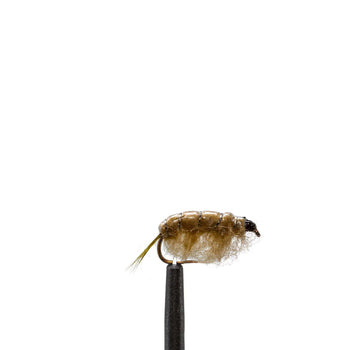
Scud – Tan |
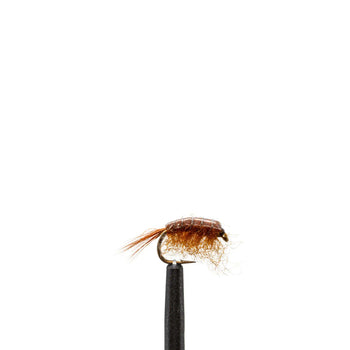
Scud – Rust |
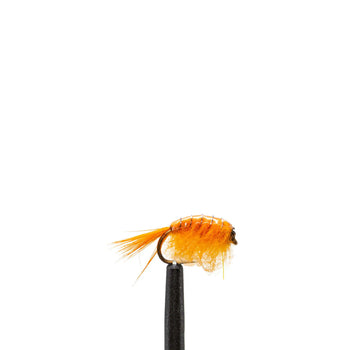
Scud – Orange |
Scud – Olive (10–18). If you carry one scud, carry this one. Olive matches the living naturals in most weedy water, and it's the color trout see most days of the year. Dead drift it under an indicator behind a heavier fly, with a short lift at the end of the drift. Sizes 14 and 16 cover most rivers; keep a few 18s for clear, pressured water.
Scud – Tan (10–18). The second living color, and the one to switch to when trout look at olive and pass. It matches scuds over lighter, sandier bottoms and pale weed, and it shows up well in slightly off-color water after a flow bump. Fish it as the dropper behind a sowbug or worm.
Scud – Rust (10–18). A darker, warmer tone between the living colors and the bright ones. Reach for it on overcast days, in low light and in darker water, or pair it with Olive on a two-fly rig to test a darker and a lighter color on the same drift.
Scud – Orange (10–18). The bright one. Dead scuds can take on an orange color, and a bright scud also works as an attractor, so it earns a place even where the living naturals are olive or gray. Fish it on a dead drift only, below weed beds and after a flow bump. Try it as the upper fly with a natural-colored scud or sowbug below it: the bright fly draws the look, and the drab one often gets eaten.
Sowbugs
 |
 |
 |
 |
|
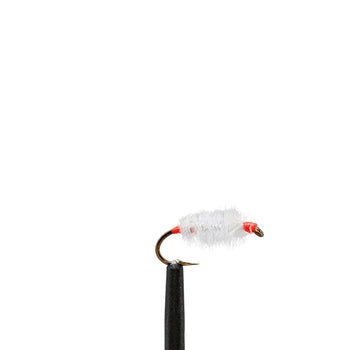
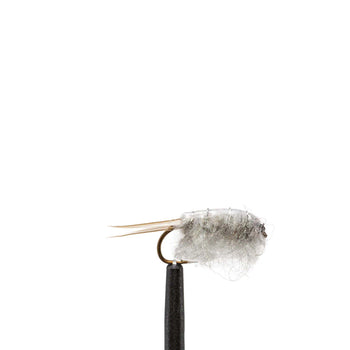
Ray Charles Sowbug |
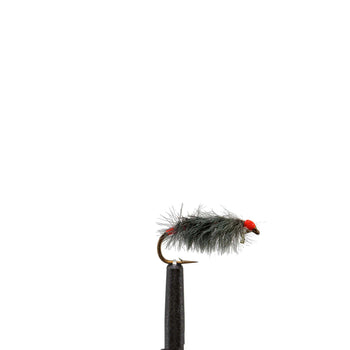
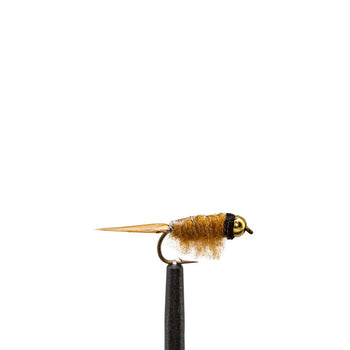
Stevie Wonder Sowbug |
Sowbug |
Beadhead Sowbug – Tan |
Ray Charles Sowbug (12–20). A tailwater standard, and the sowbug to tie on first. Its slim, flat, segmented profile reads as a sowbug from any angle a trout sees it. Dead drift it right on the bottom, as the dropper behind a heavier fly or with shot 10 to 12 inches above. Carry 16s and 18s; smaller sizes often outfish larger ones on clear, heavily fished water.
Stevie Wonder Sowbug (12–20). The change-up to the Ray Charles. When trout holding in a run have seen the Ray Charles all morning, a different look on the same drift is often all it takes. Fish the two together on a two-fly rig and let the trout tell you which one they want that day.
Sowbug (10–18). The classic flat, gray profile, unweighted, so it drifts and tumbles naturally behind shot or a heavier point fly. Trail it 14 to 18 inches behind a weighted fly on 5X or 6X in slow, clear water. In slow back eddies below a dam, try it with no shot at all under a small indicator.
Beadhead Sowbug – Tan (12–18). A sowbug with a bead, so it gets down in faster tailwater runs without extra shot, and a strong point fly to carry an Olive or Orange Scud behind it. Judge the rig by how it fishes, though: in heavy current it may still need a split shot.
If you'd rather start with a box that's already built for this water, our Tailwater Nymph Assortment pairs Orange, Pink and Flashback Olive Scuds and the Hot Head Ray Charles with worms, midges and small nymphs, and our Winter Nymph Assortment covers the cold months with midges, small nymphs and the Hot Head Ray Charles. Each is 36 flies in a slim magnetic fly box.
Before You Head Out
- Check the flows. Look up the dam's release schedule, plan to be on the water for any bump, and watch the level while you fish.
- Find the weeds. Vegetation is what makes crustacean water. One shake of a weed clump tells you scud or sowbug, size and color.
- Rig for the bottom. Indicator at about one and a half times the depth, shot 10 to 12 inches up, 5X or 6X tippet.
- Pair them. A heavier sowbug or bright scud on top, a natural-colored scud or sowbug below.
- Change color before pattern. Olive, tan, then orange.
Scuds and sowbugs aren't flashy, and on the right water they're the steadiest food in the river, all year long. Find a weed bed, get the flies down and give them a few clean drifts before you change anything.
You may never see what the trout ate. A small pause in the indicator can be all the answer you need.


