

Fall Stillwater Fly Fishing: A Complete Lake Guide

The boat ramp is empty. Three weeks ago you couldn't find a parking spot, and now there's frost on the trailer hitch and nobody on the water but you.
The lake looks the same as it did a month ago. It isn't.
Cooling nights are changing the water, and the trout are changing their routes with it. A shoreline that gave you nothing through the heat of summer is worth fishing again. The weed edge you walked past in August deserves a second look. That's the opportunity in fall stillwater — comfortable feeding water comes back within reach of the bank, on lakes nobody else is fishing.
Finding it means paying attention to how far your lake has actually cooled, then working the right stretch of shoreline at the right depth.
Follow the Water, Not the Calendar
Fall arrives at different speeds. A high-elevation lake can be well into its cold-weather pattern while a lower reservoir an hour away still fishes like August. Use the calendar to plan the trip; let the water tell you how to fish it.
You don't need a thermometer to read this, though one helps enormously.
Early cooling: work the shelf and its deeper edge
A few cold nights don't move every trout into the shallows. Start where a feeding shelf meets deeper water and test both — the shelf first, then the outside edge before you give up on the spot.
Early fall can still bring hatches and surface feeding. Don't ignore rising fish because you showed up expecting to fish a leech. Surface temperatures above about 65°F mean the summer pattern is still largely in force and fish will hold deeper through the middle of the day.
Cool water: give the shallows a proper look
As the lake cools into the 50s, trout can spend real time feeding around shallow vegetation, and this is the heart of the fall window. Treat a reading in the 50s as a strong cue to investigate that water — not as a guarantee fish are in it.
Watch for a swirl, a moving shadow, or a fish showing along the weed edge before you commit. And before you step in, make a few casts from dry ground. The fish are often in the water you were about to wade through.
Late fall: stay responsive as it gets colder
Shallow fishing can continue well into the cold. As the surface drops through the 40s, feeding slows, the daily window narrows, and fish drift toward slightly deeper water — but they don't vanish, and some of the largest fish of the year come out of that last stretch.
Shorten your search to the most promising features, slow the presentation down, and give a good area real time before moving. A quiet morning tells you very little about what the afternoon will do.
What About Turnover?
Through the heat of summer, a lake that's deep enough sorts itself into layers. Warm water floats on top, colder water sits underneath, and a narrow band between them keeps the two from mixing. Trout get squeezed: the top is too warm to be comfortable, the bottom often holds too little oxygen to be survivable.
As the surface gives up heat, that separation weakens and wind starts mixing water that spent all summer apart, redistributing oxygen through the column. The squeeze lets go. This seasonal mixing is what people mean by fall turnover.
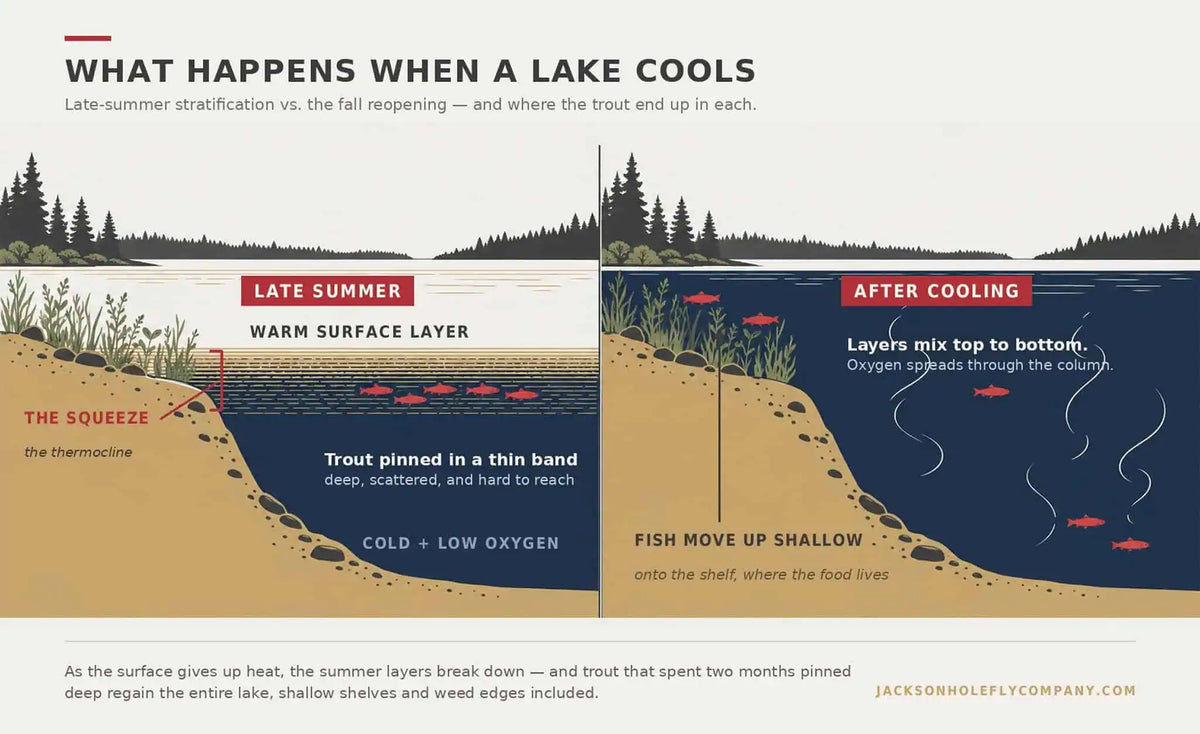
It is not a single event on a fixed date. Depth, exposure, and weather all matter. Shallow lakes, windy lakes, and most tailwater-fed reservoirs mix more or less continuously and never show an obvious transition at all. Deep, sheltered, natural lakes are where you'll actually notice one.
And it explains less than anglers give it credit for. Cloudy water or an odd smell can accompany turnover, but a murky lake and a slow bite don't prove that's the cause. Be skeptical of the familiar story about a fixed number of dead days followed by perfect fishing — it's tidier than the water usually is. If your lake isn't producing, check visibility, depth, and whether you're seeing any fish activity at all before you settle on an explanation and go home.
What is reliably true is the part that matters: once a lake has cooled and mixed, trout can use the whole thing again, and they use it the way they'd always prefer to — cruising shallow shelves and weed edges where the food actually lives, in water you can reach with a floating line and a nine-foot leader. They also feed harder than they have all year, because cold water is coming and they have a few weeks to do something about it.
Read the Shoreline Before You Cast
A lake gives you fewer obvious clues than a river. There's no seam, no riffle, no bucket behind a rock — just a flat gray plane that asks you to guess. But the bottom still has shape, and in fall you can narrow the guessing fast by starting where feeding water sits close to deep water.
Weed edges and shallow shelves
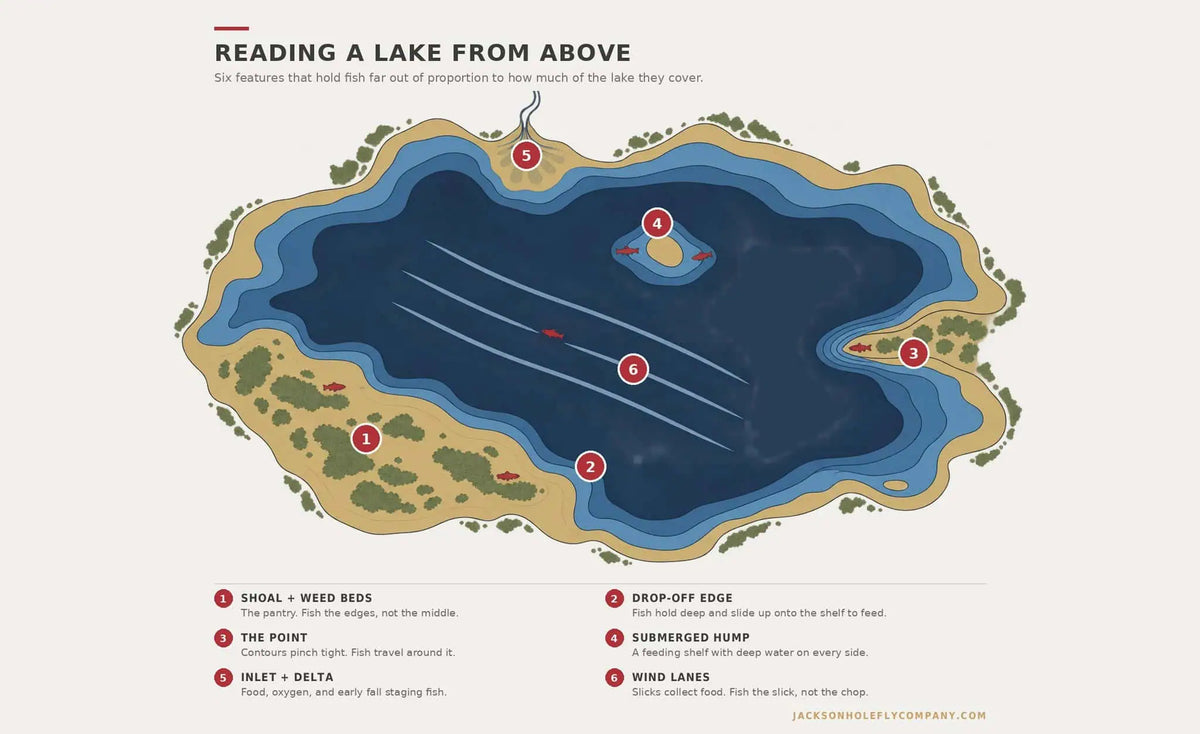
Submerged vegetation is the pantry. Scuds, chironomid larvae, dragonfly nymphs, and immature damsels all live in and around it, which means trout patrol it the way you'd walk a grocery aisle. Look for water shallow enough that light reaches bottom — often three to twelve feet — where you can see darker patches through the surface.
Fish the edge, not the middle. The line where vegetation gives way to open bottom concentrates everything: food washing out, fish cruising a visible boundary, and enough clean water that your fly doesn't foul on every cast.
Check what's actually in front of you rather than what was there in July. As beds thin out through fall, the food that lived in them gets pushed onto a shrinking edge — a shelf that was unfishable salad in August is often prime water in October.
Drop-offs and points
A shelf falling into deeper water gives you several depths to test from one position. Fish hold deep and slide up to feed, often at predictable times — mid-morning, afternoon, and under cloud.
Points are useful starting places because you can read their shape from the parking lot, though the underwater slope is often more gradual than the shoreline suggests. Fish along the transition first, then work across it. If the shallows are quiet, check the outside edge before abandoning the area. From a boat or tube, set up so you can retrieve along the shelf rather than drifting over the water you're trying to fish.
Inlets and outlets
Moving water brings food and oxygen, so any inlet is worth a look — and in autumn it's worth more than that. Inlet and outlet mouths gather fish thinking about spawning runs, and brook trout and browns in particular stage there through fall. Fish them with some restraint, and check your local regulations: a lot of water closes or gets restricted around spawning tributaries this time of year.
Let the wind help you choose
A light chop gives a suspended fly movement and makes a shallow approach far less conspicuous. Look for surface slicks collecting insects, and for shores taking wind-pushed food. Fish the slick, not the chop beside it.
Work within wind you can actually fish, though. A perfect-looking shoreline is no use if you can't control the cast, stay in contact with the fly, or hold your position in a tube.
📌 Pro Tip: The windward shore is less pleasant to stand on and less pleasant to cast into, which is exactly why it gets left alone — and wind pushes plankton, then baitfish, then trout, all in the same direction. Fish it when you can handle it.
Casting a Fall Lake
Autumn on a lake means wind. Not occasionally — most days, most of the afternoon. The anglers who do well in fall are the ones who stopped resenting it, because wind is what makes the whole thing work: it drives the mixing, it stacks food on the windward shore, and it animates a fly better than your hand can.
Cast with the wind when you can and let it extend your range for free. Casting into it, drive the loop low and hard — aim at the water rather than above it, and get line speed from a haul instead of muscling the rod. Across the wind, keep the fly on your downwind side so a gust doesn't drive a weighted hook into the back of your head; if the wind is on your casting shoulder, turn around and cast backhand rather than accepting a hook in the ear.
Open your loop for the long rigs. A fall chironomid setup under an indicator might be twelve or fifteen feet from indicator to fly, and a tight loop will hinge that rig into a knot every time. An oval or Belgian-style cast — the rod travelling a rounded path rather than straight back and straight forward, keeping constant tension — keeps everything moving in one direction. It looks less elegant than a crisp river loop. It also works, which is the only thing that counts at fifteen feet of leader.
And cut the false casting. One back cast and go. Every extra stroke with a weighted fly in a crosswind is another chance to build a tangle you'll pick out with cold hands.
Cover the Shelf, Then Find the Depth
Start close. A long cast across open water is satisfying and it often sails right over the fish you came to find.
Cast along the bank before you cast straight out. Where a shelf follows the shoreline, that angle keeps your fly over similar depth for most of the retrieve instead of crossing it for four feet and then swimming through dead water. Stand back, fish the near water first, then extend.
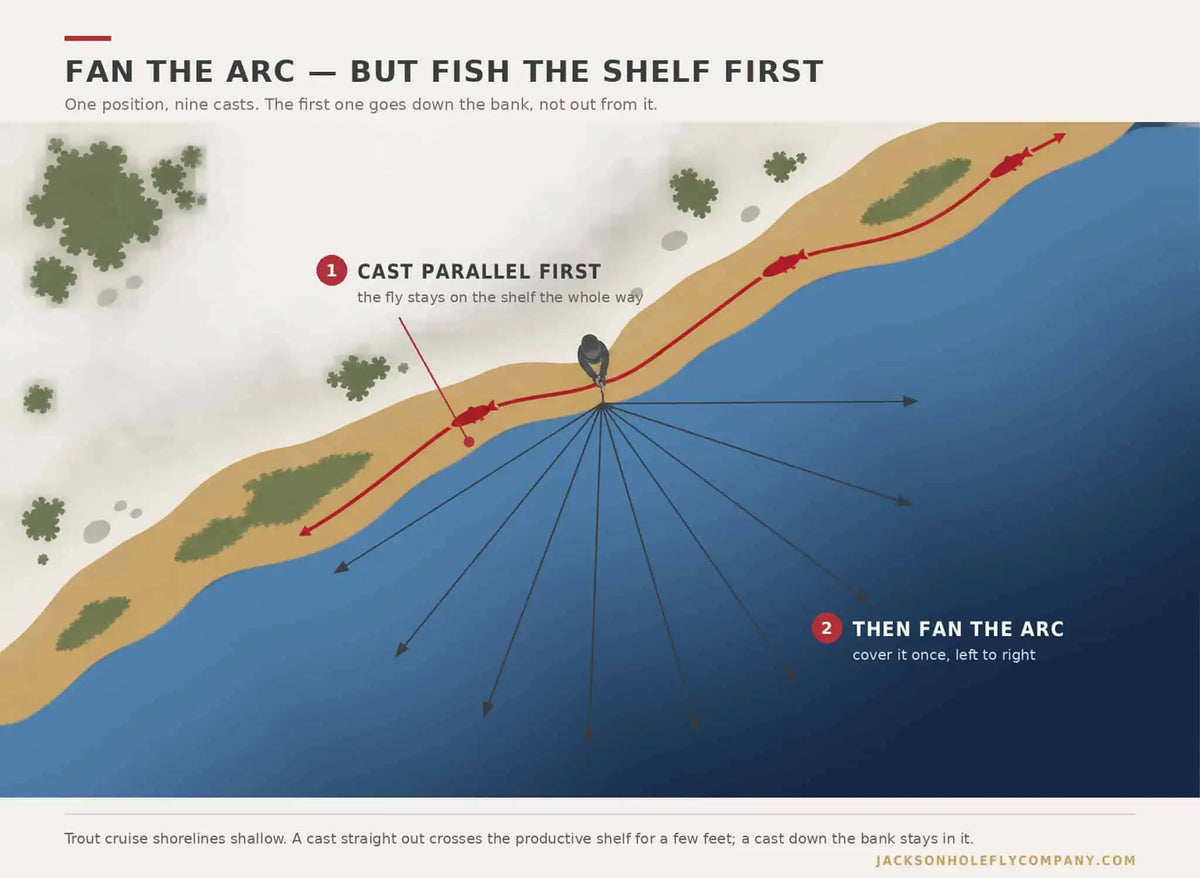
Then fan your casts across the likely water in a deliberate arc — think of a clock face, and work from nine through three in eight or ten casts rather than firing at random. Keep the fly and the retrieve consistent while you search. If nothing happens, change the depth before you start cycling through the fly box.
For a retrieved fly: the countdown
With a sinking fly or line, count after the cast before you start the retrieve. Try a short count first, then extend it on each following cast until something eats. Over shallow weeds, keep the count short enough that you're not burying the fly in the salad.
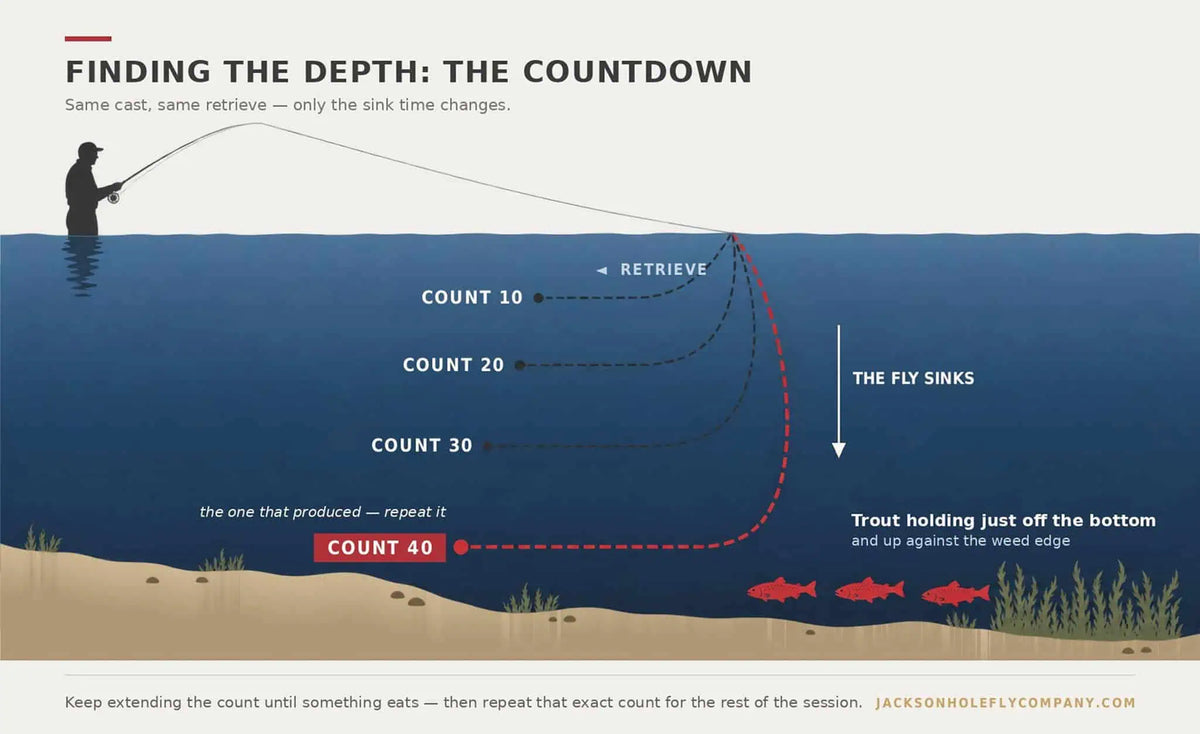
A countdown is a repeatable reference, not an exact depth measurement. Wind, line, leader, fly weight and retrieve speed all bend the path. That doesn't matter — what matters is that you can do the same thing again. When a fish takes, note the count and what your hands were doing, repeat it while it produces, and adjust when conditions change.
For a suspended fly: measure the water
An indicator lets you hold a balanced leech or a chironomid at a chosen depth and leave it there, which is the backbone of fall stillwater. Measure the water where you're fishing — drop a weight on your tippet and find bottom before you rig — and start with the fly clear of the bottom or the weed tops.
Then adjust. Trout working chironomids often feed in a narrow band close to the bottom, but that isn't a law; fish aren't always in the last foot of water and a rig set once and never changed is a rig fishing on faith.
Let a light chop do the work. If the indicator slides sideways, hesitates, or lies flat, respond to it — a take on a suspended fly can be far smaller than the fish behind it.
The hang
At the end of every retrieve, before you pick up, stop the fly and let it hang for a slow ten count. Fish follow flies to the boat constantly and commit at the moment the fly stops and starts to rise or fall. It feels like ten wasted seconds. It's a meaningful share of a day's fish, and it costs you nothing you weren't already doing.
Keep the Rig Manageable
A floating line covers indicator work and most shallow presentations, and with a long leader it fishes deeper than people expect. Nine to twelve feet of leader is a practical starting range for retrieved flies; indicator depth gets set for the water you're actually over, not out of habit.
An intermediate line is the best all-round searching option for a shelf and its outer edge — it sinks slowly and evenly and keeps a straight path between rod tip and fly. Use a shorter leader than you would for deep indicator work, four to six feet, so the fly stays down at the line's depth instead of riding up above it.
Add a faster-sinking line when the depth genuinely calls for it, which happens more as autumn goes on. Don't make deep water your default fall starting point — that's the mistake that keeps people off the shelf where the fish actually are.
Fluorocarbon earns its cost here. It's less visible, it sinks rather than floating in the film, and stillwater trout inspect flies far more carefully than river trout do. For indicator work, a slip or sliding indicator lets you fish deeper than your rod is long without making the rig impossible to cast.
Everything you need is in our fly line and leaders and tippet collections, and the stillwater combo kits pair a rod and line already matched for open water.
Eight Flies for a Fall Lake
You don't need every color of every lake pattern. Build a small box around two jobs: searching for fish, and staying at their depth once you've found them. The summer adult hatches are largely finished, but most of what a lake feeds trout is still in there — it just lives closer to the bottom now. These eight cover it.
Start here: suspended and searching
 |
 |
 |
 |
| Balanced Leech | Mohair Leech – Black | Scud – Olive | Chironomed – Black |
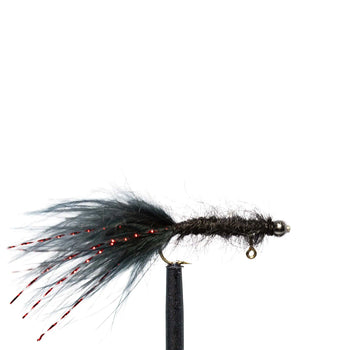
Balanced Leech: The first fly out of the box on a fall lake. A balanced leech carries its weight forward of the hook so it hangs horizontally beneath an indicator instead of nose-down — and on cold, clear water, where a cruising trout gets a long unhurried look at everything, posture is often what gets a fly refused. Set it over a weed edge or shelf, adjust the depth, and give a fish time to find it.
The series runs three body colors and three bead options. Black with a silver bead is the subtle one for clear water and pressured fish; black with an orange bead adds a warmer trigger without much shout. Brown with chartreuse matches the tan-to-amber tones real leeches run in through most western water while staying findable under heavy cloud, and olive with chartreuse is the weed-bed color. Carry two or three and compare them while holding depth and presentation steady — change one thing at a time. Our complete guide to the balanced leech goes further into rigging and color choice.
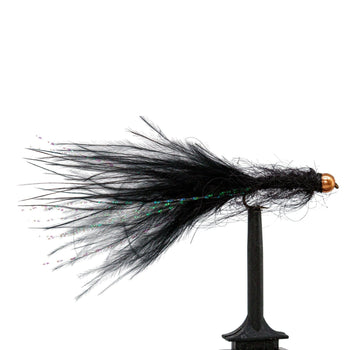
Mohair Leech – Black: The straightforward searching choice. Mohair traps water and moves like nothing else in a fly box, and black gives the strongest silhouette at depth and in the low light of short days. Slow draw, long pause, kept above the weeds or along their outside edge. If fish follow without taking, change the pace before you change the fly.
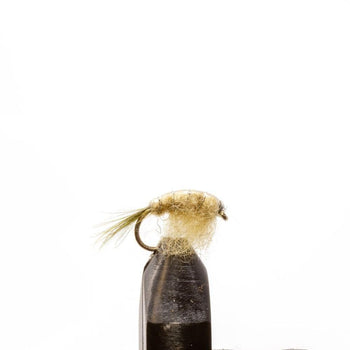
Scud – Olive: Scuds live in vegetation and never leave it, and as the beds thin out in fall they get concentrated and exposed. Fish it around weeds with a slow hand twist or short, irregular pulls — real scuds swim in unimpressive little bursts, not smooth glides. Keep checking the hook; a clean fly close to cover is the whole idea.
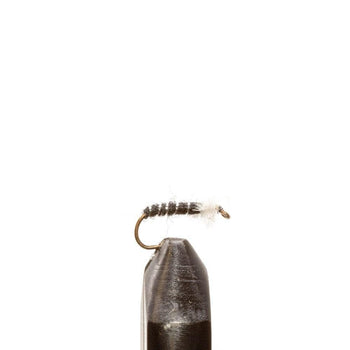
Chironomed – Black: Chironomids hatch in every month of the year, which makes them the one thing you can count on once the mayflies are finished. Keep this for visible midge activity or fish that look to be taking something small. Fish it quiet and suspended, and test the depth rather than assuming it belongs a foot off the bottom.
Then work the weed edge
 |
 |
 |
 |
| Damsel Nymph | Carey Special – Olive | Woolly Worm – Black | Beadhead Callibaetis |
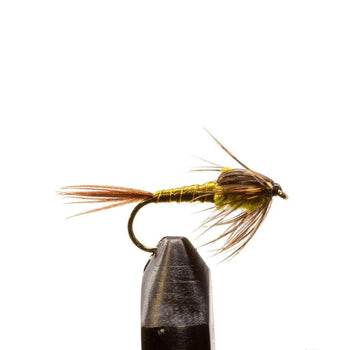
Damsel Nymph: The adults are done for the year, but damsel nymphs live in the weeds through the cold months and remain real fall food. The unweighted version is the one you want over weed tops, where a beadhead sinks into the salad and stays there. Short, gentle pulls with pauses between them — damsel nymphs swim with a side-to-side wiggle, not a glide.
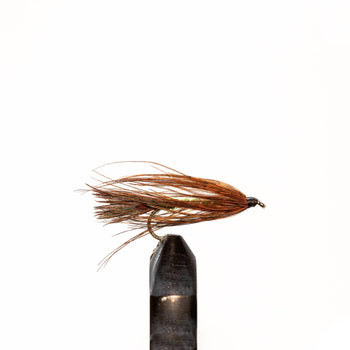
Carey Special – Olive: A classic western lake wet fly and the one to try when you're seeing activity but haven't worked out what they're eating. It can pass for a dragonfly nymph, a small leech, or a big pupa depending on how you fish it, and the pheasant-rump collar breathes on the pause. Fish it along the shelf with short pulls, changing one part of the presentation at a time.
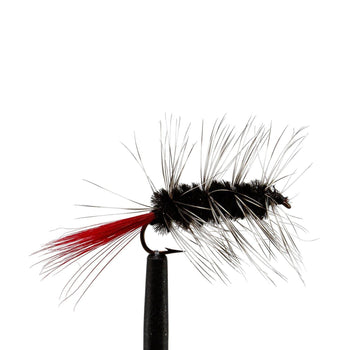
Woolly Worm – Black: Palmered hackle gives it movement on the slowest retrieve you can manage, which is exactly what cold water asks for, and black is maximum silhouette for deeper water and short days. Start with a slow hand twist keeping the fly clear of vegetation, then try short pulls and pauses if that goes unanswered.
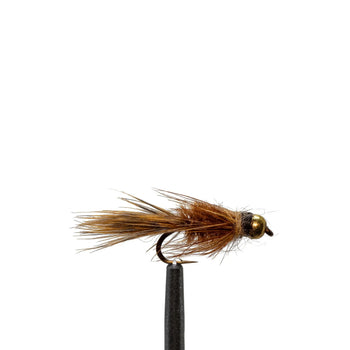
Beadhead Callibaetis: An early-fall option where these mayflies are still coming off, and the later broods run a size or two smaller than the summer ones. Fish it over a shelf with short lifts and pauses when you're actually seeing activity. Let the hatch earn this fly its place on the leader rather than tying it on out of habit in November.
Retrieves: A Short Library
A lake gives you no current, which means every bit of motion in your fly comes from you. That's a burden and an advantage — total control over what the fly does, and most anglers use that control to make it do the wrong thing.
Start slow, then let the fish decide
Almost nothing a trout eats in a lake moves quickly, and a fish in fifty-degree water isn't chasing anything far. The most common mistake on stillwater is a river angler's retrieve — a steady strip that looks nothing like a scud, a pupa, or a leech. Long pauses are not dead time; they're when the eat happens.
But don't turn "slow down" into a rule you refuse to break. Fall trout feeding hard will sometimes chase, and a faster pull can turn a follower into an eater. Start slow because that's the higher-percentage default, then experiment and let the answer come from the water.
The hand twist
Roll the line in with your fingers in a continuous slow gather rather than pulling it in strips. It's the slowest, steadiest presentation available and the right one for scuds, chironomid pupae, and anything you want crawling. It also keeps you in constant contact — and in cold water, the takes get very subtle.
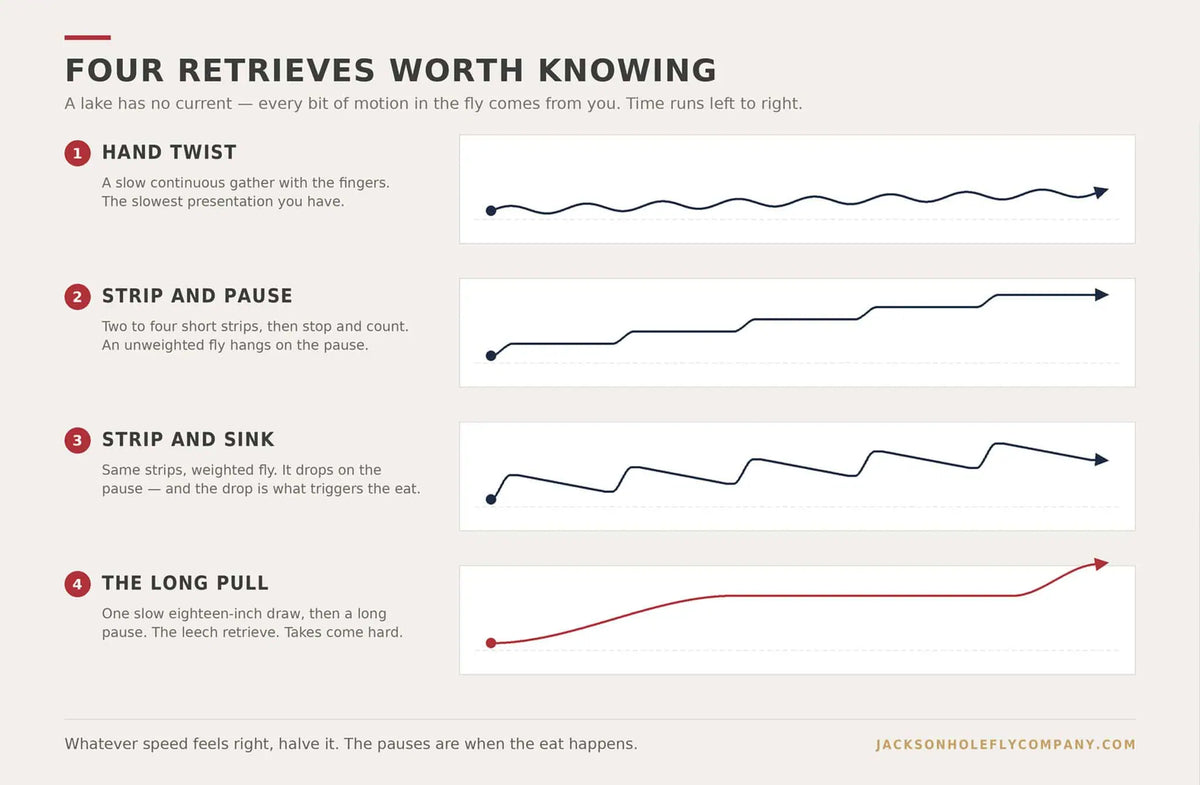
Strip and pause
Two to four short strips, then stop and count. The pause is the whole point: a weighted fly drops on it, an unweighted one hangs, and either change of behavior is what triggers a following fish. Vary the length until something answers, then lock it in. As the water gets colder the pause gets longer — counts of ten or fifteen are not unreasonable in late fall.
The long slow pull
For leeches especially, a single continuous eighteen-inch draw of the line hand — slow enough to take two full seconds — imitates a leech's undulating swim better than any number of short strips. Follow it with a long pause and be ready, because takes after a long pull are usually violent.
📌 Pro Tip: Fish with the rod tip in the water, not above it. On a lake there's no current to mend against, and a tip held in the air puts a bow of slack between you and the fly that costs you takes you never even feel — and on the hookset, strip-strike with the line hand instead of lifting the rod. A rod lift on forty feet of line just removes slack; a strip drives the hook.
Choose the Day by Conditions
There's no single best hour for every fall lake, and the honest answer changes as the season does.
Let the clock shift with the water. In early fall, morning and evening are still worth testing, especially when afternoons stay warm. As the lake cools, that inverts — late morning through afternoon earns the bigger share of the trip, because the water needs the day's warmth to move insects and switch fish on. Don't leave after a cold, quiet start; that's the single most common way to miss a good fall day.
Cloud and a light chop are your friends. Trout in a lake have no overhead structure to hide under, so flat calm and bright pushes them deep and makes them cautious. An overcast day is a shallow day, and a shift from sun to cloud will sometimes turn fish on within minutes.
Use a calm day for information. Glass is the hardest condition to fish, but it's the easiest condition to see a rise, a swirl, or a cruising shadow. Approach more carefully, watch longer, and test the deeper edge if the shelf is quiet.
Falling pressure ahead of a front is worth planning around. The hours before autumn weather arrives are frequently the best of the week; the bluebird day after it passes is frequently the worst.
Watch what changes during the session. A few insects appearing, a wind shift, repeated rises along one bank — those are reasons to adjust, and they beat any forecast. Fish the activity you can actually see.
Five Mistakes That Cost the Most Fish
Wading in before fishing the shallows. The fish were in the water you just walked through, and in fall they're shallower than you think. Fish from dry ground first, then step in.
Retrieving too fast. Almost universal, almost always costly, and worse the colder the water gets. Whatever speed feels right, halve it — then experiment from there.
Fishing the wrong depth all day. Without a countdown or a measured indicator depth you're guessing, and a fly three feet above feeding trout catches exactly nothing while feeling perfectly reasonable.
Fishing dawn out of habit. Summer's schedule is the wrong schedule now. Once the lake is properly cool, the afternoon is the window.
Quitting the retrieve at the rod tip. Skipping the hang throws away one of the most reliable takes in stillwater fishing.
Taking It to the Water
Start with a shoreline that gives you vegetation, a shelf, and deep water nearby. Fish the close water before you step into it. Work along the edge rather than straight out from it, test your depth before you test your fly box, and pay attention when something changes.
When you get a take, remember more than the fly. Remember where it was, how long it had been sinking, and whether it was moving or sitting still. That's the beginning of a pattern you can fish again — and fall fish are rarely alone.
The lake will still look like a flat gray plane from the ramp. By the end of the afternoon, one stretch of it should look very different to you.
Related Articles
- Fly of the Month: The Balanced Leech
- Learn to Love Leeches
- Reading Water 101
- How and Why to Fly Fish with Weighted Flies


