

Fly of the Month: October Caddis – The Big Bug in a Small-Fly Season

By October, most of the fly box has gone small. Size 20 olives, 6X tippet, a fair amount of squinting. Then, late in the afternoon, something the size of a big moth comes fluttering up the bank — orange body, mottled wings, impossible to miss.
That's an October Caddis, and it's the best reason of the season to keep a big dry fly within reach. It isn't a heavy hatch. Some evenings you'll only see a handful. But trout notice a bug that size, and on the rivers that have them, a size 8 dry moved across a seam can bring up fish that have let everything smaller go by.
Here's how the hatch works, where and when to look for it, and how we'd fish it — underneath first, then on top.
The Big Bug in a Small-Fly Season
October Caddis belong to the genus Dicosmoecus, and they also go by "giant orange sedge," which tells you most of what you need to know. The adults are around an inch long, with a ginger to burnt-orange body and gray-brown, tent-shaped wings. Next to the mayflies and midges that make up the rest of the fall menu, they're enormous.
They're rarely thick. This isn't a hatch where the air fills with bugs and every fish in the river is up. It's a few big insects at a time, spread over several weeks — which is exactly why it fishes so well. A trout doesn't need to see many meals that size to start watching for the next one.
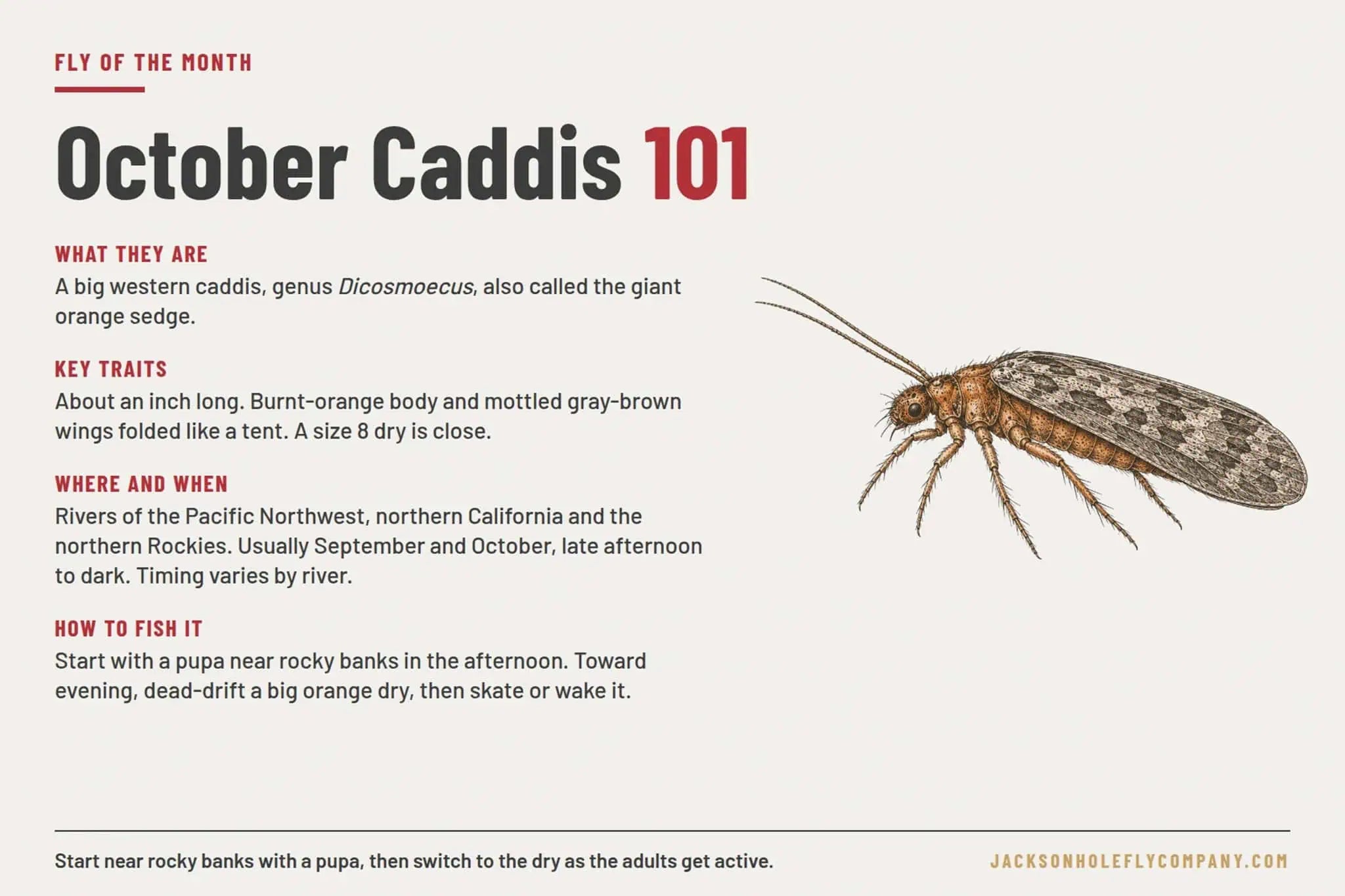
Where and When
This is a western hatch. October Caddis live in the rivers of the Pacific Northwest, northern California and parts of the northern Rockies. If you fish freestone rivers and tailwaters in that part of the country, there's a good chance some of your water has them.
September and October cover most rivers, with the timing shifting from one watershed to the next. A local fly shop will know whether your river gets them and how far along things are.
Late afternoon into evening is when to pay attention. The pupae tend to move in the afternoon, and the adults are most active from then until dark.
Our fall hatch guide shows how October Caddis fit alongside the season's Blue-Winged Olives, Mahogany Duns and midges.
Follow the Life Cycle to the Bank
October Caddis larvae build cases and carry them around the streambed — plant material when they're small, bits of gravel as they grow. Trout eat them, case and all, when they get knocked into the drift. In late summer the larvae seal themselves inside those cases to pupate.
What happens next is the part that matters for fishing. Unlike a lot of caddis, which swim up and hatch at the surface in open water, October Caddis pupae head for the edges. They swim and crawl toward shore, and most climb out onto rocks along the margin to hatch.
That makes the bank the place to start. A pupa fished along rocky shallows makes more sense than one drifted down the middle of a deep run, and a lot of the dry fly fishing that follows happens near the edges too.

📌 Pro Tip: Check the rocks along the water's edge before you rig up. Empty pupal shucks stuck to the dry side of streamside rocks — papery, an inch or so long — mean October Caddis have been hatching there, even if you haven't seen an adult yet.
Start Underneath
The dry fly gets all the attention, but there's good reason to begin below the surface. Trout see the pupae before they ever see an adult, and the pupae are moving through shallow water in broad daylight.
Fish the edges. Seams beside rocky shallows, the soft sides of riffles, and pockets near shore are the places to start.
Get it down, then follow it. Give the fly enough weight to reach the feeding lane and track the drift with the rod tip. If it hangs on the bottom every cast, take some weight off. If it never ticks anything, add a little.
Try it as a dropper. A pupa hung 18 to 24 inches under a big orange dry covers both stages at once, and it's an easy way to fish bank water in the afternoon before the adults get going. Our dry-dropper guide covers the rigging.
Watch for Adults
During the day, the adults sit tight in streamside brush and grass and on rocks. Give the bushes along the bank a look as you walk in. A big, tent-winged caddis on a branch is all the confirmation you need.
Toward evening they get active, and the females return to the water to lay eggs, dipping and skittering across the surface. That's when trout get most of their chances at an adult, and it's why this hatch is so much fun on a dry.
What you see tells you how to fish it. An adult drifting quietly calls for a dead drift. One fluttering in place calls for a twitch. One running across the surface calls for a fly that moves.
Three Ways to Fish the Dry
Start with a dead drift
Before adding any movement, put the fly through a good lane without drag — a short seam beside a boulder, a shaded bank, the edge of broken water.
Keep the casts short. Thirty feet or less gives you better control when it's time to change the presentation, and it keeps extra line from dragging the fly across conflicting currents.
If fish eat the dead drift, keep fishing it. Movement is the next thing to try, not a requirement.
Skate it
Skating moves the fly across the surface in short bursts, the way an egg-laying female does.
Cast across and slightly downstream, then take up just enough slack to feel the fly. A small lift of the rod tip or a short pull of line should move it a few inches. Pause. Do it again.
You're after a brief skitter with room between movements. If the fly dives or plows, ease off the tension, shorten the movement, or dry it and dress it again.
Work one seam at a time. A controlled skate along the edge of a pocket gives a trout a much better shot than a fast sweep across three currents.
Wake it
Waking is steadier. Instead of short bursts, the fly swings on a tight line and draws a small V behind it.
Make a slightly downstream cast and let the current bring the line gently tight. Hold enough tension to keep the fly moving on top, and use the rod angle to steer it across the seam.
Start slow. You want a floating fly leaving a visible track. If it keeps pulling under, change the casting angle or get some of the line out of the faster current.
Then comes the hard part. A fish chasing a moving fly often shows itself before it eats. Watch it all the way through, let the fish close its mouth and turn, and lift smoothly.
📌 Pro Tip: A skated fly has to float high to work. Dress it well before the first cast, and when it starts riding low, squeeze it dry in a shirt sleeve and dress it again. Our floatant guide covers which kind to use when.
Get to Know the Lineup
Four dries for the top and three flies for underneath. That covers the hatch from the first pupae in the afternoon to the last adults at dusk.
On top
 |
 |
 |
 |
|
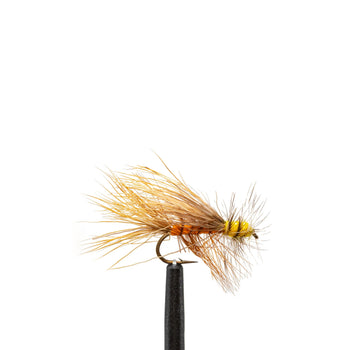
Orange Foam Stimulator |
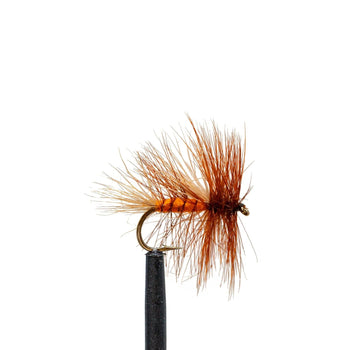
Dark Bucktail Caddis |
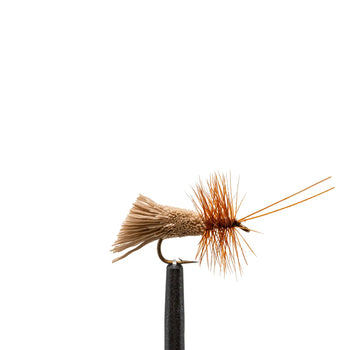
Goddard Caddis |
Madam X – Fire Orange |
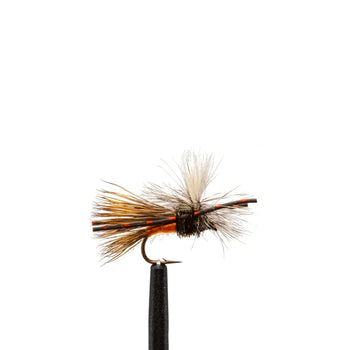
Orange Foam Stimulator (6–10). The one to build around. It's the right color and it comes in the right size, and the foam keeps it riding high through broken water and repeated skating. Start with a dead drift, then try a twitch or a controlled wake through the same lane. It will also hold up a dropper.
Dark Bucktail Caddis (10–12). A dark orange-brown body under a full bucktail wing, tied with October Caddis and the other dark fall sedges in mind. The hair wing floats through rough water and shows up well in low evening light. A good one to skate across a tailout.
Goddard Caddis (10–14). A clipped deer-hair body that floats like a cork and skates cleanly. It gives fish a different silhouette from the Stimulator, which is handy when they come up for a look and turn away.
Madam X – Fire Orange (8–10). A hot orange body, a deer-hair bullet head and rubber legs that kick on every twitch. It's more attractor than imitation, and it's the easiest fly here to see in glare, chop or off-color water.
Underneath
 |
 |
 |
 |
|
Caddis Nymph |
Bread Crust |
Beadhead Hare's Ear Flashback |
Caddis Pupa – Brown |
Caddis Nymph (10–12). A simple, segmented larva pattern for the stage that's in the river all year. Fish it deep on a dead drift earlier in the day, before the pupae start moving, or run it as the bottom fly in a two-nymph rig.
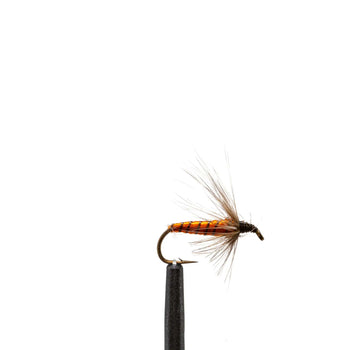
Bread Crust (8–10). A hundred-year-old caddis pattern with a rusty-orange segmented body and a soft grizzly hackle that moves in the current. Dead-drift it through the seams beside rocky shallows, then let it lift at the end of the drift. It's the closest thing in the lineup to the pupa itself.
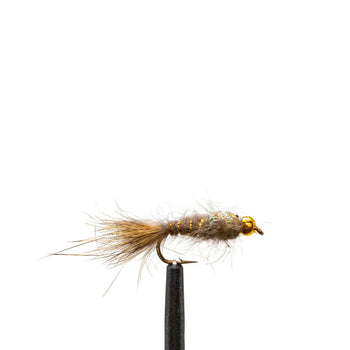
Beadhead Hare's Ear Flashback (10–12). Buggy, weighted to get down, and available big enough to stand in for an October Caddis pupa. This is the one to hang 18 to 24 inches under the Stimulator along the bank.
Caddis Pupa – Brown (14–16). Smaller than the real thing, and still worth carrying. It covers the smaller fall caddis that share the water, and it's a good change-up when fish pass on the bigger flies.
If you'd rather start with a full caddis box, our Caddis Life Stages Assortment covers larva, pupa and adult patterns in one loaded fly box.
Rigging for a Big Dry
A size 8 dry asks for a little more leader than a size 20 olive does, and a skated fly gets eaten hard.
Go shorter and heavier than your small-fly rig. A 7½- to 9-foot leader tapered to 3X or 4X turns a big dry over cleanly and holds up to a take on a tight line.
Keep the small-fly rig handy. The same afternoon can have Blue-Winged Olives on the soft water and October Caddis along the banks. A second leader in your pocket makes the switch a two-minute job. Mastering Tiny Mayflies covers that half of the day.
Leave a Little Room
October still deserves a box full of small flies. Just leave a little room beside them for something big and orange.
When a caddis the size of your thumb comes fluttering along the bank some evening, you'll have a fly ready to drift and a fly ready to move. Then find a seam near the rocks and send it across.
SHOP OUR CADDIS LIFE STAGES COLLECTION
RELATED ARTICLES:
- Fall Fly Fishing Guide: Key Hatches & Essential Flies
- Fly of the Month: Read the Rise — How to Decode a Caddis Hatch in Real Time
- Fall Fly Fishing: How Tactics Change as the Season Turns
- Fly of the Month: Mastering Tiny Mayflies for Fall Trout
- Fishing the Weather: Fronts, Pressure and Gray Days
- The Dry-Dropper Rig: Four Pairings for Every Water Type


