

Fly of the Month: How to fish the March Brown System

March doesn't announce itself with a single dramatic hatch. There's no sudden explosion of bugs blanketing the surface. Instead, the shift is quieter—longer light, slightly softer water, and trout that are just beginning to reposition from their deep winter holds. It's a transitional month, and the anglers who fish it well are the ones who understand that the best opportunities often happen before anything shows on the surface.
That's exactly why the March Brown is this month's Fly of the Month.
The March Brown isn't just a single fly—it's a system. From the nymph crawling along the bottom weeks before any visible emergence, to the wet fly swinging through soft seams as insects struggle toward the surface, to the dry fly riding the film when conditions finally align—the March Brown gives you a complete approach for early spring. Fish the lifecycle, not just the rise, and you'll connect with trout that most anglers walk right past.
What Is a March Brown?
The March Brown (Maccaffertium vicarium in the East, Rhithrogena morrisoni in the West) is one of the first significant mayfly hatches of the season. These are larger mayflies—typically sizes 10–14—with warm brown and tan tones that stand out against the muted palette of early spring water. They're slow emergers, which means they spend more time vulnerable in the water column than many other species. That vulnerability is what makes them such a reliable food source for trout transitioning out of winter feeding patterns.
March Browns don't hatch in dense blankets. They trickle off individually or in small clusters, usually during the warmest part of the afternoon when water temps begin to nudge upward. But here's the key: trout start feeding on March Brown nymphs and emergers well before you see any surface activity. The subsurface window is often longer and more productive than the dry fly window—and most anglers miss it entirely because they're waiting for rising fish.
Why the March Brown Matters in Early Spring
The March Brown bridges the gap between winter and spring like few other hatches can. Here's why it earns a permanent place in your early-season box:
- It's the first “real” mayfly hatch of the year: After months of midges and tiny nymphs, the March Brown gives trout a larger, higher-calorie food source—and they respond to it.
- It rewards patience and observation: Because the hatch trickles rather than explodes, fish feed opportunistically. Reading water and adjusting presentation matters more than matching an exact pattern.
- It fishes across the water column: Nymphs near the bottom, wet flies in the mid-column, and dries on top—the March Brown system covers every feeding zone in a single outing.
- It builds confidence: After months of winter fishing where every take feels hard-earned, the March Brown reminds you that trout want to eat. The transition is real, and this hatch proves it.
The March Brown System: Fish the Full Lifecycle
The most effective approach to March Brown fishing isn't choosing one fly—it's building a system that covers the entire lifecycle. Start deep, work your way up, and let the trout tell you what stage they're focused on.
Phase 1: Subsurface Anchor (Nymph Stage)
Weeks before any March Brown breaks the surface, nymphs are active along the bottom—crawling across substrate, drifting through seams, and repositioning in response to warming water temps. This is where your day should start.
 |
 |
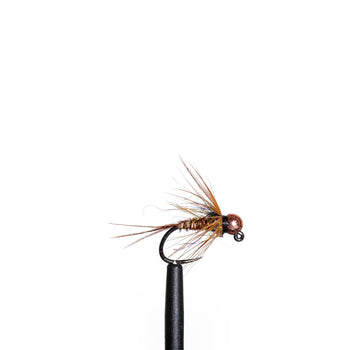 |
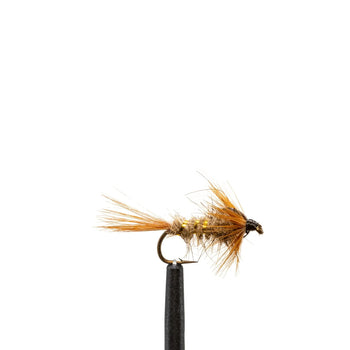
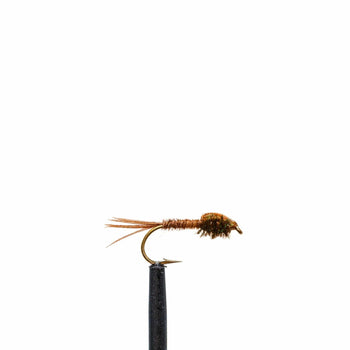
| Gold Ribbed Hare's Ear Nymph | Pheasant Tail Nymph | Beadhead Soft Hackle Pheasant Tail |
Gold Ribbed Hare’s Ear Nymph (#12–#16): The single most versatile nymph for March Brown season. Its buggy, impressionistic profile imitates a wide range of mayfly nymphs without locking you into a specific match. The gold ribbing adds subtle flash, and the hare’s ear dubbing creates natural movement in the water. Fish it as your lead fly, tight to the bottom, through riffles and deeper seams where nymphs concentrate before emergence.
Pheasant Tail Nymph – Natural or Flashback (#14–#18): A timeless choice that closely matches the slim, tapered profile of March Brown nymphs in the water. The natural pheasant tail fibers create realistic segmentation and subtle translucency. Use smaller sizes (#16–#18) in clear water and step up to #14 when flows are slightly off-color or when trout are targeting larger nymphs earlier in the emergence window.
Beadhead Soft Hackle Pheasant Tail (#14–#18): This pattern works double duty. Fish it deep on a dead drift early in the day when nymphs are hugging the bottom, then let it swing and lift at the end of the drift to imitate a nymph beginning its ascent toward the surface. The soft hackle collar adds subtle pulsing movement that standard nymphs can’t replicate—and that movement is often what triggers the eat during transition periods.
📌 Pro Tip: In March, start every session with a two-nymph rig: a heavier Hare’s Ear or beadhead pattern as your anchor fly, and a smaller Pheasant Tail trailing 12–18 inches behind. This covers both depth and profile, and the trailing fly often picks up the majority of eats when trout are feeding selectively on smaller nymphs near the bottom.
Phase 2A: The Swing (Wet Fly Stage)
This is where March Brown fishing gets interesting—and where most anglers leave opportunity on the table. As nymphs begin rising toward the surface to emerge, trout reposition into mid-depth feeding lanes and soft current edges. Wet flies swung through these zones imitate the struggling, vulnerable stage of the emergence perfectly.
Wet fly fishing is one of the oldest and most effective techniques in fly fishing, and March is when it truly shines. The down-and-across swing covers water efficiently, presents the fly at a natural pace, and triggers aggressive takes from trout that are keyed into movement just below the surface.
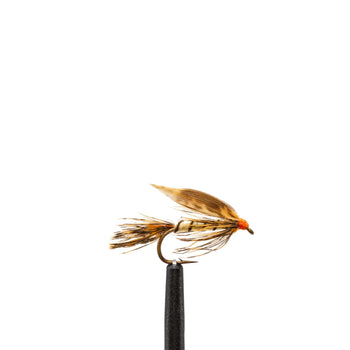
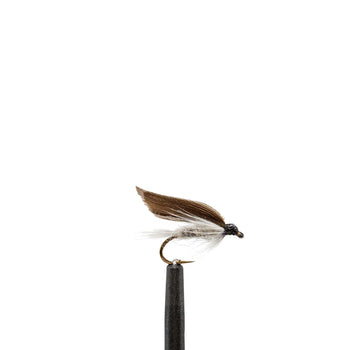
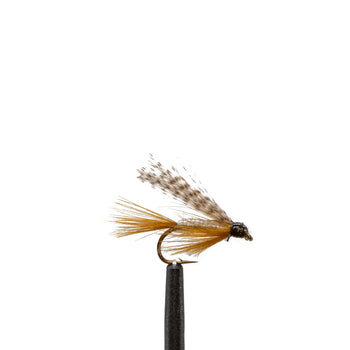
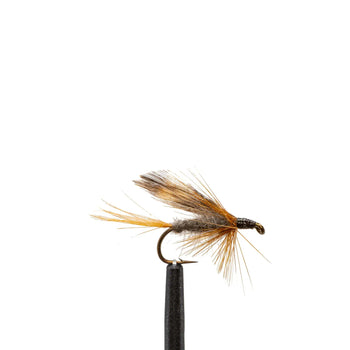
March Brown – Wet (#12–#14): The cornerstone of this system. This traditional soft hackle pattern imitates the emerging or drowned stages of the March Brown mayfly with muted brown tones and flowing hackle that comes alive in even the slightest current. Cast across and slightly downstream, let it swing through riffles and seams, and be ready—takes on the swing are often sudden and decisive. This fly also fishes beautifully on a dead drift just below the surface when trout are feeding subtly in slower water.
Blue Dun – Wet (#14–#16): A versatile early-season imitator that covers a multitude of emerging mayflies including Blue Quills, Hendricksons, and early Blue Wing Olives. When March Browns are sparse or the hatch hasn’t fully committed, the Blue Dun Wet gives you a reliable searching pattern that suggests “food in transition” without being tied to a single species. Excellent as a trailing fly behind a March Brown Wet in a two-fly swing rig.
Light Cahill – Wet (#12–#16): As March Browns lighten up toward the end of their emergence window—or when closely related lighter-colored mayflies begin to appear—the Light Cahill Wet takes over. Its delicate dubbed body and soft hackle add natural movement and allure, making it especially effective in slower pools and gentle currents where trout have more time to inspect your fly. Fish it with a gentle swing or drift it just beneath the surface.
Adams – Wet (#12–#16): When you’re not sure exactly what’s emerging and trout are feeding subsurface but not committing to a specific pattern, the Adams Wet is your confidence play. It imitates sunk and emerging adult mayflies, caddis, and Baetis with a profile that’s close enough to everything without being an exact match for anything. Think of it as your “I know something’s happening but I can’t pin it down” fly.
📌 Pro Tip: When swinging wet flies, don’t strip. Let the current do the work. Cast across and slightly downstream, mend once to control the speed of the swing, and follow the fly with your rod tip as it sweeps through the arc. Most takes happen at the end of the swing as the fly lifts toward the surface—the “Leisenring lift”—which perfectly imitates an emerging insect accelerating upward.
Phase 2B: The In-Between (Emergers)
Between the full swing of a wet fly and the committed surface eat of a dry, there’s a critical window that many anglers skip entirely. As March Browns push toward the surface, they spend time trapped in or just below the film—struggling, half-emerged, and completely vulnerable. Trout feeding in this zone often produce the most deceptive rises: subtle swirls, bulges, or sipping takes that look like dry fly feeding but happen just below the surface. Emerger patterns fish this gap perfectly.
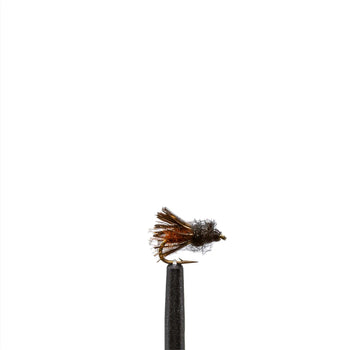
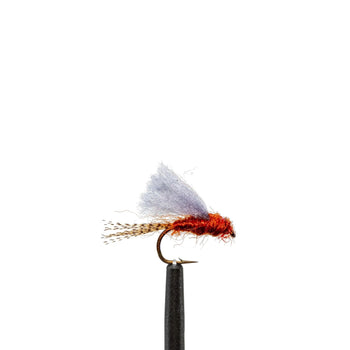
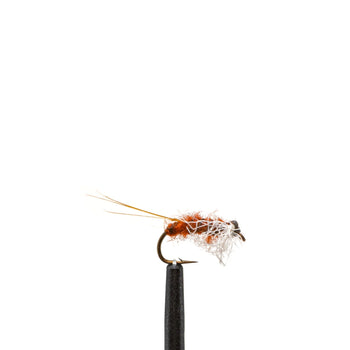
Rusty Soft Hackle (#14–#18): A classic spinner and emerger wet fly with a warm, rusty-brown body and soft flowing hackle that pulses naturally in the current. This pattern bridges the gap between a traditional wet fly swing and a true emerger—it imitates both a struggling mayfly caught mid-emergence and a spent spinner drifting just below the surface. Fish it on a dead drift through soft seams, or let it swing gently and lift at the end of the drift. When trout are feeding subsurface but refusing your wets, the Rusty Soft Hackle’s subtler profile often converts those hesitant fish.
Brown Emerger (#14–#18): A soft-profile fly designed to sit just under the surface film, imitating a mayfly caught in the vulnerable moment between nymph and adult. This is the pattern to reach for when trout are swirling or bulging near the surface but not fully breaking through—a classic sign that they’re feeding on emergers rather than duns. Fish it unweighted on a dead drift with a long, fine leader, or trail it 12–18 inches behind a visible dry fly as part of a dry-dropper rig. In March, when hatches are sparse and emergence is slow, this fly stays in the zone where trout are actually eating.
Rusty Spinner (#14–#18): A flush-floating pattern that imitates the spent adult stage of mayflies—wings splayed flat, body resting motionless in the surface film. While spinners are often associated with evening falls later in the season, early spring spinner activity can catch anglers off guard. When March Browns emerge, mate, and fall back to the water, trout sip them quietly in tailouts, eddies, and slow pools. The Rusty Spinner’s low-riding silhouette matches this behavior perfectly. Fish it on 5X–6X tippet with a drag-free drift, and look for the gentlest rises—those soft sipping rings rather than splashy takes.
📌 Pro Tip: If trout are rising but refusing your dry fly, they’re almost certainly eating emergers or spinners, not duns. Drop down to a Rusty Soft Hackle or Brown Emerger before changing your dry fly pattern—the problem is usually depth, not color or size.
Phase 3: Surface Opportunity (Dry Fly Stage)
When conditions line up—overcast skies, stable or rising water temps, and consistent surface activity—it’s time to fish on top. March Brown dries are larger than the small midges and BWOs you’ve been casting all winter, and there’s something deeply satisfying about watching a trout commit to a size 12 dry fly after months of squinting at tiny patterns in flat light.
But a word of caution: don’t rush to the dry. March Browns hatch sporadically, not in dense clouds. You may see one or two naturals on the water before any fish rise. Wait for committed surface feeding before switching. When you see consistent rises—especially in soft seams, tailouts, and inside bends—that’s your window.
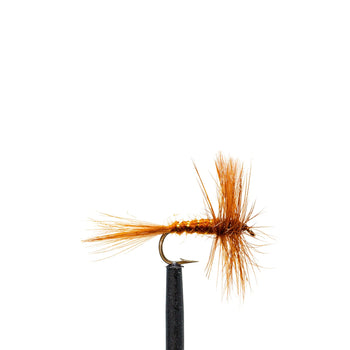
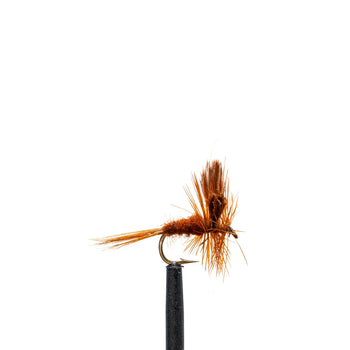
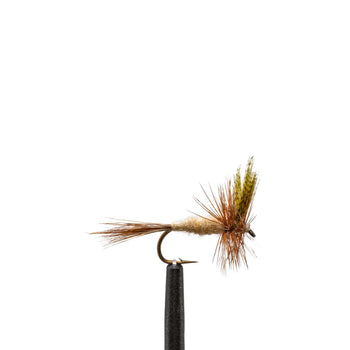
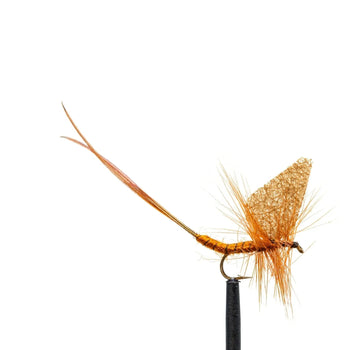
March Brown (#12–#14): A classic mayfly imitation with natural brown and tan tones and a lifelike profile that sits naturally on the surface film. This is your first choice when trout are rising to emerged March Brown duns. Present it with a drag-free drift, focusing on the seams and soft edges where duns collect and trout feel safe rising. In broken water, the traditional hackle provides enough floatation to keep the fly riding high and visible.
March Brown - East (#12–#14): A realistic variation specifically designed to match the Eastern March Brown hatch. Its natural brown tones and detailed silhouette make it an excellent choice for spring creeks and clear-water rivers where trout have more time to inspect your offering. If you fish Eastern tailwaters or freestones where Hendricksons and March Browns overlap, carry both.
March Brown - Traditional (#12–#14): The heritage pattern. Traditional construction with proven proportions that have been fooling trout for generations. This fly earns its place when you want a high-riding, durable dry that performs well in faster water and riffled surfaces where trout strike quickly and you need a pattern you can track confidently.
Mayfly – Brown (#12–#16): A versatile dry fly that covers March Browns, PMDs, and other brown-bodied mayfly hatches with a single, clean silhouette. Its naturally tapered body and balanced hackle sit cleanly in the surface film, making it especially effective on technical water where precise presentation is critical. When you’re not certain whether trout are keyed on March Browns specifically or just eating brown-bodied duns in general, this fly bridges the gap.
📌 Pro Tip: March Browns often hatch one or two at a time—not in dense blankets. Don’t let sparse surface activity fool you into thinking the fishing is slow. A single well-placed drift over a feeding fish can produce the best trout of the day. Patience and precision matter more than volume during this hatch.
Supporting Cast: Related Patterns Worth Carrying
The March Brown system doesn’t exist in isolation. Early spring water holds a mix of emerging insects, and having a few complementary patterns rounds out your approach when conditions shift or trout become selective.
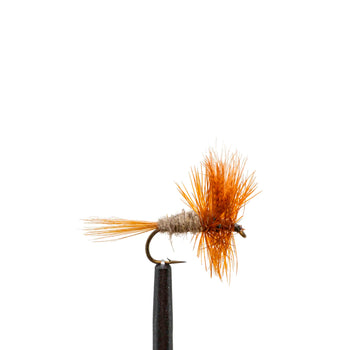
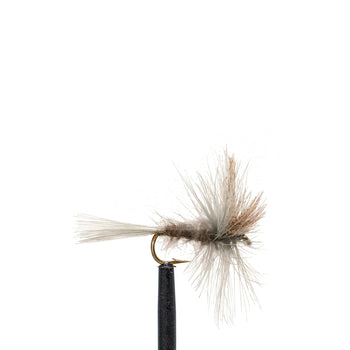
Dark Cahill (#12–#16): A variation of the classic Cahill developed specifically to imitate spring mayfly duns. When March Browns fade in the afternoon or trout switch to a slightly different profile, the Dark Cahill picks up where the March Brown leaves off.
Hendrickson (#12–#16): In Eastern waters where Hendrickson hatches overlap with March Browns, this pink-to-reddish-brown pattern is essential. Fish it the same way you’d fish a March Brown dry—drag-free drift through rising fish—and let the trout decide which profile they prefer.
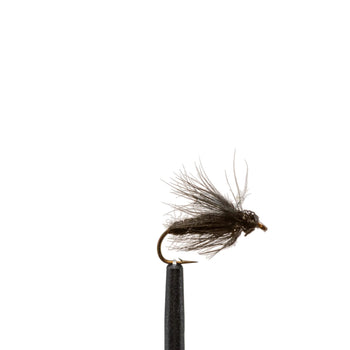
Soft Hackle – Black (#14–#18): When the swing bite is on but March Brown wets aren’t producing, a black soft hackle fished through the same zones can trigger eats from trout keyed on darker emerging insects like early midges or small stoneflies. It’s a great confidence pattern to have in rotation.
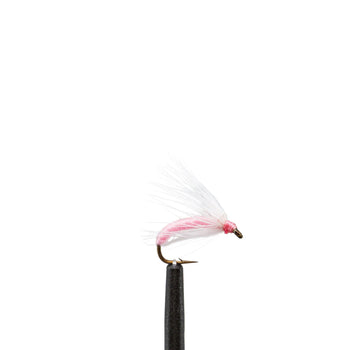
MT Soft Hackle – Pink (#14–#18): A subtle attractor-style wet fly that works as a trigger pattern when trout are feeding subsurface but not committing to natural-colored offerings. The light pink body provides just enough contrast to draw attention without spooking selective fish. Swing it behind a March Brown Wet as a trailer or fish it solo through soft seams during hatch transitions.
How to Fish the March Brown System
Fishing March Browns effectively isn’t about picking the “right” fly—it’s about reading the water, observing what stage trout are feeding in, and adjusting your approach as the day progresses. Here’s how to structure your outing:

Start deep. Arrive at the water with a nymph rig ready. Fish a two-fly setup with a weighted anchor fly and a smaller trailing nymph through deeper seams, inside bends, and soft bucket water. Trout are still positioned low early in the day, and nymphs represent the most reliable food source before any emergence activity begins. Focus on clean, drag-free drifts tight to the bottom.
Watch for the transition. As the day warms—typically between 12:00 PM and 2:00 PM in March—start paying attention to mid-column activity. If you notice trout flashing or feeding higher in the water column, it’s time to switch to a wet fly swing. Cast across and downstream, let the fly sweep through soft seams and riffles, and feel for the tug. This transitional window is often the most productive part of the day.
Don’t rush the dry. Wait for committed surface feeding before switching to a dry fly. Isolated splashes or random dimples aren’t enough—look for consistent, rhythmic rises in defined feeding lanes. When you see it, set up below the fish, lengthen your leader to 9–12 feet with 4X or 5X tippet, and present a drag-free drift through the feeding lane. In March, afternoon windows from 1:00 PM to 4:00 PM tend to be the most productive for dry fly activity.
Match the conditions to the fly:
- Cold morning, deep fish: Nymph rig – Hare’s Ear + Pheasant Tail, fished tight to the bottom
- Warming afternoon, active mid-column feeding: Wet fly swing – March Brown Wet or Blue Dun Wet through riffles and seams
- Overcast skies, consistent rises: Dry fly – March Brown or Mayfly Brown, drag-free through feeding lanes
- Uncertain conditions, no clear hatch: Beadhead Soft Hackle Pheasant Tail – dead drift deep, then let it swing and lift
📌 Pro Tip: Carry a 9’ 5WT rod for March Brown season. It’s the ideal tool for this system—light enough to present dry flies delicately, strong enough to turn over wet fly rigs, and versatile enough to handle nymphing duties when you need to get deep. One rod handles every phase of the March Brown lifecycle.
When and Where to Expect March Browns
March Browns show up on a wide range of water types, but they’re most consistent on freestone rivers and tailwaters with rocky substrate. Here’s what to look for:
- Water temperature: Activity typically picks up as temps push past 45°F. The sweet spot for surface activity is 48–54°F—usually hit during the warmest hours of the afternoon in March.
- Water type: Focus on moderate-speed riffles, soft seams, and transitional water between runs and pools. March Browns emerge in broken water where current provides cover and oxygen.
- Timing: In most western and eastern rivers, the emergence window runs from late February through April, with peak activity in March and early April depending on elevation and latitude.
- Best conditions: Overcast days with stable or slowly rising barometric pressure tend to produce the most consistent hatches. Bright, bluebird days can still produce, but expect the window to be shorter and more concentrated in the afternoon.
Build a March Brown Box
You don’t need a massive selection to fish March Browns effectively. A focused box with coverage across all three lifecycle phases gives you the versatility to adapt as conditions change throughout the day.
Nymphs (3–4 patterns):
- Gold Ribbed Hare’s Ear Nymph – #12, #14, #16
- Pheasant Tail Nymph – #14, #16, #18
- Beadhead Soft Hackle Pheasant Tail – #14, #16
Wet Flies & Emergers (3–4 patterns):
- March Brown Wet – #12, #14
- Blue Dun Wet – #14, #16
- Light Cahill Wet – #14, #16
- Adams Wet – #14 (searching pattern)
Dries (2–3 patterns):
- March Brown – #12, #14
- March Brown East or Traditional – #12, #14
- Mayfly Brown – #14, #16 (versatile backup)
Carry 2–3 of each in your primary sizes and you’re covered for any scenario March throws at you.
Gear Essentials for March Brown Season
The right gear makes the March Brown system seamless. Here’s what we recommend:
- 9’ 5WT Fly Rod: Versatile enough to handle nymphs, wet flies, and dries all in one session. This is the rod for March.
- Weight Forward Fly Line: Fresh line improves turnover and loop control—especially important when switching between subsurface and surface presentations throughout the day.
- Leaders & Tippet: Carry 9’ leaders in 4X and 5X. Use 4X for nymphing and wet fly work, 5X for dries in clear water.
- Floatant: Essential for dry fly phases. Treat your March Brown dries before the first cast and re-apply after every fish.
- Indicators & Split Shot: For the nymph phase, a foam indicator and a few pieces of split shot keep your rig in the zone where March Brown nymphs live—right near the bottom.
Taking It to the Water
The March Brown is one of those hatches that rewards anglers who think in systems rather than single patterns. Don’t wait for rising fish to tell you the hatch is on—by then, you’ve already missed the best part. Start with nymphs in the morning, swing wet flies through the transition, and earn the dry fly window when conditions line up.
March is when the season begins to open up. The days are longer, the water is warming, and trout are starting to feed with purpose again. The March Brown is your invitation to fish with confidence and cover every phase of the early spring lifecycle with a proven approach.
Fish the system. Trust the process. The shift is already happening.


