

Fly of the Month: Winter Confidence Flies

Winter fly fishing is a game of patience, precision, and confidence. Cold water slows trout metabolism, insect activity shrinks, and fish settle into soft seams and deeper holding water. That means fewer opportunities—but when you present the right fly, winter trout still eat.
This month’s Fly of the Month lineup focuses on proven winter producers: midge patterns, small mayfly nymphs, and a few subtle attractors that consistently move fish when conditions are tough. These are flies we rely on when flows are low, water is clear, and trout won’t waste energy chasing big meals.
Why Fly Selection Matters More in Winter
In winter, trout feed selectively and opportunistically. They’re not looking for big meals—they’re looking for easy calories drifting right past their face. Most winter success comes down to:
- Smaller fly sizes (often #18–24)
- Natural, muted colors
- Flies that sink quickly and drift cleanly
- Consistent depth control
The patterns below cover 90% of winter situations, whether you’re fishing a tailwater, spring creek, or freestone on a warming afternoon.
10 Winter Confidence Fly Patterns
When winter sets in and trout become selective, fly choice matters more than ever. These 10 Winter Confidence Fly Patterns are proven producers in cold, clear water—designed to get down quickly, drift naturally, and fool fish that won't chase big meals. From tiny midges to subtle mayfly nymphs, this lineup covers the flies we trust when every bite counts.
|

|
|
|
|
| Zebra Midge | WD-40 | Pheasant Tail Nymph | RS2 | Perdigon |
|
|

|
|

|
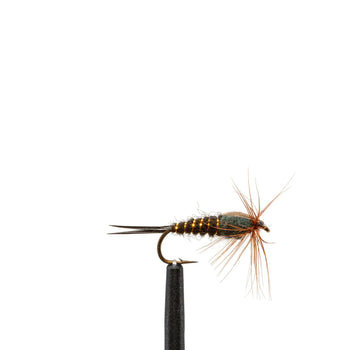
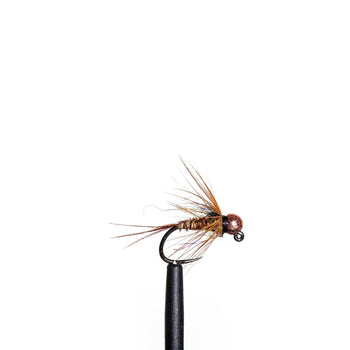
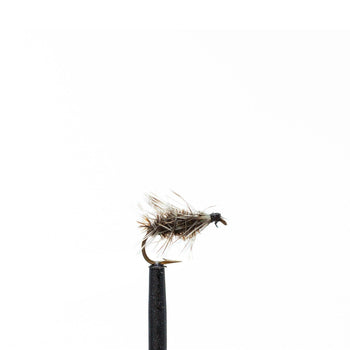
| Stonefly Nymph | Beadhead Soft Hackle Pheasant Tail | Walt’s Worm | Griffith’s Gnat |
Duracell |
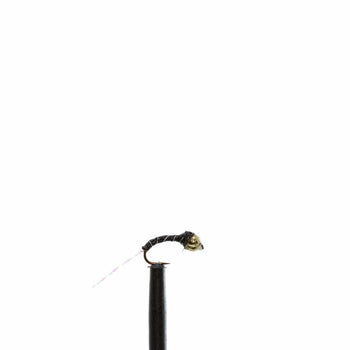
Zebra Midge – Black or Red (#18–#22): A simple, segmented pattern that imitates midge larvae and early pupae active throughout the winter. The slim black body, wire ribbing, and small bead create a subtle, natural profile that trout recognize immediately. Fish it deep in slow runs and tailouts, either as a trailing fly or paired with a slightly heavier lead nymph to maintain depth.
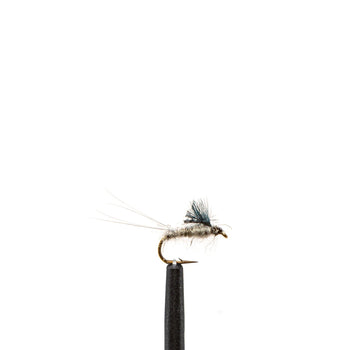
WD-40 – Gray or Tan (#18–#22): A subtle mayfly emerger that excels when trout are feeding selectively just off the bottom. Its slim profile and muted colors closely match small winter mayflies and midges, making it especially effective in clear, low-flow conditions.
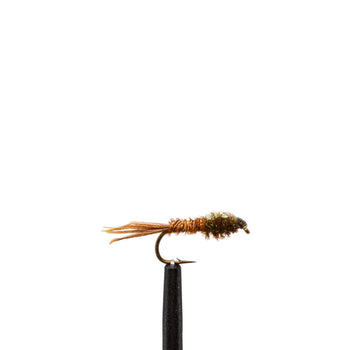
Pheasant Tail Nymph – Natural or Flashback (#16–#20): A timeless pattern that imitates a wide range of mayfly nymphs active year-round. In winter, smaller sizes shine when fished deep with a clean, drag-free drift along seams and softer inside water.
RS2 (#18–#22): A delicate nymph-emerger hybrid that fools wary trout in cold, clear water. The RS2 is most effective as a trailing fly when fish are feeding subtly and rejecting heavier or flashier patterns.
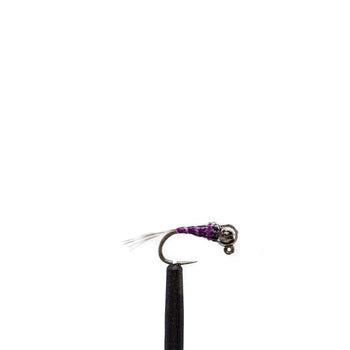
Perdigon – Purple, Black, or Olive (#16–#20): A fast-sinking, compact nymph designed to cut through winter currents and reach depth quickly. Its slim, durable profile excels in faster seams and pocket water when precise depth control is critical.
Stonefly Nymph – Black or Brown (#16–#18): A realistic imitation of immature stonefly nymphs that remain active throughout winter. Fish it as a heavier lead fly near the bottom, especially in freestone rivers where trout key on larger subsurface insects.
Beadhead Soft Hackle Pheasant Tail (#16–#20): A versatile soft hackle pattern that imitates emerging mayflies and midges drifting just off the bottom. The soft hackle fibers add subtle movement, while the beadhead helps maintain depth in winter currents. Fish it as a dropper or swing it gently at the end of the drift when trout are feeding on emergers.
Tungsten Bead Walt's Worm Jig (#14–#18): A simple, buggy pattern that imitates caddis larvae, annelids, and general subsurface protein. Its soft profile and natural colors make it an excellent lead fly when trout want an easy, high-calorie meal in cold water.
Griffith’s Gnat (#18–#22): A classic dry fly that imitates clustered adult midges during winter hatches. Best fished on calm, sunny afternoons when trout rise selectively in slow pools and tailouts.
Duracell – Olive, Brown, or Black (#14–#18): A modern attractor-style nymph that blends natural materials with subtle flash, making it easy for trout to spot in cold, deep water. The Duracell excels as a lead or anchor fly in winter nymph rigs, helping get smaller midges and emergers down to feeding depth while still looking buggy and natural in slow winter currents.
How to Fish These Flies in Winter
Winter fly fishing rewards anglers who slow down, simplify, and focus on precision. Trout metabolism drops in cold water, meaning fish are less willing to chase and far more selective about what they eat. The goal is to present a small, natural fly right at eye level and let it drift effortlessly.
Go small.
Winter insects are tiny, and trout know it. When fish refuse larger offerings, dropping down one hook size often makes the difference. Sizes #18–#22 should be your starting point, especially in clear water and pressured fisheries.
Slow everything down.
A true dead-drift is essential in winter. Focus on softer seams, inside bends, tailouts, and slower runs where trout can feed without expending energy. If your flies are moving faster than the current, they’re moving too fast.
Depth is critical.
Most winter eats happen near the bottom, where trout conserve energy. Adjust indicator height, add weight, or switch to a heavier lead fly before changing patterns. If you’re not occasionally ticking bottom, you’re likely fishing too high in the water column.
Light tippet helps.
Cold, clear water exposes everything. Fishing 5X–6X tippet allows small flies to drift naturally and helps avoid spooking wary fish. The tradeoff in strength is well worth the increased number of eats.
📌 Pro Tip: Change depth before changing flies. Many “slow” winter days aren’t about fly choice—they’re about not getting deep enough.

Build a Winter Confidence Box
Winter doesn’t require a massive fly selection—just the right flies in the right sizes. A focused winter box removes guesswork and helps you stay confident when conditions are tough.
To cover most winter scenarios, aim for:
- 3–4 midge patterns in multiple sizes and colors
- 2–3 small mayfly nymphs for subtle, selective feeding
- 1–2 heavier anchor flies to control depth and maintain a clean drift
Carry duplicates in your confidence patterns and vary bead sizes, weights, and profiles. This lets you adjust depth and presentation without constantly re-rigging or second-guessing your fly choice.
When your box is dialed, you spend less time tying knots and more time fishing effectively.
Taking It to the Water
Winter fly fishing isn’t about flashy flies or constant action—it’s about trust, patience, and execution. When you slow down, fish small, and put proven patterns in the right water at the right depth, trout will eat—even in the coldest months.
Stock your box with confidence flies, focus on clean drifts, and embrace the slower pace of winter. The rewards may be fewer, but they’re often the most satisfying fish of the year.


