

Fly of the Month: Big Foam Attractors — The Summer Confidence Game

By the first week of July, the river has stopped rewarding patience and started rewarding confidence. Spring's careful match-the-hatch game — the size-18 emerger, the perfect drift, the right tippet for the right olive — gives way to something louder. The water is warm, the banks are alive with hoppers and beetles and stoneflies, and trout that spent all spring inspecting tiny mayflies are now looking up for a meal worth moving for. This is the season of the big foam fly, and it's the most fun fishing of the year.
Here's the thing most anglers get backwards about summer dry fly fishing: they think a bigger fly is a compromise — a searching pattern you throw when nothing's hatching, a way to cover water until the "real" fishing starts. It isn't. In July, a big foam attractor is often the most effective fly in the box, and not in spite of being unrealistic — partly because of it.
That's this month's Fly of the Month: not a single pattern, but the whole category of big foam attractors, and the argument for why they belong on your line from the first warm afternoon of July straight through August.
Why Big Foam Wins in Summer
A big foam fly does three things a perfect imitation can't, and each one matters more in July than any other month of the year.
You can see it. Summer means low sun, bright glare, fast pocket water, and long casts to the bank. A size-18 parachute disappears the instant it lands in a riffle thirty feet away. A Chubby Chernobyl with a white wing post is visible in all of it — which means you actually see the eat, set on time, and fish the fly with intention instead of guessing where it is. Visibility isn't a luxury in summer. It's the difference between hooking the fish that ate and watching it spit the fly before you react.
It floats a dropper. The single most productive summer rig in the West is a big foam dry with a weighted nymph hanging below it. The foam attractor does double duty — it draws the surface eats and suspends the dropper at depth, working as an indicator you can see and a fly fish will actually take. A hackled dry can't do this; it drowns under the weight. Foam was built for it. (We broke the whole system down in The Dry-Dropper Rig: Four Pairings for Every Water Type — that post is the companion to this one.)
It triggers a confidence eat. This is the part anglers miss. By July, a trout has watched thousands of insects drift overhead and has learned to scrutinize the small stuff. But a big foam attractor reads as a hopper, a stonefly, a beetle, a chunk of easy protein — something big enough to be worth leaving a feeding lane for, and arriving the way real terrestrials arrive: clumsily, against the bank, with a little disturbance. The fish isn't inspecting it. It's reacting to it. Summer trout will refuse a perfect size-16 PMD and then crush a size-8 Chubby on the next cast, because the two flies are asking two completely different questions. The PMD asks "is this exactly right?" The Chubby asks "is this worth it?" In July, the answer to the second question is almost always yes.
The patterns below are organized into three tiers by what they actually do on the water — the confidence attractors that anchor the box, the foam stonefly imitations for July's golden and salmonfly activity, and the movement patterns that pull fish up when the standard Chubby gets refused. Fish them by water type and light, not by habit.

Tier 1: The Confidence Attractors
This is the core of the summer foam box — the Chubby Chernobyl family. High-floating, rubber-legged, endlessly variable in color, and buoyant enough to support a heavy dropper, these are the patterns you tie on first in July and leave on until a fish tells you otherwise. The four below cover the full range: the dark silhouette for bright sky, the visible body for flat light, the natural tone for selective fish, and the downsized version for when the full-size foam gets refused.
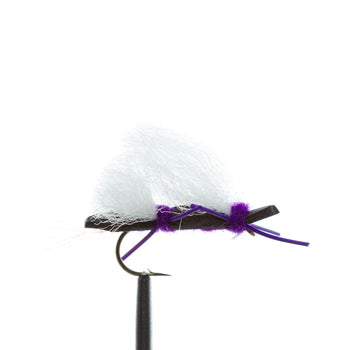 |
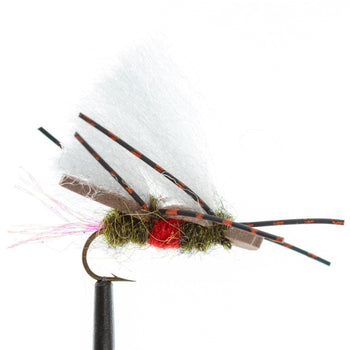 |
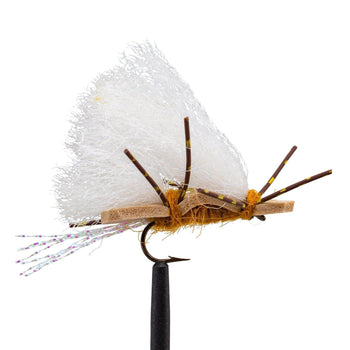 |
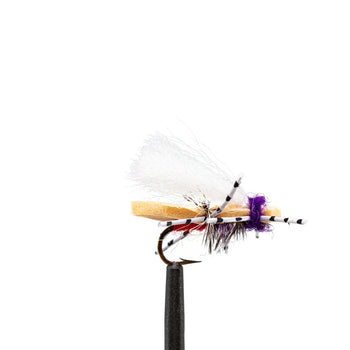 |
| Chubby Chernobyl – Knockout | Royal Chubby Chernobyl | Chubby Chernobyl – The Mule | Micro Chubby – Joker |
Chubby Chernobyl – Knockout (Black/Purple) (#8–#12): The summer workhorse and the fly to tie on first in July. The black and purple body throws a dark, high-contrast silhouette against bright sky — exactly what a trout sees looking up into midday glare — and the foam body floats high enough through pocket water and fast seams to carry a heavy tungsten dropper without sinking. If you fish one foam attractor all summer, this is it. Cast it tight to the bank, drift it drag-free through the soft water against the cut, and trust that you'll see the eat even at distance.
Royal Chubby Chernobyl (#8–#12): The flat-light and off-color answer. When the Knockout's dark body disappears in overcast light, glare, or stained tailwater, the Royal's red-and-white body becomes the visible target — for you and the fish. This is the rotation piece when conditions change midday: same presentation, same buoyancy, different color profile to match the light. Keep it in reach for afternoon cloud cover and the flat-light window before dusk.
Chubby Chernobyl – The Mule (Tan/Copper) (#8–#12): The natural-tone Chubby for the back half of summer, when fish have seen every loud foam pattern on the river and start refusing the bright ones. The tan and copper body reads as a real hopper or golden stone rather than an attractor, which makes it the choice on pressured water and clear, low-summer flows where a more believable silhouette earns eats the Knockout no longer gets. Same float, same dropper capability, quieter profile.
Micro Chubby – Joker (Natural/Purple) (#12–#14): The downsize for technical water and educated fish. When a full-size Chubby gets refused on a flat tailout or a spring creek — and by August it will — dropping to a size-12 or 14 Micro Chubby often resets the bite without giving up the rubber-leg movement and foam float that make the pattern work. It still supports a small dropper, still rides high, but presents a profile that doesn't spook trout that have grown wary of big foam. The first move when the bank eats dry up.
Tier 2: Foam Stoneflies — The Golden Stone Window
July is prime stonefly time on Western freestone rivers. Golden stones are active through July and into August, the tail end of the salmonfly flight lingers on higher-elevation water, and Yellow Sallies hatch every warm afternoon. These four foam patterns imitate the adult stonefly specifically — they ride high enough for the roughest pocket water, hold a more realistic stonefly silhouette than the Chubby, and shine during egg-laying flights when fish key on a bigger, structured profile. Fish them tight to logs, boulders, and overhanging brush where trout hold to ambush egg-laying adults.
 |
 |
 |
 |
| Golden Stone – Foam | Water Walker – Gold | Foam Stimulator – Yellow | Foam Stimulator – Orange |
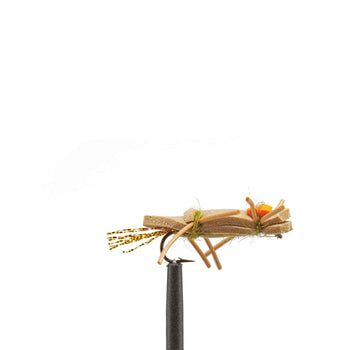
Golden Stone – Foam (#8–#12): The dedicated golden stonefly adult, built for the July peak. Golden stones skitter across the surface to lay eggs through the warmest hours of the day, and trout lie in ambush tight to structure waiting for them. The foam body keeps this pattern riding high through the fastest pocket water and broken riffles where the naturals are most active — and where a natural-material fly would drown under a dropper. Fish it tight to logs, boulders, and shaded banks, and don't be afraid to give it a twitch to imitate an egg-laying female.
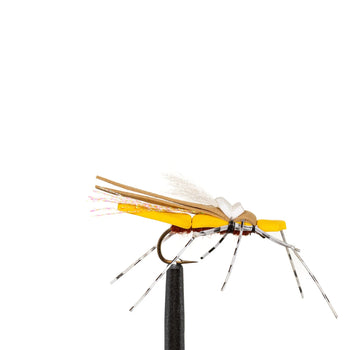
Water Walker – Gold (#10–#14): The most realistic foam adult in the lineup — closer to the true silhouette and proportions of a golden stone or large Yellow Sally than the bulkier Chubby. The Water Walker rides high in the broken water stoneflies prefer but presents a more believable insect profile, which makes it the choice for selective fish that have refused the louder attractors. Particularly useful in the late afternoon on pressured water where the trout have already seen too many Chubbys drift overhead.
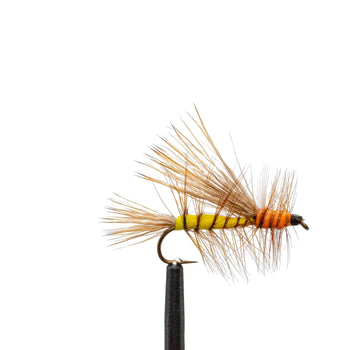
Foam Stimulator – Yellow (#12–#16): The Yellow Sally and small golden stone specialist. Through July, small yellow stoneflies hatch on warm afternoons across nearly every wild trout watershed, and a high-floating yellow foam body matches them while staying up through riffles and pocket water that drown standard hackled patterns. It's also a superb dry-dropper anchor when you want a smaller, more believable lead fly than a full Chubby. Fish it through the heaviest water during afternoon Sally activity and trust it to stay afloat.
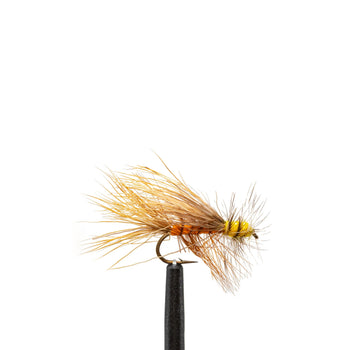
Foam Stimulator – Orange (#10–#14): The caddis-and-large-stonefly crossover. The orange body imitates adult golden stoneflies and big October-caddis-class bugs simultaneously, making it a high-visibility searching pattern through the late-June-into-July window when goldens and large caddis overlap. Its foam construction gives it the all-day buoyancy and durability the original hair Stimulator can't match, and the bright body makes it one of the easiest flies in the box to track in fast, broken current.
Tier 3: The Movement Patterns
When the standard Chubby gets refused — and on pressured summer water, it will — the answer is usually movement. These four patterns trade the clean foam-hopper silhouette for rubber legs, animation, and a different footprint in the film. They're the change-up flies: the ones you tie on to search unfamiliar water, to pull a fish that's been sitting tight, or to show a refusing trout something it hasn't seen all afternoon. Each one earns its slot by moving in a way the standard attractor doesn't.
 |
 |
 |
 |
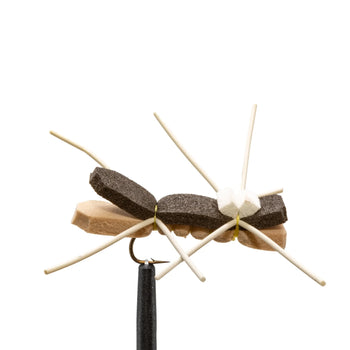
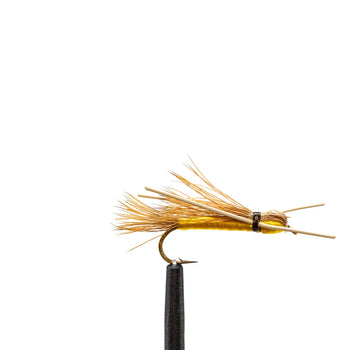
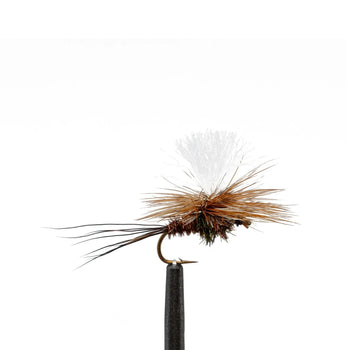
| Chernobyl Ant – Tan | Madam X | BJ's Dancing Fairy | The Mouthful |
Chernobyl Ant – Tan (#8–#12): The original big-foam attractor and still one of the most productive. The Chernobyl Ant's flat foam body sits lower in the film than a Chubby and its rubber legs splay out across the surface, imitating the kicking sprawl of a stonefly or large terrestrial that's fallen in and can't get out. The tan body is the natural, all-purpose color — believable enough for clear water, big enough to draw fish from a distance. Fish it tight to the bank with the occasional twitch to activate the legs; the movement is the trigger.
Madam X (#10–#14): The hair-bodied attractor with rubber legs that has fooled Western trout for decades. Not a foam fly and not a strict imitation of anything, the Madam X works in summer because those rubber legs imitate the kicking motion of an egg-laying stonefly or a struggling adult terrestrial. Fish it dead-drift through fast water and add a slight twitch to make the legs dance — and reach for it on windy afternoons when a natural drift is impossible, because the silhouette and the movement are what trigger the strike, not a perfect presentation.
BJ's Dancing Fairy (#10–#14): The attractor-terrestrial crossover and the change-up when fish want something different from the standard hopper rotation. It carries the buoyancy of a foam pattern with the more delicate profile of a small terrestrial or mayfly, fishes beautifully as a dry-dropper indicator in moderate current, and produces across multiple species. Named for how it animates in moving water — it dances rather than drifts — which is exactly the quality that pulls a fish off the bottom when the dead-drifted Chubby has stopped working.
The Mouthful (#8–#12): The big, calorie-dense searching fly for when you want to move the largest fish in the run. A bulky foam-and-rubber-leg profile that reads as a serious meal — a hopper, a big stone, a chunk of protein worth leaving cover for — it's the pattern to throw through deep banks, undercut structure, and slow summer pools where a trophy fish is holding and won't move for anything small. Fish it tight to the heaviest cover you can reach and give it the occasional twitch. When the river feels slow and you want to force a decision from a big fish, this is the fly.
📌 Pro Tip: Match your foam color to the light, not the hatch. Bright sky and midday glare? Throw the dark Knockout — a black silhouette is what a trout actually sees looking up into the sun. Overcast, stained water, or the flat light before dusk? Switch to the Royal or a yellow body so both you and the fish can find the fly. Most "the bite died" afternoons are really just a fly nobody can see anymore.
Build Your Big Foam Box
You don't need all twelve patterns to fish foam effectively in July — you need coverage across the three jobs: a confidence attractor that floats a dropper, a stonefly imitation for the golden stone window, and a movement pattern for when the standard fly gets refused. Here's the minimum box that covers a July day from the first bank-tight cast to the last light of the evening.
The confidence core (3): Chubby Chernobyl – Knockout (the dark-sky workhorse), Royal Chubby Chernobyl (the flat-light answer), Micro Chubby – Joker (the downsize for pressured fish).
The stonefly window (2): Golden Stone – Foam (the July golden adult), Foam Stimulator – Yellow (the Yellow Sally and small-stone match, and a smaller dropper anchor).
The movement change-up (2): Chernobyl Ant – Tan (the rubber-leg sprawl in the film), The Mouthful (the big-fish searcher for heavy cover).
Carry two or three of each in your primary sizes and you're covered for every situation July creates — bright water and flat, fresh fish and pressured, the bank-tight hopper eat and the deep-pool trophy that won't move for anything small. Build this core first, then add the variants — The Mule for clear late-summer water, the Water Walker for selective stonefly eaters, Madam X and the Dancing Fairy for windy afternoons and change-ups — as the season and the water demand them. Or skip the box-building entirely and start with the JHFLYCO Summer Fly Collection, which carries all of these and the droppers to hang beneath them.
📌 Pro Tip: Hang a dropper. The single most productive way to fish big foam in summer isn't the foam fly alone — it's the foam fly with a weighted nymph 18 to 24 inches below it. The Chubby draws the surface eats and suspends the nymph at depth, and on a slow afternoon the dropper often outfishes the dry three to one. You lose nothing by adding it: the foam still floats, you still see every take, and you're covering two stages of the water column with one cast. If you're fishing a Chubby naked in July, you're fishing half a rig.

Taking It to the Water
The big foam fly is the most honest fly in summer fishing — it doesn't pretend to be a precise imitation, and it doesn't need to. It's a bet that a July trout, warm and opportunistic and tired of inspecting tiny mayflies, will leave a feeding lane for something big and easy that lands the way real terrestrials land: against the bank, with a little disturbance, looking like a meal worth the move.
So fish it that way. Cast tight to the cutbank — within six inches, not two feet — because that's where the food falls in and where the biggest fish in the reach are holding to ambush it. Match your color to the light. Hang a dropper. And when the standard Chubby stops working, don't quit on foam — change the silhouette, add some movement, or downsize before you give up on the surface entirely. The fish are still looking up. You just have to give them a reason to commit.
July is the easiest month of the year to catch a trout on a dry fly, and the big foam attractor is why. Tie one on, throw it at the bank, and watch what happens.
Related Articles
- The JHFLYCO Summer Fly Collection: 275 Patterns Built for the Season
- The Dry-Dropper Rig: Four Pairings for Every Water Type
- Fly of the Month: The Yellow Sally — The Most Misunderstood Stonefly in Your Fly Box
- Fly of the Month: Stoneflies — The Biggest Bug in Your Box
- Late Spring to Early Summer Fly Fishing: A Regional Hatch Guide
- Fly of the Month Archive


