

The Summer Fly Collection: What Earns Its Place June Through September

June changes everything. The water drops and clears. Fish move off the midstream current and set up along the banks. Hatches that ran all spring start compressing into the first and last hours of the day, and the terrestrial window — hoppers, ants, beetles — opens for the next three months. Summer fly fishing isn't harder than spring fishing. It's just different, and the anglers who adjust early catch more fish all season.
The patterns that earn a place in a summer box aren't necessarily the most famous flies in fly fishing — they're the ones that solve specific summer problems. A hopper that lands tight to a cutbank. A rubber legs that gets to the bottom of a deep, sun-warmed run. A BWO that comes out when the clouds roll in on a tailwater afternoon. Every pattern in the JHFLYCO Summer Fly Collection is here for a reason. Six categories, 275 patterns — here's what earns its place, and why.
Terrestrials – The Season-Defining Category
No other season is defined by land-born insects the way summer is. From late June through September, hoppers, ants, beetles, and foam attractors account for a disproportionate share of surface strikes on Western rivers. The bank becomes the most productive zone in the river – not the midstream current where most anglers wade. These eight patterns are why the terrestrial box goes in the vest every morning from July forward, and why it often stays on until the sun goes down.
 |
|
 |
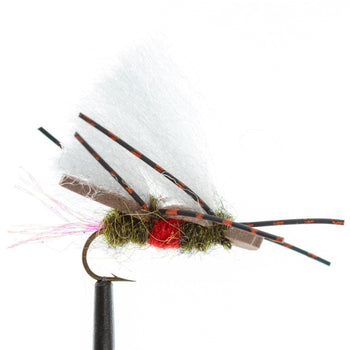 |
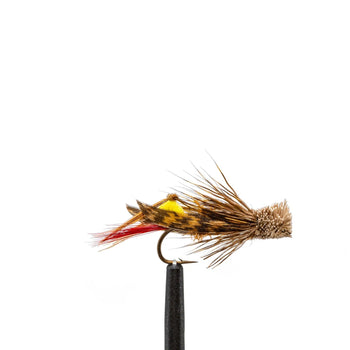
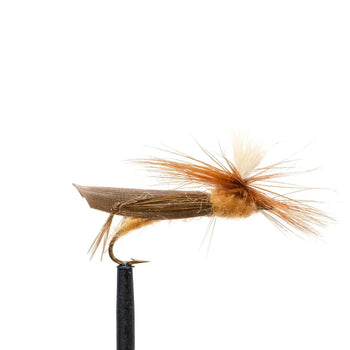
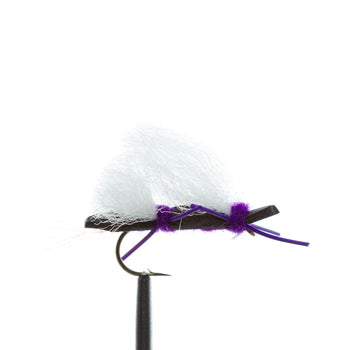
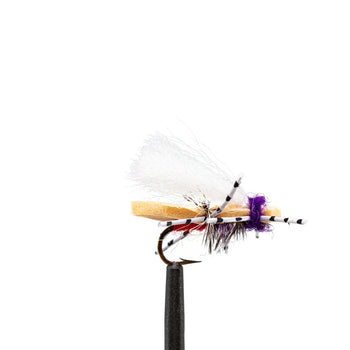
| Dave's Hopper | Parachute Hopper | Chubby Chernobyl Knockout | Royal Chubby Chernobyl |
|
 |
|
 |
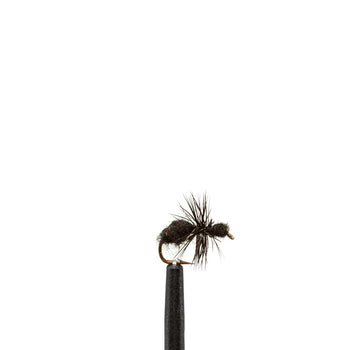
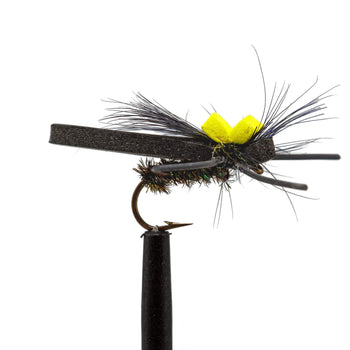
| Micro Chubby – Natural/Purple (Micro Joker) | Black Ant | Snake River Beetle | BJ's Dancing Fairy |
Dave's Hopper (sizes 8-12): The foundational grasshopper imitation – the pattern that defined hopper fishing on Western rivers and still holds up decades after its introduction. Its spun deer hair head, turkey wing, and knotted pheasant tail legs create a lifelike silhouette that sits low in the film the way a real hopper does after struggling on the surface. Fish it along cutbanks, cast tight to grass edges, and let it drift without drag. This is the starting-point hopper – carry it in size 10 before the big foam goes on in July, and return to it in September when fish become selective and the Chubby gets refused.
Parachute Hopper (sizes 10-14): The technical hopper for flat water, spring creek fishing, and pressured fish that have seen the foam patterns all summer. The white parachute post gives the angler a clear sighting point at distance while presenting a lower, more natural profile to the fish – it floats in the film rather than on top of it, closer to how a real grasshopper sits after struggling for a moment. On slow-moving meadow water where foam attractor patterns get refused, the Parachute Hopper consistently picks up fish that won't touch anything else.
Chubby Chernobyl Knockout (sizes 8-12): The July and August workhorse – a high-float foam attractor with rubber legs, a black and purple body, and the buoyancy to support a heavy tungsten dropper below. It sits high in the roughest water, is visible to both angler and fish in fast seams and pocket water, and doubles as an indicator for the dropper fly that often does the actual work. The Knockout color combination is particularly productive on the Snake River and high-elevation freestone streams where fish respond to dark silhouettes against bright sky. If you fish one foam attractor all summer, this is it.
Royal Chubby Chernobyl (sizes 8-12): The red and white variant for off-color water, overcast conditions, and low-light periods when the Knockout's dark silhouette gets lost. The Royal's body is a highly visible target in stained tailwater, during afternoon cloud cover, and in the flat-light window before dusk. It earns its box space as the rotation piece when conditions change during the day – same presentation, different color profile to match the light.
Micro Chubby Chernobyl – Natural/Purple (Micro Joker) (sizes 12-14): The downsized Chubby for technical water, selective fish, and late-season conditions when full-size foam gets refused. On tailwaters and spring creeks where trout have seen every big attractor pattern by August, dropping to a size 12 or 14 Micro Joker often resets the bite. It still floats well enough to support a small dropper nymph and still has the rubber leg movement that triggers strikes – just in a profile that doesn't spook educated fish.
Black Ant (sizes 14-18): The most underused terrestrial in the West and one of the most effective. Ants fall into the water constantly throughout summer – from overhanging trees, bankside vegetation, and during mating flights that push millions of winged ants onto the surface in late July and August. Trout eat them confidently and without the hesitation they show toward larger foam patterns. Fish it on a dead drift in calm water, near any bank with overhanging brush, and in the flat tail-outs where rising fish are often taking something smaller than you think.
Snake River Beetle (sizes 12-16): The bank-tight presentation fly – built for the cast that drops within two inches of the cutbank and stays there. Beetles are summer-long staples on the Snake River, where heavily wooded banks create a constant rain of land-born insects through July and August. The pattern's low, flat profile sits in the film rather than on top of it, matching the silhouette of a beetle struggling on the surface. Fish it tight to structure – deadfall, overhanging brush, shade lines – in the lanes where trout hold specifically to ambush bank-falling insects.
BJ's Dancing Fairy (sizes 10-14): The attractor-terrestrial crossover – a high-visibility dry with the buoyancy of a foam pattern and the delicate profile of a small terrestrial or mayfly. It fishes well as a dry-dropper indicator in moderate current, produces on multiple species, and earns its box space as the change-up when fish are looking for something different from the standard hopper rotation. Named for its animation in moving water – it dances rather than drifts.
📌 Pro Tip: Bank presentations win in summer. Cast within six inches of the cutbank on the first drift – terrestrials don't swim out from shore, they fall in. If your fly is landing two feet off the bank, you're fishing the wrong lane. The water directly against the cut is where the biggest fish in the reach hold, precisely because that's where the food arrives.
Mayflies – The Technical Game
Summer mayfly hatches demand specificity in a way that hopper season doesn't. Pale Morning Duns emerge June through August on most Western rivers. Tricos come on in late July and August, producing some of the most demanding dry fly fishing of the year. Callibaetis hatch throughout the summer on lakes and stillwaters. Between hatches, attractor patterns cover the gaps. The collection carries both camps because summer trout fishing requires both – the fish sipping in a flat tailout at 9am are not the same fish eating Chubbys along the bank at 2pm.
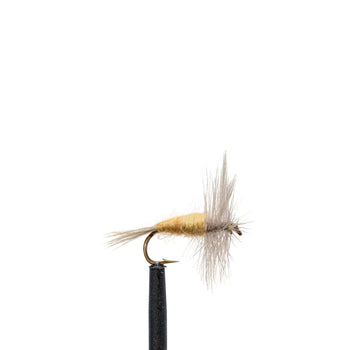 |
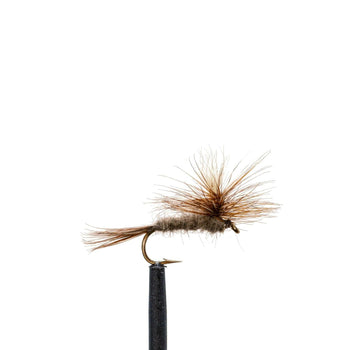 |
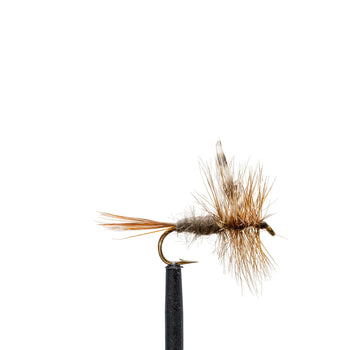 |
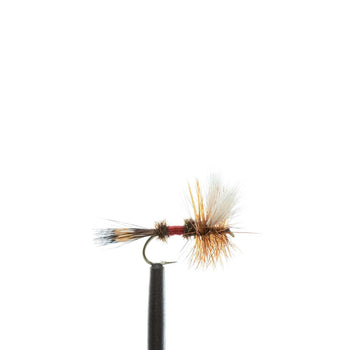
|
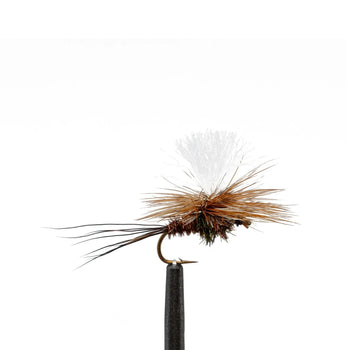
| Pale Morning Dun | Parachute Adams | Adams | Royal Wulff |
 |
|
 |
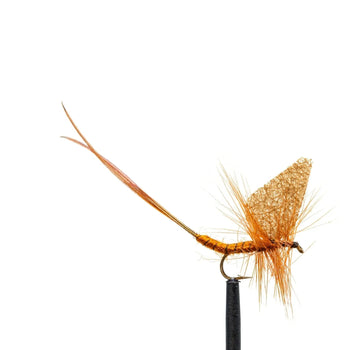 |
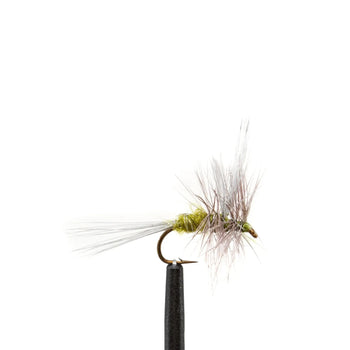
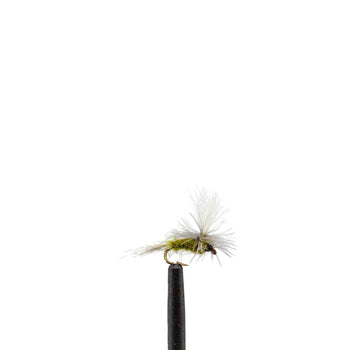
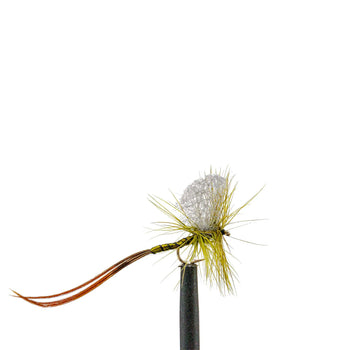
| Blue-Winged Olive | Blue-Winged Olive Parachute | Olive Mayfly | Brown Mayfly |
Pale Morning Dun (sizes 16-18): The most important technical hatch of the summer in the Rocky Mountain West. PMDs emerge in the morning hours from June through August on tailwaters and freestone rivers alike – a consistent, reliable hatch that produces visible rising fish and highly selective feeding behavior. The pale yellow body and upright wing are non-negotiable color targets during active hatches. Fish it on a dead drift with a long, fine tippet in the lanes where fish are actively sipping, and match the size precisely – one size off is the difference between refusals and eats.
Parachute Adams (sizes 14-18): The universal mayfly impressionist – the fly that earns its place in every box because it works when you don't know exactly what they're eating. The gray body and grizzly hackle match an enormous range of mayfly species and sizes, and the white parachute post makes it visible on broken water where smaller dries disappear. Fish it whenever rising fish are present and the hatch isn't clearly identified, as a searching pattern between hatch windows, or as the indicator dry in a dry-dropper setup. It produces all summer because summer always has rising fish and not-quite-identified hatches.
Adams (sizes 14-18): The traditionally hackled version – lower on the water than the Parachute, with a different silhouette that produces on flat, clear water when the parachute post version gets refused. The hackled Adams sits slightly higher in the surface film with a different footprint and light pattern that selective trout occasionally prefer. Carry both: the Parachute Adams for broken water and visibility, the traditional Adams for slow-moving tailouts and spring creek conditions where trout have time to inspect the fly from below.
Royal Wulff (sizes 10-14): The high-float attractor that crosses the line between searching dry and mayfly pattern – its calf tail wings and red midsection create a distinctive silhouette that has triggered dry fly strikes on Western rivers since Lee Wulff developed the series in the 1930s. In summer, fish it as a searching dry on rough freestone water and as the anchor fly in a dry-dropper setup where visibility and buoyancy matter more than precise imitation. It earns its place not because it imitates any specific mayfly, but because fish eat it confidently enough that it belongs in every summer box.
Blue-Winged Olive (sizes 18-22): The counterintuitive summer pick that catches most anglers off guard. Most put it away after April – that's a mistake. Baetis hatch in overcast conditions all summer long on tailwaters, and fish that have been ignoring hoppers and Chubbys all afternoon will suddenly sip size 20 dries with total commitment the moment the clouds come in. Keep a few BWOs in the box from June through September specifically for the mid-afternoon overcast window that changes the entire character of the day's fishing on the Snake, Green, and South Fork.
Blue-Winged Olive Parachute (sizes 18-22): The high-visibility version – the white parachute post makes a size 20 fly visible on choppy water and at the casting distances summer fishing sometimes demands. It fishes the same conditions and hatch windows as the standard BWO but is the better choice on broken riffles and when light conditions make the flat-hackle version hard to track. Carry both if you fish tailwaters regularly; the parachute version when you need to see the fly, the standard when fish are being selective about profile.
Olive Mayfly (sizes 14-18): The generalist olive pattern that crosses PMD, Callibaetis, and BWO hatch windows where the exact species isn't identifiable but the fish are clearly keyed on olive-bodied duns. On stillwaters and slow-moving sections where Callibaetis are active throughout summer, this is the go-to searching fly during morning or evening hatch windows. Fish it on a dead drift with a long tippet and minimal drag wherever you see subtle, consistent rises to something small and olive-colored.
Brown Mayfly (sizes 14-18): The late-summer pattern for spinner falls and Trico-adjacent situations where fish are feeding selectively on brown-bodied mayfly adults. Spinner falls – when spent mayflies drift on the surface after mating – produce some of the most frustrating and rewarding dry fly fishing of the season in August and September. Trout sip spinners with total confidence in flat water, often creating consistent surface activity that demands the right color and size. The Brown Mayfly earns its slot specifically for this late-season window.
📌 Pro Tip: The BWO earns its summer slot on tailwaters. Most anglers put it away after April. Don't. Overcast afternoons on the Snake, Green, and South Fork produce Baetis hatches through August – and fish that have been ignoring hoppers all day will suddenly sip size 20 dries with total commitment the moment the clouds come in. Always have a few BWOs in the box from June through September.
Stoneflies – Before and After the Hatch
Stoneflies are the most important subsurface food source in Western freestone rivers, and they're active all summer – not just during the hatch. Stonefly nymphs live on the streambed for one to three years before emerging. The adult flights get all the attention, but the nymph game runs 365 days a year. On rivers with significant stonefly populations – the Snake, Madison, Green River, and most high-elevation Western freestones – a weighted rubber legs or Kaufmann's nymph fishing deep in the main current is one of the highest-percentage presentations of the entire season, even in July and August when most anglers have switched entirely to hoppers and dries.
 |
 |
|
|
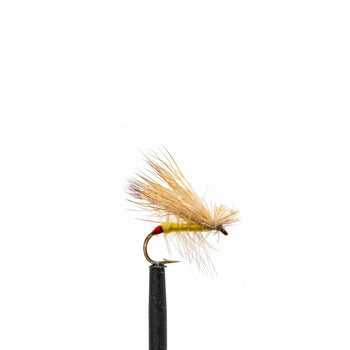
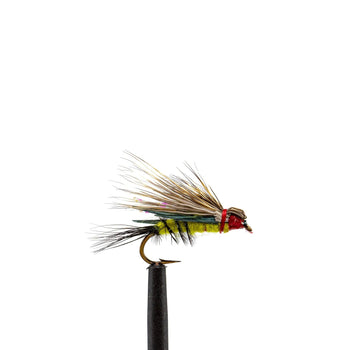
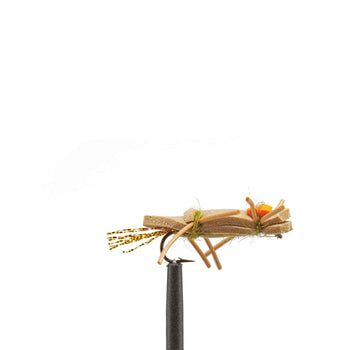
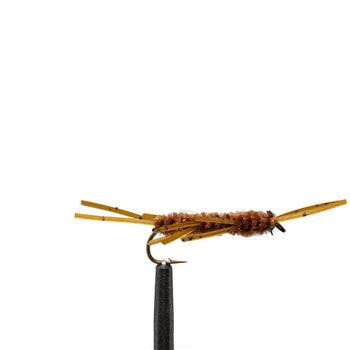
| Yellow Sally | Golden Stone | Golden Stone – Foam | Coffee Rubber Legs |
 |
|
 |
 |
| Rootbeer Rubber Legs | Kaufmann's Stonefly Nymph – Black | Kaufmann's Stonefly Nymph – Brown | Girdle Bug |
Yellow Sally (sizes 14-16): The small golden stonefly adult that hatches June through August and gets systematically overlooked by anglers focused on hoppers and caddis. The Yellow Sally is a member of the Chloroperlidae family – a small, yellow stonefly that hatches in the afternoon, often creating visible rises from trout that aren't taking anything else. Fish it on a dead drift near riffles and pocket water during afternoon hours, and pay attention to selective feeding activity in sizes you'd normally associate with caddis. The hatch is subtle; the strikes are not.
Golden Stone (sizes 8-12): The natural-material adult stonefly imitation for peak summer golden stonefly activity – a classic pattern with a realistic golden-yellow body, natural wing profile, and rubber legs that create lifelike movement on the water. Golden stonefly adults are active July through August on most Western rivers, skittering across the surface to lay eggs. Fish this pattern tight to structure – logs, boulders, overhanging brush – where trout lie in ambush during active egg-laying windows. It fishes equally well as an all-purpose attractor dry throughout the day even when stoneflies aren't visibly hatching.
Golden Stone – Foam (sizes 8-12): The high-float version – built for rough water, heavy current, and dry-dropper rigs where buoyancy matters more than material aesthetics. The foam body keeps this pattern riding high through the fastest pocket water and riffles where natural-material flies struggle to stay afloat under a tungsten dropper. Use it interchangeably with the natural Golden Stone based on conditions: foam version for fast, broken water and dropper rigs; natural version for slower water where profile matters more than float.
Coffee Rubber Legs (sizes 6-10): The dark nymph for salmonfly and large golden stone imitation – a generalist stonefly nymph that suggests "big crawly thing" to a trout rather than matching any specific species precisely. The coffee-brown coloration is effective for mimicking the dark, robust stonefly nymphs that dominate Western freestone rivers. Fish it as the anchor in a two-nymph rig with a smaller dropper below, dead-drifted through deep seams and runs. The rubber legs pulse in current, delivering the movement profile that bottom-feeding trout key in on during summer low-water conditions.
Rootbeer Rubber Legs (sizes 6-12): The guide favorite – a warm tan-brown coloration that precisely matches the golden stonefly nymphs active in freestone rivers all summer. The rootbeer color sits between dark and tan, covering both salmonfly and golden stone color windows without committing to either exclusively. Without a conehead, it sinks at a moderate rate that gives better drift control in mid-depth water – perfect for standard nymph rigs in seams, tailouts, and pocket water that doesn't require an aggressive plunge to the bottom. This is the highest-percentage rubber legs pattern for summer guide conditions on Western rivers.
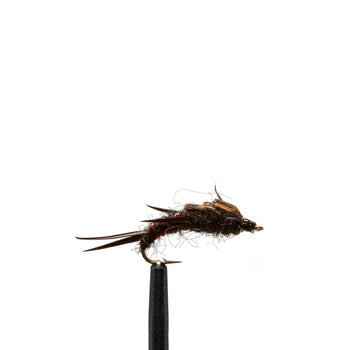
Kaufmann's Stonefly Nymph – Black (sizes 4-8): The realistic anatomy pattern for big-fish conditions – a heavily weighted, anatomically detailed imitation with a segmented abdomen, prominent wing cases, and rubber legs that push water and create movement on the drift. Developed by Randall Kaufmann to replicate the large, dark-bodied nymphs of giant stonefly species like Pteronarcys, it's a big-fish fly built for deep runs, pocket water, and overcast conditions where dark coloration is most effective. Fish it on the heaviest nymph rigs, in the deepest seams, when you want to target the most aggressive, opportunistic trout in the river.
Kaufmann's Stonefly Nymph – Brown (sizes 4-8): The tan-brown variant – the golden stone and early salmonfly nymph color match that covers the lighter end of the stonefly spectrum. Where the Black excels in deep, heavy water and low-light conditions, the Brown is the choice on clearer water and during early-season golden stone activity when the naturals are running lighter in color. Carry both: fish the Black when you want to go big and dark, the Brown when you want to match the specific golden stone nymphs migrating toward the banks in late June and July.
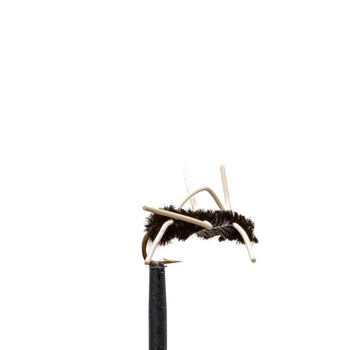
Girdle Bug (sizes 6-10): The classic chenille and rubber legs searching nymph – a foundational Western pattern that imitates stonefly nymphs, large aquatic insects, and small prey items with equal effectiveness. Unlike the more anatomically realistic Kaufmann's, the Girdle Bug is an attractor nymph that suggests size and movement rather than precise species imitation. It's particularly effective in riffle-run-pool sequences where fish are actively feeding on whatever the current delivers – dead-drifted under an indicator, fished as the anchor in a two-fly rig, or twitched along the bank to mimic stonefly nymphs migrating toward shore before hatching.
📌 Pro Tip: A rubber legs as your point fly with a smaller mayfly nymph or caddis pupa as the dropper is the highest-percentage two-fly nymph rig in Western summer fishing. The rubber legs gets the rig down fast and acts as the attractor; the smaller fly – the Pheasant Tail, the RS2, the Caddis Pupa – is what most fish actually eat. Set up the rig and let the rubber legs do the heavy lifting so the trailer can do the catching.
Caddis – The Evening Benchmark
Caddis emergence is the most consistent summer hatch on Western freestone rivers. June through September, right at last light, caddis adults skitter across the surface and trout abandon the caution they've carried through the day. If you understand one hatch, understand caddis – the lifecycle, the emergence stages, and specifically the pupa stage that most anglers miss entirely. The hatch happens in the evening. The fish aren't always eating what you think they're eating. These six patterns cover every stage of the summer caddis game.
 |
 |
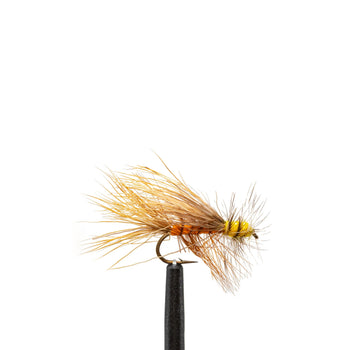 |
| Elk Hair Caddis | Goddard Caddis | Orange Foam Stimulator |
 |
 |
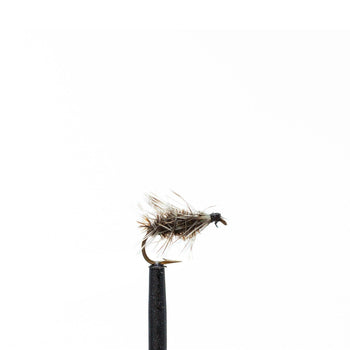 |
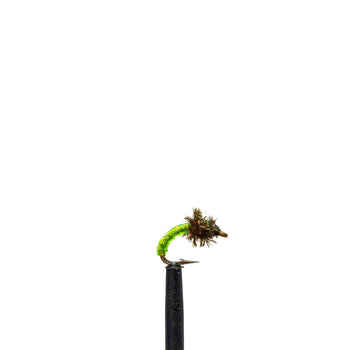
| Caddis Pupa – Brown | Caddis Pupa – Green | Griffith's Gnat |
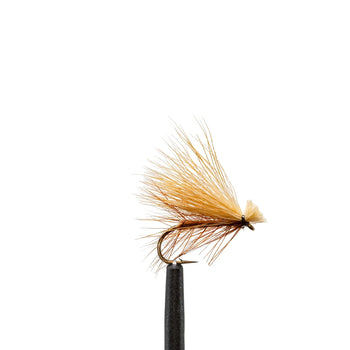
Elk Hair Caddis (sizes 14-18): The foundational caddis dry – non-negotiable, all summer, every Western river. Al Troth's pattern has defined caddis fishing since 1957 because it does everything right: the elk hair wing creates a realistic profile, it floats well in broken water, and it remains visible to the angler even at distance in low-light evening conditions. Fish it in sizes 14-16 during active evening hatches, dead-drifted through the feeding lanes where caddis adults are skating across the surface. If you carry one caddis pattern from June through September, carry this one.
Goddard Caddis (sizes 12-16): The deer hair caddis for fast water – a spun and clipped body that creates exceptional buoyancy and a distinctive silhouette that is particularly visible in rough, tumbling current. Where the Elk Hair excels on moderate water, the Goddard's bulk makes it the choice for heavy freestone runs and fast pocket water where lighter flies get pulled under. It also works exceptionally well on the swing – cast across and slightly downstream, let the current belly the line and skate the fly across the surface, mimicking an adult caddis returning to the water to lay eggs. Strikes on the skating Goddard in July and August are aggressive.
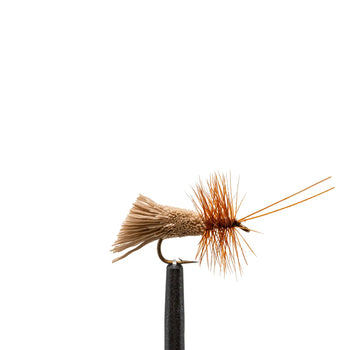
Orange Foam Stimulator (sizes 10-14): The caddis-stonefly-attractor crossover – a high-float foam pattern with an orange body that imitates adult golden stoneflies and large caddis simultaneously. Fish it during the late-June through July window when golden stones and large caddis overlap on Western rivers, as a general attractor dry throughout summer where you need a high-visibility fly in fast current, or as the indicator fly in a dry-dropper rig when you want to see the lead fly through rough water. Its foam construction adds the buoyancy and durability that make it a practical all-day choice in ways the original hair Stimulator isn't.
Caddis Pupa – Brown (sizes 14-16): The subsurface emergence pattern for the most important and most missed stage of the caddis hatch. During peak evening emergence, trout are often intercepting pupae as they ascend through the water column – not taking adults off the surface, even when the rise form looks identical. The brown coloration matches the most common caddis species in Western rivers. Fish it on a tight line or slight swing 12-18 inches below the surface during evening hatch windows, exactly where ascending pupae are most concentrated and where fish that are refusing the dry fly are actually feeding.
Caddis Pupa – Green (sizes 14-16): The green body variant – the color match for the Hydropsychidae family, the most widespread net-spinning caddis in Western rivers and the species responsible for many of the largest summer evening hatches. Particularly effective on rivers with heavy caddis populations through July and August. Carry both colors; the difference between a brown and green pupa is often the difference between a slow evening and fish in the net on every other drift. When the brown gets refused, switch colors before switching patterns.
Griffith's Gnat (sizes 18-22): The midge-cluster and small caddis crossover – a peacock herl and grizzly hackle dry that imitates a cluster of small midges or a single small caddis adult with equal effectiveness. On summer tailwaters where technical dry fly fishing demands tiny patterns and selective fish are sipping something small and dark, the Griffith's Gnat is the switch from a larger dry when fish are refusing everything with a visible wing. It sits in the surface film, presents a complex silhouette that matches multiple small insects simultaneously, and produces consistently on the Snake, Green, and South Fork through August and September.
📌 Pro Tip: During peak evening caddis emergence, fish are often taking pupae in the film – not adults on the surface. The rise form looks identical. If you're getting refusals on the Elk Hair Caddis during an active evening hatch, drop down to a Caddis Pupa fished six to eighteen inches below the surface on a slight downstream swing. The presentation changes; the catch rate changes with it.
Nymphs – Two Camps, One Box
Summer nymph fishing splits into two distinct strategies. On freestone rivers where trout are opportunistic and the current delivers a constant variety of food, attractor nymphs – Prince, Copper John – produce fish all day without matching any specific hatch. On tailwaters, where fish have seen every pattern and the diet is specific and repetitive, match-the-hatch nymphs are the only reliable producers. These eight patterns carry both camps, and the ones that cross between them – the Pheasant Tail, the Soft Hackle – earn extra box space because they work everywhere.
 |
 |
 |
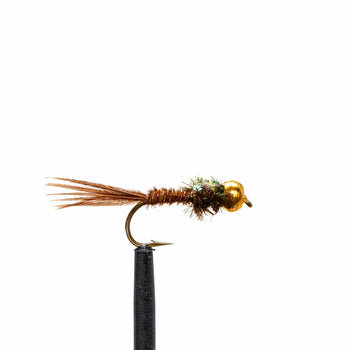 |
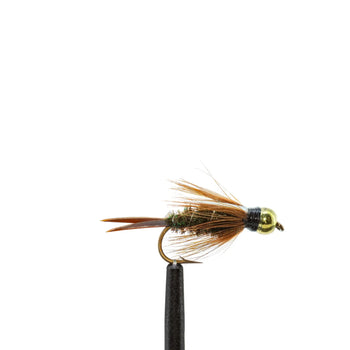
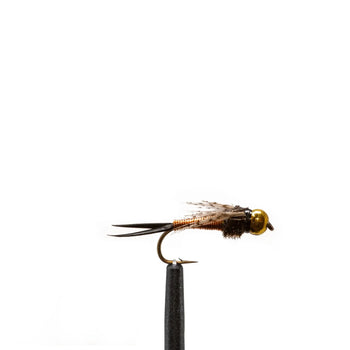
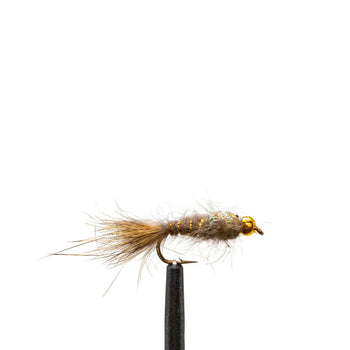
| Beadhead Prince Nymph | Copper John | Beadhead Hare's Ear Flashback | Beadhead Flashback Pheasant Tail |
 |
 |
 |
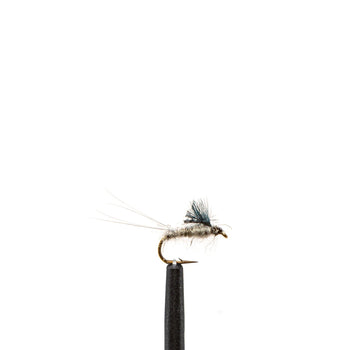
|
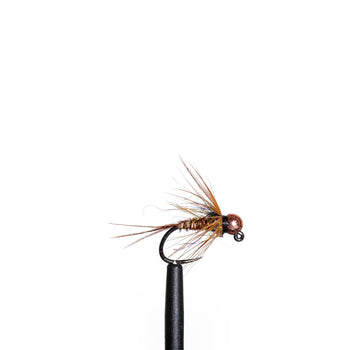
| Beadhead Soft Hackle Pheasant Tail | Tungsten Bead Walt's Worm Jig | Tungsten Bead Rainbow Warrior Jig | RS2 |
Beadhead Prince Nymph (sizes 12-16): The universal attractor nymph – the freestone river anchor that works year-round, all summer, in any condition where trout are feeding subsurface. The peacock herl body, bead head, and white biots suggest a range of aquatic insects without imitating any one precisely, creating a generalist profile that triggers opportunistic strikes from non-selective fish. Fish it as the lead fly in a two-nymph rig on freestone water, as the searching pattern between hatches, or as the anchor above a smaller trailer nymph that matches the current hatch.
Copper John (sizes 12-16): The fast-sinking attractor nymph for deep summer runs and high-current conditions. The copper wire body and bead head combination creates one of the heaviest nymphs of its size class – it gets to the bottom fast and stays there, which is exactly where summer trout hold when surface temperatures push them out of the feeding lanes above. Fish it as the point fly in fast pocket water, through deep seams in heavy current, and as the anchor in dropper rigs where the goal is depth first and imitation second.
Beadhead Hare's Ear Flashback (sizes 14-18): The generalist mayfly nymph that covers BWO, PMD, and Callibaetis nymph windows all summer. The hare's ear dubbing creates a rough, buggy texture that suggests the natural look of mayfly nymphs across every size and color variation, and the flashback wing case adds subtle attraction that produces more strikes than the plain version in all but the most pressured conditions. It crosses the attractor-imitation line better than almost any other nymph – specific enough to match summer hatches, general enough to produce between them.
Beadhead Flashback Pheasant Tail (sizes 14-18): The slim-profile mayfly nymph mandatory on summer tailwaters – the PMD and Baetis nymph imitation that matches the slender, brown-bodied nymphs dominating freestone and tailwater diets from June through September. The slim pheasant tail fiber profile creates an exact body match for these species, and the bead head gets it into the strike zone faster than the traditional version. On the Snake, the Green, and the South Fork, fish that have been hammered all season on attractor nymphs will still eat a properly presented size 16 Pheasant Tail Flashback with confidence.
Beadhead Soft Hackle Pheasant Tail (sizes 14-18): The wet fly crossover – the pattern that bridges nymph fishing and the swing. The soft hackle collar breathes and pulses in current, mimicking an emerging mayfly or ascending caddis pupa in a way no dead-drifted nymph can replicate. Fished on a slight downstream swing through the feeding column, it intercepts fish that are keyed on emerging insects in the top 12-18 inches of the water column – fish that aren't taking the dead-drift nymph and aren't rising to the surface yet. It's the technique most summer anglers skip entirely, and this pattern is purpose-built for it.
Tungsten Bead Walt's Worm Jig (sizes 12-16): The dry-dropper rig dropper of choice – a barbless jig hook with a tungsten bead that sinks fast and creates a natural, subtle presentation that doesn't overload the lead dry fly. The worm profile imitates aquatic worms and midge larvae present in every trout river all summer. Tied on a barbless jig hook, it rides hook-up in the water column – exactly the orientation that produces the cleanest hooksets and fewest snags in the rocky-bottom runs where summer fish hold.
Tungsten Bead Rainbow Warrior Jig (sizes 14-18): The tailwater essential – a Chironomid and midge crossover pattern with a slim Perdigon-style profile that drops fast and holds in the strike zone on tight-line and Euro nymphing setups. The pearl body and bead create a subtle flash that reads as a natural insect in clear tailwater conditions where highly specific patterns consistently outperform attractor nymphs. On the Green River, the South Fork, and the Snake River system in summer, when water temperatures are high and fish are lethargic and selective, this is one of the most consistently productive subsurface patterns in the collection.
RS2 (sizes 20-24): The mandatory tailwater midge and emerger pattern – the most important small nymph in the collection for summer fishing on the Snake, Green, and South Fork. Rim Chung's pattern imitates emerging Baetis and midge pupae in the surface film, precisely where summer tailwater trout feed when they're not doing anything else obviously productive. In sizes 20-22, it's small enough to match the natural insect exactly and subtle enough not to spook fish in clear, low-water summer conditions. When surface temps are up and fish have moved to the cool tailwater sections and aren't taking anything aggressive, the RS2 is what still catches them.
📌 Pro Tip: On tailwaters in summer heat – when surface temps push above 65 degrees F and fish go deep and lethargic – the RS2 and Pheasant Tail in sizes 20-22 on a tight-line or Euro setup are often the only presentations that still produce. Don't fish big attractor nymphs in warm water. Go small, go deep, go slow. The fish are still there; they've just moved to the coldest seams and stopped chasing anything that requires energy.
|
 |
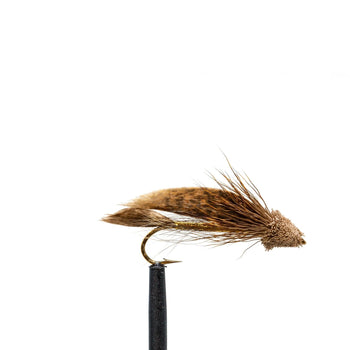 |
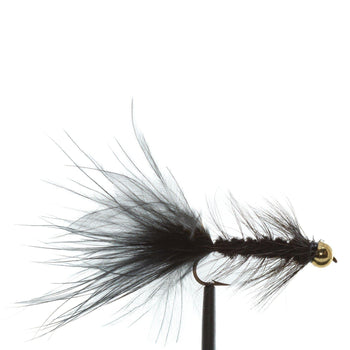
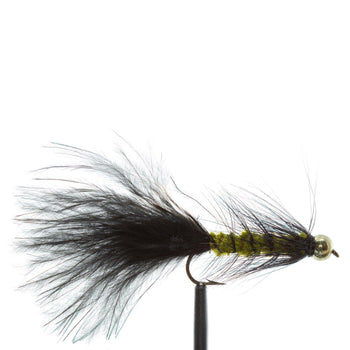
| Beadhead Woolly Bugger – Black | Beadhead Woolly Bugger – Black/Olive | Muddler Minnow |
|
 |
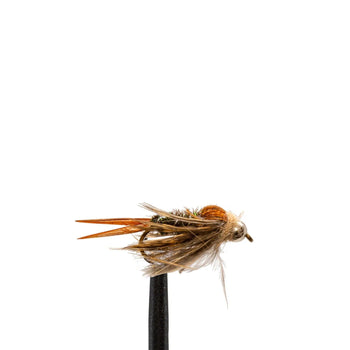 |
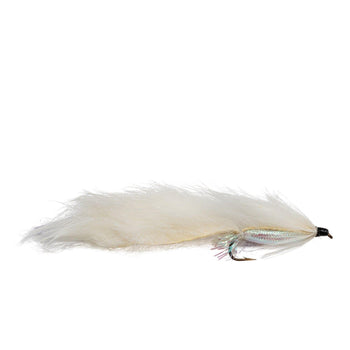
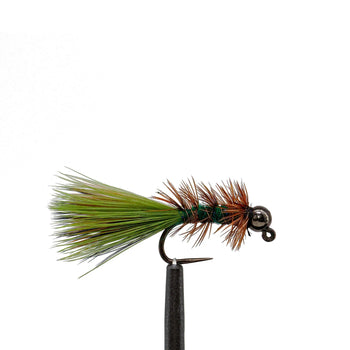
| White Zonker | Tungsten Bead Thin Mint Jig | 20 Incher |
Beadhead Woolly Bugger – Black (sizes 6-10): The foundational streamer – the pattern that works on every species, every water type, and every season, with no legitimate argument against carrying it. The black marabou tail, chenille body, and palmered hackle create a silhouette that suggests leeches, sculpin, baitfish, and large nymphs simultaneously. In summer, fish it at first light through the deepest, slowest pools and along undercut banks where large trout hold after overnight feeding. Dead-drift it through slow pools, strip it through seams, swing it across fast current – there is no wrong way to fish a Woolly Bugger.
Beadhead Woolly Bugger – Black/Olive (sizes 6-10): The clear-water variant – the Black/Olive coloration is the choice when water conditions are low and clear and the all-black silhouette is too stark. The olive tones in the marabou and body create a more naturalistic baitfish and leech profile that reads better to pressured fish in summer low-water conditions. Fish it on the same presentations as the Black version – swing, strip, dead-drift – but reach for it first when the Snake or the Green drops to its summer low and fish are wary of anything that looks unnatural.
Muddler Minnow (sizes 6-10): The original sculpin imitation – Don Gapen's 1937 pattern that remains one of the most versatile streamer patterns in fly fishing. Its spun deer hair head, mottled turkey wing, and tan body accurately suggest a sculpin or baitfish pushed along the bottom by current. In summer, fish it on a dead drift along the bottom through riffles and tailouts where sculpin are present, or swing it through slow pools near bank structure where large trout lie in ambush. It also works in the film when skated dry – a technique that produces explosive strikes on summer mornings in low-light conditions.
White Zonker (sizes 6-8): The high-movement, high-visibility evening streamer – a rabbit strip body that undulates and breathes with every current change, creating a lifelike baitfish profile particularly effective in low-light conditions when fish hunt by lateral-line vibration as much as sight. The white coloration is visible to both trout and angler in the low-light window around dusk when large fish are most active. Strip it through slow pools and along seam lines in the last 30 minutes of fishable light, and be ready for strikes that are unlike anything in daytime dry fly fishing.
Tungsten Bead Thin Mint Jig (sizes 10-14): The streamer-nymph crossover – a jig-style pattern with a tungsten bead that gets deep fast and swings with the movement of a small baitfish or large nymph. The green and white coloration produces across multiple species and water types, and the jig hook orientation keeps it riding hook-up through rocky bottom structure where conventional streamers snag. Fish it on a tight-line setup through deep summer runs, or swing it across current as a streamer in the edges-of-the-day window – it produces in both situations.
20 Incher (sizes 4-8): The big-fish nymph-streamer hybrid – a large, heavily weighted pattern with a peacock herl and chenille body, segmented profile, and rubber legs that suggests giant stonefly nymphs and large aquatic invertebrates to the largest, most aggressive trout in the river. Named for what it's designed to catch, it earns its summer slot as the searching pattern for trophy-grade fish in heavy water. Dead-drift it through the deepest seams, fish it in tandem with a smaller dropper, and let the weighted body bounce along the bottom in the pocket water and plunge pools where large trout hold when surface temperatures rise and smaller food sources stop being worth the energy.
📌 Pro Tip: Fish streamers on the swing in summer, not strictly dead-drift. Cast quartering downstream, mend once upstream to sink the fly, then let the current pull it across the seam. The fly accelerates as it swings – exactly how a baitfish or sculpin moves when spooked from cover. Keep tension on the line at all times; the hookset on a swung streamer strike is the current doing the work, not your arm.
Taking It to the Water
Six categories. Forty-two patterns highlighted. The full collection has 275 in stock across all of them. Here's how to build a box that covers June through September without overcomplicating it.
The minimum summer box – eighteen flies that cover every major situation the season creates:
Terrestrials (4): Chubby Chernobyl Knockout (the foam attractor), Dave's Hopper (the natural bank presentation), Black Ant (the overlooked bank pattern), Micro Chubby Chernobyl (the technical water backup).
Mayflies (3): Pale Morning Dun (the June–August morning hatch), Parachute Adams (the all-conditions searching dry), Blue-Winged Olive (the tailwater afternoon pattern).
Stoneflies (3): Yellow Sally (the small stone adult, June–August), Rootbeer Rubber Legs (the subsurface anchor), Kaufmann's Black (the big-fish nymph).
Caddis (2): Elk Hair Caddis (the evening dry), Caddis Pupa – Brown (the emergence pattern nobody fishes).
Nymphs (4): Beadhead Prince Nymph (the freestone attractor), Copper John (the deep, fast-water anchor), Beadhead Flashback Pheasant Tail (the tailwater match), Tungsten Bead Walt's Worm Jig (the dry-dropper dropper).
Streamers (2): Beadhead Woolly Bugger – Black (the foundational streamer), White Zonker (the low-light evening pattern).
The full summer box adds the variants – both Kaufmann's Stonefly colors, both Golden Stone versions, both Caddis Pupa colors, the full Chubby family, the RS2 and Rainbow Warrior Jig for tailwater days, the Brown Mayfly and Olive Mayfly for spinner falls and Callibaetis water, the 20 Incher for mornings when you're targeting one specific fish. Build the minimum box first. Add from there as the season and the water demand it.
Shop the full JHFLYCO Summer Fly Collection »


