

Summer Smallmouth on the Fly: The Warmwater Answer to Hot Weather

There's a stretch of every summer — call it the dog days — when the trout fishing gets hard for the right reasons. The water warms up, the fish get stressed, and the responsible move is to back off. A trout fought hard in 70-degree water often doesn't survive the release, no matter how carefully you handle it. So you check the thermometer, and some afternoons the honest answer is: not today.
Here's the good news most trout anglers overlook: you don't have to hang up the rod. While the trout are hunkered down waiting for cooler water, another fish is just getting warmed up — and it might be the most fun thing that swims. Smallmouth bass thrive in the warm water that shuts trout down. They're aggressive, they eat flies with total commitment, and pound for pound they fight harder than just about anything with fins. Summer isn't the offseason. It's smallmouth season.
This is the warmwater crossover every fly angler should have in their back pocket. The best part: smallmouth water usually isn't far away, and it often looks a lot like the trout water you already know how to read. Here's where to find them, and how to catch them once you do.
Why Smallmouth in the Heat
Smallmouth bass are built for exactly the conditions that sideline trout. Their comfort zone runs warm — they feed hardest in water from the upper 60s well into the 70s and beyond, the same temperatures that push trout into thermal refuges and off the bite. When the freestone drops low and the tailwater's the only cold game in town, the smallmouth river two exits down the highway is having its best month of the year.
They're also the perfect fly-rod quarry. Smallmouth are ambush predators with a mean streak — they'll crush a topwater bug, chase down a stripped streamer, and root a crayfish off the bottom, often within the same hour. They pull harder than a trout of the same size, jump like they're trying to throw the hook, and live in beautiful, wadeable water. For a fly angler looking to scratch the itch when trout are off-limits, there's simply no better summer target.
Where to Find Them
First, a distinction worth making, because it shapes everything about where you look: smallmouth and largemouth are different fish that want different water. Largemouth are the warm, weedy, still-water fish — farm ponds, lily pads, backwater sloughs. Smallmouth want the opposite: cool, clear, rocky water with current. If that sounds familiar, it should. Smallmouth water often looks a lot like trout water, which is exactly why the crossover feels so natural to a fly angler. You already know how to read it.
The core range. Smallmouth are native to the Ohio, Mississippi, and Great Lakes drainages, and they've been stocked so widely that most of the country now has them within reach. The strongholds are the Upper Midwest (Wisconsin, Minnesota, and Michigan rivers and lakes), the Ohio and Tennessee River systems, and the Mid-Atlantic — the Susquehanna, Potomac, Shenandoah, James, and New River are all legendary smallmouth fisheries. New England and the Ozarks hold outstanding populations too, and Southern reservoirs across the Southeast produce big fish.
And yes, out West. Smallmouth aren't just an Eastern story. The Columbia and Snake River systems hold enormous numbers of them, and reservoirs and warmwater impoundments across Idaho, eastern Oregon and Washington, and the Mountain West fish well all summer. If you live in trout country, there's a good chance there's a smallmouth fishery closer than you think — often on the same river system, just lower and warmer.
The rule of thumb. Here's the practical version, and it's the most useful thing to carry with you: if a river or lake near you runs too warm for trout in summer but has rock, current, and reasonable clarity, it probably holds smallmouth. That's the water everyone drives past on the way to the tailwater. Check your state's fish and wildlife site for warmwater listings, look at the lower reaches of your home river below where the trout water ends, and start there.

Reading Smallmouth Water
Once you've found smallmouth water, reading it is the easy part — they relate to structure and current the same way trout do, they just favor different spots. Find the following and you'll find fish:
Rock, and lots of it. Smallmouth are hardwired to boulders, ledges, riprap, and cobble. Rock holds crayfish (their favorite food), breaks current, and gives them ambush points. A rocky bank or a boulder-strewn run is prime real estate.
Current seams and drop-offs. Just like trout, smallmouth sit on the edge between fast and slow water, waiting for the current to bring them a meal. In rivers, work the seams along the main current; in lakes and reservoirs, find the drop-offs where shallow flats fall into deeper water.
Wood and shade. Laydowns, submerged logs, undercut banks, and overhanging trees all hold fish, especially the bigger ones. In the heat of the day, look for smallmouth tucked into shade and cover; early and late, they'll roam the shallows to feed.
The current speed sweet spot. In rivers, the biggest smallmouth often hold in surprisingly soft water — the slower pools, eddies, and pockets behind current breaks — rather than the heavy stuff. Fish the calmer edges and you'll be surprised what's living there.
Three Ways to Catch Them
Smallmouth will eat across the entire water column, which is a big part of what makes them so fun. On a good day you can catch them on top, in the middle, and on the bottom — three completely different, equally thrilling ways to fish. Here's the fly selection for each, and when to reach for it.
1. Topwater — The Most Fun You'll Have All Summer
Nothing in fly fishing beats a smallmouth blowing up on a surface bug. Topwater is at its best in low light — early morning, evening, and overcast days — and in the warm shallows where bass hunt. Cast tight to cover, let the rings settle, then work the fly with a mix of pops, chugs, and dead-drift pauses. The take is violent and unforgettable. These are proven surface bugs; for the full range of colors and styles, browse our complete popper and topwater collection.
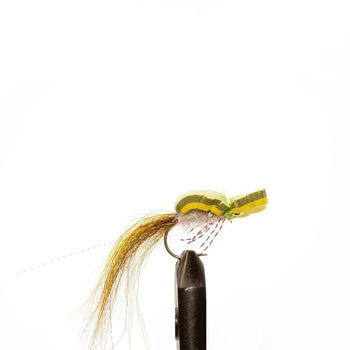


Gurgler Saw – Olive/Yellow: A foam Gurgler with a serrated lip that throws extra spray and wake on every strip. It rides in the film rather than sitting up high, so it's the subtle-but-active choice — perfect for pushing water across a flat or waking along a bank when a hard popper is too much commotion. Deadly at first and last light.
Deer Hair Frog: A spun-and-trimmed deer hair frog that rides flush and pushes water with its clipped head. Frogs are a top-tier summer smallmouth meal, especially around lily pads, grass edges, and shallow shorelines. Twitch it, pause it, and hang on — bass hit a frog like they're trying to kill it.
Fire Tiger Flash Popper: A loud, high-visibility hard popper with a chartreuse-yellow fire tiger body and flash in the tail. This is the fly for when you want to call fish up from a distance and trigger a reaction — the popping, chugging surface disturbance and bright color pull smallmouth out of cover to investigate.
Popper Legs – Green/Brown: A more natural, froggy popper with rubber legs that twitch on the pause. When bass are keyed on frogs and want something a little more realistic than a loud attractor, the legged popper splits the difference — enough pop to get noticed, enough realism to close the deal.
Want the whole topwater kit in one shot? Our Loaded Bass Popper Assortment packs 12 surface bugs — poppers and divers, all tied on #2 hooks for bass mouth geometry — into a blaze orange foam box. Dark silhouettes for bright skies, flash patterns for stained water, and subdued profiles for clear, pressured fish. It's a complete topwater box ready to fish out of the package.
2. Baitfish — Where the Numbers Are
When smallmouth aren't looking up, they're chasing baitfish — and no pattern imitates a fleeing minnow better than the Clouser Minnow. It's the single most productive smallmouth fly ever tied, full stop. The heavy dumbbell eyes give it a jigging, darting action and ride it hook-point-up to slip through rock and wood. Cast it to structure, let it sink, and strip it back in sharp, erratic pulls with pauses — most eats come on the fall. If you fish one subsurface fly for smallmouth, make it a Clouser.
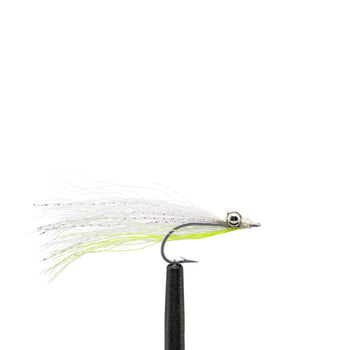


Clouser Minnow – Chartreuse: The confidence color. Chartreuse-over-white is one of the most productive baitfish schemes ever, visible in stained water and irresistible in clear. If you tie on one Clouser to start the day, start here.
Clouser Minnow – Orange: A high-heat color that also doubles as a crayfish suggestion. The white-over-orange flash wing draws reaction strikes in off-color water and does double duty imitating both baitfish and crawfish tones — a smart all-rounder.
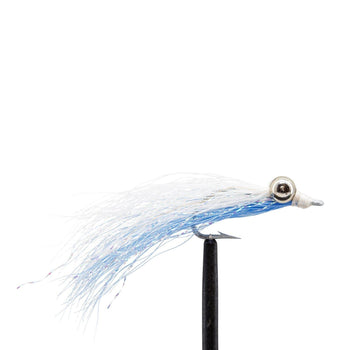
Clouser Minnow – Blue: The clear-water and bright-day choice. Blue-over-white reads as a natural shiner or shad, and it shines when the water's clear and the fish want something more realistic than a hot color.
White/Kreelex DNA Clouser: The flash bomb. A white DNA-fiber wing shot through with brilliant Kreelex flash throws maximum flash and profile — the fly to reach for when you need to call fish from a distance or trigger a reaction in low light and stained water.
3. Crayfish & Bottom — The Biggest Meal
Ask a smallmouth what its favorite food is and the answer is crayfish, every time. Crawfish make up the bulk of a smallmouth's diet in most rivers, and a fly crawled and hopped along the bottom is often the fly that fools the biggest fish in the pool. The brown Woolly Bugger family imitates a crayfish perfectly — fish it dead on the bottom with short strips and hops, ticking rock, and let the pauses do the work. The eat is often just a heavy stop, so stay tight and set on anything that feels different.
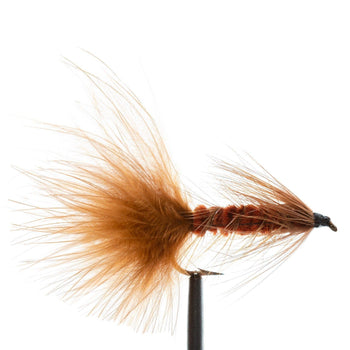


Woolly Bugger – Brown: The crayfish of the Bugger family. Rusty-brown marabou and body that hop and pulse along the bottom exactly like the crustacean smallmouth crave. Simple, cheap, and deadly — crawl it slow along rock and hold on.
Beadhead Flash Bugger – Brown: The crayfish colorway with a brass bead and a little flash. The bead gets it down to the bottom fast and adds a jigging action on the hop, while the flash gives wary fish a reason to commit. A great choice in deeper or faster runs where you need to get down quick.
Beadhead JJ Special: A leggy, variegated brown-and-yellow bugger with a brass bead — part crayfish, part baitfish, all attractor. The rubber legs and two-tone body give it extra movement and a slightly louder profile, making it a great searching fly when you want to cover water and draw fish.
Chain Eye Brown: A buggy brown marabou streamer with bead-chain eyes that jigs and breathes on every strip-and-pause. The lighter chain eyes make it perfect for shallower rock and slower water where a heavy bead would snag — a subtle crayfish-and-baitfish crossover for pressured fish.
The Right Gear for Smallmouth
Smallmouth call for a heavier setup than trout. A 6- or 7-weight rod is the sweet spot — enough backbone to throw wind-resistant poppers and weighted Clousers, and to muscle a strong fish out of wood and rock. Pair it with a weight-forward floating line for topwater and shallow work, and add a sink-tip if you're fishing deep water or reservoirs. Keep leaders short and stout — a 7.5-foot leader tapered to 0X–3X turns over big flies and stands up to abrasion around structure. Smallmouth aren't leader-shy the way clear-water trout are, so err on the heavier side. Round it out with a good pair of pliers for unhooking those bucket-mouthed takes, and you're ready.
If you're stepping into warmwater for the first time and don't want to piece a setup together, we build two combo kits that are ready to fish right out of the tube.


Bass Smasher Rod Combo Kit — 8'6" 6WT: Purpose-built for exactly this fishing. The shorter 8'6" length is an advantage on smallmouth water — easier to work under overhanging trees, quicker to load on short accurate casts to a rock or laydown, and plenty of backbone to turn a hard-charging bass before it wraps you in structure. If your summers involve more bass than trout, this is the rod to reach for.
Jackson Lake Rod & Reel Combo — 9'0" 6WT: The bigger-water option. That extra half foot of length buys you casting distance and line control on lakes and reservoirs, where you're covering flats, working drop-offs, and often throwing into wind. It's a true crossover setup too — the same rod handles stillwater trout, so it earns its keep long after smallmouth season winds down.
Jackson Lake Plus — 9'0" 6WT: The upgraded build of the same stillwater setup, anchored by the Yellowstone Flow CNC-machined aluminum reel with a fully sealed drag and large arbor. If you're fighting hard-pulling bass around structure — or want one reel that'll hold up for years across bass, stillwater trout, and bigger river systems — the sealed drag and machined construction are worth the step up. Ships fully rigged with line, backing, leader, a six-fly box, and a complete tool kit.
And if you'd rather not build a bass box fly by fly, our Medium Streamer Assortment is a strong starting point for smallmouth — a curated spread of baitfish and crayfish-style streamers in the sizes bass eat most. Going after the biggest fish in the system? Step up to the Large Streamer Assortment.
📌 Pro Tip: When smallmouth are following but not committing to a stripped fly, kill it. Let the fly drop dead on the pause — a Clouser fluttering down or a crayfish bugger settling to the bottom triggers the eat far more often than a fly moving steadily away. With smallmouth, the pause is the presentation.
The Responsible Summer Choice
There's a quiet ethic underneath all of this. Chasing smallmouth when the trout water is warm isn't just a fun alternative — it's the responsible one. Every day you spend on a warmwater river or reservoir is a day you're not stressing heat-vulnerable trout during the toughest stretch of their year. Smallmouth let you keep fishing hard, all summer, without leaving dead trout behind you.
So carry a thermometer, know your trout water's temperature, and when it climbs too high, don't force it — go find the bass. Handle your smallmouth well too: they're tougher than trout, but a quick fight, wet hands, and a fast release keep the fishery strong. For more on protecting the fish you catch, read Catch and Release Done Right.
Taking It to the Water
The dog days don't have to mean a dead rod. While everyone else is complaining about the heat and waiting for fall, the smallmouth angler is having the time of their life — topwater blowups at dawn, screaming runs, and some of the hardest-pulling fish in fresh water, all in the warm months when trout need a break.
So next time the thermometer says the trout are off-limits, don't go home. Grab a 6-weight, a box of poppers and Clousers and brown buggers, and go find the water everyone else is ignoring. Summer smallmouth might just become your favorite fishing of the year.


