

How to Fish Low Water in Early Fall – Best Rod & Line Setups

As September winds down and early fall begins, trout behavior shifts. Rivers across the West run low and clear, nights turn cooler, and fish grow increasingly cautious after a long summer of pressure.
These conditions ask for finesse: delicate presentations, the right rod weight, and line setups that minimize disturbance while maximizing accuracy. The good news is that none of it requires new gear so much as the right gear for thin water, and knowing why it works.
Here's how we'd put a low-water setup together, from the rod down to the nippers. If you're looking for the broader question of which combo kit suits the water you fish all fall, our fall fly rod combo guide covers that. This one is about fishing skinny water well.
A Few Terms, Up Front
These come up throughout, so here they are in one place.
- Rod weight: the number that tells you how heavy a line the rod is built to cast. A 4-weight is lighter and more delicate than a 5-weight, and both are trout rods.
- Rod action: how stiff the blank is and where it bends. A fast rod flexes mostly near the tip, generates more line speed and cuts wind better. A medium rod bends deeper into the blank, loads with less effort and protects fine tippet.
- Tippet "X" size: the diameter of the fine end of your leader. Higher number, thinner line. 6X is finer than 5X.
- Mend: flipping a loop of line upstream after the cast so the current can't drag your fly.
- Drag-free drift: the fly traveling at exactly the speed of the current, with no pull from the line. In clear water this is usually the difference between a take and a refusal.
- Weight-forward taper: a line with most of its mass in the front thirty feet. Easier to cast far and to turn over heavier rigs.
- Double taper: a line that tapers evenly at both ends. It lands more softly, rolls and mends better, and it can be reversed when one end wears out.
- Dry-dropper: a buoyant dry fly on top with a small nymph hung beneath it. The dry doubles as your strike indicator.
- Euro nymphing: a tight-line method using a long leader, heavy nymphs and no indicator. You stay in direct contact with the flies and feel takes through the line instead of watching for them.
- Tungsten bead: a denser bead than brass, so a small fly can still sink fast. Useful when you need depth without a bulky fly.
Why Low Water Changes Everything
Three things happen when a river drops in early fall, and every recommendation below comes out of one of them.
The fish can see you. Summer's higher flows, algae and broken surface hid a lot of mistakes. In two feet of clear water a trout can see your shadow, feel your wading and watch your line land. That's why leaders get longer and tippet gets finer: you're trying to put the fly in front of the fish without putting anything else there.
There's less water to hide in. Fish concentrate. The good lies get better and the mediocre water empties out, so a precise cast into a small target matters more than distance. A shorter rod in tight quarters, or a rod that loads easily at close range, is worth more than one built to throw eighty feet.
The food gets smaller. Big summer hatches give way to Blue-Winged Olives and midges in sizes 18 to 22, with terrestrials hanging on through warm afternoons. Presenting a size 20 dry softly on fine tippet is a different job than launching a hopper, and it wants a lighter rod and a line that lands quietly.
Match the Setup to Your Water
If you want the short version, start here and read the section that applies.
- Small creeks, side channels, overhanging brush: a 7-foot 4-weight.
- Mid-sized rivers, a bit of everything: a 9-foot 5-weight.
- Technical water, selective risers, wind: a fast-action 9-foot 5-weight.
- Fish holding deep and ignoring the surface: a 9-foot 4-weight Euro setup.
Best Rod Setups for Early Fall Fishing
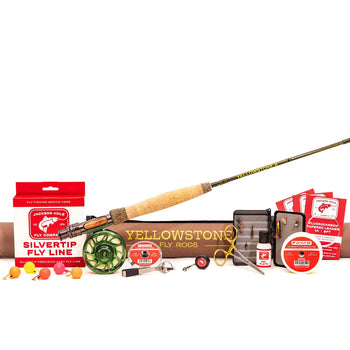
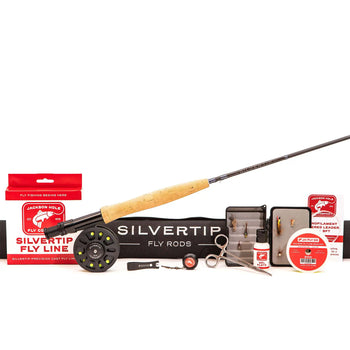
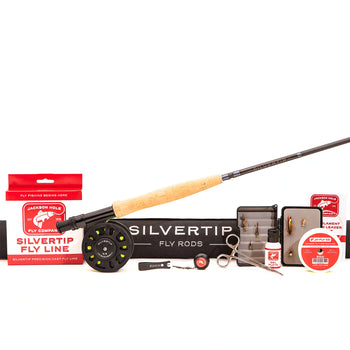
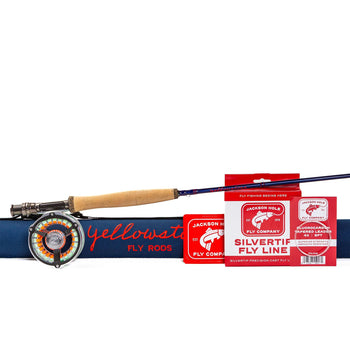
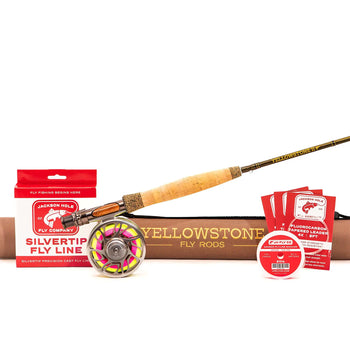
When trout are spooky in fall's skinny water, the right rod can mean the difference between a perfect drift and a blown opportunity. Stick to 4–5 weight rods for the finesse needed to present smaller flies without overpowering delicate runs. Our Silvertip and Yellowstone series rods deliver the precision and durability you need, in medium and fast actions that load easily for accurate casts in tight quarters.
 |
 |
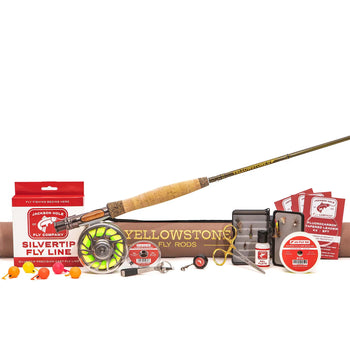 |
| Fall Creek Combo | Granite Creek Combo | Flat Creek Combo |
 |
 |
 |
| Crystal Creek Combo | Yellowstone Signature Combo | JHFLYCO Euro Nymph Combo |
Light & Accurate (4WT) – Small Creeks and Technical Dry Fly Work
Early fall often means exploring smaller tributaries, side channels, or high-country creeks where water runs thin and trout are quick to spook. These intimate settings demand finesse: a shorter, lighter rod that delivers precise casts without disturbing the surface.
A 4-weight is the tool of choice here. It's soft enough to protect fine tippets, responsive enough to drop a size 18 BWO or ant under the branches, and light enough to make all-day casting effortless. The shorter length matters as much as the weight, because a 7-foot rod can work under brush and roll-cast in places where a 9-footer catches every willow behind you. For anglers who enjoy sneaking along brushy banks, crawling into pocket water, or presenting dries in tight quarters, a 4WT setup is indispensable.
- Fall Creek Combo Kit – 7' 4WT: Designed for tight quarters, this compact rod allows for precise casts under overhanging branches and into pocket water. Its shorter length and lighter weight excel when fishing terrestrials or small dries on intimate streams.
- Granite Creek Combo Kit – 7' 4WT: Built on our Silvertip rod, this kit balances durability with finesse. It's a great entry point for beginners or younger anglers, offering smooth casting that builds confidence in small-water scenarios.
The Versatile All-Arounder (5WT) – Dries, Nymphs, and Light Streamers
The 5-weight is the gold standard of trout rods and the backbone of most anglers' arsenals. In early fall, when conditions can shift from delicate dry fly hatches to subsurface nymphing or even streamer fishing for aggressive browns, versatility is everything.
A 9' 5WT gives you the reach to mend across tricky currents, the backbone to handle a weighted rig, and the finesse to land a size 18 BWO softly on glassy water. That reach is the underrated part: the extra foot or two of rod keeps more line off conflicting currents, which is how you buy a longer drag-free drift without moving your feet. Whether you're buying your first setup or looking for a reliable workhorse, a well-built 5WT is the rod you'll come back to again and again.
- Flat Creek Combo Kit – 9' 5WT: A fast-action rod that gives you the control needed for longer drifts on mid-sized rivers, plus the line speed to deal with an afternoon breeze. It handles a variety of techniques, from dry fly presentations to small streamer swings, making it a reliable all-season choice.
- Crystal Creek Combo Kit – 9' 5WT: Our best-selling beginner-friendly setup, built on the medium-action Silvertip fly rod. That slower, deeper flex is forgiving of casting timing, which makes it the easier rod to learn on and a kind one to fine tippet. Versatile enough to fish everything from BWOs to attractor dries.
Premium Performance (5WT) – Precision for Demanding Anglers
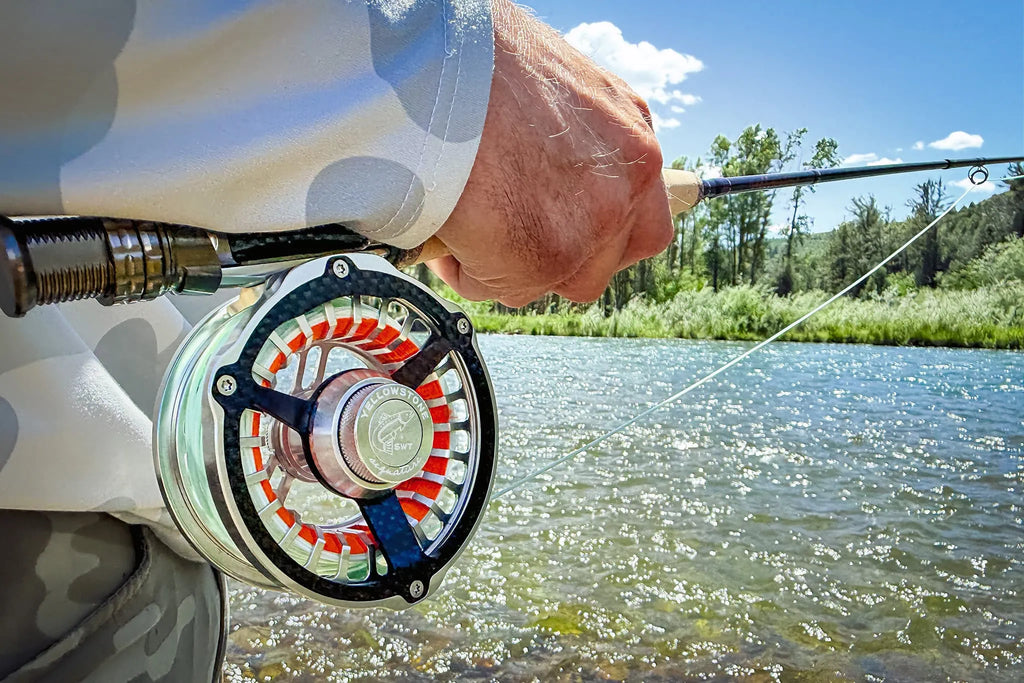
For anglers who want every cast to count, the Yellowstone Signature delivers. Early fall often means technical water: selective trout rising in slow pools, complex currents that punish poor mends, and breezy afternoons that test your accuracy.
A premium fast-action 5WT gives you the backbone to drive longer casts into the wind while maintaining the sensitivity needed to protect fine tippets and feel subtle takes. Fast action is what makes a tight, wind-cutting loop possible, and a tight loop is also a quiet one, which is exactly what you want over a fish in flat water. This is the rod for anglers who chase precision, consistency, and confidence in every drift.
- Yellowstone Signature Combo Kit – 9' 5WT: Our premier kit combines fast-action performance with premium components for technical fishing. Whether you're casting a #20 dry to selective fish in a slow pool or turning over a hopper-dropper rig in the afternoon breeze, this kit delivers the control and sensitivity advanced anglers look for.
Nymphing Specialist (4WT) – Master Euro-Style Tactics
When trout get lockjaw in clear, low early fall flows, few methods are as effective as Euro nymphing. By keeping direct contact with your flies instead of watching an indicator, you feel strikes that would otherwise never register, and you can steer the flies through a seam rather than just letting them go.
A lighter 4WT Euro setup offers the sensitivity to pick up on the faintest takes, while giving you the control to guide tungsten nymphs through pocket water, seams, and deeper runs. It also keeps most of your line off the water, which is worth a lot when the river is clear enough for fish to notice line in the first place. For anglers who want to expand their skills beyond dries and standard nymphing, Euro-style techniques open the door to catching fish when surface activity shuts down.
- Euro Combo Kit – 9' 4WT: Purpose-built for tight-line nymphing, this kit comes ready to fish with the leader setup you need to detect subtle strikes in skinny fall water. It's the ideal choice when trout are hugging the bottom and ignoring surface activity.
📌 Pro Tip: Stick with rods in the 4–5 weight range. They provide the finesse to present smaller flies delicately while still handling larger late-September trout. If you're choosing between two weights, the lighter one is usually the better call in low water — you can always land a fish a little more carefully, but you can't un-spook a run.
Fly Line Choices for Early Fall
In early fall, fly line choice can make or break your day on the water. With flows at seasonal lows and trout scrutinizing every drift, your line needs to deliver accuracy, delicacy, and control.
The difference comes down to the taper, meaning how the line's thickness is distributed along its length. That's what decides whether it punches through wind or settles softly, and in clear water it matters more than most anglers expect.
- Silvertip Weight-Forward Floating Line: Our most versatile line. The mass up front delivers enough punch to turn over a hopper-dropper rig, but it still lands delicately for small dries. Best paired with 4–5 weight rods for all-around trout fishing.
- Silvertip Double Taper Line: Tapered evenly at both ends, which gives it superior roll casting and mending ability — the two things that buy you a drag-free drift on technical water. It also lands more softly than a weight-forward line, which is useful when you're fishing small BWOs and midges over fish that have seen everything.
📌 Pro Tip: A clean, well-maintained floating line makes more difference in early fall than switching fly patterns. A dirty line sinks slightly, drags your fly and shortens your cast. Strip and dress your line regularly to keep it casting like new.
Fly Patterns & Fly Box Pairings for Early Fall Success
A rod and line are only as effective as the flies you tie on. Early fall is a transitional period: hoppers and ants can still draw surface eats on sunny afternoons, Blue-Winged Olives and caddis return with cooler weather, and pre-spawn browns begin chasing streamers. That's four different jobs in one month, which is why a box organized by approach beats a box organized by nothing.
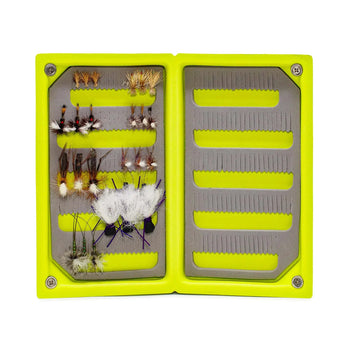
Matching these food sources with the right patterns is essential, and that's where our loaded fly boxes shine. Each box is assembled to give you proven flies, organized and ready to fish, so you can adapt quickly to shifting fall conditions.
 |
 |
 |
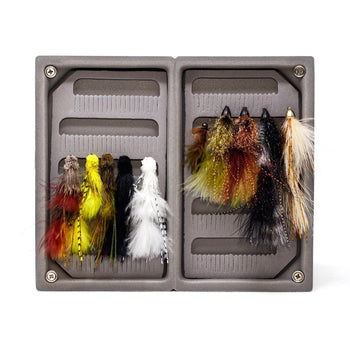 |
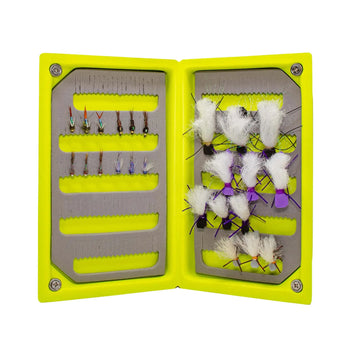
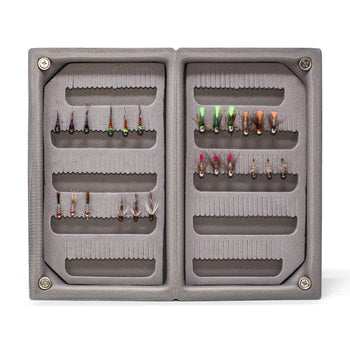
| Standard Dry Fly Assortment | Hopper-Dropper Assortment | Euro Nymph Assortment | Medium Streamer Assortment |
Small Dry Flies
BWOs and caddis are staples of early fall hatches, and BWOs come off best on the gray, drizzly afternoons most people skip. A long, drag-free drift with a size 18–20 dry can be deadly. If fish rise steadily but refuse the dry, they're often taking emergers just under the film, so hang one a foot or so below.
Standard Dry Fly Assortment: Stocked with a versatile mix of dries and emergers to keep you covered when trout are rising to small patterns.
Terrestrials & Dry-Droppers
Ants, beetles, and hoppers remain productive, especially in the afternoons and especially when wind is working over a grassy bank. Pairing a foam hopper with a small beadhead nymph is a classic early fall setup: the hopper is a real target and a visible indicator at the same time, so one rig covers the surface and the top of the water column.
Hopper-Dropper Assortment: Includes proven foam hoppers with matched droppers for versatility in changing conditions.
Subsurface Nymphs
As water cools, trout feed lower in the column and won't move far for a fly. Tungsten bead nymphs excel at getting down quickly in shallow, clear flows, because the denser bead lets a small fly sink fast without the bulk that would make it look wrong.
Euro Nymph Assortment: Packed with Perdigons, Duracells, and other confidence nymphs built for tight-line precision.
Streamers
Aggressive browns start keying on larger meals as they prepare for the spawn. Even in skinny water, a lightly weighted streamer can trigger big strikes, and in low clear flows the lighter fly is the right call: it lands quietly and stays in the upper water column where a two-foot-deep run actually holds fish.
Medium Streamer Assortment: Compact yet comprehensive, with unweighted and lightly weighted streamers for targeting larger trout.
📌 Pro Tip: Downsizing flies often produces better results. A #18–20 dry on 5X or 6X tippet can fool selective trout when larger offerings get ignored. Change the tippet before you change the fly — a refusal from a fish that clearly saw your pattern is usually a tippet or drift problem, not a pattern problem.
📌 Pro Tip: Brown and brook trout spawn in fall. Clean, pale patches of gravel are redds — walk around them, leave any fish sitting on one alone, and fish the run below instead. Those downstream fish are the ones that are actually feeding.
Essential Accessories to Dial In Your Setup
Don't overlook the little things that keep you fishing longer. In low water you'll change flies and tippet more often than you did in July, so the tools that make a rig change fast are the ones that earn their place.
- Carbon Fiber Landing Net: Lightweight and tangle-free with a rubber bag to protect fish — perfect for quick releases in skinny water.
- JHFLYCO Pro Nippers: Tungsten nippers and assorted rings for quick rig changes without fumbling, which matters when 6X knots are the order of the day.
- JHFLYCO Silicon Fly Box: Attaches to your vest or pack for instant fly access during hatches, when the window is short and digging through a pack isn't an option.
A stream thermometer is worth adding too. Early fall temperatures swing several degrees between morning and afternoon, and that number tells you when to start, how fast to fish and when the day is going to turn on. Our trout water temperature guide breaks down what to do in each range.
📌 Pro Tip: Pack light but smart — our accessories are designed to fit in a sling pack, leaving room for more flies.
Closing: Fish Smarter, Not Harder
Fishing in early fall is about finesse: light rods, precise lines, and seasonal fly choices. Pair the right combo kit with the right line, a well-stocked loaded fly box, and a few key accessories, and you'll be ready to fool selective trout as we head into fall.
And remember that gear is only half of it. Approach from downstream, stay low, fish the near water before you wade through it, and give the river a minute to show you what's happening before you make a cast. In low water, how you get into position is part of the presentation.
Related Articles
- Fall Fly Fishing: How Tactics Change as the Season Turns
- Fall Fly Rod Combos: Pick the Right Kit for the Water You Fish
- Fall Fly Fishing Guide: Key Hatches & Essential Flies
- 10 Fall Fly Fishing Tips for Trout That Have Seen It All
- October's Best Trout Flies: 12 Patterns for Fall Success
- Terrestrial Tactics: Big Takes from Hoppers to Beetles
- Fly of the Month: Ants – Unlocking September's Secret Weapon


