

Streamer Science: How to Fish Slow and Deep for Big Trout

The November chill changes everything. The vibrant hatches of summer fade, mornings start with ice on the guides, and the trout that once chased down streamers with reckless aggression now hold deep and deliberate. As water temps slip below 50°F, metabolism slows and feeding windows narrow — but for anglers who adapt, this is still prime time to move serious fish.
Streamer season doesn’t end when the air turns cold — it just gets more technical. The fish are still there, but they’re not willing to sprint. They’re conserving energy, hugging structure, and waiting for an easy meal to drift by. That’s where streamer science comes in — understanding how sink rate, retrieve speed, and color choice all work together to keep your fly in the strike zone.
Fishing slow and deep isn’t about covering water fast — it’s about reading current, managing depth, and making your fly look convincingly alive in frigid water. When you dial in the right combination of weight, tempo, and subtle motion, you’ll find that big trout still hunt — just at a different pace.
The Science Behind the Slow Game
When trout slow down, everything they do becomes more deliberate. Their digestion, reaction time, and movement efficiency all drop as water temperatures fall. They stop chasing quick meals mid-current and instead hold tight to structure: deep pools, undercut banks, ledges, and slow inside bends.
That’s why “matching the mood” matters. In summer, a fast strip might trigger aggression. In winter, that same retrieve simply moves your fly out of reach. The trick is to keep your streamer in the strike zone for as long as possible — low, slow, and steady.
📌 Pro tip: If you think you’re fishing too slow, slow down again.
Sink Rate: Getting Down to Business
Depth is everything when water temps drop. Trout aren’t cruising near the surface; they’re hugging bottom. The key is understanding sink rate — how fast your line or fly sinks, measured in inches per second (IPS).
The faster your sink rate, the quicker your fly reaches the zone — but if your retrieve is too quick, it’ll still ride too high.

To maximize depth:
- Use short leaders (3–4 feet). Long leaders lift your fly too high.
- Pick weighted flies — coneheads, dumbbell eyes, or lead wraps.
- Make a downstream mend after casting across current to help the fly drop.
- Let the fly sink for a count of 5–10 before your first strip.
🎯 The goal: keep your streamer just above the rocks, ticking bottom now and then — that’s where predators are waiting.
Retrieve Speed & Cadence
The way you move a streamer determines how alive it looks underwater. In cold water, prey like sculpins and baitfish aren’t darting around — they’re sluggish and erratic. That’s what you need to imitate.
Try These Retrieves:
- Hand-Twist Retrieve: Ideal in calm or still water; slow, steady motion keeps the fly deep.
- Short Strips (6–12”) with long pauses: Perfect for deep seams and slow current.
- Swing and Drop: Let your fly swing through a run, then pause — many strikes happen on the fall.
Avoid long, fast strips that lift your fly. Instead, mix in micro-twitches and pauses. The pause mimics a stunned baitfish — and that’s when big trout commit.
📌 Pro tip: Watch your line, not your fly. Often, you’ll only see the line twitch or stall when a fish hits.

Color and Profile: What Trout See in Cold Water
Cold water changes how trout feed — and how they see. In winter’s low light, sediment-rich flows, and shadowed banks, visibility becomes a key factor in whether your fly gets noticed or ignored. The right color and profile don’t just imitate prey — they create a believable target in specific water and light conditions.
The rule of thumb: contrast over color. In murky or dim conditions, trout rely on silhouette and vibration more than hue. In clear water or bright sun, subtle, lifelike tones seal the deal.
Go-To Cold-Water Color Strategies
- Olive/White: Excellent all-around baitfish tones that mimic sculpins, dace, and juvenile trout — a natural match in most rivers.
- Black or Brown: High-contrast profiles that hold their shape in stained or shadowed water; deadly in overcast conditions.
- Chartreuse or Copper Flash: For murky or off-colored water, these create bold visibility without being gaudy.
- All-White or Pearl: Bright and reflective in clear winter light; ideal for low, sunny flows.
- Rust or Tan: Perfect for crayfish or leech imitations near the bottom.
- Two-Tone (Dark Top / Light Belly): Adds depth and realism, echoing the natural countershading found in most baitfish.
Flash should enhance, not dominate. A touch of shimmer imitates the natural glint of scales and helps trout locate your fly in low light, but too much flash can break the illusion. Patterns like the Dolly Llama, Zonker, and Goldie use just enough flash to suggest life without overpowering the silhouette, while flies such as the Woolly Bugger or Egg-Sucking Bunny Leech rely more on movement and profile to draw strikes. The key is balance—combine subtle shine with believable motion, and your streamer will stand out naturally in cold, dim water.
The goal isn’t to overwhelm trout with color — it’s to let them find and commit in tough conditions.
8 Streamers to Fish Slow and Deep This Winter
When water temps drop and trout hunker down, not every streamer will produce. The most effective flies are those that move water, maintain profile at slow speeds, and stay in the strike zone longer. These eight proven patterns cover a range of situations—from natural sculpin imitations to bold attractors built for dirty water. Each excels when fished methodically, low, and with deliberate pauses that tempt cold, cautious trout into committing.
|
|
|
|
| Woolly Bugger | Zonker | Muddler Minnow | Dolly Llama |
|
|
|
|
| Sex Dungeon | Circus Peanut | Egg-Sucking Bunny | Clouser Minnow |
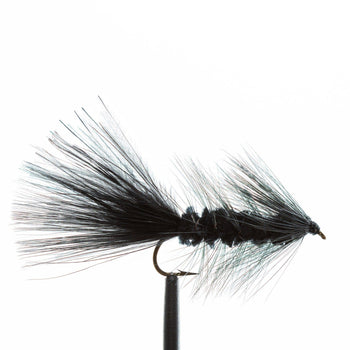
1. Woolly Bugger – Black (#6–10): The all-time classic that works in every river system. Its marabou tail breathes with lifelike motion even at a crawl, making it deadly when trout are sluggish. Whether tied unweighted, with a bead, or conehead, it can imitate leeches, baitfish, or stoneflies. Fish it dead-drifted or with short, slow strips near bottom—trout can’t resist the subtle pulse.
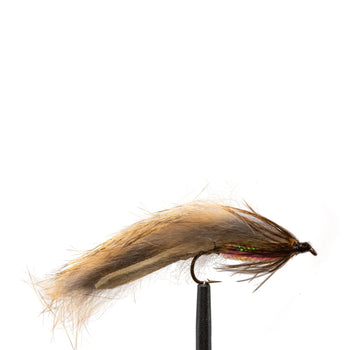
2. Zonker – Natural (#4-8): A slim, realistic baitfish imitation with an irresistible rabbit-strip tail. The natural color blends perfectly with most riverbeds, while subtle flash along the body adds life without overdoing it. The fly sinks evenly and swims with soft, pulsing motion—ideal for deep, slow pools where trout key on sculpins and dace. Fish it with a slow hand-twist retrieve or short strips near structure.
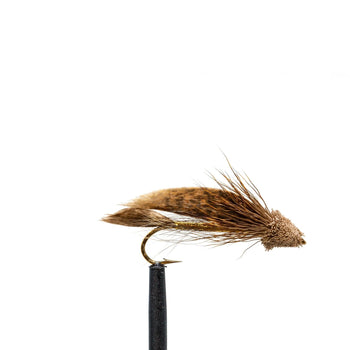
3. Muddler Minnow (#6-10): A timeless sculpin and baitfish imitation. The spun-deer-hair head displaces water, creating vibration and lift, while the mottled body looks alive in any light. Unweighted Muddlers shine in shallows and tailouts; conehead versions dive quickly for deep ledges. Fish it slow and near structure for the best results—this pattern has fooled trout for nearly a century.
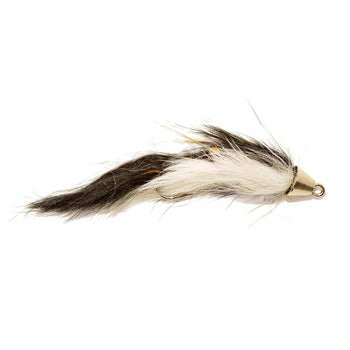
4. Dolly Llama – Black/White (#2-4): A modern powerhouse built for motion. The articulated rabbit strips breathe and flare with every strip, while the heavy conehead gets it down fast. Black-over-white provides natural contrast in both clear and stained water. Swing it across deep runs or crawl it through slow winter pools—big trout crush it as it flutters and hangs.
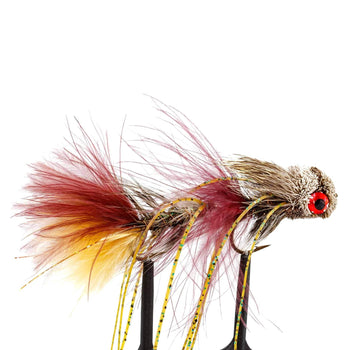
5. Sex Dungeon – Natural (#4-8): Designed for moving water and moving fish. The dual hooks and deer-hair head push water, creating a wide, swimming profile that imitates small trout or sculpins. The natural tones keep it believable while the articulation adds irresistible motion. Fish it on a sink-tip with long pauses—many eats come right as it hovers mid-column.
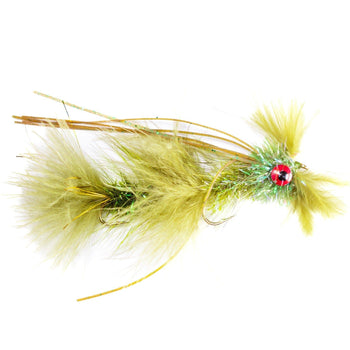
6. Circus Peanut – Olive (#4-8): An articulated classic that combines natural tone with subtle flash. Weighted eyes drop it quickly into the strike zone, while rubber legs and twin bodies pulse with life even on a slow retrieve. Perfect for cold-season streamer days when trout hug the bottom—strip twice, pause, and wait for the line to jump.
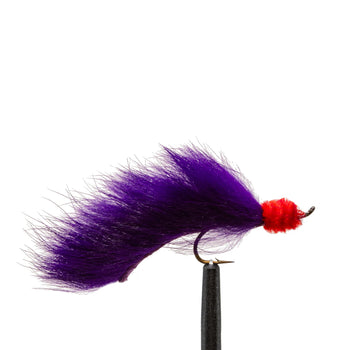
7. Purple Egg-Sucking Bunny – Orange Egg (#4-8): Equal parts leech and attractor, this fly delivers bold color contrast for cold, off-color water. The orange egg head gives trout a clear target, while the purple rabbit strip pulses naturally with every pause. It excels when visibility is low and trout need incentive—swing it through tailouts or slow-strip along seams where fish hold tight to the bottom.
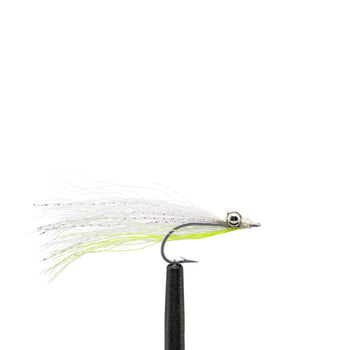
8. Clouser Minnow – Chartreuse/White (#4-8): Simple, balanced, and incredibly effective. The inverted design and dumbbell eyes give this fly a jigging motion that imitates wounded baitfish. The white-over-chartreuse coloration keeps it natural while still visible in winter light. Great for clear, cold rivers where trout feed selectively—fish it low and slow with measured twitches.
📌 Pro Tip: In cold water, it’s less about how fast you strip—and more about how long your fly hangs in front of a fish. Add extra pauses between strips, and let the materials breathe. The moment your streamer stops and flutters, that’s when big trout decide to eat.
Gear That Gets It Done
Cold-water streamer fishing demands gear with backbone — rods that can turn over heavy flies, reels that stay smooth in cold temps, and lines that keep your patterns deep and controlled.

Rods
A 6–7 weight setup is ideal for winter streamer work, offering enough power to cast sink tips and articulated flies while still protecting lighter tippets.
- Yellowstone II Rod (6 & 7 WT) – A fast-action design built for control, distance, and accuracy. It delivers plenty of punch for big streamers yet remains sensitive enough for precise drifts and short presentations.
- Yellowstone Signature Rod (9' 5 WT) – Though rated as a 5-weight, its high-modulus IM8 graphite blank provides exceptional strength and recovery speed. It handles smaller streamers and sink-tip lines with ease while maintaining the refined feel of a premium trout rod.
- White River Combo Kit – Purpose-built for streamer fishing, this balanced setup includes everything you need to throw heavier flies right out of the box — ideal for anglers who want a dedicated streamer outfit without the guesswork.
Reels
Pair your rod with a reel that has a smooth, sealed drag and a large arbor for quick line pickup. The Yellowstone Grizzly 7/8 Reel is built for this job — cold-weather-ready with a powerful drag that performs when big fish and heavy lines put on the pressure.
Lines
The right line makes all the difference when fishing slow and deep. JHFLYCO’s Silvertip Line Series covers every situation:
- Weight Forward Floating Line – For shallow water or when pairing with weighted flies.
- 10' Sink Tip WF Line – Perfect all-around streamer line for varied depths.
- Full Sink Line – Keeps your fly tracking in the zone through long, deep runs.
- Super Sink Line – Maximum descent for stillwater or heavy current where trout hug bottom.
Leaders & Tippet
Keep leaders short — 3 to 4 feet of 0X–2X fluorocarbon gives direct contact and faster sink rates. Longer leaders lift your fly out of the zone, while fluorocarbon helps reduce drag and abrasion near structure.
Reading the Water: Where Slow Streamers Shine
Winter trout won’t waste calories fighting current. Instead, they hold in slower, deeper water. Focus your efforts on:
- Tailouts below riffles.
- Inside bends where current softens.
- Deep runs behind structure.
- Eddies and ledges with moderate flow.
Avoid fast, shallow water — it’s too cold and oxygen-rich to attract feeding fish. The sweet spots are slower seams and drop-offs where trout can watch for easy prey drifting by.
📌 Pro tip: In big rivers, think of structure as “fish elevators.” Cast slightly upstream of a boulder or ledge and let your streamer sink before stripping through the pocket below it.
Putting It All Together
Streamer fishing in cold water isn’t about power — it’s about patience. Adjust your sink rate, slow your retrieve, and choose colors that fit the clarity of the day. The magic happens when your fly looks like it’s barely surviving, not racing away.
Trout may not move far in 40°F water, but they’ll crush the right streamer placed within reach.
Taking It to the Water
When the leaves are gone and the mornings frost over, most anglers hang up their streamers. Don’t! This is the season when big fish let their guard down — if you’re willing to fish methodically, one slow strip at a time.
Whether you’re swinging a Muddler Minnow, dead-drifting a Sparkle Minnow, or crawling a Dolly Llama through deep runs, remember: the slower you fish, the deeper you connect.
SHOP OUR STREAMER COLLECTION
RELATED ARTICLES:
- Fly of the Month: Sculpins – Streamers That Hunt Late-Season Trout
- Maximize Your Catch: Fishing Double Streamer & Streamer Nymph Rigs
- Master Fall Streamer Fishing: Top Flies, Gear & Pro Tips
- Fly of the Month: Targeting Fish with Egg Patterns During the Fall Spawning Season
- Fall Fly Fishing Guide: Key Hatches & Essential Flies


