

Below the Dam: How to Fish Tailwaters

Drive along nearly any freestone river after a hard rain, and you'll find it blown out — high, the color of chocolate milk, completely unfishable. Then you round a bend below a dam and the water turns gin-clear again, like someone flipped a switch. Anglers are standing in it, catching fish, working water that has nothing to do with the muddy mess a mile upstream.
That's not luck. It's a tailwater — the stretch of river fed by water released from deep inside a reservoir instead of collected from rain and melting snow — and it plays by a completely different set of rules than everything else on the map. The water holds the same temperature and the same flow whether it's January or July, because a reservoir, not the weather, is setting the conditions. That consistency is exactly what makes tailwater trout some of the biggest, most technical fish around.
It also means the flies barely change. Where a freestone box has to track a whole season of hatches, a tailwater box stays built around the same handful of food sources year-round, because those food sources never go anywhere. Learn to read one tailwater well, and you've learned most of what every other tailwater in the region will ask of you.
Reading a Tailwater
Tailwaters read differently than freestone water, because the thing shaping the river isn't gradient or rainfall — it's the dam. Current below a release tends to be steadier and more even than freestone riffles, which means fish hold in subtler seams rather than the obvious pocket water a freestone teaches you to look for. Weed beds are the real structure to key on here; they're where scuds and sow bugs actually live, and trout stack up along their edges rather than behind visible rocks.
Depth matters more than almost anywhere else. Tailwater flow is metered, not chaotic, which means the same run fishes at the same depth day after day — get a fly into that exact zone and stay there, rather than covering water the way you would on a freestone.

Why Tailwaters Fish Year-Round
This is the real advantage of a tailwater, and it has nothing to do with winter specifically. A freestone river's bug life follows the seasons — stoneflies in spring, caddis in early summer, hoppers by August — and the fly box has to follow along with it. A tailwater's food base doesn't move that way. Scuds, sow bugs, worms, and midges are present in roughly the same numbers in January and July, because the water temperature barely changes between them.
That means the patterns below aren't a seasonal snapshot — they're the same box worth tying on any month of the year. Learn this lineup once and it's set for every trip to this kind of water, not just the cold ones.
📌 Pro Tip: Tailwater fish see more anglers and more perfect drifts than almost any trout in the region, which makes tippet size a bigger factor here than on freestone water. Step down at least one size smaller than you'd use elsewhere, and expect it to matter.
The Small-Fly Game
Four food groups make up nearly everything a tailwater trout eats, and carrying the right patterns across all four is what actually separates a good day from a blank one.
Scuds
Scuds live in weed beds and never really disappear, which makes them the most reliable year-round food source in any tailwater.
 |
 |
 |
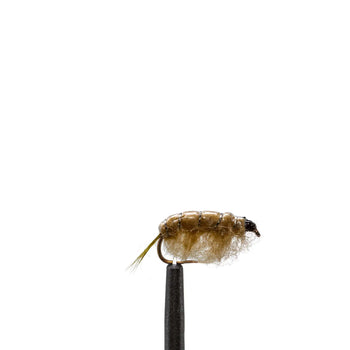 |
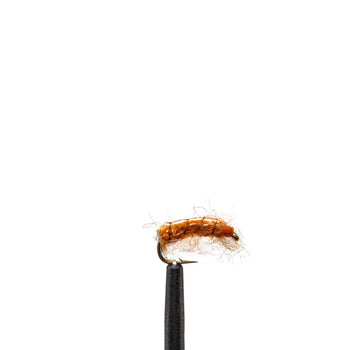
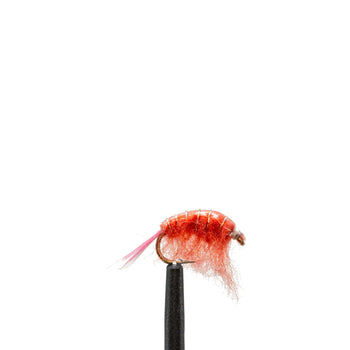
| Scud – Orange | Scud – Pink | Flashback Scud – Olive | Scud – Tan |
Scud – Orange (#14): The color a live scud turns as it's dying or carrying eggs — and the one trout key on above the natural gray-olive of a healthy one. A reliable searching pattern in any weed bed, any month.
Scud – Pink (#16): A softer, fleshier tone than the orange. When fish have seen a few orange scuds drift past and stopped eating, pink is often what resets the drift.
Flashback Scud – Olive (#16): The natural color of a live, healthy scud, with just enough flash on the back to add signal in moving water. The everyday choice when nothing specific is triggering fish.
Scud – Tan (#16): The most subdued option in the lineup, closer to dead grass than anything alive. Worth the switch on clear, heavily-fished water where the flashier colors have already been refused.
Sow Bugs & Searching Patterns
Sow bugs are a tailwater staple in their own right, and pairing them with a heavier general searching pattern covers both ends of the water column.
 |
 |
 |
 |
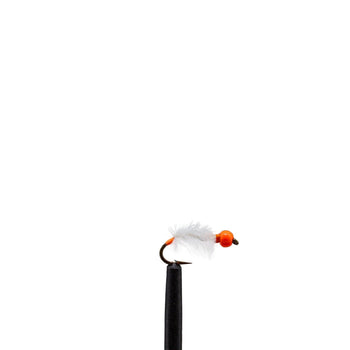
| Hot Head Ray Charles – Orange | Hot Head Ray Charles – Pink | Duracell Jig – Coppertop | Rainbow Warrior Jig |
Hot Head Ray Charles – Orange (#16): The sow bug pattern that changed tailwater fishing, with a hot orange head as the trigger point. If a tailwater holds sow bugs, this is the fly to start with.
Hot Head Ray Charles – Pink (#18): A smaller, softer-toned follow-up for low, clear water and fish that have already refused the orange.
Duracell Jig – Coppertop (#16): A tungsten jig that rides hook-point-up and sinks fast — the pattern for tight-line nymphing the deepest, heaviest part of a run rather than working the weed beds.
Rainbow Warrior Jig (#16): A flashier, faster-sinking attractor than the Duracell — more searching pattern than specific imitation. Worth switching to when a subtler presentation isn't drawing attention.
Worms
An aquatic worm is genuine year-round forage, not just a high-water fly, though it earns its keep most when a release pushes the flow up and colors the water.
 |
 |
 |
 |
| Sparkle Worm – Purple | Double Bead Ultra Worm – Red | San Juan Wire Worm – Red | Blood Worm |
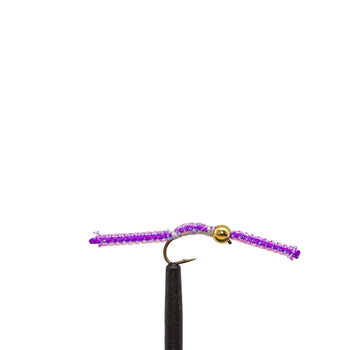
Sparkle Worm – Purple (#14): An unexpected color that keeps producing on tailwaters long after a natural red or pink has been refused by every fish in the run.
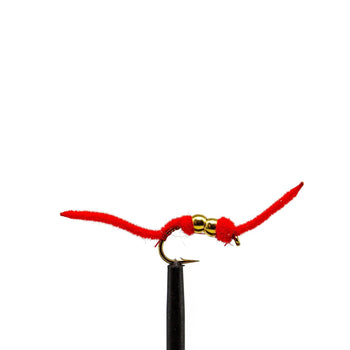
Double Bead Ultra Worm – Red (#10): Two beads to get it down fast when a dam release pushes the flow up. The first fly on the point the moment the water rises.
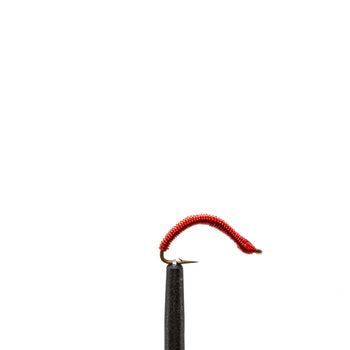
San Juan Wire Worm – Red (#8): The tailwater standard, wire-bodied for weight and durability — named for a tailwater for good reason.
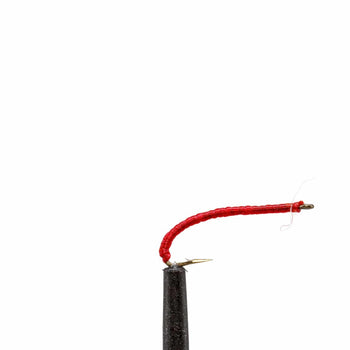
Blood Worm (#14): A slimmer, more segmented profile than the others here, closer to a true aquatic worm than a generic attractor shape. Worth carrying alongside the bulkier patterns for fish that want something a little more realistic.
Midges & Small Mayflies
On the technical days when nothing else gets eaten, this is usually why — tailwater fish spend enough time looking at tiny naturals that the small stuff earns real respect.
 |
 |
 |
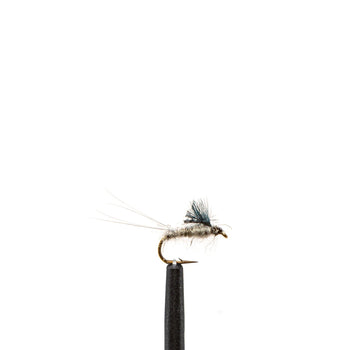 |
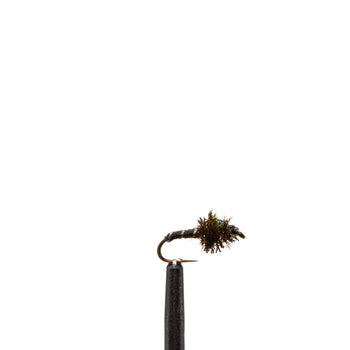
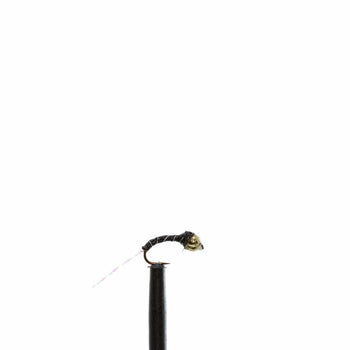
| Beadhead Soft Hackle Flash Pheasant Tail | Black Beauty | Zebra Midge – Black | RS2 |
Beadhead Soft Hackle Flash Pheasant Tail (#18): About as versatile as a mayfly nymph gets, with a soft hackle collar that breathes like an emerging insect on the swing or under an indicator alike.
Black Beauty (#20): The definitive tailwater midge pupa — a slim black thread body and fine wire rib. On a flat, cold day, this is often the only fly that gets eaten.
Zebra Midge – Black (#18–20): About as simple as a fly gets — thread body, wire rib, bead head — and that simplicity is exactly why it works. A genuine tailwater standard right alongside Black Beauty; worth carrying in more than one color, since fish can be surprisingly particular about which one they want on a given day.
RS2 (#20): A slim, translucent mayfly emerger trusted on technical tailwaters nationwide — the more precise call for fish keyed on one specific emergence, versus the Pheasant Tail's broader coverage.
One Box, All Four Groups
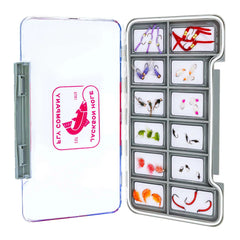 |
Building sixteen patterns from scratch is a real investment, one product page at a time. For anyone who'd rather not, the JHFLYCO Loaded Tailwater Nymph Assortment is a solid, pre-loaded starting point covering much of this ground — just not the whole story above. |
Taking It to the Water
Tailwaters reward precision more than almost any other water type — the right fly, at the right depth, presented to fish that have already seen the wrong version of all three. Learn the four food groups, carry the patterns that match them, and this same lineup will still be the right one to reach for next winter, and the summer after that.


