

Fly of the Month: Sculpins – Streamers That Hunt Late-Season Trout

The air is crisp, the mornings are frosty, and the trout have changed their tune. As autumn gives way to early winter, surface activity slows, insects dwindle, and trout turn their focus to bigger meals that pack more energy per bite.
This is the time of year when streamer fishing takes center stage—and when one type of prey dominates a trout’s diet: the sculpin. These small, bottom-dwelling baitfish are the unsung heroes of the trout food chain, offering a high-protein feast that triggers a predator’s instinct.
For anglers, this means it’s time to fish deeper, slower, and smarter. Late fall isn’t about counting risers—it’s about swinging or stripping meat through the river’s dark seams, waiting for that unmistakable jolt that only a streamer can bring.
What Is a Sculpin?
Sculpins are small, wide-headed baitfish found in most cold-water rivers, creeks, and lakes across North America. They live on the bottom, hiding among rocks and gravel, blending perfectly with their surroundings.
Because they lack a swim bladder, sculpins don’t rise or hover mid-column—they dart in short, erratic bursts and settle quickly to the bottom. Their movement is low, compact, and sudden—exactly what big trout are built to crush.
During late fall, as insect life wanes and water temperatures drop, trout key in on these small fish more than anything else. Post-spawn browns, in particular, become aggressively territorial, striking at anything that invades their zone—including a well-presented sculpin fly.
Why Sculpin Patterns Excel in Cold Water
When water temperatures dip below 45°F, trout metabolism slows—but they’ll still eat, especially when the meal is worth the effort. A sculpin pattern represents a dense, high-calorie snack that doesn’t require the chase of a minnow or the precision of a dry fly.
Sculpin imitations also stay low in the water column, where late-fall trout spend most of their time. The combination of realism, motion, and profile triggers both feeding and aggression responses. In short: sculpins make big trout do dumb things.
📌 Pro Tip: Trout often hit sculpins out of reaction, not hunger. When you feel the thump—set hard and fast.

How to Fish Sculpin Patterns Effectively
The most important rule: keep your fly near the bottom. Sculpins don’t swim up in the current, so your fly shouldn’t either. Use a sink-tip line or add split shot above your fly if necessary.
Presentation tips:
- Cast across or slightly downstream, allowing your fly to sink and swing naturally.
- Use short, deliberate strips followed by pauses—imitating a darting baitfish.
- Maintain contact throughout the drift; strikes are often subtle before the big hit.
- Cover water—sculpin fishing is a search game. Work each seam, boulder, and bank.
📌 Pro Tip: The perfect retrieve is a strip–pause rhythm: two short pulls, one pause. The pause sells the imitation—most strikes come when the fly drops or flutters.
Where to Fish Sculpin Patterns
Sculpins thrive wherever there’s rocky structure and cold water. That means you’ll find them:
- Along undercut banks and boulder edges, where they hide from the current.
- In deep runs and tailouts, where post-spawn browns rest.
- Around riffle drop-offs and transitions, where trout ambush prey.
- Near woody debris or cutbanks, where trout stage during colder months.
Early morning and cloudy afternoons are prime windows, especially after light rain or snowmelt adds color to the water. That touch of turbidity gives trout confidence to strike hard and move shallow.
From Muddlers to Modern Streamers: The Flies That Hunt
Before you fill your box, it helps to know how each fly fits the sculpin story. Not all streamers are created equal—each family of patterns evolved to imitate sculpins in a slightly different way. From the original Muddlers that defined the look, to the modern Sparkle Minnows that rely on flash and vibration, every design offers its own personality in the water.
MUDDLERS – THE ORIGINAL SCULPIN
Before articulated streamers and flash-forward designs, there was the Muddler Minnow. Created in 1937 by Don Gapen on Canada’s Nipigon River, it was the first fly ever tied specifically to imitate a sculpin. The spun deer-hair head pushed water, mimicking the broad, blunt profile of the real fish, and that design principle still drives modern streamer tying today.
Muddler patterns remain timeless because they’re versatile—they can be swung, stripped, or dead-drifted through almost any type of water. Whether you fish the original or one of its modern variations, these flies represent the roots of sculpin imitation and continue to fool big trout everywhere.
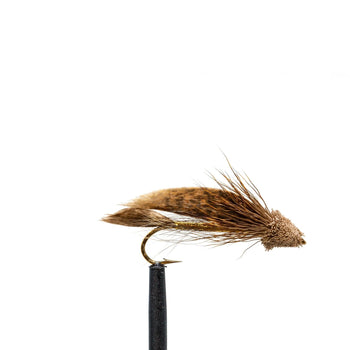
- Muddler Minnow (Sizes 6–10): The classic design that started it all. The deer-hair head creates lift and vibration, while the mottled turkey wing and tinsel body flash just enough to draw attention. Excellent swung through riffle transitions or stripped along shallow banks where sculpins dart between rocks.
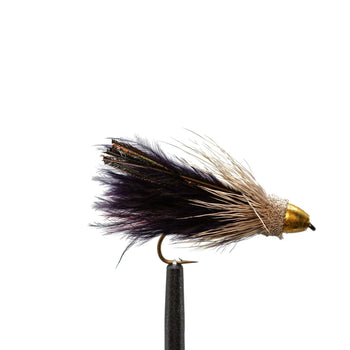
- Conehead Muddler – Black (Sizes 6–8): A weighted evolution of the original. The conehead gives this fly depth and control in faster currents, while the dark color provides a bold silhouette in low light or stained water. It’s a proven pattern for deep tailouts and evening streamer sessions.
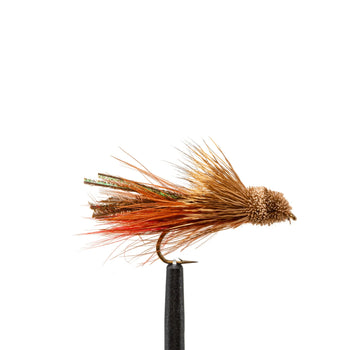
- Marabou Muddler – Brown (Sizes 6–10): This softer variation breathes life with every strip. The marabou tail pulses naturally, while the compact head maintains that signature sculpin shape. Perfect when trout are holding deep and feeding slow.
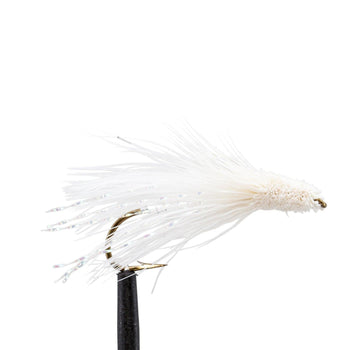
- Muddler Minnow – Crystal White (Sizes 6–8): A modern twist on the traditional pattern, tied with pearlescent flash and a pale body that stands out in off-color water. It’s an excellent search fly for murky conditions or when targeting aggressive post-spawn browns.
📌 Pro Tip: Fish Muddlers tight to structure. Cast quartering downstream, let the fly swing broadside, and add subtle twitches to imitate a sculpin darting for cover. Most strikes happen as the fly changes direction or lifts toward the surface.
SCULPINS – REALISTIC IMITATORS
If the Muddler Minnow laid the foundation, modern sculpin patterns perfected the profile. Built to hug the bottom, these flies feature wide heads, natural mottled colors, and weighted eyes that make them crawl and dart like the real thing. They’re designed for depth, subtle motion, and realism—exactly what trout want in cold water when insects are scarce.
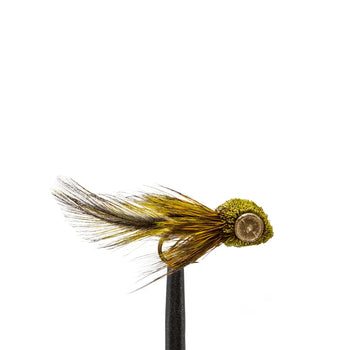
- Weighted Sculpin – Olive (Sizes 6–10): The go-to sculpin imitation and a must-have for any streamer box. Heavy dumbbell eyes keep the fly right on the riverbed, while soft marabou and a barred body pulse naturally with every strip. Ideal when trout are feeding deep and slow.
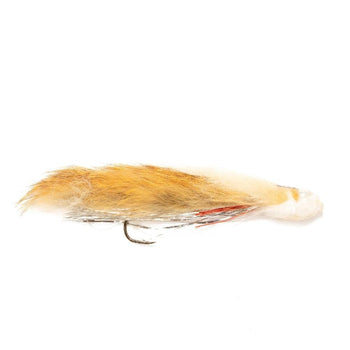
- Sculpin - Silver (Size 1/0): A brighter variation for murky water or overcast days. The silver body and dark wing create strong contrast, helping fish track the fly when visibility is low. An excellent choice after rain or snowmelt when the water carries color.
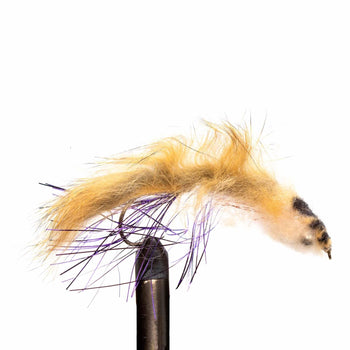
- Articulated Sculpin (Size 1): Designed for movement. Two connected sections give it a lifelike swimming motion and natural sculpin kick. Perfect for swinging through deep pools or stripping across current seams when targeting aggressive browns.
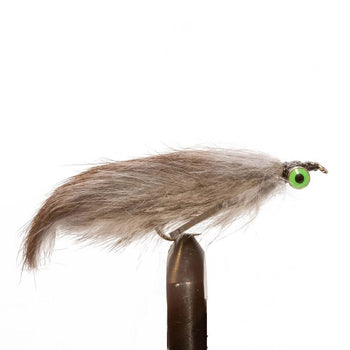
- Hardhead Double Bunny - Bullhead Flash (Size 2): A heavyweight, realistic sculpin imitation that dives fast and rides hook-up to avoid snags. The dual rabbit strips undulate constantly, and the molded head pushes water for added vibration. A top pattern when trout want a big, slow-moving meal.
📌 Pro Tip: Keep your fly near the bottom. Cast slightly downstream, let it sink, and retrieve with short, slow strips. Most strikes come as the fly stalls or flutters after the pause.
MATUKAS – OLD-SCHOOL MINIMALISM
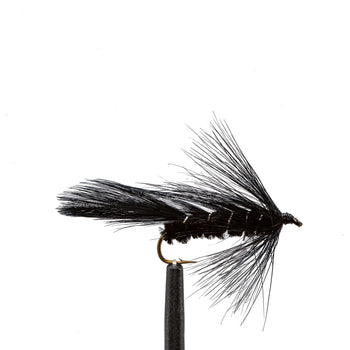
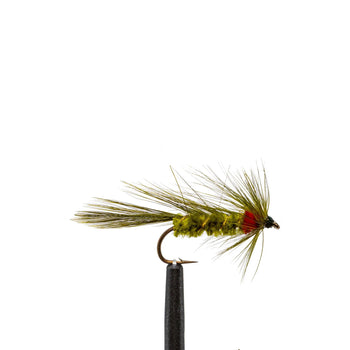
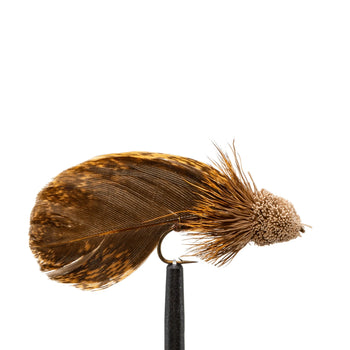
The Matuka is one of the earliest streamer styles—born in New Zealand and embraced worldwide for its simplicity and effectiveness. Instead of a bulky deer-hair head, the Matuka uses a streamlined feather wing bound along the shank, creating a slim, natural profile that cuts through current. This design imitates sculpins, small baitfish, and even leeches, depending on color and retrieve.
Matukas are subtle, versatile, and reliable. They shine in clear water and cold conditions when trout demand a lifelike presentation with minimal flash.
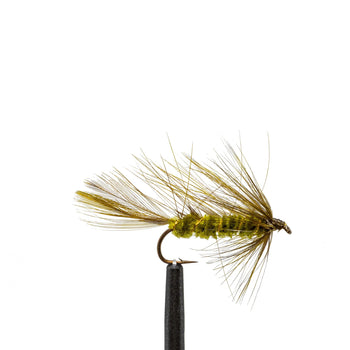
- Matuka - Olive (Sizes 6–10): A classic, natural pattern that perfectly imitates small sculpins or baitfish. The olive body and wing blend with riverbed tones, making it deadly in clear or lightly stained water.
- Matuka - Black (Sizes 6–8): A darker variation that casts a strong silhouette and fishes well in low-light or murky water. Its slim design keeps it tracking true even in faster currents.
- Red Throat Matuka (Sizes 6–10): A subtle attractor pattern with a hint of red near the head to imitate gill flash or wounded prey. Excellent for pressured trout that ignore brighter patterns.
- Matuka Muddler (Sizes 6–8): A hybrid between two classics—the feather-wing Matuka and the deer-hair-headed Muddler. The result is a sculpin imitation that pushes water while keeping a smooth, natural body profile.
📌 Pro Tip: Fish Matukas with a slow, steady retrieve or gentle swing across current seams. Their natural movement does the work—no aggressive stripping required.
SPARKLE MINNOWS & FLASH STREAMERS – MOVEMENT & LIGHT
Not every streamer needs to perfectly imitate a sculpin. Some simply need to get noticed. Flash streamers use light, color contrast, and motion to trigger instinctive strikes—especially when water turns off-color or skies go gray. These are your confidence flies for covering water fast, waking up aggressive trout, or getting attention when subtle patterns get ignored.
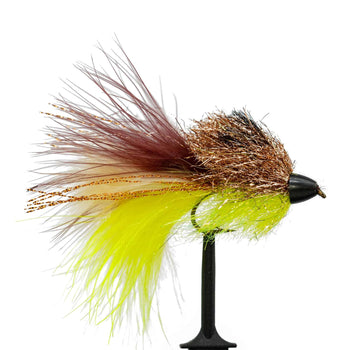
- Sparkle Minnow – Brown/Yellow or Olive/White (Sizes 4–8): A modern flash classic that blends shimmer, contrast, and motion. The Brown/Yellow shines in stained or low-light water, while Olive/White mimics natural baitfish tones in clear flows. Both flutter seductively on the drop—often when trout decide to eat.
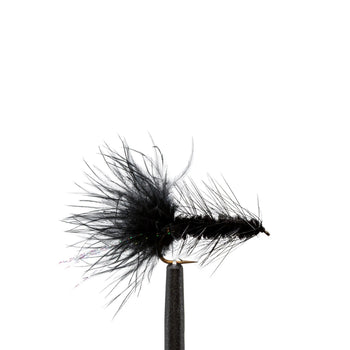
- Flash Woolly Bugger – Olive or Black (Sizes 6–10): A Woolly Bugger enhanced with flash fibers for just the right amount of sparkle. The olive version covers most conditions; black is the go-to for low light or cloudy water. Fish it with a strip-pause retrieve or swing it across seams.
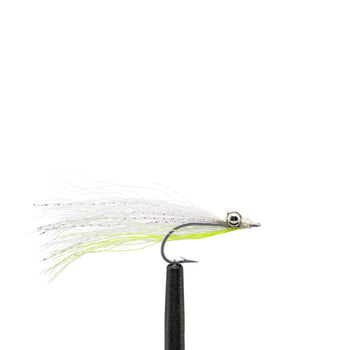
- Clouser Minnow – Chartreuse (Sizes 4–6): Weighted eyes make this fly dive fast and track straight, while the Mylar body and synthetic wing flash in the current. It excels in dirty water or when trout key on small baitfish.
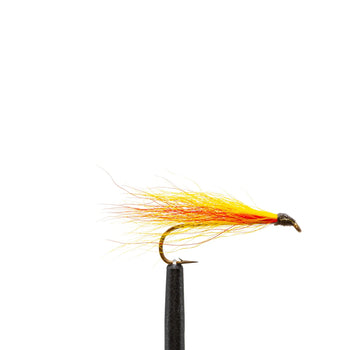
- Mickey Finn (Sizes 6–10): A heritage streamer that predates synthetics but paved the way for modern flash flies. Its bright red-and-yellow bucktail wing and silver tinsel body make it one of the earliest attractor streamers ever tied—and still a proven fish-getter when trout want color and movement.
📌 Pro Tip: When fishing flash streamers, focus on rhythm. Strip fast, pause, and let the fly fall—most takes happen on that fluttering drop when light catches the flash.
BONUS PATTERNS – MODERN MEAT STREAMERS
Not all heavy streamers are sculpins, but they share the same mission: to move big trout. These articulated "meat" flies imitate large baitfish, leeches, or even juvenile trout, using bulk, motion, and water displacement to provoke violent reaction strikes. When trout are on the hunt—or when smaller patterns get ignored—these are the flies that draw the biggest eats of the year.
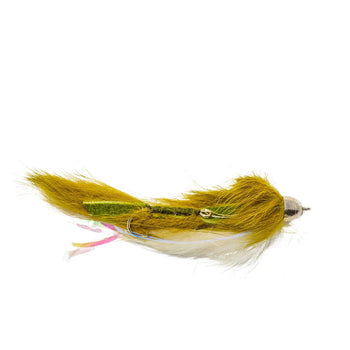
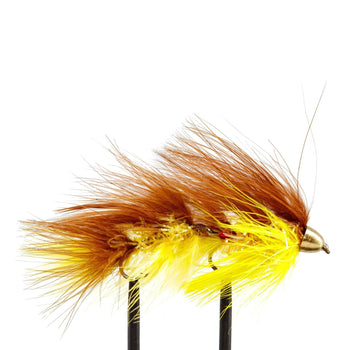
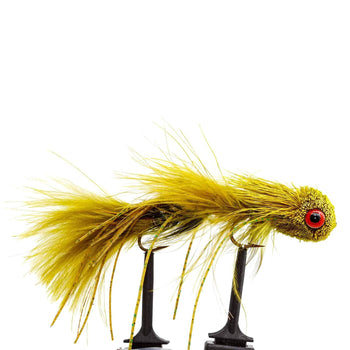
- Dolly Llama – Black/White or Olive/White (Sizes 2–6): The modern legend of streamer fishing. Two rabbit strips create nonstop movement, and the articulated body gives this fly a natural, swimming kick. Black/White is ideal for low-light conditions, while Olive/White excels in clear water. Perfect for post-spawn browns or high-water runs.
- Peanut Envy – Olive, Brown/Yellow, or White (Sizes 2–6): Designed by Kelly Galloup, this fly bridges realism and aggression. The deer-hair head pushes water, the marabou body pulses with life, and the articulated tail gives it a true baitfish kick. Olive is the everyday color; Brown/Yellow shines in stained water; White dominates in bright or clear conditions.
- Sex Dungeon – Olive, Yellow, or Black (Sizes 2–4): Another Galloup original built to push maximum water. The double-articulated body, broad head, and flowing marabou make it a heavyweight fly for chasing true trophies. Olive is the standard, Yellow excels in dirty water, and Black is unbeatable in low light.
📌 Pro Tip: Big flies demand stout gear. Use a 6–8 wt rod, short leader (0X–2X), and a sink-tip line to maintain control and depth. These patterns work best with slow, deliberate strips and long pauses—let the articulation and water push do the work.
Taking It to the Water
Sculpin season marks the final act of the trout year—a time when slow water and short days call for patience, precision, and persistence. Every cast is a hunt, every strip a heartbeat.
When your indicator rigs stop producing and trout go deep, the sculpin becomes your ticket to connecting with fish that rarely see the surface. Fish them slow, fish them deep, and stay ready—because when the eat happens, it’s explosive.
So load up a box with these proven patterns, grab your streamer rod, and take it to the water. Late fall belongs to the hunters.
SHOP OUR STREAMER COLLECTION
RELATED ARTICLES:
- Maximize Your Catch: Fishing Double Streamer & Streamer Nymph Rigs
- Master Fall Streamer Fishing: Top Flies, Gear & Pro Tips
- Fly of the Month: Targeting Fish with Egg Patterns During the Fall Spawning Season
- Fall Fly Fishing Guide: Key Hatches & Essential Flies
- Fall Fly Fishing for Brook Trout: Essential Tips & Techniques


