

Early Spring Fly Box Essentials: What to Carry, What to Cut, and How to Organize It

Most experienced anglers don't need more flies. They need fewer — organized better.
By the time early spring arrives, your boxes are probably a graveyard of last summer's patterns, half-tied droppers, and hoppers that won't see water for another three months. The window before runoff is short, and the anglers who fish it well aren't the ones who packed the most — they're the ones who packed smart.
This isn't another survey of every fly that works in March and April. You already know what works. This is about building a disciplined, ready-to-fish setup across three boxes, understanding which patterns actually belong in the water right now, and knowing what to pull out until conditions call for it. Get this right before the season opens, and you'll spend more time fishing and less time digging.
The Early Spring Box System: Three Boxes, One Season
The core idea is simple: one box for nymphs, one for small flies and emergers, one for streamers. Each box has a specific purpose, a specific form factor, and a specific set of patterns it should hold right now — not eventually, not in two months, but now. When you build your setup around this system, you're not just organizing flies. You're making decisions on the water faster, wasting less time between rigs, and fishing with more confidence because everything in your vest has earned its spot.
Box 1: The Nymph Box
Nymphs are the backbone of early spring fishing. Trout are subsurface the overwhelming majority of the time in March and April — cold water keeps them low, hatches are sparse and unpredictable, and nymphs represent the most reliable, calorie-dense food source available. If you only have time to dial in one box before the season starts, this is it.
The mistake most anglers make here isn't carrying the wrong patterns — it's carrying too many different ones in not enough sizes. Three sizes of a Pheasant Tail will catch you more fish than eight different mayfly nymphs in a single size. Depth coverage and size flexibility matter more than variety. Build around four core patterns and invest in having each of them in the sizes you actually need.
The Four Core Nymphs
 |
|
 |
 |
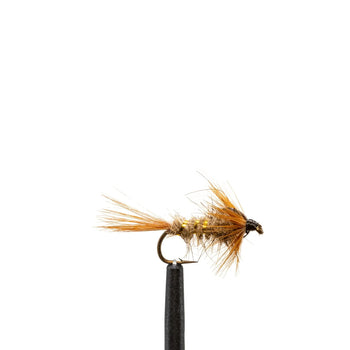
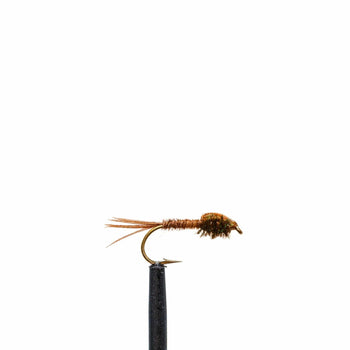
| Gold Ribbed Hare's Ear Nymph | Pheasant Tail Nymph | Tungsten Bead Perdigon Jig | Kaufmann's Stonefly Nymph |
Gold Ribbed Hare's Ear Nymph (#12–#16): The most versatile nymph in your box, full stop. The buggy, impressionistic profile imitates mayfly nymphs, caddis larvae, and scuds without committing to any single match. That versatility is exactly what you need in early spring when you're not always sure what's on the menu. Fish it as your lead fly through riffles, seams, and deeper runs. Carry it in at least three sizes — the water will tell you which one to use.
Pheasant Tail Nymph – Natural or Flashback (#14–#18): Your slim-profile mayfly imitation. Where the Hare's Ear is broad and buggy, the Pheasant Tail is precise and subtle — a closer match for smaller mayfly nymphs like Baetis and early-season Ephemerella. Drop it in as your trailing fly 12–18 inches behind a heavier anchor pattern. In clear water, go smaller. In slightly off-color flows, step up a size.
Tungsten Bead Perdigon Jig (#12–#16): Your fast-water workhorse. The tungsten bead and slim coated body get it to depth quickly, which matters when flows are elevated and you need to punch through the current column. Fish it tight-line on a Euro rig or as your heavy anchor fly under an indicator. The Perdigon doesn't imitate any single insect perfectly — it imitates "food at the right depth," which is often exactly what cold-water trout are looking for.
Kaufmann's Stonefly Nymph (#8–#12): Your anchor pattern for freestone water and high-gradient rivers. Big, heavy, and bulky — exactly what you want when you need the fly to get down fast and stay there. Run it as the lead fly in a two-nymph rig with a smaller trailer. On rocky rivers where stoneflies are present year-round, this is one of the most productive patterns you can throw from March through runoff.
📌 Pro Tip: Stock your nymph box with 3 of each pattern in each size you carry. You'll lose flies to fish, snags, and bad casts — running out of a critical size mid-session is avoidable. Two-nymph rigs are standard in early spring: anchor fly (Perdigon or Stonefly) plus trailer (Pheasant Tail or Hare's Ear), 12–18 inches of separation.
The Right Box for the Job
For nymphs, you want segmented compartments that let you organize by size across patterns — not one giant bin where everything mingles. The JHFLYCO Aluminum Fly Box is purpose-built for this. The aluminum construction is durable enough to take a beating in the field, the individual compartments keep your sizes separated and accessible, and the profile fits cleanly in a vest or pack pocket without bulk. If you want a shortcut to a fully loaded nymph setup, the Loaded Standard Nymph Box arrives stocked and ready — no building required.
 |
 |
| JHFLYCO Aluminum Fly Box | Loaded Standard Nymph Box |
Box 2: The Midge & Emerger Box
This is the box most anglers don't have — and it's the one that will cost them the most fish in early spring.
Midges and emergers don't belong buried in your nymph box. In March and April, they're the most-reached-for patterns of any session. Midges hatch year-round and dominate the diet of trout in tailwaters and spring creeks throughout the early season. BWOs start showing on overcast afternoons as water temps nudge past 48°F. The emerger window — when insects are trapped between subsurface and surface — is often the most productive feeding period of the entire day, and most anglers fish through it with the wrong fly.
Small flies also have a retention problem in foam boxes: they pull out when you don't want them to and slip into cracks. Magnetic retention is the answer. That's why this category gets its own dedicated home.
The Midge & Emerger Core
 |
 |
 |
 |
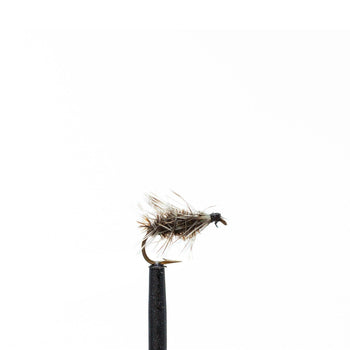
| Zebra Midge | Griffith's Gnat | Beadhead RS2 | Beadhead BWO Emerger |
Zebra Midge – Red, Black, Olive (#18–#24): The workhorse of early spring subsurface fishing. Carry all three colors — conditions and water type will dictate which one gets tied on. Red is your first call in tailwaters and spring creeks. Black works in lower light and stained water. Olive earns its place during BWO activity when trout are keyed on smaller, greenish nymphs. Fish it dead-drifted under an indicator or as a trailer behind a larger anchor nymph.
Griffith's Gnat (#18–#22): Your surface midge pattern. When trout are sipping midge clusters in calm water — flat tailouts, slow eddies, slick spring creek runs — this is the fly. Its peacock herl body and wrapped hackle create a realistic cluster footprint that sits naturally in the film. Fish it with fine tippet (6X minimum) and a delicate presentation. Don't leave home without at least a half-dozen.
Beadhead RS2 (#18–#22): The bridge pattern between nymphing and dry fly fishing. The RS2 sits just below the surface film and imitates a midge or small mayfly at the most vulnerable moment of its emergence — half in, half out, going nowhere. When trout are rising subtly but refusing your dries, they're almost always eating emergers. This is the answer. Fish it unweighted as a dropper beneath a dry fly or dead-drift it through feeding lanes on its own.
Beadhead BWO Emerger (#18–#22): Purpose-built for the overcast afternoon window when Blue-Winged Olives start pushing toward the surface. BWO emergences in early spring are often the best dry-fly-adjacent fishing of the entire season — trout feed aggressively and the emerger stage is longer than most anglers realize. Fish this pattern in the film during the pre-hatch buildup before switching to a dry. It regularly outfishes the adult pattern by a wide margin.
📌 Pro Tip: Midges often hatch in overlapping waves throughout the day. In the morning, fish midge larvae deep. By mid-morning, shift to pupae and emergers as activity moves toward the surface. By afternoon, watch for cluster sipping and reach for the Griffith's Gnat. Rotating through the midge lifecycle rather than staying on one pattern all day will consistently put more fish in the net.
The Right Box for the Job
Small flies need magnetic retention — foam grips them unevenly, and the smallest sizes can disappear into gaps or pull free when you least want them to. The JHFLYCO Slim Magnetic Fly Box is the right tool here. It's narrow enough to slide into a shirt pocket, holds small patterns securely on both sides, and opens and closes cleanly in the field. For a pre-loaded option, the Loaded Midge Assortment Box covers this entire category with a curated selection ready to fish.
 |
 |
| JHFLYCO Slim Magnetic Fly Box | Loaded Midge Assortment Box |
Box 3: The Streamer Box
Here's the honest truth about early spring streamer fishing: most anglers overcomplicate it. They carry articulated patterns, double-hook rigs, and half a dozen color variations when the water is still cold and trout are not actively chasing. Cold water means slower metabolisms and more deliberate feeding. A targeted, disciplined streamer selection will outperform a packed box of 25 options every time — because it forces better decision-making and better technique.
Two scenarios cover 90% of early spring streamer fishing: dark, natural patterns for clear water, and brighter or larger profiles for off-color flows. Build around that and you're covered.
The Early Spring Streamer Core
 |
 |
 |
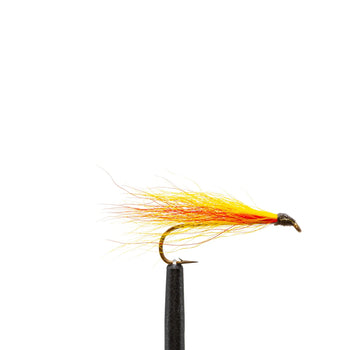 |
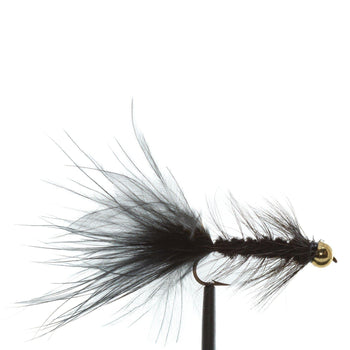
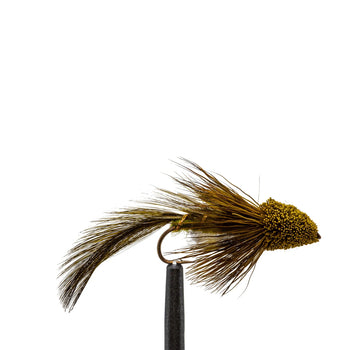
| Wooly Bugger | Sculpin | Black Ghost | Mickey Finn |
Wooly Bugger – Black or Olive (#6–#10): The most consistently productive streamer in early spring, and the one you should have confidence in even when nothing else is working. In cold water, the slow strip-pause retrieve — let it sink, strip once, pause, strip again — outperforms aggressive retrieves by a significant margin. Black in clear water. Olive when there's a slight tint. Three of each is not excessive.
Sculpin Pattern (#6–#10): Sculpins don't migrate seasonally — they're on the bottom of cold rivers year-round, and big trout know it. A low-riding sculpin pattern bounced along the bottom with a sink-tip line and slow retrieve is one of the most reliable ways to target large fish in early spring when chasing isn't in the cards. Fish it near structure: undercut banks, large boulders, woody debris.
Black Ghost (#6–#10): A classic feather-wing streamer that earns its place in clear-water conditions and with pressured fish. Its white wing and contrasting dark body create a defined silhouette that spooky early-season trout can evaluate and commit to without feeling rushed. Fish it on long, slow swings in soft pools and deep channels.
Mickey Finn (#6–#10): When the water comes up and visibility drops — spring rain, overnight snowmelt, upstream runoff — the Mickey Finn is your call. The bright red and yellow combination creates contrast and movement that fish can track in murky conditions. Strip it faster than you would a natural-toned pattern. This is your off-color day fly, and it earns its spot in the box precisely because conditions in early spring are unpredictable.
📌 Pro Tip: In cold water, retrieve speed is almost always the variable — not the pattern. Start with the slowest retrieve you think is reasonable, then slow it down further. A strip-pause that feels impossibly slow in 45°F water is often exactly right. Trout won't chase in cold water, but they will eat something that stops in front of them.
The Right Box for the Job
Streamers need hook point exposure — foam that traps the bend of a hook makes for slow, fumbled fly changes mid-session. The JHFLYCO Foam Fly Box holds larger flies securely on slit foam while keeping hooks accessible and sharp. For a loaded option, the Loaded Medium Streamer Box arrives pre-stocked with a curated selection that covers exactly this early-season range.
 |
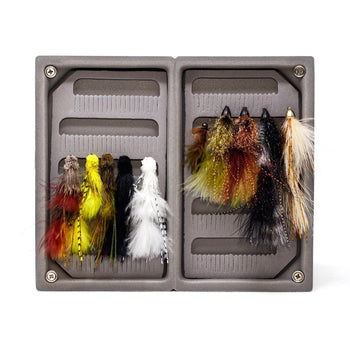 |
| JHFLYCO Foam Fly Box | Loaded Medium Streamer Box |
What Doesn't Make the Cut — Yet
This is the section most fly fishing content skips. It's also the most useful thing you can do for your early spring setup: pull out the patterns that don't belong.
Right now, today, the following patterns are dead weight in your vest:
- Hoppers and big foam terrestrials. Water temps are too cold, trout aren't looking up for large surface food, and these flies will sit in your box for another 10–12 weeks. Pull them.
- Chubby Chernobyls and attractor dries. Same reasoning. These earn their spot in July. In March they're taking up space where something useful should be.
- Heavy articulated streamers. Large articulated patterns with multiple hooks are designed for warmer water, more active fish, and aggressive chase behavior. Early spring trout aren't in that mode. Leave them home until flows stabilize and water temps climb above 50°F consistently.
- Late-season Skwala dries and big stonefly adults. The Skwala window is narrow and specific. If you're not actively targeting that hatch on a river where it's happening, these flies are clutter.
- Size 8 dry flies of any kind. With limited exceptions, early spring surface feeding involves small insects — midges, BWOs, early caddis. Big dries wait.
Pull these patterns, put them in a labeled box at home, and bring them out when conditions call for them. The Loaded Hopper Dropper Box is exactly where your terrestrial and attractor setup will live come summer — fully stocked and ready when that window arrives. For now, it stays home.
A cleaned-out vest means faster decisions, better focus, and fewer frustrated minutes on the bank sorting through flies that have no business being there in March.
Putting the System Together
Three boxes. That's the system.
In your vest or pack, the Slim Magnetic goes in a shirt pocket — quick access, because you'll be in it constantly for midge and emerger swaps throughout the day. The Aluminum Nymph Box goes in a front pocket where you can open it flat and see your full size range at a glance. The Foam Streamer Box goes in a larger rear pocket or pack — you're not swapping streamers mid-riffle the way you swap nymphs, so it doesn't need to be on top.
This isn't about buying more gear. It's about making the gear you have work better through deliberate organization. If you already have fly boxes that match these functions — magnetic for small flies, compartmented for nymphs, slit foam for streamers — use them. The principle matters more than the specific products.
That said, if you're starting from scratch or rebuilding after a season of accumulated clutter, the loaded assortment options let you skip the build-it-yourself phase entirely and arrive at the water with a fully curated, ready-to-fish setup for each category. That's not a shortcut — it's just a faster path to the same place.
The Window Is Short — Fish It Right
Early spring is one of the most underrated stretches of the season. The crowds haven't arrived, the water is fishable before runoff takes over, and trout that have been in winter survival mode are starting to feed with intent. The anglers who capitalize on it aren't necessarily fishing more — they're fishing smarter, with organized, purpose-built setups that let them adapt quickly when conditions shift.
Build the three-box system. Pull the patterns that don't belong. Get on the water before it comes up.
Shop Fly Boxes >>
Shop Loaded Assortments >>


