

Why Try The Foam Fly

Every angler remembers the day a foam fly changed how they fished. Maybe it was a guide who finally handed you something after watching you re-dry the same waterlogged dry for the tenth time in an hour. Maybe you just got tired of picking floatant crumbs off a fly that kept sinking anyway. However it happens, the first time a big, ugly foam pattern floats through an entire day — rough water, refusals, however many fish it takes to finally hook one — without a single re-treatment, it's hard to go back to anything else.
If you've never tied one on, here's what you're missing, and why it's worth a spot in your box even if you've spent years fishing nothing but delicate, natural-material dries.
Foam is a relatively recent shift in fly tying, and it solved a problem traditional materials never fully could. A dry fly's ability to float has always come down to careful construction — dense hackle, buoyant deer hair, precisely dressed dubbing — and that construction puts a real ceiling on how big or bulky a pattern can get before it simply won't stay up. Closed-cell foam sidesteps the problem entirely: it floats regardless of how it's tied, which opened the door to bigger, bulkier patterns that traditional materials could never support as a functional dry fly. That's the real story behind the shift — foam didn't replace natural materials across the board, it made an entirely new category of fly possible.
Why Foam Works
Buoyancy is the whole story. Closed-cell foam doesn't absorb water the way natural materials do, which means a foam fly rides high on the surface through an entire session — no re-drying, no re-floating with powder every few casts. That durability matters most exactly when it's needed most: in rough pocket water and broken current, where a natural-material fly gets pulled under fast.
Trout keying on a big terrestrial meal aren't inspecting the fly for anatomical accuracy, either. They're reacting to size, silhouette, and the fact that something substantial just landed on the water — foam delivers all three, and keeps delivering them long after a deer-hair or CDC pattern would have sunk.
It's also genuinely versatile. The same buoyancy that keeps a foam fly floating on its own makes it the strongest dry-dropper anchor available — strong enough to suspend a real nymph rather than just a token one. We went deep on that specific use case, color by color, in our full guide to the Chubby Chernobyl.
What Foam Can Imitate
Foam isn't one fly — it's a material that gets shaped into whatever's actually falling into the water that day. These eight cover most of what you'll need across a summer season.
 |
 |
 |
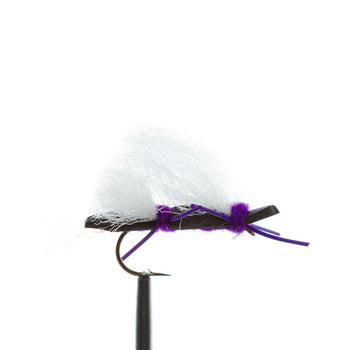 |
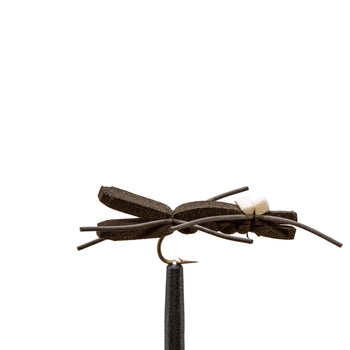
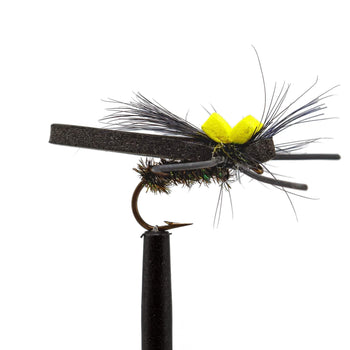
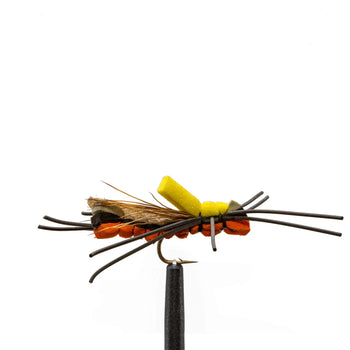
| Chernobyl Ant – Black | Snake River Beetle | Jurassic | Chubby Chernobyl |
Chernobyl Ant – Black: Ants are among the first terrestrials to show up as the season warms, and they stay relevant for months — effective as a standalone searching pattern and just as useful as an indicator fly for a subsurface nymph early in the year.
Snake River Beetle: Beetles fall into the water clumsily rather than getting blown in, so fish it tight to the bank and let it drift over deeper runs with a little twitch — that's usually enough to bring a fish up from below.
Jurassic: No foam discussion gets far without a hopper pattern in it. On a hot, breezy afternoon this one bobs on its own from the current alone — often enough natural movement that you don't need to add anything.
Chubby Chernobyl: The single most versatile foam pattern on this list — buoyant enough to anchor a dry-dropper rig, big enough to draw its own strikes, and available in enough colors to match nearly any water condition. It earned a full breakdown of its own, covering all eight colors and when to fish each one.
 |
 |
 |
 |
| Foam Stonefly – Brown | Yellow Humpy | Foam Stimulator – Yellow | Water Walker – Black |
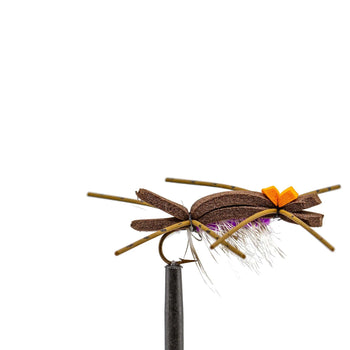
Foam Stonefly – Brown: Stoneflies hatch in some of the largest sizes of any aquatic insect, and this pattern is built to match that scale — a natural, mottled profile that reads as an adult stone or just a big, buggy meal. Dead-drift it through faster riffle water where naturals are actually active.
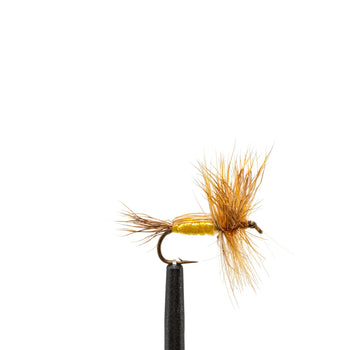
Yellow Humpy: A classic high-floating attractor with a distinct humped-wing silhouette, built here in foam for extra durability. Bright and buoyant enough to ride through the roughest pocket water and stay visible from well downstream.
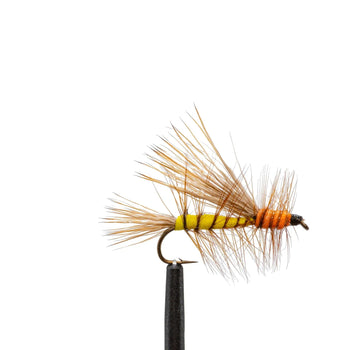
Foam Stimulator – Yellow: Part stonefly, part general attractor — the palmered profile creates a buggy silhouette that works whether trout are keyed on a specific naturals or just looking for something worth the effort. A strong first choice on unfamiliar water.
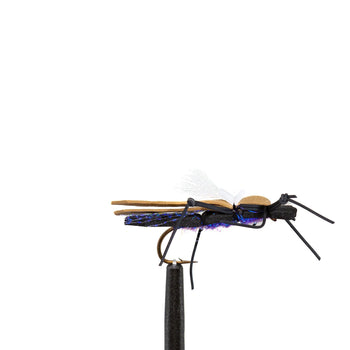
Water Walker – Black: A splayed-leg profile that pushes its own small wake on the surface — genuinely different action from anything else in this lineup. Add an occasional twitch rather than a pure dead drift; that disturbance is what sells it.
How to Fish a Foam Fly
Foam flies are fished the same way as any dry fly — cast above the target water and let it drift down and over it. A slightly overpowered cast that drops the fly onto the water with a little slap actually helps here; the commotion reads as a clumsy natural insect rather than spooking fish the way it would with a delicate pattern.
If a fish is holding tight to a bank, don't be afraid to land the cast on the bank itself and pull it into the water — that's exactly how the real thing usually arrives. And because these flies don't need re-floating every few casts, they're the right choice for pocket water and rough current, where you'd otherwise be constantly drying and re-treating a natural-material fly instead of fishing it.
📌 Pro Tip: Foam doesn't need floatant to work, but a light coat of gel floatant on the legs and wing post sheds water faster after a fish eats it, so you're back to a clean drift sooner instead of picking up to re-dry.
This is the starting point, not the whole story. For the single most versatile foam pattern in any box, see our full breakdown of the Chubby Chernobyl. For a deeper look at foam attractors by confidence tier, read Big Foam Attractors. And for exactly where these flies produce, not just which ones to carry, see Fishing the Foam Line.
Related Articles
- The Chubby Chernobyl: When, Where & How to Fish It
- How to Fish Big Foam Attractors for Summer Trout
- Fishing the Foam Line: Why Foam Is Food and How to Read It


