

The Chubby Chernobyl – Foam's Most Versatile Fly

Foam earns its place in a fly box for one simple reason: buoyancy that doesn't quit. Once summer water warms and terrestrials start falling in off the banks, trout key on big, easy meals riding the surface — and a fly that survives repeated refusals and rough current without waterlogging has a real edge over anything tied from natural materials. We made the broader case for foam in Why Try the Foam Fly and went deeper on the attractor category specifically in Big Foam Attractors — the Chubby Chernobyl is where that whole idea comes together in one pattern.
Some flies imitate one insect. The Chubby Chernobyl doesn't bother — it's a dual-layered foam body, a poly-yarn wing, and a flashy underbelly that reads as a hopper, a stonefly, a beetle, or just something big and worth eating, depending on what the fish wants that day. That ambiguity is the whole point.
It also floats like nothing else in the box. The foam construction keeps it high and visible through the roughest water on the river, which makes it as useful for suspending a nymph as it is for drawing its own strikes.
Why the Chubby Chernobyl Works
Trout keying on terrestrials aren't inspecting your fly for anatomical accuracy — they're reacting to size, silhouette, and movement. A fly this large sitting on the water reads as a real meal worth the energy to rise for, and the buoyant foam means it survives repeated refusals and hard current without waterlogging the way a natural-material fly does.
That same buoyancy is why it doubles as the best dry-dropper anchor in the box. A Chubby Chernobyl can suspend a genuinely heavy beadhead nymph without sinking, which means one fly is doing the job of both an indicator and a searching pattern at once.
 |
 |
 |
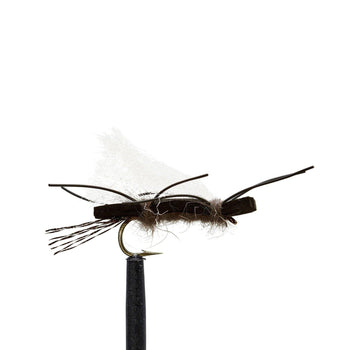 |
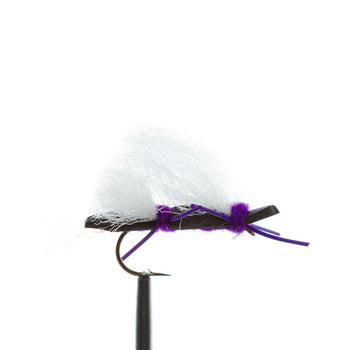
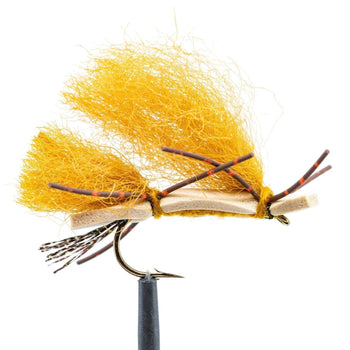
| Chubby Chernobyl – Knockout | Chubby Chernobyl – Chubby Peanut | Chubby Chernobyl – Southfork Stone | Chubby Chernobyl – Vader |
Chubby Chernobyl – Knockout (Black/Purple, #8–12): The high-visibility workhorse — its white poly wing is about the easiest thing to track on a bubble line or through broken water. It's also the strongest dropper anchor in the lineup, holding a heavy nymph up through rough current all day.
Chubby Chernobyl – Chubby Peanut (Gold, #10–14): A loud, bright attractor built to get noticed in fast or slightly stained water. Wide hackle and a bold wing post keep it visible even in glare or shadow — a reliable first choice when you don't yet know what the fish want.
Chubby Chernobyl – Southfork Stone (Tan, #8–12): The natural option, closer to a real hopper or stonefly than an attractor. Fish it when trout are getting picky under bright skies or in water that's already seen a lot of louder patterns.
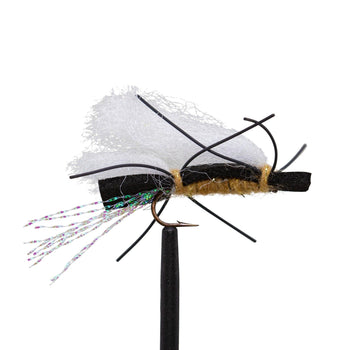
Chubby Chernobyl – Vader (Black, #8–12): A solid black silhouette that reads clean against a bright sky — the fly to reach for at midday when everything else is washing out in the glare.
📌 Pro Tip: Let conditions pick the color, not preference. Bright attractor colors (gold, pink) pull fish from a distance in fast or stained water; natural tones (tan) work best on picky fish in clear water; solid dark colors (black) hold their silhouette against a bright sky when everything else washes out.
 |
 |
 |
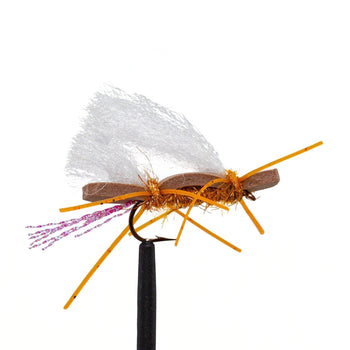 |
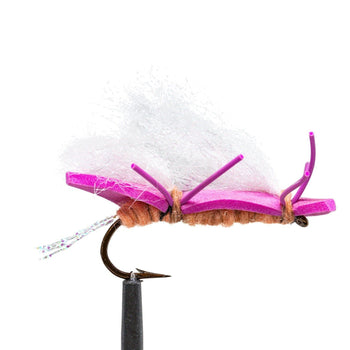
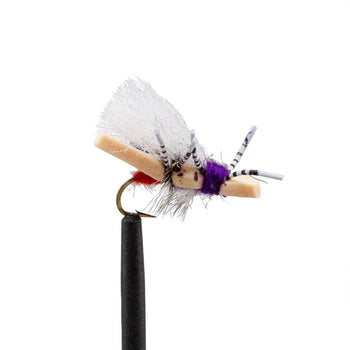
| Chubby Chernobyl – Miss Piggy | Chubby Chernobyl – Black & Tan | Micro Chubby Chernobyl – Joker | Chubby Chernobyl – Oliver |
Chubby Chernobyl – Miss Piggy (Pink, #10–12): Not matching anything specific — this is the reaction-strike option for water that's already refused two or three more natural patterns. Bright enough to provoke a strike out of curiosity or aggression rather than hunger.
Chubby Chernobyl – Black & Tan (#8–12): A genuine hybrid — dark enough for the silhouette advantage, warm enough to still read as natural. A strong all-around pick when you don't want to commit fully to either end of the color spectrum.
Micro Chubby Chernobyl – Joker (Natural/Purple, #12–16): A downsized take on the same foam-and-flash formula, built for smaller water and pickier fish that shy away from the standard size. Still buoyant enough to carry a light dropper.
Chubby Chernobyl – Oliver (Coffee/Copper, #8–12): A subdued, natural-leaning color with just enough copper flash to stand out without looking like an obvious attractor. Effective in clear, heavily-fished water where louder patterns get refused.
When to Fish It
There's no single hatch this fly is trying to match, which is exactly why timing is about conditions more than the calendar. It earns its spot any time trout are looking for a big, general meal rather than keying on one specific insect — windy stretches when terrestrials are getting blown into the water, slow periods between hatches, or simply as the first fly you tie on unfamiliar water to see what the fish want before narrowing down. High or off-color water calls for the brighter attractor colors in the lineup above; low, clear water and pressured fish call for the natural tones or the micro size instead.
Where to Fish It
Structure matters more than water type. Overhangs, undercut banks, and grassy edges are where a real terrestrial actually falls in, and a fly this size reads as exactly that kind of accident — cast tight to the bank rather than out in open water. In faster water — riffles, pocket water, the broken current below a rapid — the foam body's buoyancy is doing real work, staying up through turbulence that would sink a smaller dry. It holds up just as well in slower pools and glides where trout have more time to inspect the drift, provided the color matches what that calmer water calls for. For how to find the specific holding water within a faster run, we broke that down in Fishing the Foam Line.
How to Fish It
As a dry-dropper anchor. The Chubby's buoyancy makes it the strongest indicator fly in the box, holding a genuinely heavy nymph up through rough water without sinking. We covered the full rigging process — bend vs. eye, dropper length by water depth — in The Magic of the Hopper Dropper, and matched specific fly pairings to specific water types in The Dry-Dropper Rig: Four Pairings for Every Water Type.
As a standalone dry. Fished alone, a dead drift covers most situations — let it ride naturally along the bank or through the seam without dragging.
The twitch. Don't be afraid to add movement. A slight twitch or short skate on the retrieve mimics a struggling insect and can turn a look into a strike, especially from fish that are already keyed on something moving rather than drifting.
📌 Pro Tip: A fly this bulky pushes back against a tight casting loop and tends to pile up on itself. Open your loop and put a bit more power behind the cast than you would for a standard dry — that's the difference between a clean presentation and a tangled leader.
Taking It to the Water
Most flies ask you to match one very specific thing — a hatch, a color, a size — and get refused if you get it wrong. The Chubby Chernobyl asks the opposite question: what's the water telling you today, and which color answers it? That's a fly worth building a system around, not just one worth picking off a shelf.
Carry a handful rather than committing to one, and let conditions decide. It earns a permanent spot in the box regardless of season — it just needs the right color, water, and presentation to match the day in front of you.
Related Articles
- How to Fish Big Foam Attractors for Summer Trout
- Fishing the Foam Line: Why Foam Is Food and How to Read It
- The Magic of the Hopper Dropper
- The Dry-Dropper Rig: Four Pairings for Every Water Type
- Why Try The Foam Fly


