

Chasing Season Starts Now: When to Throw Micro Streamers — and When to Go Full Meat

There's a moment in late March when the river shifts from patience to pursuit. Water temperatures push past 45°F, daylight hours lengthen, and trout that spent months conserving energy start moving with purpose. They reposition into current. They follow food. They chase.
This is when streamer fishing stops being a slow, deep grind and becomes the most exciting way to spend a day on the water.
But here's the question most anglers don't ask early enough: how big should you go? The answer isn't always "throw the biggest thing in your box." Some days, a subtle micro streamer twitched along a bank produces twice the eats of a full articulated pattern. Other days, nothing less than a four-inch meat fly triggers a response. Knowing when to stay small and when to go full aggression is what separates a good streamer day from a great one.
Why Trout Start Chasing in Late March
Understanding what triggers the shift from passive feeding to active pursuit helps you decide what to throw — and how to fish it.
Metabolism increases with water temperature. As water moves from the high 30s into the mid-40s, trout digest food faster and need more calories more often. Small nymphs and midges that sustained them all winter are no longer enough. Larger food sources — baitfish, leeches, sculpins, crayfish — become worth the energy expenditure to chase. That metabolic shift is the biological trigger behind chasing season.
Pre-spawn aggression builds. In many western rivers, late March marks the early stages of pre-spawn behavior for rainbow trout. Fish become territorial, aggressive, and less selective about what they eat. They'll hit a streamer not because they're hungry but because it entered their space. This aggression peaks through April and is one of the most productive windows for streamer fishing all year.
Baitfish become more active and visible. As water warms, minnows, sculpins, and juvenile fish move out of deep winter refuges and into moderate current — exactly where trout are repositioning. Trout that have been eating size 18 midges for three months suddenly have size 6 meals swimming past their face. They don't ignore that.
📌 Pro Tip: Watch for the first aggressive follows. Even before trout commit to eating streamers, you'll notice them tracking your fly — turning, following, then peeling off at the last moment. That behavior means the switch is happening. Keep casting. The commits are coming.

Micro Streamers: When to Stay Small
Not every March streamer day calls for heavy artillery. In fact, the first few weeks of chasing season often favor a smaller, more subtle approach. Trout are transitioning from winter feeding patterns — they're willing to chase, but they haven't fully committed to hunting large prey yet. A micro streamer bridges that gap perfectly.
Micro streamers — typically sizes 8–12 — imitate small baitfish, juvenile trout, leeches, and sculpins. They're light enough to cast on a 5WT, subtle enough to fish in clear water, and small enough that trout don't have to make a major commitment to eat them. They're the confidence play when fish are showing interest but not fully committing to bigger profiles.
When Micro Streamers Win
- Clear water with good visibility. When trout can see everything, a smaller profile feels less threatening and more natural. A size 10 Woolly Bugger drifted through a clear seam looks like food. A size 4 articulated pattern ripped through the same water can spook fish that aren't fully in chase mode yet.
- Early in the transition (late March). Fish are waking up but not yet fully aggressive. Micro streamers match the energy level — they suggest "easy meal" rather than "fight for your dinner."
- Pressured water. On rivers that see heavy traffic, trout learn to avoid the big, flashy patterns. A smaller, more natural streamer fished with subtlety often produces where larger flies get refused.
- When you're getting follows but no commits on larger patterns. This is the clearest signal to size down. If fish are tracking your streamer but peeling off before the eat, they want something smaller.
How to Fish Them
Micro streamers fish best on a 5WT or 6WT rod with a floating line or light sink tip. The presentation is more finesse than power — short strips, frequent pauses, and a retrieve that keeps the fly in the zone rather than ripping it through. Think of it as a conversation with the fish rather than an argument.
Cast across and slightly downstream, let the fly sink for a two-count, then retrieve with slow, 4–6 inch strips and deliberate pauses. Most eats on micro streamers happen on the pause or the first strip after a pause — when the fly looks like a wounded baitfish hesitating before moving again. Keep your rod tip low and strip-set on the take.
 |
 |
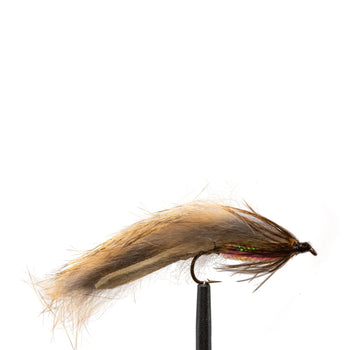 |
| Woolly Bugger – Black/Olive | Sparkle Minnow | Zonker |
Micro Patterns to Carry:
Woolly Bugger – Black/Olive (#8–#10): The most versatile small streamer ever tied. It imitates leeches, baitfish, and nymphs depending on how you fish it. Strip it, swing it, or dead-drift it through deeper seams. In late March, olive is your clear-water default and black is your low-light or stained-water option.
Sparkle Minnow (#6–#8): A modern flash streamer that blends shimmer, contrast, and motion. It flutters seductively on the drop — often when trout decide to eat. Brown/Yellow works in stained or low-light water, Olive/White mimics natural baitfish tones in clear flows.
Zonker (#6–#8): The rabbit strip wing creates lifelike swimming motion that no other material matches. Fish it with a slow retrieve near submerged structure — logs, rocks, undercut banks — where baitfish hide and trout ambush.
📌 Pro Tip: When fishing micro streamers, slow down your retrieve. The instinct is to strip faster when nothing's eating, but in late March the opposite is usually true. Slow strips with longer pauses give hesitant fish time to commit. If you're getting follows, add a full two-second pause between strips — the "stop" often triggers the eat.
Going Full Meat: When to Size Up
There's a point in the transition — sometimes it happens in a single afternoon — when subtlety stops working and aggression takes over. The water has warmed enough, the fish are positioned in current, and they want something worth chasing. This is when you tie on the big stuff and fish with authority.
Full-sized streamers — sizes 2–6, often articulated — imitate large baitfish, adult sculpins, juvenile trout, and oversized leeches. They push water, create vibration, and trigger the predatory instinct that micro streamers only hint at. When the conditions line up, these flies produce the biggest fish of the day — and often the most violent takes.
When to Go Full Meat
- Water temps push past 45°F consistently. This is the threshold where most trout shift from opportunistic to predatory feeding. When afternoon temps reliably hit the mid-to-upper 40s, the big flies start producing.
- Off-color or rising water. Early runoff pulses, rain events, or snowmelt that slightly stains the water give trout cover and confidence to chase larger prey. Reduced visibility also means fish rely more on vibration and profile than on color or detail — exactly what big streamers deliver.
- Low light conditions. Overcast days, early mornings, and late afternoons are prime windows for big streamer eats. Trout feel less exposed and more willing to move aggressively.
- When micro streamers get ignored. If trout aren't following or reacting to smaller profiles, they may already be locked into predatory mode and looking for a bigger target. Don't be afraid to jump two sizes — going from a size 10 to a size 4 isn't reckless, it's responsive.
How to Fish Them
Big streamers demand a different approach. You need a 6WT or 7WT rod with enough backbone to turn over heavy flies and drive them into the bank. A sink tip line gets the fly down quickly and keeps it in the zone through the retrieve. Leaders should be short — 4 to 6 feet of 0X to 2X fluorocarbon — for direct contact and fast sink rates.
Cast tight to structure: undercut banks, submerged logs, deep seam edges, and boulder pockets. Retrieve with aggressive, varied strips — two fast pulls followed by a hard pause, then repeat. The erratic movement imitates a fleeing or injured baitfish, and the pause gives trailing fish a window to commit. Unlike micro streamers, big meat flies are designed to provoke — fish them with confidence and don't slow down unless the fish tell you to.
 |
 |
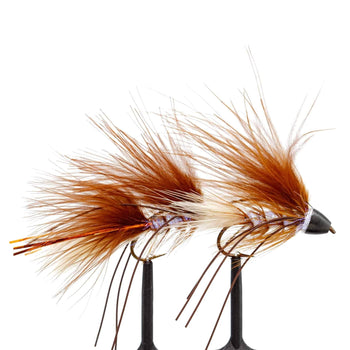 |
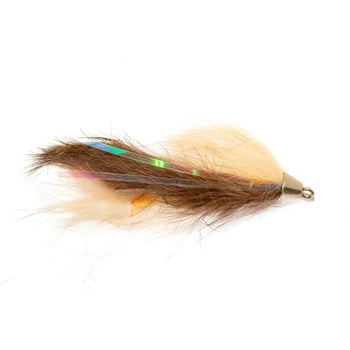
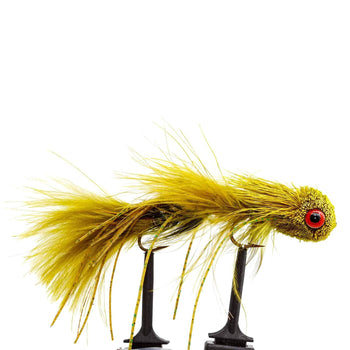
| Dolly Llama | Sex Dungeon | Peanut Envy |
Full Meat Patterns to Carry:
Dolly Llama – Black/White or Olive/White (#2–#6): The modern legend. Two rabbit strips create nonstop movement, and the articulated body gives this fly a natural swimming kick that drives big trout wild. Black/White for low light and stained water, Olive/White for clear conditions. If you carry one big streamer in March, this is it.
Sex Dungeon (#4–#6): An articulated powerhouse designed to push water and provoke reaction strikes. The bulk and movement of this fly triggers territorial aggression in pre-spawn fish. Fish it with a sink tip and aggressive strips along deep banks and structure.
Peanut Envy (#2–#6): Designed by Kelly Galloup, this pattern bridges realism and aggression. The deer-hair head pushes water, the marabou body pulses with life, and the articulated tail gives it a true baitfish kick. Available in olive, brown/yellow, and white — rotate colors based on water clarity and light.
📌 Pro Tip: Don't false cast big streamers more than twice. They're heavy, wind-resistant, and designed to be fished, not waved around in the air. One pick-up, one back cast, shoot the line, and get it back in the water. More time fishing, less time casting — that's how big streamer days are won.
Reading the Day: A Decision Framework
The best streamer anglers don't commit to one size for the whole day. They read the conditions and adjust — sometimes multiple times in a single outing. Here's a simple framework for deciding what to throw and when:
Start with a micro streamer. Unless conditions are obviously calling for big flies (stained water, overcast, warm temps), begin your day with a size 8–10 pattern on a floating line. Fish it through moderate-speed water with a slow, deliberate retrieve. This gives you information — are fish interested? Are they following? Are they eating?
If you get follows but no commits — stay small but change the presentation. Add longer pauses. Fish tighter to structure. Slow down. The fly size is right, the technique needs adjustment.
If you get nothing — no follows, no interest — size up. Tie on a Dolly Llama or Sex Dungeon, switch to a sink tip, and fish more aggressively. Cover more water, cast tighter to banks, and increase your strip speed. Sometimes fish need a bigger trigger to react.
If you're getting aggressive eats on micro streamers — stay with it. Don't fix what isn't broken. Sizing up when smaller flies are working is a common mistake. Match the energy the fish are showing you.
If afternoon conditions shift — warming temps, cloud cover, rising water — that's your signal to go bigger. Late afternoon in late March is often the best big-streamer window of the day.
Gear for Chasing Season
Streamer fishing puts different demands on your gear than nymphing or dry fly work. Having the right setup makes the transition from small to big seamless — and keeps you fishing efficiently when the window is open.
 |
 |
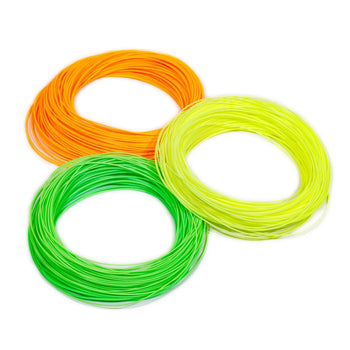 |
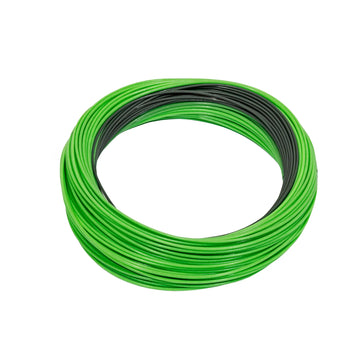
| Yellowstone II Fly Rod | Silvertip 10' Sink Tip Line | Silvertip WF Floating Line |
| Available in 5WT & 6WT | Get big streamers into the zone | Default for micro streamers |
- 9' 5WT Fly Rod: Handles micro streamers, Woolly Buggers, and small sculpin patterns with ease. Your go-to for the finesse side of chasing season. Pair with a weight forward floating line for most situations.
- 9' 6WT Fly Rod: Step up when you're throwing bigger patterns, heavier flies, or fishing in wind. The 6WT gives you the backbone to turn over articulated streamers and the power to punch tight casts into structure.
- Silvertip 10' Sink Tip Line: Essential for getting big streamers into the zone quickly. The 10-foot sinking tip drops your fly while the floating body makes casting and mending manageable. This is the line that makes full-meat fishing possible on a standard trout rod.
- Silvertip Weight Forward Floating Line: Your default for micro streamers and lighter patterns. The low-memory core and clean taper make short, accurate casts along banks and structure straightforward.
- Leaders & Tippet: Short and heavy for big streamers — 4–6 feet of 0X–2X fluorocarbon. Longer and lighter for micros — standard 9' tapered leader to 3X or 4X.
Taking It to the Water
Chasing season is the most dynamic time to throw streamers. The fish are waking up, the water is warming, and every outing brings a different mix of conditions that demand attention and adjustment. Don't lock yourself into one size or one approach — read the water, read the fish, and let the day tell you whether it's a micro day or a meat day.
Start subtle. Watch for follows. Adjust your size and speed based on what trout are telling you. And when the conditions line up and a big fish explodes on a Dolly Llama ripped along a dark bank — that's when you remember why you waited all winter for this.
For a deeper look at early spring streamer tactics and rigging, check out our Early Spring Streamer Tactics guide.


