

Evening Fly Fishing: The Window Most Anglers Miss

The angler reels up at 6:30 PM. It's been a decent day — a few fish, nothing memorable, the kind of summer afternoon that earns the "I'll take it" shrug on the walk back to the truck. The boat ramp is busy. Drift boats are coming off the river. The parking lot is full of guys breaking down rods and trading reports.
By 8:00 PM, the parking lot is half empty. By 9:00 PM, it's nearly deserted. And on the water — the same water that had three boats and a dozen waders all afternoon — the caddis are coming off so thick they're collecting on the brim of your hat. The water's cooled five degrees. The trout that hugged the deep seam at midday are working the shallow shelf six feet from the bank. And nobody's fishing them.
Most anglers think about what they're fishing and how. The smart anglers think about when. Time is the variable nobody talks about — the dimension of trout fishing that gets ignored because it's the only one you can't buy your way around. You can buy a better rod. You can buy better flies. You can hire a better guide. But you can't buy the patience to be on the water at 9:15 PM when the rest of the world has called it a day.
This is the case for evening fishing — specifically, the case for staying on the water through the three distinct tactical windows that define the last few hours of summer light. It's the case for understanding why the bite peaks when most anglers are eating dinner, what's actually hatching in each window, and which patterns earn their place in an evening fly box. The window most anglers miss isn't a secret. It's right there on the water, every summer night, hiding in plain sight.
Why Evening Outfishes Midday in Summer
There are four reasons evening consistently outfishes midday on summer trout water, and only one of them gets discussed regularly.
The most-discussed reason is water temperature. Summer afternoons push freestone water into the upper sixties and low seventies in many fisheries — the zone where trout move into deep holds, slow their metabolism, and stop feeding aggressively. As the sun drops and shade creeps across the water, temperatures fall. By 8:30 PM on most summer freestones, the water is back into the mid-sixties — the feeding zone. Trout that were holding deep at noon move back into the seams, riffles, and shallow shelves they prefer when conditions allow.
The second reason is insect activity. Most aquatic insect hatches concentrate emergence into specific time windows, and a surprising number of those windows fall in the last two hours of light. Caddis are the canonical example — many species emerge and return to lay eggs in late evening, and the resulting density of bugs on the water can be staggering. Mayflies that hatched at midday return to the water as spinners in the evening, often in waves that go unseen because they're tiny and translucent against fading light. The Yellow Sallies covered in our June Fly of the Month continue ovipositing through the evening. And terrestrials that got blown onto the water during the warm afternoon are still drifting — drowned, vulnerable, easy meals.
The third reason is light angle. Direct overhead light makes fish feel exposed and pushes them deeper or into structure. Low-angle evening light cuts through the water column at a slant, reducing the sense of exposure and emboldening trout to move into shallower lies. Anglers who scout a piece of water at 2 PM and try to fish the same lies at 9 PM are fishing the wrong water — the trout have moved.
The fourth reason — and the one nobody talks about enough — is fishing pressure. By 8 PM on most summer water, the boats are off, the wading anglers are heading back to their cars, and the river is functionally empty. The same run that had four anglers working it from 11 AM to 4 PM has nobody on it from 8 PM to dark. Pressured fish go down or get spooky; unpressured fish feed. The water you fished at midday in competition with everyone else is yours alone in the evening.
📌 Pro Tip: The morning argument is real but narrower than its advocates claim. First light has its place — especially on hot July water where overnight cooling produces a brief productive window before the sun pushes temperatures up. But morning fishing is heavily contested. By 7 AM on any summer weekend, every accessible run is being fished. Evening pressure is dramatically lower, and the productive window is longer.

The Three Evening Windows
The biggest tactical error in evening fishing is treating "evening" as one undifferentiated block. It isn't. The last three hours of summer light contain three distinct tactical windows, each with different fish behavior, different insect activity, and different fly choices.
Golden Hour — Two Hours Before Sunset
Golden hour is the transition window. Direct sun is starting to angle off the water, but visibility is still strong. Water temperatures are beginning to drop but haven't bottomed out. Insect activity is building — early caddis are starting to come off, terrestrials are still active, and any leftover afternoon mayflies are still drifting.
This is the window where most anglers are still on the water but most are also winding down — taking off shoes, packing up, drinking a beer at the takeout. It's also the window where the fishing starts to genuinely shift. Trout begin moving out of midday lies and into evening positions. The hatch is building but not yet at peak. Fishing the golden hour means transitioning your rig: the midday nymphing setup gets retired, the heavy hopper-dropper gets simplified, and you switch to a single dry — a caddis, a hopper, a small attractor — and start covering water aggressively. The strikes you get during golden hour are confidence builders. They tell you the bite is on.
Magic Hour — The Last 45 Minutes Before Sunset
Magic hour is when summer trout fishing peaks. The sun has dropped behind the canyon wall or the tree line. Direct light is gone. The water is in shadow, cooled to its evening temperature, and the insect activity that was building during golden hour reaches its crescendo.
This is the window. If you're going to commit to one block of evening fishing, this is the block to commit to. Caddis emergence is typically heaviest in the 30 minutes before and after sunset on summer freestones. Mayfly spinner falls concentrate in this window. The water surface becomes a moving conveyor belt of vulnerable insects, and the trout know it. Fishing the magic hour means switching to your most visible flies and being deliberate about presentation. The strikes come fast and often. The challenge is detection and execution — the fish are eating, and the angler's job is to put the fly where they're eating it without spooking.
📌 Pro Tip: If you're going to be on the water during magic hour, plan to switch flies at least once during the window. The bug activity shifts within those 45 minutes — caddis dries early, emergers and spinners later. Have your second fly already rigged on a spare leader or pre-cut tippet so the swap takes 30 seconds, not 5 minutes. You will not get those 5 minutes back.
Legal Dark — The Final 15 Minutes
Legal dark is the window between civil twilight and the legal end of fishing light — roughly the last 15 minutes of legal angling, plus the few minutes after sunset where you can still legally fish in most jurisdictions. Check your state regulations carefully; many Western states explicitly close fishing at sunset or civil twilight, while Eastern brown trout fisheries are often more permissive.
This window is short and intense. Fish are aggressive. Light is fading fast. Detection of strikes becomes harder. And the patterns that work here are different from the patterns that worked 30 minutes earlier — high-visibility silhouette flies, streamers fished with active retrieves, and, in waters that permit it, mouse patterns swung across pools.
This is also the window where the biggest fish of the day often come. The trout that wouldn't move in daylight will move on a streamer at 9:15 PM. The brown that ignored every drift through his lie at noon will eat a mouse at the surface in near-darkness. The downside is that you'll lose some fish you can't see well enough to land. The upside is the fish you do land are often the best fish of the season.
The Evening Bug Sequence
The evening hatch on summer water isn't a single event. It's a sequence — different bugs come off in different windows, and an angler who understands the sequence catches more fish than one who shows up at sunset with a single fly tied on.
The sequence in late June and July on most freestone water roughly follows this pattern. Late afternoon into golden hour: terrestrials are still active — hoppers, ants, beetles. Yellow Sallies that emerged during the warmest part of the afternoon are still ovipositing on the water surface. Small mayflies (PMDs in the West, Sulphurs in the East) are still drifting as duns from earlier hatches, and the first spinners are starting to fall. Larger caddis species are starting to flutter and skitter along the surface. Magic hour: caddis emergence peaks. Species vary by region — Hydropsyche and Brachycentrus dominate Western freestone water, Apatania and a wide range of regional species dominate Eastern and Midwestern water — but the pattern is consistent: dense surface activity, often a mix of emerging pupae, adult egg-layers, and dead/dying spinners all on the water simultaneously. Mayfly spinner falls of the day's earlier hatches are at peak. Trout will key on whatever's most abundant and easiest to eat. Legal dark: activity narrows. Caddis numbers drop. Trout switch from selective dry-fly feeding to opportunistic predatory feeding. Streamer eats become more aggressive. Anything moving across the surface — a struggling caddis, a drowned mayfly, a mouse swimming across a pool — becomes a target.
The smart evening angler reads this sequence and adjusts. The flies that worked at 7:30 PM are the wrong flies at 9:15 PM. The angler who keeps an Elk Hair Caddis on through legal dark is fishing the wrong fly. The angler who switches to a streamer at 8 PM is fishing the wrong fly. Timing within the evening matters as much as timing the season — and for a deeper look at how to read the bugs that drive these windows, the June regional hatch guide breaks down the species mix watershed by watershed.
Tactical Adjustments for Evening
Lighter tippet, shorter leaders. Evening light masks tippet — both because reduced glare hides the diameter and because trout are less wary in shadow. Drop a size in tippet from your daytime rig. A leader that's been at 4X all day can move to 5X for magic hour without losing fish. Shorter leaders (7.5 to 9 feet) also help with control as visibility fades — you can track a shorter leader by feel and the angle of the line where longer leaders disappear into the murk.
Visible flies after the hatch peaks. When the light starts going, fly visibility becomes the limiting factor. The accurate emerger pattern that catches fish at 8:15 PM is invisible at 8:55 PM. Switch to high-visibility patterns — a Foam Stimulator with a bright wing post, a Chubby Chernobyl with a foam back, even an oversize attractor — for the last 30 minutes. You'll catch fewer "matching" fish but you'll catch more fish total because you can actually see your fly.
Drift management by feel and angle. As visibility drops, line tracking shifts from visual to tactile. Develop the habit of keeping a slight tension in the line so you can feel a take rather than only see it. Watch where your line enters the water rather than trying to track the fly itself. Shorten casts. Eliminate slack. The angler who can't see their fly but can feel a take will land fish that the angler watching empty water will miss.
Plan for darkness. Carry a headlamp with a red filter — white light spooks fish and ruins your night vision. Pre-rig a second rod with a streamer or mouse pattern so you don't have to tie knots in the dark. Know your way back to the takeout. Have water and a snack in your pack — magic hour and legal dark together can stretch a day from "I'll be back by 7" to "back by 10," and you'll be tired and dehydrated if you didn't plan.
📌 Pro Tip: Most anglers underestimate how disorienting it gets to wade out of a river in near-darkness. The current feels stronger. The bottom feels less stable. Footing you crossed easily at 4 PM feels treacherous at 9:30 PM. Mark your exit point before light fails. If wading deep, start your wade-out at least 15 minutes before you think you need to.

The Evening Fly Box
Eight patterns covering all three evening windows — from the building golden-hour hatch through the magic-hour peak and into the silhouette feeding of legal dark. Carry them, read the window, and switch as the light goes.
Light's Still On — Golden Hour Through Magic Hour
This is the matching window. Hatches are building, trout are selective, and visibility is still strong enough that pattern accuracy matters more than fly silhouette. The four flies here cover the four insect groups active across golden hour and into magic hour — adult caddis, emerging caddis, drifting terrestrials, and falling mayfly spinners. Read what's on the water, pick the matching fly, and put it where the fish are eating.
 |
 |
 |
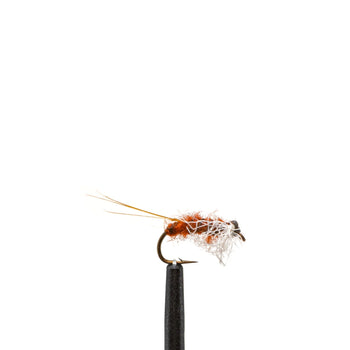 |
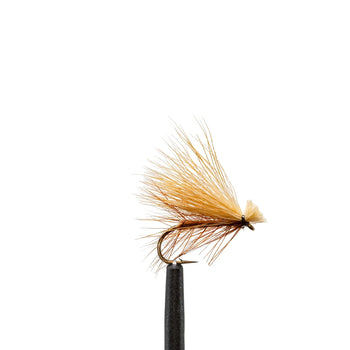
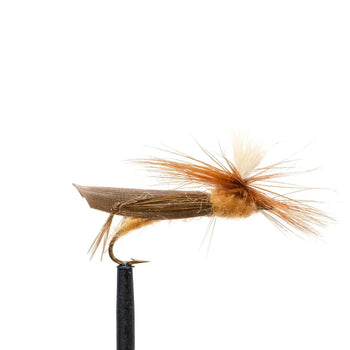
| Elk Hair Caddis | Deer Hair Sparkle Caddis | Parachute Hopper | Rusty Spinner |
Elk Hair Caddis (sizes 14–18): The workhorse of the evening dry-fly box. Palmered hackle and a deer hair wing keep it floating high through repeated casts in fast water, and the silhouette reads cleanly to trout keyed on adult caddis from late afternoon through deep into magic hour. Carry tan, olive, and black to match the dominant local species — and when you're prospecting evening water before you know what's hatching, this is the lead fly. Fish it across riffles, seams, and any broken water where caddis are likely active.
Deer Hair Sparkle Caddis (sizes 14–18): The emerger pattern that earns its place during peak emergence. The sparkle element imitates the trapped pupal shuck — the air-bubble halo trout key on when caddis are actively breaking through the surface film. When the hatch hits its crescendo in the last 30 minutes of light, accurate emergers outfish adults consistently. Run it as a dropper behind the Elk Hair Caddis when bugs are coming off thick, or fish it solo on a dead drift through softer water during magic hour.
Parachute Hopper (sizes 8–12): The terrestrial pattern that bridges day to evening. Warm summer afternoons blow grasshoppers, ants, and beetles onto the water for hours; by golden hour, drowned and drifting terrestrials are still being eaten alongside the building caddis activity. The parachute post keeps the fly visible from a low angle, and the hopper silhouette triggers fish that have been eating terrestrials all day. Fish it along grassy banks, slow seams, and any water where natural terrestrials would be ending up.
Rusty Spinner (sizes 16–20): The magic-hour mayfly pattern that fish lock onto. Spinner falls concentrate in the last 45 minutes of light as mayflies that hatched at midday return to the water to mate and die, and a Rusty Spinner imitates the spent adult sitting flush in the surface film. When the spinner fall hits, fish key on it exclusively — an Elk Hair Caddis will be ignored while a Rusty Spinner gets eaten on every drift. Carry the full size range to match whatever's falling.
Light's Going — Magic Hour Through Legal Dark
This is the trigger window. The hatch is winding down, but the feeding isn't — it's just shifted from selective to opportunistic. Light is fading. Your matching fly has become invisible. Silhouette and movement are now doing the work that pattern accuracy did 30 minutes ago. The four flies here are built for that shift — a high-vis attractor for the transition, an oversize foam for late silhouette feeding, a streamer for the predatory feed, and a mouse for the wild card. Stay until legal dark forces you off the water.
 |
 |
 |
 |
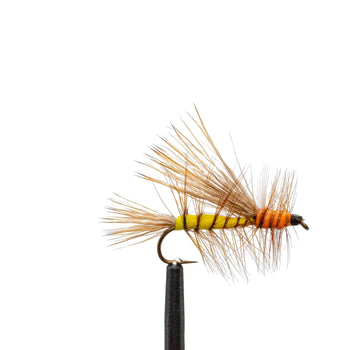
| Foam Stimulator – Yellow | Chubby Chernobyl – Knockout | Sex Dungeon – Black | Moorish Mouse |
Foam Stimulator – Yellow (sizes 10–14): The high-visibility transition fly between matching and triggering. When the light starts going and natural-material patterns become impossible to track, the bright wing post and foam body of the Stimulator stay visible 10–15 minutes longer than anything tied with traditional materials. The yellow body doubles as a Sally attractor when those bugs are still active into evening. Switch to this fly when you can no longer reliably see your accurate emerger, and trust it through the visibility-loss window.
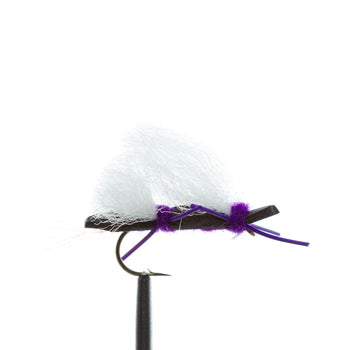
Chubby Chernobyl – Black/Purple (Knockout) (sizes 8–12): The oversize silhouette fly built for legal dark. The black-and-purple foam body delivers two jobs at once — dark coloration silhouettes hard against the fading-light water surface when trout look up, and purple is the canonical low-light color across nearly every wild trout watershed. The bulky profile rides high enough to track even as full daylight fails, and the larger size triggers opportunistic strikes from fish that have switched off selective feeding into late-evening predatory mode. Fish it across heads of pools, shelf water, and any seam where bigger fish move up to feed after sunset.
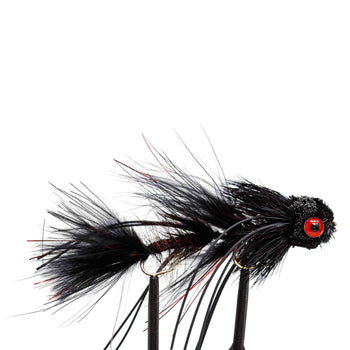
Sex Dungeon – Black (sizes 4–6): The articulated streamer for predatory feeding into dark. Black silhouettes most clearly against the fading-light water surface from a fish's view looking up, and the articulated body kicks and moves on the swing or stripped retrieve in ways that trigger reactive strikes. This is the fly to tie on when dry-fly action winds down and fish shift to opportunistic hunting. Fish it across pool tails, deep seams, and structure where the biggest fish in the system stage at night.
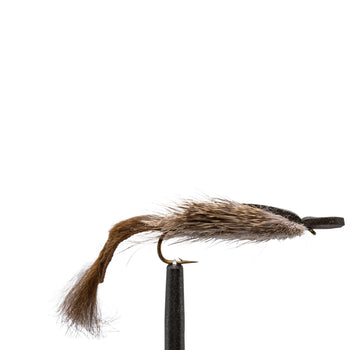
Moorish Mouse (sizes 4–6): The wild card after dark. Slim deer-hair body and a long zonker-strip tail that comes alive on the swing — fished across pools and seams with a steady retrieve, the silhouette and surface wake signal "swimming rodent" to a predatory brown. Not every river produces on mice, and not every state allows fishing into full darkness; check your regulations before committing. Where it works, it works on the biggest fish in the system — and the fish that eat a mouse at 9:30 PM are the fish of the season.
SHOP THE SUMMER FLY COLLECTION >>
Taking It to the Water
Evening fishing isn't a secret technique or a specialized skill. It's a willingness to be on the water when most anglers aren't — to keep fishing when the smart move feels like packing up, to push through the heat of the day and the boredom of slow midday hours because you know what's coming at 8:30 PM.
The window most anglers miss is the one they don't have to miss. The water's still there. The fish are still there. The flies that work are sitting in fly boxes anglers already own. The only thing missing is the patience to wait out the slow part of the day and the willingness to leave the river in the dark.
This summer, pick one evening a week and commit to it. Pack a headlamp. Tie on a caddis at golden hour, switch through the hatch sequence as it unfolds, and stay until legal dark forces you off the water. Do this five times and you'll understand evening fishing in a way that no blog post can teach. The first time you catch a 20-inch fish on a mouse pattern at 9:30 PM in water you'd written off at noon, you'll never fish the same way again.
Related Articles
- Yellow Sally: The Most Misunderstood Stonefly in Your Fly Box | Fly of the Month — June 2026
- Late Spring to Early Summer Fly Fishing: A Regional Hatch Guide for Every Major Watershed
- The Two-Fly Rig: Building a Cast for the April Hatch
- Spring Runoff Tactics: How to Fish When the River Won't Cooperate
- 25 Flies Every Beginner Fly Fisher Needs in Their Box


