

After Dark: Mousing for Big Browns

There are few takes in fly fishing quite like a brown trout eating a mouse after dark. You'll often hear the fish before you ever see it — a heavy splash or a deep slurp somewhere along the bank — followed by the unmistakable weight of a trout coming tight on the other end of the line.
That unpredictability is part of what makes this style of fishing so addictive. Fishing a mouse well isn't about complicated presentations — it comes down to finding the right water, keeping a convincing swim going across the surface, and having the patience to let the fish actually eat.
Why Big Browns Come Out at Night
It comes down to a combination of lower light, less angling pressure, generally cooler conditions, and a real feeding opportunity. The biggest, most educated browns in a river spend all day avoiding exactly what makes them catchable — being seen — and darkness removes that problem. Once the light is gone and the pressure eases, those same fish are often willing to leave cover and hunt in ways they never would at noon.
Mice matter here for a specific reason on top of that: a swimming rodent is one of the largest, most calorie-dense meals a brown trout ever gets a shot at, and it's an easy meal — clumsy, slow, and struggling on the surface rather than darting away. For a fish trying to add serious size before winter, that's not a snack worth ignoring.
When to Fish a Mouse
Summer through early fall is the real window. Water is warm enough that big browns stay active well after dark, nights are long enough to fish productively without an impossibly late start, and fish are actively feeding to build reserves before the fall spawn and winter ahead.
Darker nights tend to concentrate feeding activity across the whole window after dusk — a new moon or heavy cloud cover often means more consistent action than a bright, moonlit night, when fish may feel more exposed and hold tighter to cover. That said, the last hour of daylight and the first hour of full dark are worth fishing regardless of the moon; that transition period produces on almost any night.
One condition rules this out entirely regardless of the hour: dangerously warm water. If daytime temperatures have pushed a river into the stressed range, the fish are still stressed after dark — low light doesn't undo heat stress. We covered how to read that threshold in Watch the Thermometer, and the same rule applies here: if it's too warm to fish during the day, it's too warm to fish that water at night as well.

Where to Fish It
Prioritize undercut banks, soft edges along faster current, deep pools, tailouts, and any real structure — the same places worth checking during the day, just fished tighter and slower than daylight nerves usually allow. A big brown hunting at night doesn't need to travel far from cover to feel safe, so the productive water is often the first two or three feet off the bank, not the middle of the run.
Slower water adjacent to a faster current seam is worth particular attention after dark — there's less current to fight while listening for a real meal, and less commotion competing with the sound of something swimming on the surface.
How to Fish a Mouse Pattern
Cast tight to the bank and work the fly back with a steady, swimming retrieve — not the erratic twitch-and-pause of a daytime popper. That motion depends on one specific thing: the wake behind the fly has to stay even and unbroken the entire retrieve. A fish keyed in on sound and vibration in total darkness is reading the rhythm of that wake more than anything else, and a stutter or a gap in it reads as wrong immediately — even if the fish never sees the fly at all.
Getting an even wake comes down to two things. Keep the rod tip low, almost touching the water and pointed straight down the line at the fly — any higher and the rod absorbs part of each strip instead of transferring it directly to the fly, which is what causes the wake to surge and fade instead of holding steady. And keep every strip the same length and the same pace, six to eight inches, evenly spaced, like a metronome. The most common mistake is pausing mid-rhythm to gather loose line — even a half-second hitch shows up as a break in the wake.
There's a separate kind of slack worth understanding here, distinct from the wake rhythm above — a small amount of give in your retrieve hand at the moment of the take, rather than holding everything rod-tip tight. A mouse fly is tethered to a leader in a way a real swimming rodent obviously isn't, and a fish trying to close its mouth on something under full tension often can't get a clean grip before feeling resistance and letting go. A little give lets the fish actually eat the fly before you feel anything happen at all.

The hardest habit to build is patience on the take itself. A slurp or a boil in total darkness triggers an instinct to set the hook immediately, and that instinct is almost always wrong — you'll pull the fly away before the fish has actually closed its mouth on it. Wait to feel the weight of the fish pulling back before you set. It feels like an eternity in the moment. It's usually less than a second.
📌 Pro Tip: Set on feel, not on sound. The take is almost always heard before it's felt, and reacting to the noise alone pulls the fly out of the way. Count "one-one-thousand" after the splash before you even think about lifting the rod.
The Flies
Four patterns cover almost everything this style of fishing asks for — a swimming profile and a wake a fish can find in the dark by sound and vibration alone.
 |
 |
 |
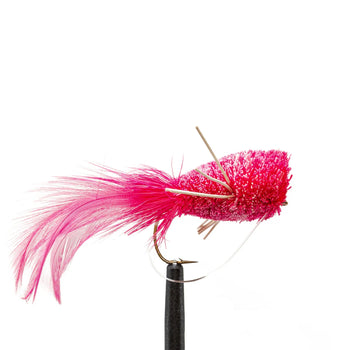 |
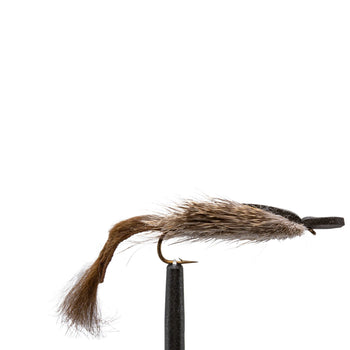
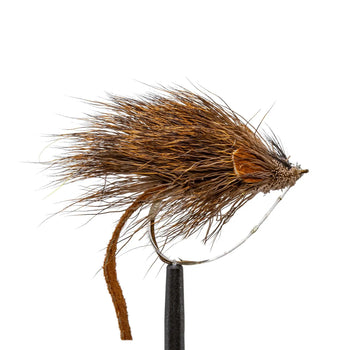
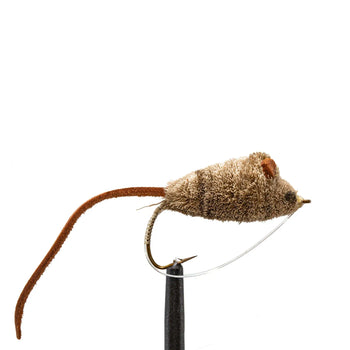
| Moorish Mouse | Rat-Mouse | Natural Mouse | Pink Pollywog |
Moorish Mouse: A deer-hair body that pushes a genuine wake across the surface, with enough buoyancy to keep swimming through a steady retrieve all night. The standard for a reason.
Rat-Mouse: A slightly slimmer, longer profile than the Moorish — worth switching to on nights when fish are following without committing, since the different silhouette sometimes changes the answer.
Natural Mouse: A muted, realistic color instead of the darker tones above — worth having on clear, calm nights when a fish is relying on sight as much as sound, and a natural silhouette holds up better under close inspection.
Pink Pollywog: Not a rodent at all, but the same swimming-wake presentation applies — a tadpole struggling across open water pushes the same kind of steady disturbance a mouse does. Worth having on for the nights a fish wants something a little different than fur and legs.
Default to the smaller sizes in this lineup rather than reaching for the biggest fly in the box. A trout's mouth isn't built to inhale large prey whole the way a bass or pike's is — it grabs sideways and turns, which means a smaller fly gets a cleaner, more confident eat and hooks up more often. Size up only when the conditions call for it: stormy, windy, murky water, or a fast, deep run where a fish needs extra motivation to commit.
Gear for the Dark
Rig heavier than you would during the day. A big brown that eats at night eats aggressively, and a strike coming out of total darkness with no visual warning gives you far less time to react than a daylight take does. The 9ft Fluoroflex Fluorocarbon Leader in 0X gives up some finesse, but it provides real additional strength and abrasion resistance when fishing a larger pattern around heavy cover — worth it on either setup below.
 |
 |
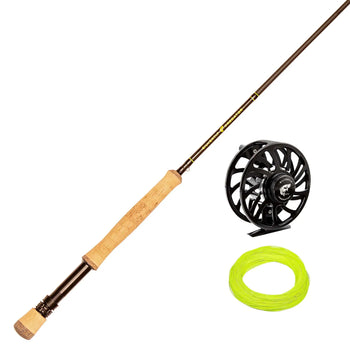 |
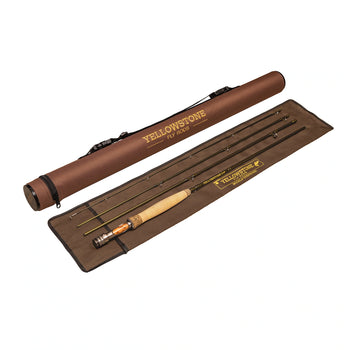
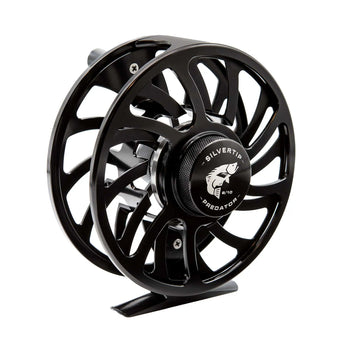
| Yellowstone II – 9'0" 7WT | Predator Large Arbor Reel | Freshwater Predator Combo Kit |
Yellowstone II, 9'0" 7WT with a fighting butt: If a standard trout rod is already in the closet, this is plenty of rod for the job. That extra leverage at the butt section matters more than it sounds like it should when you're fighting a big, unexpected fish blind, with no visual read on which way it's about to run.
Predator Large Arbor Reel: Worth adding on its own if a good trout rod is already in the closet but the reel isn't up to a blind, aggressive nighttime take. The sealed drag holds up to a hard surge, and the large arbor picks up slack fast if a big fish turns and runs straight at you in the dark.
Freshwater Predator Combo Kit: The same heavy-duty setup already built for pike, musky, and King salmon — the Silvertip Predator Fly Rod and Predator Large Arbor Reel, pre-matched. The backbone that turns over a big, wind-resistant mouse pattern is the same backbone that stops a big brown from reaching cover after dark.
📌 Pro Tip: Scout the water in daylight before you ever fish it in the dark. Walk the exact stretch you plan to fish, note the deep spots, the loose rocks, and anywhere you wouldn't want to step blind — night fishing is not the time to be reading water and your footing for the first time at once. If you haven't waded a stretch in daylight, don't wade it after dark; fish it from the bank instead.
Taking It to the Water
This isn't a numbers game — most nights produce fewer fish than an average daylight outing, sometimes just one or two takes in hours of fishing. But the fish that do eat are frequently the biggest of the entire season, willing to do something in total darkness that they'd never risk in daylight. Scout your water, rig heavy, fish patient, and be ready for the one take that makes the whole night worth it.
Related Articles
- Watch the Thermometer: Water Temps & When to Quit
- Pike & Musky on the Fly: Chasing Freshwater Predators


