

Fly Fishing for Steelhead and Salmon: A Symphony on the Water

There's something different about fishing for a salmon or steelhead that's on the spawn. These aren't fish keyed in on a hatch or sipping midges off a glassy pool — they're pulsing with a different kind of energy entirely, pushing through heavy current on a singular mission, and the flies that work on them barely resemble anything in a typical trout box.
That's because spawning fish generally aren't feeding the way trout feed. Success here comes down to understanding three distinct categories of flies, why each one works, and how to fish it — not memorizing a list of names.
Egg & Attractor Patterns
Spawning salmon and steelhead generally aren't feeding in the traditional sense — they're either intercepting loose eggs drifting downstream from a redd, or striking out of pure territorial aggression at anything that gets too close. Neither behavior has much to do with imitating an insect, which is why this category looks nothing like a typical trout box.
 |
 |
 |
|
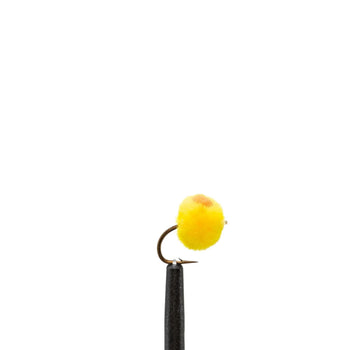
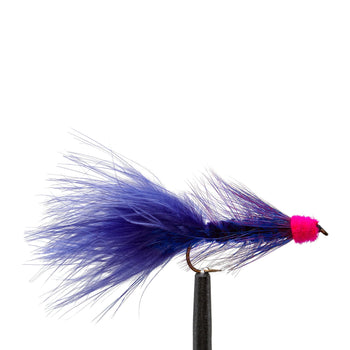
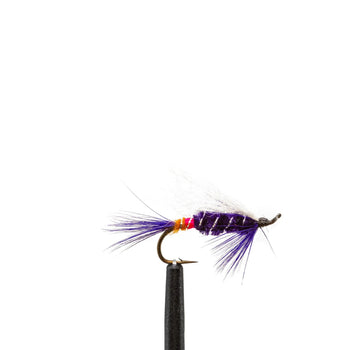
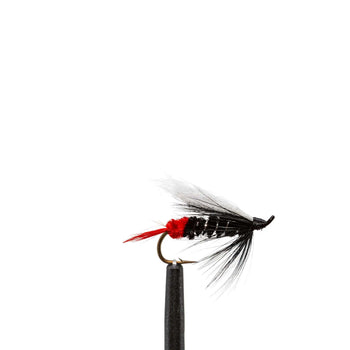
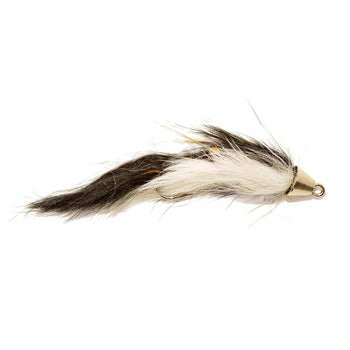
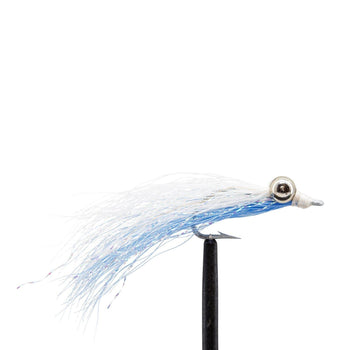
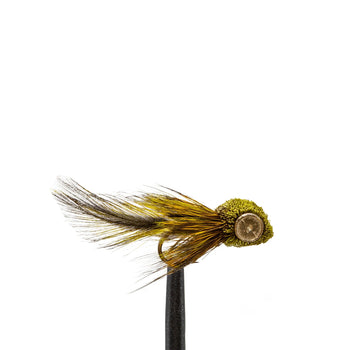
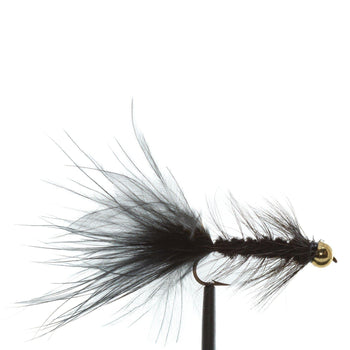
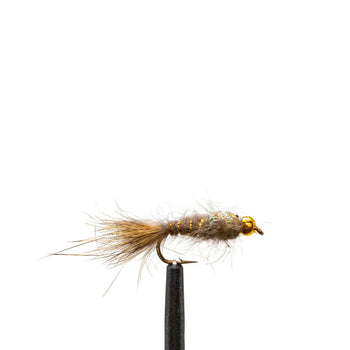
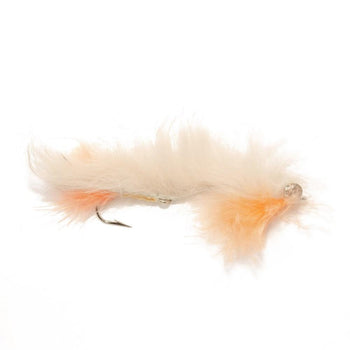
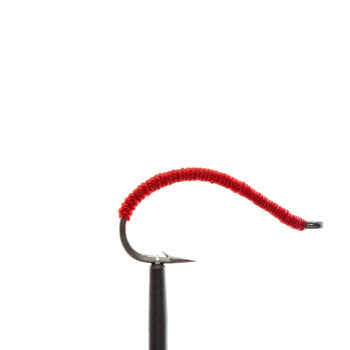
| Glo Bug | Egg-Sucking Leech | Intruders | Skunks |
Glo Bug: Built to imitate a single loose egg drifting free of the redd — the simplest, most direct way to fish this whole category. Dead-drift it deep near gravel beds where fish are actively spawning, exactly like a nymph. Comes in a range of colors worth matching to water clarity.
Egg-Sucking Leech: A natural leech body paired with a fluorescent egg-colored head, combining a real food source with the egg trigger in one fly. Swing it through tailouts below spawning beds, where fish hold guarding territory.
Intruders: A whole family of large, articulated patterns — Thor, Boss, Skykomish Sunrise, and more — built to push water and create a substantial presence in front of a fish. That size and movement is what triggers a territorial strike from something that isn't interested in eating. Swing it slowly through known holding water; the profile alone does most of the work.
Skunks: A dark, high-contrast attractor available in several tag colors — Green Butt, Red Butt, and more — that reads clearly even in murky water. Swing it slowly through deep pools where fish rest between pushes upstream; no need to match anything, just get seen.
Streamers
A big fly swimming near a redd reads as a threat, not a meal — these patterns provoke a defensive strike rather than fool a hungry fish. Profile and movement matter more than realism here, and the right retrieve varies more by fly than in almost any other category.
Dolly Llama: An articulated streamer with a long rabbit-fur tail and a genuinely fish-like swimming action — the hinge is what sells it. Swing or dead-drift it near the bottom of deep pools and runs, where the biggest, most aggressive fish tend to hold. Available in a wide range of colors.
Clouser Minnow: Weighted eyes give this fly a jigging action that gets it down fast and keeps it there. Effective in deeper runs adjacent to spawning beds, where it reads as a smaller fish raiding the redd.
Weighted Sculpin: Built to imitate one of the most direct threats to salmon and steelhead eggs — sculpins actively raid redds, and both species know it. Fish it slow and bottom-hugging; a real sculpin doesn't swim fast, and neither should this one.
Woolly Buggers: One of the most versatile flies in any box, and a genuine leech imitation in the size and color steelhead and salmon actually see around spawning beds. Twitch or jig it near the edges of a redd to draw a territorial strike, rather than dead-drifting it like a searching nymph.
📌 Pro Tip: Never cast directly onto an active redd — the clean, lighter-colored patch of gravel where a fish has cleared silt to lay eggs. Fish the water around and below it instead. Trampling or repeatedly disturbing a redd can destroy an entire season's spawn.
Nymphs & Scavenger Patterns
Not every steelhead or salmon in the system is actively spawning, and even the ones that are will still eat real food when it drifts past. This category covers actual subsurface feeding — plus the strange, specific opportunity that opens up once fish start dying after the spawn.
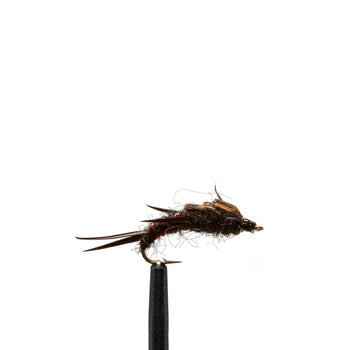
Stonefly Nymphs: A genuine year-round food source, not a spawn-specific pattern — stoneflies are present in the system regardless of what else is happening. Dead-drift it deep along seams where the current breaks, using a sinking line to keep it in the strike zone.
Beadhead Nymphs: A broad family of general-purpose nymphs that cover a wide range of natural food items without imitating anything too specifically. Dead-drift them through slower pools near spawning beds, where fish hold between more aggressive pushes.
Flesh Strip Leech: As salmon die off after spawning, decaying flesh becomes a genuinely significant food source for the fish still working through the system — this fly exists specifically for that window. Dead-drift it through deep pools below active spawning areas.
San Juan Worm: The digging and disturbance around a redd dislodges far more than eggs — aquatic worms get swept into the current too, and both species key on it. Dead-drift it the same way as the nymphs above, tight to the bottom near active spawning gravel. Comes in red, orange, and chartreuse.
📌 Pro Tip: Swing water and dead-drift water aren't the same thing. Attractors and streamers work a run on a swing — cast across and slightly downstream, let the current pull the fly through. Eggs, nymphs, and scavenger patterns want a genuine dead drift, weighted enough to stay deep. Match the technique to the fly, not the other way around.
Choosing the right fly is only part of it — reading the water, spotting a redd before you wade near it, and knowing which category to reach for in a given run all matter just as much. That's the real skill this fishery rewards.
The Right Rod for the Job
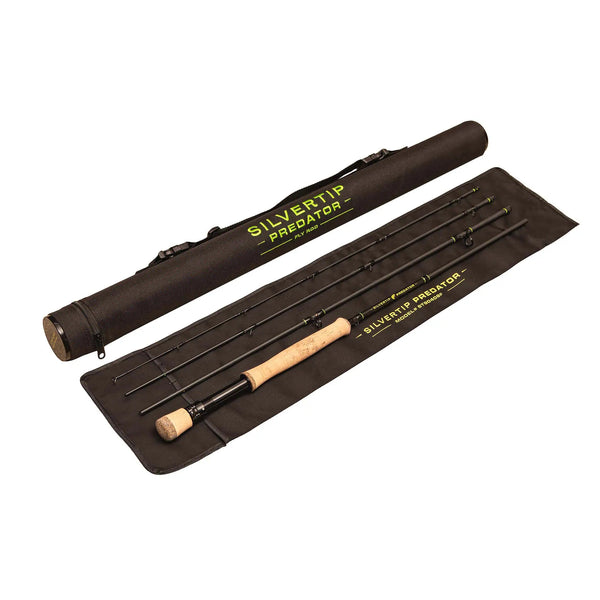
Salmon and steelhead demand a rod built for sustained pressure in heavy current, not just a hard hookset. The Silvertip Predator Fly Rod is built around exactly that — a fast-action blank with the backbone and line speed to turn over sink tips and weighted streamers, and enough lifting power to keep a big fish out of the heavy water it's trying to use against you. It comes in 9'0" 8WT, the right call for steelhead and most salmon, and 9'0" 10WT for anyone specifically targeting King salmon.
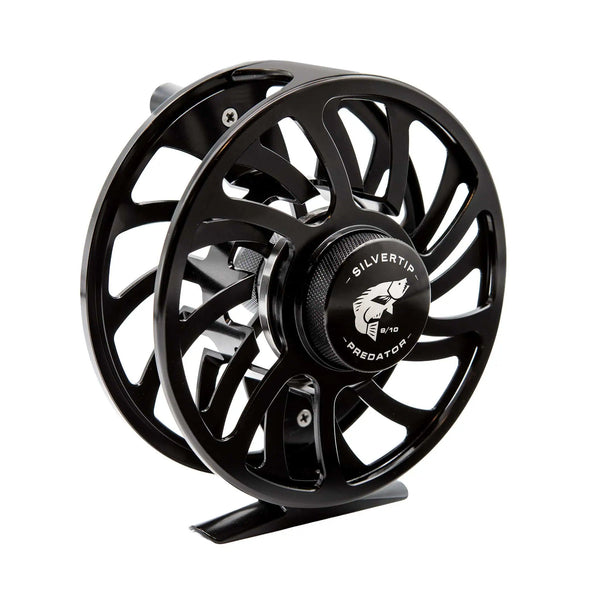
Paired with the Silvertip Predator Large Arbor Reel — a sealed carbon-and-stainless drag built for the kind of sustained, powerful runs these fish are known for, with a large arbor and deep-channeled spool for fast pickup when a fish changes direction mid-fight.
Both come pre-matched into two combo kits built around exactly this fishing:
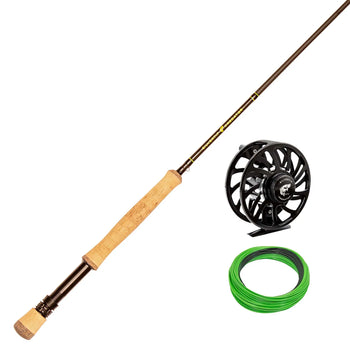
Kenai River Rod Combo Kit: The 8WT setup, pre-spooled with sink-tip line, backing, and 0X fluorocarbon tippet — built for steelhead and salmon generally, and the right choice for most days on the water covered in this guide.
Chinook Rod Combo Kit: The 10WT step-up, built for one thing — King salmon. Same Predator rod and reel, scaled up for the largest anadromous fish in the river and the sustained runs that come with it.
Related Articles
- 8 Late Summer Strategies for Landing the Perfect Trout
- Exploring 6 Key Fly Categories & Effective Patterns


